


Granturismoevents.com Alternatives for Expat Parents in Singapore
- sasha2644
- 14 hours ago
- 5 min read

For family-friendly activities in Singapore, turn to local international preschools, enrichment centers, community centers, and vetted activity marketplaces. Gran Turismo Events is an adult supercar touring company that has hosted more than 1,000 supercar owners annually across European circuits like Nurburgring and Spa-Francorchamps. It has no child programs, no curriculum, and no staff credentials relevant to families. Generic “sites like” aggregators surface dozens of automotive marketplaces as substitutes, none of which serve children.
The right alternatives for your child are:
Local international preschools and primary schools (ages 1.5–12): Astor International School offers small-class, inquiry-based programs and is awarded Best Small School and Best Affordable International School in Singapore.
Enrichment centers: arts, languages, sports, and STEM programs available across Singapore neighborhoods.
Community centers and libraries: affordable, age-appropriate sessions run by trained facilitators.
Museums and cultural institutions: structured children’s programs with qualified educators.
Expect term-based or session pricing, and always verify staff background checks and trial class availability before enrolling.
Pro Tip: Ask any provider directly: “Do you publish staff-to-child ratios and staff qualifications?” If they hesitate, move on.
Table of Contents
What do granturismoevents.com alternatives look like for children?
Astor’s three key pages give parents a clear, education-first starting point.
Option | Best For | Delivery | Class Size | Booking/Trial |
[IPC | Astor International School](https://astor.edu.sg/learning/ipc) | Ages 1.5–5; structured early years | In-person | Small |
[Our Curriculum | Ages 5–12; curriculum comparison | In-person | Small | |
All ages 1.5–12; admissions | In-person | Small | Contact for visit/enrolment |
Practical next steps: request an IPC trial class, schedule a campus visit, or review the curriculum page to compare program fit before committing.
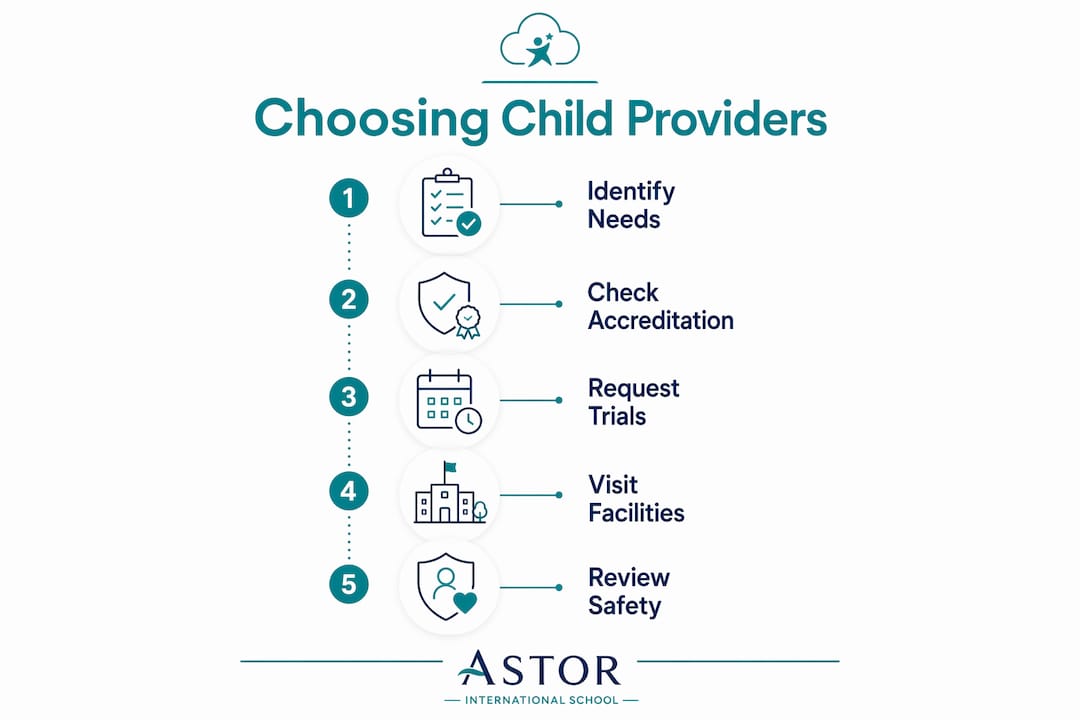
How do you choose the right child-focused provider?
Prioritize age-appropriate curriculum and verified staff credentials over polished event photos.
Request documentation: ask for staff qualification records, background check policies, and insurance details.
Check staff-to-child ratios: smaller ratios mean more personal attention, especially for toddlers.
Confirm curriculum fit: inquiry-based and play-based models suit ages 1.5–6; structured academic programs suit ages 7–12.
Understand pricing models: drop-in sessions offer flexibility; term-based enrollment gives cost predictability.
Book a trial class: reputable providers welcome observation visits before full enrollment.
Pro Tip: Accreditation badges and published parent testimonials are fast credibility filters. If neither appears on a provider’s site, request them directly.
What should you prioritize by your child’s age group?
Ages 1.5–3: sensory play, small caregiver-to-child ratios, and consistent routines matter most. Look for preschools with outdoor play areas and trained early-years staff. Astor’s preschool in Holland features two playgrounds and a blend of outdoor and classroom learning.
Ages 4–6: structured play and early literacy programs build confidence. IPC-based learning, where children explore topics through inquiry, suits this stage well. Both in-person and hybrid options exist, though in-person is strongly preferred for social development.
Ages 7–9: enrichment in arts, languages, and STEM complements core schooling. Check whether programs accommodate diverse learning needs and offer differentiated instruction.
Ages 10–12: academic enrichment, project-based learning, and extracurricular clubs become priorities. Confirm that providers publish clear progression pathways.
Virtual vs. in-person: which works better for your child?
In-person programs are non-negotiable for motor skills, socialization, and early-years development. Virtual sessions work well for specialist tutoring, language classes, and supplementary enrichment for ages 7 and up.
In-person pros: hands-on learning, peer interaction, physical activity, safety verification possible.
In-person cons: schedule rigidity, commute time.
Virtual pros: access to specialist tutors, flexible scheduling, lower cost per session.
Virtual cons: screen fatigue, limited physical and social development for younger children.
A practical approach: trial a provider virtually to assess teaching quality, then schedule an in-person visit to verify safety standards and classroom environment before committing.
How do you verify a provider’s safety and credibility?
Insist on documented staff background checks, published class sizes, and a clear complaints procedure before any enrollment.
Trust signals to request and verify:
Staff qualifications and background check policy (equivalent to DBS checks)
Published staff-to-child ratios
Insurance documentation
Accreditation or awards (e.g., Best Small School recognition)
Parent testimonials from named or verifiable sources
A posted incident and complaint procedure
If a provider cannot supply these on request, treat that as a red flag. Small class sizes are one of the strongest structural safety signals: teachers who know every child by name respond faster and more personally to any concern.
How do you move from an adult events platform to child-friendly options?
The shift is simpler than it sounds. Start by replacing your search habit: instead of searching “events near me,” search “international preschool Singapore” or “children’s enrichment [your neighborhood].” Bookmark two or three education-specific sites rather than general event aggregators.

Next, shortlist providers by age band and request trial classes from each. Visiting in person before committing is the single most effective step. You will quickly notice the difference between a provider with trained, attentive staff and one that treats children as an afterthought.
Finding inclusive activities for children with varying abilities
Look for providers that explicitly publish their inclusion policy and describe how they support children with diverse learning needs. Ask directly whether staff have training in differentiated instruction or special educational needs support.
Community centers and libraries often run sensory-friendly sessions at low or no cost. For structured schooling, smaller schools tend to offer more individualized attention by design. Astor’s inquiry-based learning model is built around curiosity and personal pace, which naturally accommodates a range of learning styles without singling children out.
Astor International School: a nurturing place to start
Astor is a practical, education-first alternative for expat families in Singapore with children aged 1.5–12. Small class sizes, an inquiry-based curriculum, and a warm, attentive team mean every child is genuinely seen and supported, not just enrolled.
You can book an IPC trial class for toddlers and preschoolers, review the full curriculum for primary-age children, or contact the admissions team directly through the Astor homepage to schedule a campus visit. The next step is simply reaching out.
Key Takeaways
For expat parents in Singapore, the best granturismoevents.com alternatives are local international preschools, enrichment centers, and community programs built specifically for children aged 1.5–12.
Point | Details |
Wrong platform | Gran Turismo Events serves adult supercar owners and has no child programs. |
Generic lists fail | Automotive aggregators list similar event sites, not child-focused providers. |
Verify before enrolling | Request staff credentials, background check policies, and class size data from every provider. |
Age-appropriate fit | Match provider type to age band: sensory play for 1.5–3, IPC inquiry for 4–6, enrichment for 7–12. |
Astor as local option | Astor International School offers small-class, inquiry-based programs for ages 1.5–12 in Singapore. |
Recommended