


Home Language Maintenance for Children in Singapore

Home language maintenance means deliberately keeping the language your family speaks at home alive in your child, so that it grows alongside English instead of fading behind it. In Singapore, where English dominates school, playgrounds and screens, it rarely happens by accident. It happens through small, steady habits: a clear rule about who speaks what, stories and songs in the family language, and regular contact with people who use it. This guide sets out how to do that from toddlerhood to primary school, which local resources help, and how to tell whether your approach is working.
TL;DR
Children in Singapore tend to drift towards English, so the home language needs a plan, not just good intentions.
Pick one simple structure, such as one parent one language or a time-and-place rule, and keep it going.
Respond in your home language when your child answers in English, and make the language fun through books, games and stories.
Use free local help: library mother tongue books, bilingualism.sg and your child’s school programmes.
Watch fluency in daily use, not just test results, and adjust as your child grows.
Table of Contents
What home language maintenance looks like in Singapore
Most expat families arrive with a clear picture: we speak our language at home, and the child will pick up English at school. The second half is true almost immediately. The first half takes work.
Singapore research shows why. A study of home language shift among Singaporean families found a trend from Mandarin Chinese towards English among younger generations, with children using English more with peers and siblings than with their parents (Li, Tan and Goh, 2015). The same researchers describe family language choices as a decision shaped by the need for English to succeed socially and the wish to keep an ethnic identity, and one that should not be taken lightly.
That tension is familiar to many of the families we meet. English is the language of lessons, friendships and most of the city. The home language is the language of grandparents, bedtime, jokes and belonging. When English starts to win every conversation, children often understand the home language but stop answering in it, and that is usually the first stage of loss.
Maintenance, then, is not about resisting English. It is about making sure your child has enough meaningful, enjoyable exposure to a second language that it stays usable for life.

Why it is worth the effort
There are three reasons parents tell us matter most, and each has solid backing.
Development. The National Association for the Education of Young Children (NAEYC) states that preserving a child’s home language supports cognitive development, and that families still building their English give stronger language models when they speak their home language with the child (NAEYC position statement). In other words, you do not need perfect English at home. You need rich, confident language in whatever tongue you know best.
Family relationships. A child who can talk with grandparents, cousins and relatives without a translator builds a different kind of closeness. This is the reason most families give when they say why the language matters, and it is hard to measure but easy to feel.
Identity and confidence. A child who sees their family language as a strength, not a leftover, tends to carry that confidence into school. Singapore’s own bilingual policy is built on a similar idea: English for broad access, and the mother tongue to strengthen values and a sense of cultural belonging (SG101).
Start from how languages are actually learned
Children build language from input. Input-driven models stress that the amount of language a child hears and uses across settings and interactions is crucial to acquisition (Li, Tan and Goh, 2015). The Ministry of Education (MOE) likewise notes that studies show a rich language environment at home helps young children pick up languages (MOE, 2024).
This has a practical consequence. A weekly language class cannot compete with a school day in English. What matters is the total number of hours your child hears and uses the home language in ways they enjoy. So the aim of your plan is to protect and widen those hours.
Choose a structure your family can keep
The best plan is the one you will still follow in month eight. Two structures are widely recommended by Singapore’s National Institute of Education (NIE): the time-and-place method, and one parent, one language (NIE, 2025).
One parent, one language
Each parent speaks their own language to the child consistently. It works well when parents have different mother tongues, and it gives the child a clear association between a person and a language. It is less effective when the home-language parent is away much of the week, so pair it with extra time on weekends.
Time and place
Here the language is tied to a moment or a location: dinner, the weekend, game night, the car ride to school. NIE suggests dedicating times such as game nights or weekends to the less dominant language so that practice is consistent and meaningful (NIE, 2025). In a country where English is everywhere, this is often the easiest rule for two parents who share the same home language, because it turns the language into a family tradition instead of a correction.
A quick comparison
Approach | Works best when | Watch out for |
One parent, one language | Parents speak different languages | The minority-language parent is often absent |
Time and place | Both parents share the home language | Rules that slip when schedules get busy |
Mixed, with a fixed anchor routine | Several caregivers, helpers or grandparents are involved | Needs everyone to agree on the anchor |
Whichever you pick, write it down and tell grandparents, helpers and caregivers. Consistency is what makes it stick.
Daily habits that work from toddler to primary school
Ages 1.5 to 3: build the sound world
At this age language lives in routines. Greetings, mealtimes, bath, songs and rhymes are the natural places for your home language. The Early Childhood Development Agency (ECDA) suggests bilingual books, labeling household items, and involving children in cultural activities such as wearing traditional attire (ECDA, 2024). Sticky labels on the fridge, the door and the toy box in your home language take ten minutes and give your child a daily visual cue.
MOE’s guidance for preschools points the same way: integrate the mother tongue into daily routines such as greetings, and use songs, games and dramatization for active learning (MOE Nurturing Early Learners, 2025). Those ideas work just as well at your kitchen table.
Ages 4 to 6: stories, play and pretend
Preschoolers love repetition and make-believe. Read the same book again and again, let your child act out the story, and play simple games where the rules are spoken in your language. NIE’s tips include using home-language phrases, reading stories in both languages, playing games and acting out stories (NIE, 2025).
Picture books matter more than most parents expect, because they give your child vocabulary that daily chat does not. If you want a place to browse by age, storybooks for ages 3 to 13 can give you ideas for stories that open conversations about identity and family history. Your library is the other obvious stop, covered below.
Ages 7 to 12: purpose and pride
Older children need a reason. Homework, friends and screens all pull towards English, so the home language has to earn its place. Give it real jobs: a video call with grandparents every week, cooking a family recipe from a handwritten card, writing a postcard or message to a cousin, or reading a chapter book together. Letting your child teach you something, such as a game they love, in the home language shifts the dynamic from correction to collaboration.

When your child answers in English
This is the moment almost every family reaches. Your child understands everything you say and replies in English. It is normal, and it is fixable.
NIE’s advice is simple: keep responding in the home language, make sure each language is used sufficiently, and use fun activities such as reading, games, storytelling and conversation (NIE, 2025). In practice, that means:
Accept the English reply without scolding, then say the same idea back in your home language. Your child hears the right words in context.
Ask open questions that need more than yes or no, so there is more language to produce.
Keep demands light. Corrections in front of friends or at the end of a long day can make a child reject the language.
Create situations where English does not help, such as talking with a grandparent who does not speak it.
Mixing languages in one sentence is also not a red flag. The NIE’s 2025 evidence synthesis suggests that code-switching can be a tool for building confidence and cultural connection, not a sign of confusion (SingTeach, 2025). Let it happen in play, and gently model the full sentence in your language.
Parents do not need to be perfect
Many parents hold back because they worry their own accent, grammar or reading level is not good enough. The guidance from Singapore is encouraging. MOE emphasizes that parents are a child’s first teachers and should show a willingness to learn the mother tongue alongside their child, even without being proficient (NIE, 2024). A parent who learns beside a child sends a strong message: this language is worth the effort.
Free local help in Singapore
Singapore has more support than many families realize, though much of it is shaped around the official mother tongues (Chinese, Malay and Tamil). If your home language is another one, the principles still apply, and you will need to add community networks and online resources.
Libraries. MOE encourages families to borrow Mother Tongue Language books from libraries and to check bilingualism.sg for recommendations (MOE, 2024). The Minister for Education has repeated the call for frequent, natural use of the mother tongue at home, supported by community resources (MOE, 2023).
Community events. Schools and community partners run literary festivals, theatre performances and language competitions, which give children a social reason to use the language (MOE, 2024).
School support. In national schools, the Mother Tongue Support Programme gives small groups of 8 to 12 pupils in Primary 3 and 4 extra help when they need it (MOE, 2024). International schools set their own arrangements, so ask yours what language support it offers.
Technology and partnerships. The NIE synthesis recommends using technology for language learning and deepening partnerships with parents and the community (SingTeach, 2025). For families, that can mean video calls, audiobooks and apps, as long as they supplement real conversation.
Our own guides cover the school side of this in more detail: how MOE rules affect home language support and why bilingual education benefits expat kids.
Our perspective: protect the language by making it joyful
At Astor, we are a small school, and we see children as individuals, not as cohorts. That shapes how we think about home languages. Our classes have a maximum of 20 children and an average of 15, which means teachers can notice when a child who chatters in one language at home becomes quiet in another at school, and ask why.
We believe the best learning happens when every child is truly seen and supported. For languages, that means three things.
First, a child’s home language is an asset to be nurtured, not an obstacle on the way to English. Children who feel proud of the language they speak with their grandmother come into class with more confidence and curiosity.
Second, language grows through meaning, not drills. Our inquiry-based approach, built on the International Primary Curriculum, invites children to explore topics through questions, projects and conversation. A child who has explained a project to a friend, or compared how families celebrate a festival, is using language for a real purpose. Families can extend that at home by asking the child to tell the story of their day in the home language.
Third, partnership matters more than any programme. School can offer multilingual support and language enrichment, but the daily hours at home are where a language is kept alive. When parents share what they are doing at home, teachers can reinforce it, and the child sees both worlds pulling in the same direction. If you are weighing how Mandarin fits into an international school day, our parents’ checklist on Mandarin in international schools is a good place to start, and our piece on language enrichment that puts play first explains why we avoid early pressure.
Our advice to every family: choose a plan you can enjoy, keep it light, and give it time.
— Elena
Where Astor fits in
If you are looking for a school that treats language as part of the whole child, we would be glad to show you around. Astor International Preschool in Holland and Astor International School in Tanglin both keep groups small, with a mix of outdoor and classroom learning at the preschool and enrichment in arts, sports and languages at the school. You can read about our foreign languages offer, explore the enrichment classes, and see current fees and options before booking a visit.
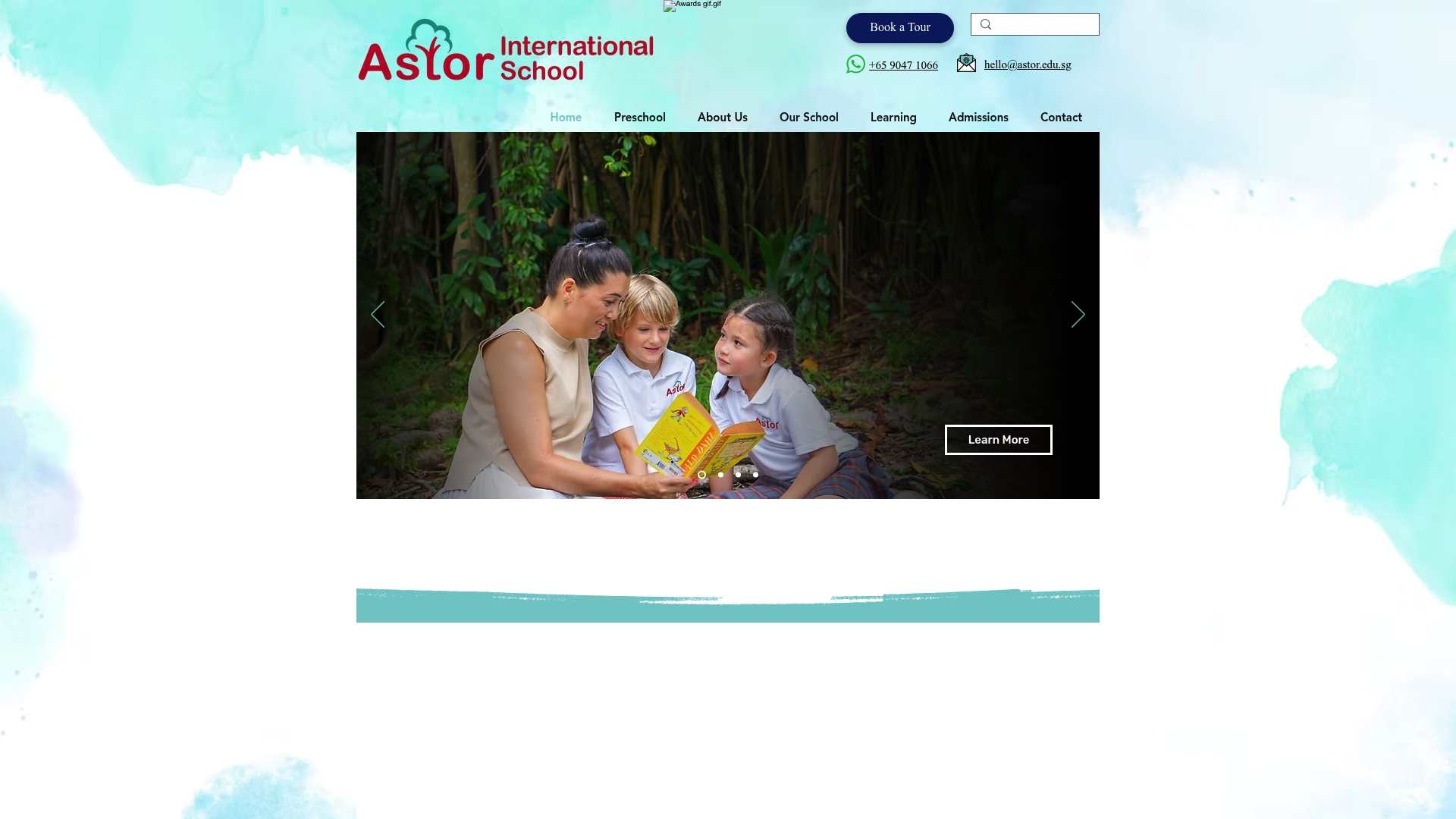
For younger children, the Astor Preschool programme shows how play, songs and storytelling shape each day.
How to tell whether it is working
You do not need a formal test to know if your approach is helping. NIE suggests monitoring progress in both languages by observing academic performance and fluency in daily use (NIE, 2025). Here are practical signs to check every few months.
Understanding. Does your child follow instructions and stories in the home language without help?
Speaking. Does your child start conversations in it, not only answer in it? Starting is a stronger sign than replying.
Vocabulary range. Can they talk about school, feelings and hobbies in the home language, or only about food and family?
Attitude. Do they treat the language as part of who they are, or as something they do to please you?
Reading and writing. For older children, can they read a short book or write a simple message?
If one of these is slipping, adjust the routine instead of adding pressure. A child who understands but will not speak often needs more fun, low-stakes situations. A child who speaks but cannot read may need regular shared reading. And if you notice a child struggling with language in more than one area, speak to your child’s teacher or a speech-language therapist.
Re-check your plan at natural transition points: starting preschool, entering Year 1, moving up to upper primary, or after a long holiday back home. Needs shift at each, and so should your routine.
A simple weekly plan to begin with
If all of this feels like a lot, start with a plan you could hold for one term:
Pick one daily anchor, such as dinner or bedtime, that is always in the home language.
Choose one weekly family activity, such as a game night or a weekend morning, with the same rule.
Borrow three books from the library in your home language and read one a night.
Schedule a regular call with relatives who speak the language.
Review after a month. Keep what feels natural and drop what feels forced.
Small habits repeated for months beat ambitious plans that last two weeks. For more ways to build bilingual skills, see 5 ways to make your child bilingual and effective ways to support your child’s learning in Singapore.
FAQ
At what age should I start maintaining my child’s home language?
Start from birth, or as soon as you begin raising a child in Singapore. Early years are when routines, songs and stories are easiest to build in. That said, it is never too late to begin, and older children respond well when the language is given a real purpose, such as talking with relatives.
Will speaking my home language hold back my child’s English?
No. NAEYC states that home language preservation supports children’s cognitive development, and that parents with limited English offer stronger models when they use their home language (NAEYC). English will grow through school and the community around you.
My child only answers in English. Should I insist on the home language?
Do not insist or scold. Keep speaking the home language, respond to English replies by repeating the idea in your language, and use games, books and storytelling to make it enjoyable (NIE, 2025). Over time, giving your child reasons to use it matters more than correction.
Is mixing two languages in one sentence a problem?
Usually not. NIE’s 2025 synthesis suggests code-switching can build confidence and cultural connection rather than signal confusion (SingTeach, 2025). You can model the full sentence in your language without making a point of it.
Sources
Recommended
Comments