


How to Balance Play and Study: A Parent's Guide
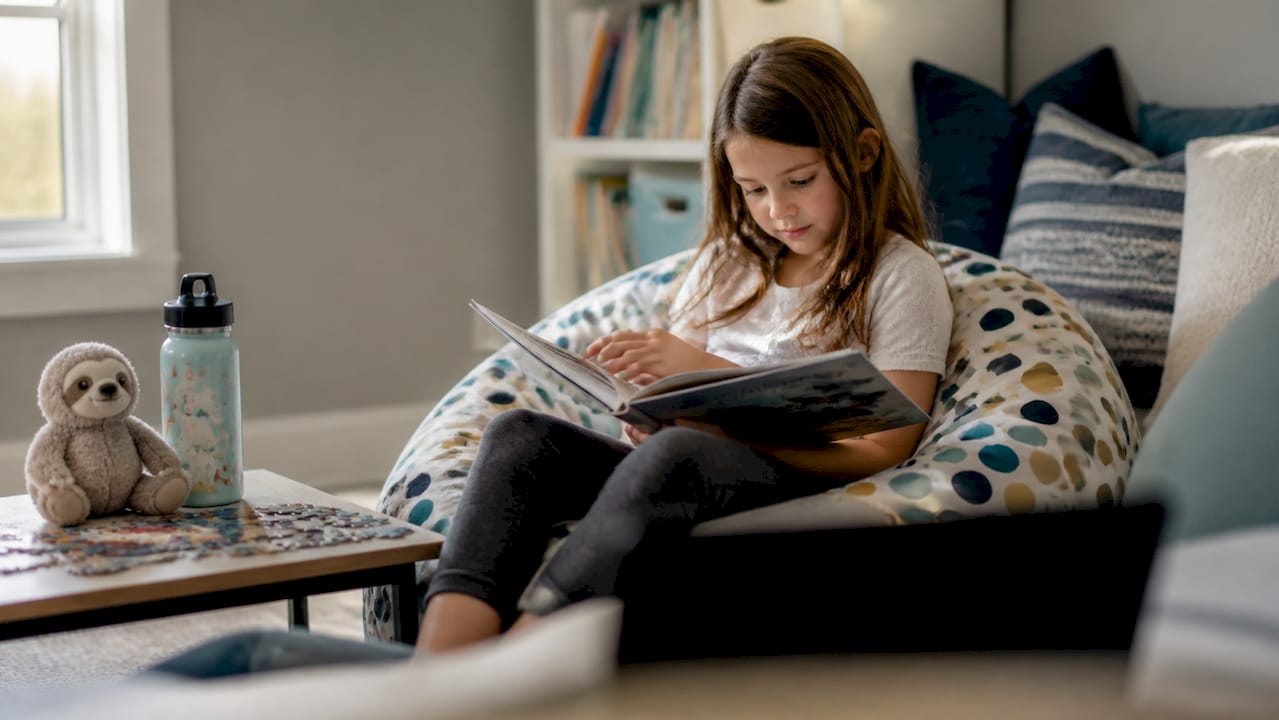
A simple weekly time budget plus three daily anchors — wake time, a protected study block, and a firm bedtime — is enough to balance play and study for most children in Singapore.
Here is your start-now checklist:
Set three daily anchors today. Fix wake time, one study block, and bedtime. Everything else fits around them.
Time-block one study session this afternoon. Choose a short study session of appropriate length after school, set a timer, and commit to it.
Protect one play block. Treat outdoor or free play as a non-negotiable appointment, not a leftover.
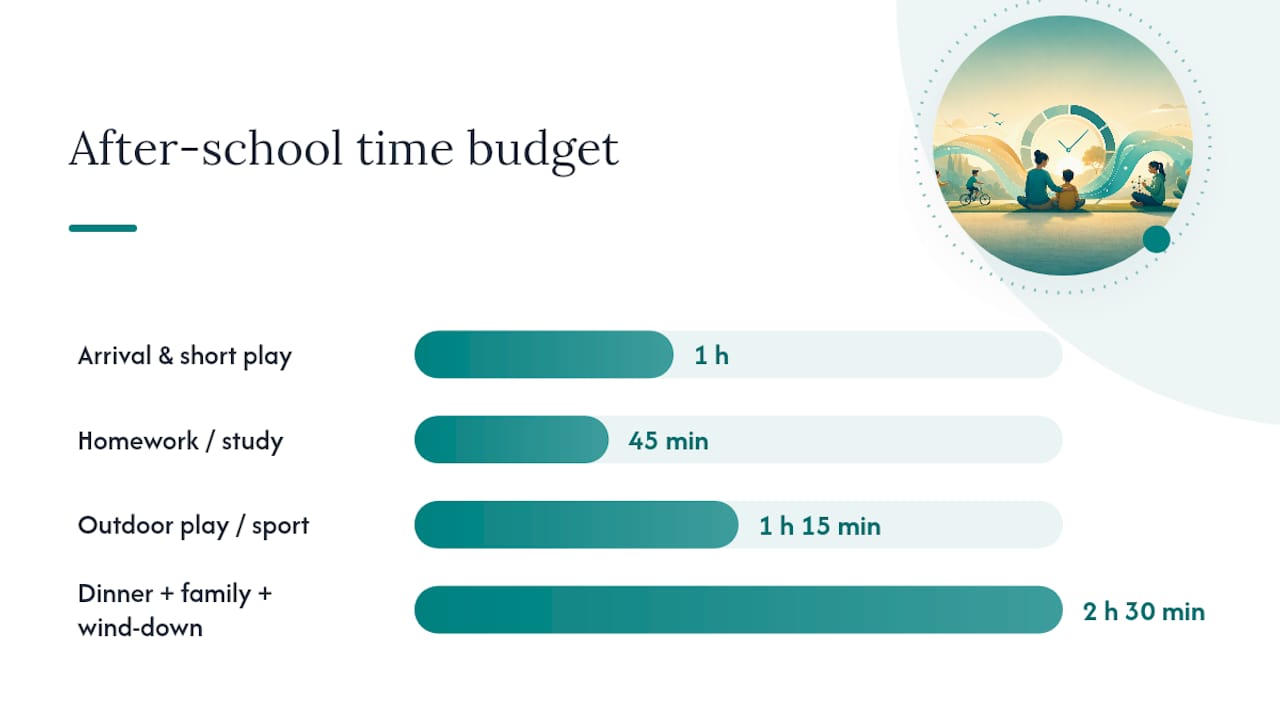
Sample school-day routine you can copy: After school snack at 3:30 PM, homework from 4:00–4:45 PM, outdoor play from 4:45–6:00 PM, dinner at 6:30 PM, wind-down and bed by 8:30–9:00 PM depending on age.
Key Takeaways
Balancing play and study comes down to three protected anchors, age-appropriate session lengths, and a weekly review that adjusts the plan based on what actually happened.
Point | Details |
Set three daily anchors | Fix wake time, one study block, and bedtime — everything else fits around them. |
Match session length to age | Preschoolers need play-based learning; upper primary children can handle 45–60 minute study blocks with breaks. |
Protect play as non-negotiable | Play supports memory, emotional regulation, and focus — treat it as a scheduled appointment, not a leftover. |
Run a 7-day trial | Test the schedule this week, track actual times, and adjust next week based on observed data, not estimates. |
Astor applies this daily | Astor’s small classes and IPC curriculum integrate short learning cycles and outdoor play into every school day. |
Table of Contents
How to balance play and study: why both matter for your child
No magic ratio between study and play exists, and Singapore educators are clear on this point. Play supports brain development, emotional regulation, and memory consolidation. Treating it as a reward to be earned after homework shortchanges your child’s cognitive growth.
Two learning-science principles are worth keeping in mind. First, spaced practice and retrieval — reviewing material across several short sessions rather than one long sitting — produces stronger long-term retention than marathon study. Second, sleep is the single highest-priority recovery habit for learning. A child who stays up late to finish homework and loses an hour of sleep loses far more in memory consolidation than she gains in extra study time.
Singapore’s academic environment is genuinely demanding. Primary school children face regular assessments, and enrichment classes fill many afternoons. That pressure makes a structured, balanced routine more important, not less. A child running on too little play and too little sleep will hit a wall well before exam season. Protecting play is not soft parenting — it is good strategy.
What time budgets look like by age
Age shapes everything: how long a child can focus, what “study” should look like, and how much unstructured time they need. The ranges below are starting points, not prescriptions.
Preschool (ages 1.5–4)
Formal study: none. Learning happens through play.
Play: 3–4 hours of active, exploratory, and social play daily.
Sample day: morning free play, a short guided activity (puzzles, drawing, storytime), afternoon outdoor play, quiet rest.
The role of routine in early childhood matters most here — predictable anchors reduce anxiety and support language development.
Early primary (ages 5–7)
Focused learning: 20–30 minutes per session, one or two sessions per school day.
Play: at least 90 minutes of active or creative play daily.
Sample day: 15-minute reading after school, 30-minute outdoor play, dinner, 15-minute phonics or math activity, bed by 8:00 PM.
Mid primary (ages 8–10)
Homework and review: 30–45 minutes per session, with a short break between subjects.
Play and downtime: 60–90 minutes daily, including physical activity.
Sample day: snack and decompression at 3:30 PM, homework 4:00–4:45 PM, outdoor or social play 4:45–6:00 PM, dinner, light reading, bed by 9:00 PM.
Upper primary (ages 10–12)
Independent study: 45–60 minutes, using retrieval and spaced practice techniques.
Play and leisure: 60 minutes minimum, including physical activity and social time.
Sample day: school ends, 30-minute decompression, study block 4:30–5:30 PM, sport or play 5:30–6:30 PM, dinner, 20-minute review, bed by 9:30 PM.
Sample schedules you can drop into your calendar
These three templates are designed to be copied and adjusted. Swap the times to match your child’s school hours and commute.
Typical school day
Time | Activity |
3:00–3:30 PM | Arrive home, snack, decompression |
3:30–4:00 PM | Free play or outdoor time |
4:00–4:45 PM | Homework / study block (timer on) |
4:45–6:00 PM | Outdoor play, sport, or creative activity |
6:00–6:30 PM | Dinner |
6:30–7:30 PM | Family time, reading, or light enrichment |
7:30–8:30 PM | Wind-down, bath, bed (adjust 30 min for older children) |
Weekend day
Time | Activity |
8:00–9:00 AM | Breakfast, free play |
9:00–9:45 AM | Study or enrichment class |
9:45–12:00 PM | Outdoor play, park, or social activity |
12:00–1:00 PM | Lunch and rest |
1:00–2:00 PM | Creative or quiet play |
2:00–3:00 PM | Optional second study block (upper primary only) |
3:00–6:00 PM | Family activity, sport, or free time |
Exam-week adjustment
Keep the same daily anchors. Add one extra 30-minute review block in the morning before school. Protect the after-dinner wind-down and do not cut sleep. A well-rested child outperforms an exhausted one every time.
A practical weekly time budget turned into visible time blocks helps families protect sleep and downtime while allocating realistic study hours. Write the schedule on paper or a whiteboard where your child can see it — visibility reduces negotiation.
Editable checklist for any schedule:
Morning anchor set (wake time fixed)
One study block time-boxed with a timer
One outdoor or active play block protected
Screen-free period before bed (at least 30 minutes)
Emergency rule: if homework runs over, stop at the agreed time and note what is left for tomorrow
Study techniques that actually finish on time
Short, focused sessions with active-learning techniques consistently outperform long, passive ones. University learning centers recommend time-blocking, short study blocks, and varied activities over marathon sessions.
Four parent-coachable techniques
Pomodoro method. Set a timer for 25 minutes of focused work, then a 5-minute break. After four rounds, take a longer 20-minute break. This works well for ages 8 and up; for younger children, shorten the block to 15 minutes.
Retrieval practice. Instead of re-reading notes, ask your child to close the book and recall what they just learned. A simple “Tell me three things you remember from today’s lesson” at dinner counts.
Spaced practice. Review yesterday’s material for five minutes before starting today’s new topic. This takes almost no extra time and dramatically improves retention.
Interleaving. Mix subjects within a study session rather than spending the whole block on one topic. Alternate math problems with vocabulary review, for example.
Before the study block starts: Set one clear goal (“finish the first five math problems”), do a one-minute pre-test (ask your child what they already know), and remove phones from the room.
Three coaching phrases that work:
“What’s the one thing you need to finish in the next 25 minutes?”
“You stayed focused the whole block — that’s the habit we’re building.”
“The timer went off. Good stop. What did you get done?”
Making study feel purposeful and time-limited reduces resistance. If language learning is part of your child’s schedule, study techniques that make language learning engaging can turn a dreaded subject into a genuinely enjoyable block.
Pro Tip: Write the study goal on a sticky note before the timer starts. Children who see a written goal complete their block more consistently than those who start without one.
Which types of play actually support learning?
Not all play is equal in its restorative and developmental value, but all genuine play matters. Physical play — running, climbing, sport — reduces cortisol, improves attention, and supports sleep quality. Social play builds communication and emotional regulation. Creative play (drawing, building, imaginative games) develops flexible thinking. Unstructured free play, where children choose their own activity without adult direction, is especially valuable and often the first thing squeezed out of busy schedules.
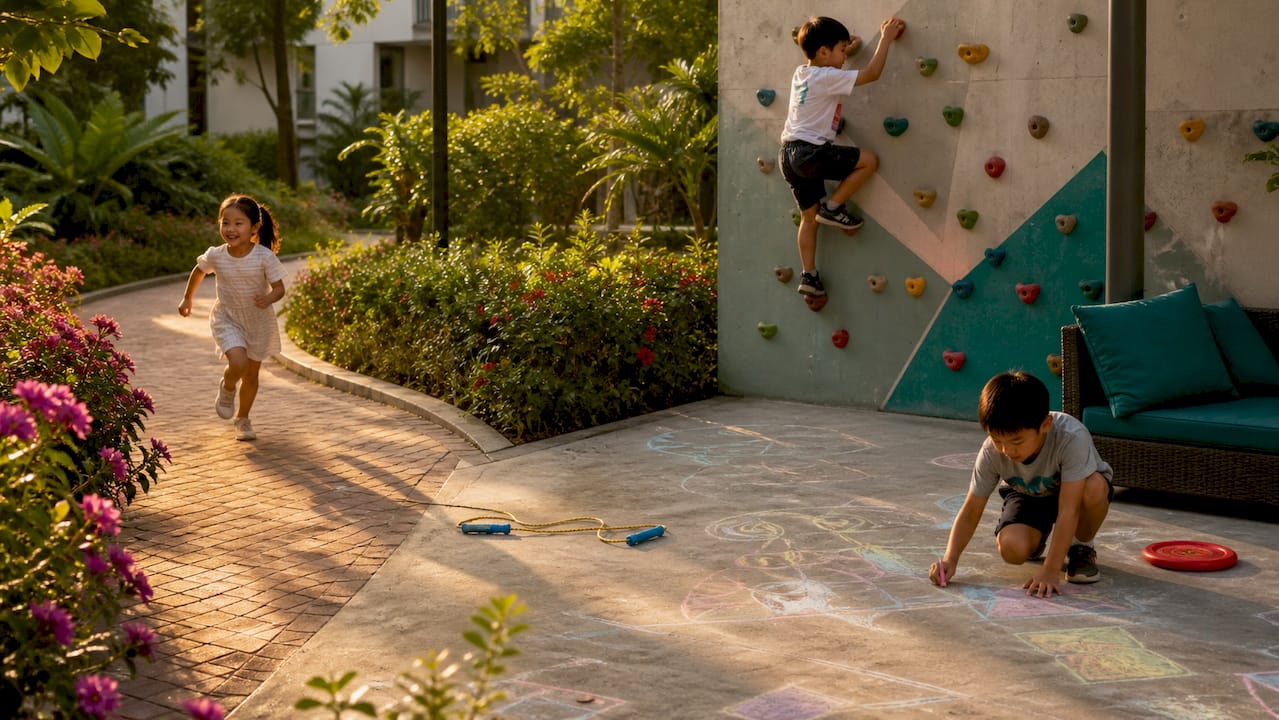
In Singapore, practical options are close at hand. Neighbourhood parks and playgrounds offer physical and social play without cost or commute. Home-based options — board games, LEGO, art projects, DIY creative games — work well on rainy afternoons. Family board games in the evening count as social play and are genuinely restorative.
Schedule higher-energy physical play in the slot immediately after the study block. A child who runs around for 45 minutes after homework will sit down to dinner calmer and sleep better than one who moves straight from a screen to bed. Healthy sleep routines established early in childhood pay dividends well into the primary years.
How to make transitions between study and play smooth
Resistance at transition points — the moment study is supposed to start, or the moment play is supposed to end — is where most family routines break down. A short, predictable ritual removes the negotiation.
A five-step transition ritual (study to play):
Tidy the desk and close books.
Two-minute stretch or walk around the flat.
Set the play timer aloud together.
Quick one-sentence recap: “I finished the math worksheet.”
Start play.
Timers work best when the child sets them, not the parent. Ownership reduces resistance. For rewards, keep them simple and immediate: after the study block, the play block happens automatically. Play is not a prize for perfect work — it is the next scheduled activity. Framing it that way removes the conditional pressure that makes children anxious about their performance.
A short parent–child agreement (adapt and sign together):
Study block: [time] to [time], at [location], with phone in another room.
Play block: [time] to [time], chosen by the child.
If homework is unfinished at the end of the block, we note it and discuss tomorrow — we do not extend the block into play time without agreement.
We review the schedule together every Sunday and adjust if something is not working.
Classroom routine examples from Astor’s teachers show how predictable transitions reduce anxiety for young learners — the same principle applies at home.
Screen and device rules that families can actually keep
Devices are the single most common source of schedule erosion. Three rules tend to hold up in practice:
Device-free study zones. The study desk has no phone, no tablet, and no open social apps. For children who need a device for homework, use a laptop with social apps closed and notifications off.
Specific social windows. Rather than banning screens entirely, assign a 20–30 minute social or entertainment screen window after the play block. A defined window is easier to enforce than a vague “not too much.”
Pre-bed screen cutoff. No screens 30–45 minutes before bedtime. This is non-negotiable for sleep quality, which directly affects next-day focus. For practical tips on making online study time effective without letting devices take over, engaging online learning strategies offer useful guidance.
For older children (ages 10–12), negotiate the rules together rather than imposing them. A child who helped write the rule is more likely to follow it. Use built-in device tools — Screen Time on iOS, Digital Wellbeing on Android, or router-based scheduling — to make the rules automatic rather than reliant on willpower.
Common problems and how to fix them quickly
Procrastination. Usually a sign the task feels too large or the goal is unclear. Fix: shrink the first step to something that takes under two minutes (“open the book to page 12”). Once started, most children continue.
Over-scheduling. Too many enrichment classes leave no buffer for homework, play, or rest. Fix: audit the weekly schedule and protect at least one afternoon with no structured activity.
Resistance to study. Often linked to fatigue or anxiety, not laziness. Fix: move the study block earlier in the afternoon when energy is higher, and reduce the session length by 10 minutes for one week.
Signs of imbalance to watch for:
Sleep changes (taking much longer to fall asleep, or sleeping through alarms)
Mood swings in the hour before or after study time
Falling grades despite longer study hours
Chronic avoidance of homework or school-related conversation
Parents and students tend to underestimate how long tasks actually take — a pattern known as the planning fallacy. Academic counselors recommend building schedules from observed past behavior and treating the plan as a living document to adjust weekly, rather than trying to force a perfect plan from day one.
If mood changes persist for more than two weeks alongside declining school performance, speak with your child’s teacher or a school counselor. Early support is far more effective than waiting for a crisis.
Run a 7-day trial this week
A one-week experiment gives you real data to work with. Harvard’s time-management guidance emphasizes anchoring schedules to fixed commitments first, then fitting discretionary time around them — the same logic applies here.
Monday: Set the three anchors (wake, study block, bedtime). Write them on the whiteboard.
Tuesday: Run the first timed study block. Note how long it actually took versus the plan.
Wednesday: Protect the play block even if homework feels unfinished. Note what happened.
Thursday: Try one retrieval-practice technique (close-the-book recall) during the study block.
Friday: Review the week’s actual times. Where did the schedule slip? Note the reason.
Saturday: Use the weekend template. Protect the morning play block.
Sunday: Run the weekly review (five questions below).
Weekly review template:
What worked well this week?
What took longer than expected?
Did sleep stay consistent?
Was there enough play time, or did it get squeezed?
One change to try next week.
Base next week’s schedule on this week’s actual times, not on what you hoped would happen. That single shift — using observed data instead of optimistic estimates — is what turns a good plan into a sustainable routine.
How Astor puts these principles into practice
Astor International School and Astor International Preschool are built around the same balance this guide describes. At the Astor International Preschool in Holland Village, children aged 1.5–4 learn through a mix of outdoor play on two playgrounds and structured classroom activities. Play is not a break from learning — it is the primary vehicle for it at this age.
At Astor International School in Tanglin, small class sizes mean teachers can observe each child’s focus and fatigue in real time, adjusting the pace of a lesson the way a parent adjusts a home schedule. The school’s IPC curriculum integrates inquiry-based learning with regular movement and creative projects, so children experience the same short-block, active-learning rhythm at school that this guide recommends at home.
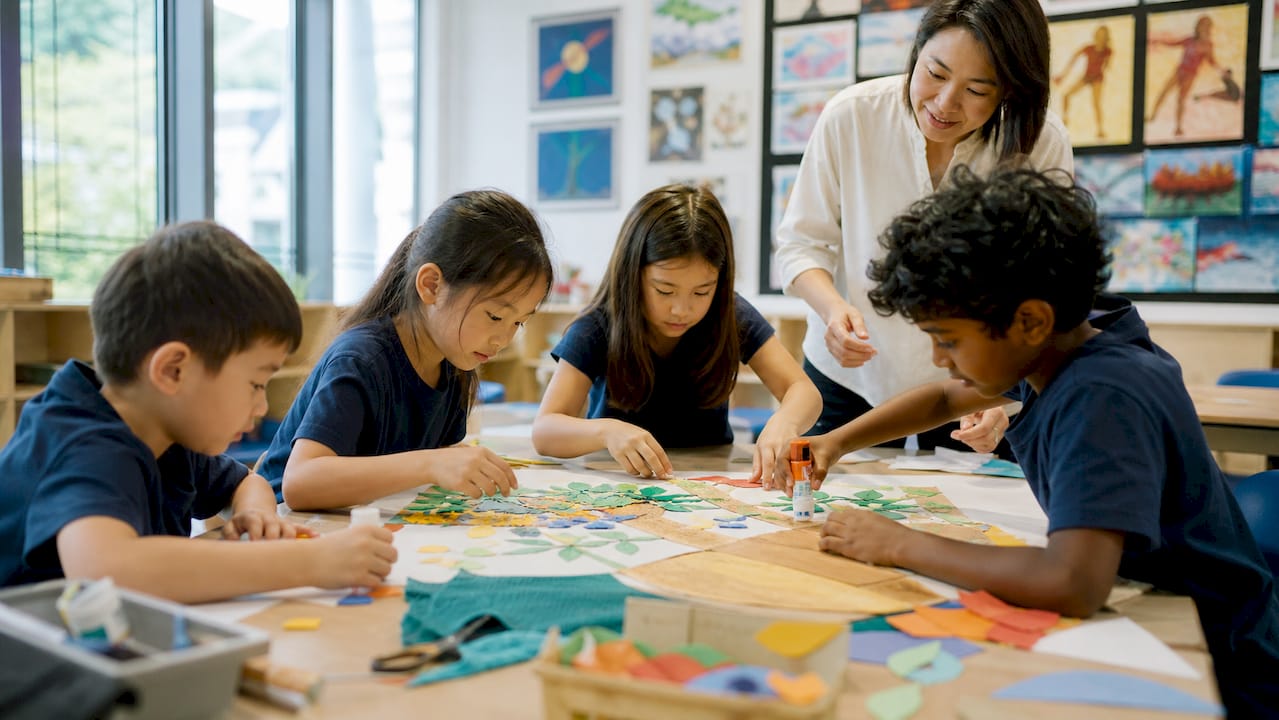
On an open day, look for: outdoor play anchors built into the school day, short focused learning cycles with visible transitions, and teacher-led reflection moments that mirror the retrieval practice described above. Astor also publishes practical guidance for parents on supporting organized study schedules at home while protecting time for play. Tuition and admissions details are available directly from the school.
A note from Elena
The shift that made the biggest difference in our household was not a new curriculum or a fancy planner. It was committing to stop the study block at the agreed time, even when the worksheet was not finished.
The first week felt uncomfortable. My instinct was to push through and “just finish it.” But when the play block happened reliably, every day, my child started the study block with less resistance — because the end was predictable and the play was guaranteed. Homework completion actually improved, and the evening arguments dropped off noticeably. The 25-minute Pomodoro block, which seemed too short at first, turned out to be exactly right for an 8-year-old’s genuine attention span.
The lesson: a shorter, protected study block with a guaranteed play block afterward outperforms a long, anxious session with no clear end. Trust the structure, run it for seven days, and adjust from there.
Publishers: this section is a placeholder for Elena’s full credentials and for parent testimonials or case studies to be added before publication.
Astor: a school that lives this balance every day
Astor International School has been recognized as one of Singapore’s best small schools and most affordable international schools — and small is the point. With genuinely small class sizes, every child’s energy level, focus, and need for movement is visible to the teacher. That means the play-and-study balance described in this guide is not just a home strategy: it is embedded in how the school day is designed.

If you are looking for a school that applies inquiry-based learning, protects time for outdoor play, and keeps class sizes small enough for real personal attention, Astor is worth a visit. The IPC curriculum page shows how structured learning and play are woven together across the primary years. To ask about admissions, fees, or to book an open day, contact the school directly through Astor — the team is straightforward about what enrolment involves and happy to answer questions before you commit to a visit.
Sources
No magic ratio between study and play — The Straits Times. A Singapore-specific piece that challenges fixed study:play ratios and makes the case for protecting play as a developmental priority. Start here if you need to explain the approach to a skeptical co-parent.
Effective ways to support your child’s learning in Singapore — Astor. Practical, Singapore-context guidance from Astor on structuring at-home learning routines and supporting your child’s school experience.
Time management — McGill Student Learning Resources. Covers the planning fallacy and how to build a schedule from observed behavior rather than wishful thinking. Useful for parents designing the weekly review.
Time management — University of Melbourne Academic Skills. Detailed guidance on short study blocks, active-learning techniques, and break structures. Practical for parents coaching upper primary children.
12 strategies for balancing academics and life. A broader guide covering time budgets, visible scheduling, and protecting sleep and downtime alongside academic demands.
Recommended
Comments