


What Does "IB Principled" Mean for Students?

Being IB principled means acting with integrity, honesty, and fairness, and taking genuine responsibility for the consequences of your choices, whether anyone is watching or not. A child who finds a classmate’s lost lunch money and returns it without being asked is demonstrating this attribute in its simplest, most recognizable form.
“Principled learners act with integrity and honesty, with a strong sense of fairness and justice, and with respect for the dignity and rights of people everywhere. They take responsibility for their own actions and their consequences.”IB Learner Profile
Three things make this definition worth pausing on:
It is about internal commitment, not surface compliance. A principled student does the right thing because they believe it matters, not because a rule demands it.
It extends beyond the classroom. Fairness, dignity, and accountability apply at home, online, and in the community.
It is developmental. A five-year-old and a seventeen-year-old will express this attribute very differently, and both expressions count.
Key Takeaways
Being principled is the IB learner profile attribute most directly tied to a student’s internal ethical compass, and developing it requires consistent modeling, reflection, and restorative practice across school and home.
Point | Details |
Official IB definition | Principled learners act with integrity, honesty, fairness, and responsibility for their actions and consequences. |
One of ten attributes | “Principled” sits within the IB Learner Profile’s holistic framework of ten interrelated attributes, not as a standalone value. |
Age-appropriate expression | Observable behaviors range from returning lost items (early years) to disclosing AI use in research (Diploma Programme). |
ATL connection | ATL skill areas like self-management and research make principled behavior visible and assessable across subjects. |
Astor International School | Small class sizes and an IPC-aligned curriculum allow teachers to nurture and recognize each child’s principled development individually. |
Table of Contents
How does “principled” fit with the other IB learner attributes?
What does principled behavior actually look like at different ages?
How does “principled” connect to IB teaching and assessment?
How one small international school embeds principled behavior daily
Principled learning in a small school that knows every child
What is the official IB definition of “principled”?
The IB Learner Profile document gives the following formal wording:
Each phrase carries a specific meaning for day-to-day behavior:
Integrity and honesty: Telling the truth even when it is uncomfortable; submitting original work; not taking credit for someone else’s ideas.
Fairness and justice: Advocating for equal treatment; noticing when a rule or situation disadvantages someone and speaking up about it.
Respect for dignity and rights: Treating every person as worthy of consideration, regardless of background, ability, or opinion.
Responsibility for actions and consequences: Owning mistakes, making amends, and thinking ahead about how a choice might affect others.
The IB notes that the learner profile represents capacities and responsibilities that go well beyond academic achievement, and that every IB program is committed to developing these qualities in students.
How does “principled” fit with the other IB learner attributes?
The IB Learner Profile lists ten attributes that together describe an internationally minded person. Being principled is one part of a larger, interconnected picture:
Inquirers — develop curiosity and a love of learning
Knowledgeable — explore concepts across a range of disciplines
Thinkers — apply critical and creative thinking to complex problems
Communicators — express ideas confidently in more than one language
Principled — act with integrity, fairness, and responsibility
Open-minded — appreciate their own culture and the perspectives of others
Caring — show empathy and commit to service
Risk-takers — approach uncertainty with courage and creativity
Balanced — understand the importance of intellectual, physical, and emotional well-being
Reflective — thoughtfully consider their own learning and experience
The profile is a holistic framework, not a checklist. A student who is caring but not principled, or knowledgeable but not reflective, has not fully developed the profile the IB envisions. The attributes reinforce each other: a principled student tends to be more reflective about their choices and more genuinely caring in their relationships.
What does principled behavior actually look like at different ages?
Recognizing principled behavior in real life is easier when you know what to look for at each stage of development.
Age-grouped examples
Early years (ages 3–6): A child tells a teacher they accidentally broke a toy rather than hiding it. They share materials without being told. They notice when a friend is left out and invite them to join.
Primary (ages 7–11): A student cites where they found information for a project instead of presenting it as their own idea. They speak up when they see a classmate being treated unfairly. They complete a group task even when the teacher is not watching.
Middle years (ages 11–14): A student declines to copy a friend’s homework and explains why. They raise a concern about a school rule they believe is unfair through the student council rather than simply ignoring it. They acknowledge their role in a group conflict instead of deflecting blame.
Diploma Programme (ages 15–18): A student discloses their use of AI tools in research, checks sources for accuracy, and refuses to submit fabricated citations. They advocate for a peer who is being treated unjustly, even at social cost.
Discussion scenarios for teachers and parents
These short prompts work well in class circles, family dinners, or advisory sessions:
“You find out a friend copied their essay from the internet. What do you do, and why?”
“Your group finishes a project, but one member did most of the work. How should the credit be shared?”
“You accidentally break something at school that belongs to someone else. No one saw it happen. What do you do next?”
Classroom observation reference
Behavior to observe | What it signals |
Cites sources in written work without prompting | Honesty and respect for others’ ideas |
Acknowledges mistakes to the teacher or group | Responsibility for actions |
Speaks up when a peer is treated unfairly | Fairness and justice |
Completes tasks to the agreed standard when unsupervised | Integrity |
Considers how a decision affects others before acting | Responsibility for consequences |
How can teachers and parents develop principled behavior?
Principled behavior grows through practice, modeling, and reflection. Here are three ready-to-use approaches.
1. Classroom activity: the integrity dilemma circle
Present a short, age-appropriate ethical scenario (see the discussion prompts above).
Ask students to write their initial response privately before sharing.
Invite three or four students to share their reasoning, not just their answer.
As a class, identify which IB learner profile attributes are at play.
Close with a one-sentence reflection: “One thing I would do differently next time is…”
This routine takes about fifteen minutes and works across subjects. A science class can use a scenario about data fabrication; a humanities class can use one about plagiarism or historical bias.
2. Home activity: the responsibility review
Once a week, ask your child one simple question at dinner: “Tell me about a moment this week when you did the right thing even though it was harder.” Celebrate the story, not just the outcome. Over time, this builds the habit of noticing and naming principled choices, which is the first step toward making them consistently.

3. Cross-age project: the community fairness audit
Older students (ages 10–12) partner with younger ones (ages 6–8) to identify one thing in their school or neighborhood that seems unfair and propose a realistic solution. The process of listening, researching, and advocating develops fairness and justice in a way that no worksheet can replicate. Linking this to inquiry-based learning gives it academic structure and makes the principled thinking visible.
Teacher and parent language that helps:
Instead of “That was wrong,” try “What do you think the impact of that choice was on the other person?”
Instead of “You should have known better,” try “What would you do differently, and what would make it right?”
Praise the reasoning, not just the behavior: “I noticed you thought about how that would affect your friend before you decided. That’s integrity.”
Pro Tip: Build a brief “principled moment” ritual into your weekly class meeting or family routine. Ask students or children to name one moment when they acted with fairness or honesty that week. Making principled choices visible and celebrated is far more powerful than any poster on the wall.
How does “principled” connect to IB teaching and assessment?
The IB’s Approaches to Teaching and Learning (ATL) are deliberate strategies and skills intrinsically linked to the learner profile attributes. They give teachers a structured way to make principled behavior visible in everyday learning.
The six pedagogical principles (inquiry-based, conceptually focused, contextualized, collaborative, differentiated, and informed by assessment) each create natural opportunities for principled behavior to emerge and be observed. Collaborative tasks, for instance, require fairness and shared responsibility. Inquiry-based learning demands honest reporting of findings.
The five ATL skill areas map directly to principled behaviors:
ATL skill area | Principled behavior it supports | Assessment evidence |
Self-management | Taking responsibility for deadlines and commitments | Reflective journals, self-assessment rubrics |
Research | Citing sources accurately; avoiding fabrication | Annotated bibliographies, portfolios |
Communication | Expressing disagreement respectfully | Peer feedback records, discussion observations |
Social | Advocating for fairness in group work | Teacher observation notes, group process logs |
Thinking | Evaluating ethical dimensions of a problem | Extended essays, project reflections |
The DP ATL guidance confirms that ATL supports the visibility of learner profile attributes across subjects, which means principled behavior should appear in evidence across multiple disciplines, not just in a personal and social education class.
Effective evidence includes reflective journals, sampled portfolios, and moderated peer feedback. A continuous behavior spreadsheet is neither practical nor meaningful. Sampled moderation keeps implementation manageable while preserving genuine insight into each student’s growth.
The IB also enforces academic honesty through citation requirements and original work standards in the Diploma Programme, where failures can carry serious consequences. This makes the principled attribute one of the few learner profile qualities with direct, formal assessment implications.
Common misunderstandings about being principled
A few persistent misconceptions can undermine how this attribute is taught and recognized.
Principled does not mean polite. A student can be courteous and still act dishonestly. Politeness is a social skill; being principled is an ethical commitment. The two can coexist, but one does not guarantee the other.
It is not the same as rule-following. A student who obeys every rule because they fear punishment is compliant, not principled. The IB’s emphasis is on internal ethical reasoning: understanding why a rule exists and choosing to uphold its spirit, even in situations the rule does not explicitly cover.
It is not a behaviorist checklist. Ticking off “cited sources: yes” on a rubric misses the point. The goal is for students to understand why intellectual honesty matters, not to perform it for a grade.
The learner profile is not a poster. IB guidance is clear that the profile should function as a shared language across programs and subjects, woven into daily planning and discussion, not displayed on a wall and referenced once a term.
When a student falls short, restorative conversations tend to be more effective than simple punishment. Asking “What happened, who was affected, and how can you make it right?” builds the internal ethical reasoning that principled development actually requires.
How one small international school embeds principled behavior daily
At Astor International School in Singapore, principled behavior is not a separate lesson. It is woven into the fabric of the International Primary Curriculum (IPC) through structured activities and consistent classroom language.
Sample classroom activity: the “fair share” project (ages 7–10)
Students receive a group task with deliberately unequal resources (some groups get more materials than others).
They complete the task, then reflect: “Was the distribution fair? How did it feel? What would you change?”
Each group presents their reflection to the class, naming the principled choices they made or wished they had made.
The teacher closes with a connection to a real-world fairness issue appropriate to the age group.
Intended learning outcomes: Students recognize unfairness, articulate why it matters, and practice advocating for equitable solutions, all within a single forty-minute lesson.
Sample parent communication:
Small class sizes at Astor mean teachers can observe and respond to each child’s principled development individually, making this kind of nuanced, relationship-based learning genuinely possible. You can explore how this approach shapes classroom culture across the school.

Why principled development deserves more than a poster
Most schools display the IB learner profile on a wall. Fewer treat it as a living commitment that shapes how teachers respond to mistakes, how students resolve conflicts, and how families talk about choices at home. That gap matters.
Principled development is about the internal “why” behind a decision. A student who understands why honesty matters will navigate university, workplaces, and relationships with a moral compass that no test score can replicate. The students who leave school knowing how to sit with an uncomfortable ethical choice, reason through it, and act with integrity are the ones who tend to make a genuine difference in their communities.
The most overlooked opportunity in IB schools is the moment after a breach of integrity. That moment, handled with a restorative conversation rather than a quick punishment, is where principled development actually happens. It is where a student learns that their choices have weight, that repair is possible, and that the community holds them to a standard because it believes in them.
Principled learning in a small school that knows every child
Astor International School has been recognized as one of Singapore’s best small and most affordable international schools, and that recognition reflects something real: small class sizes mean every child’s ethical development is visible, supported, and celebrated. When a teacher knows each student well, they can notice the moment a child chooses honesty over convenience and name it meaningfully.
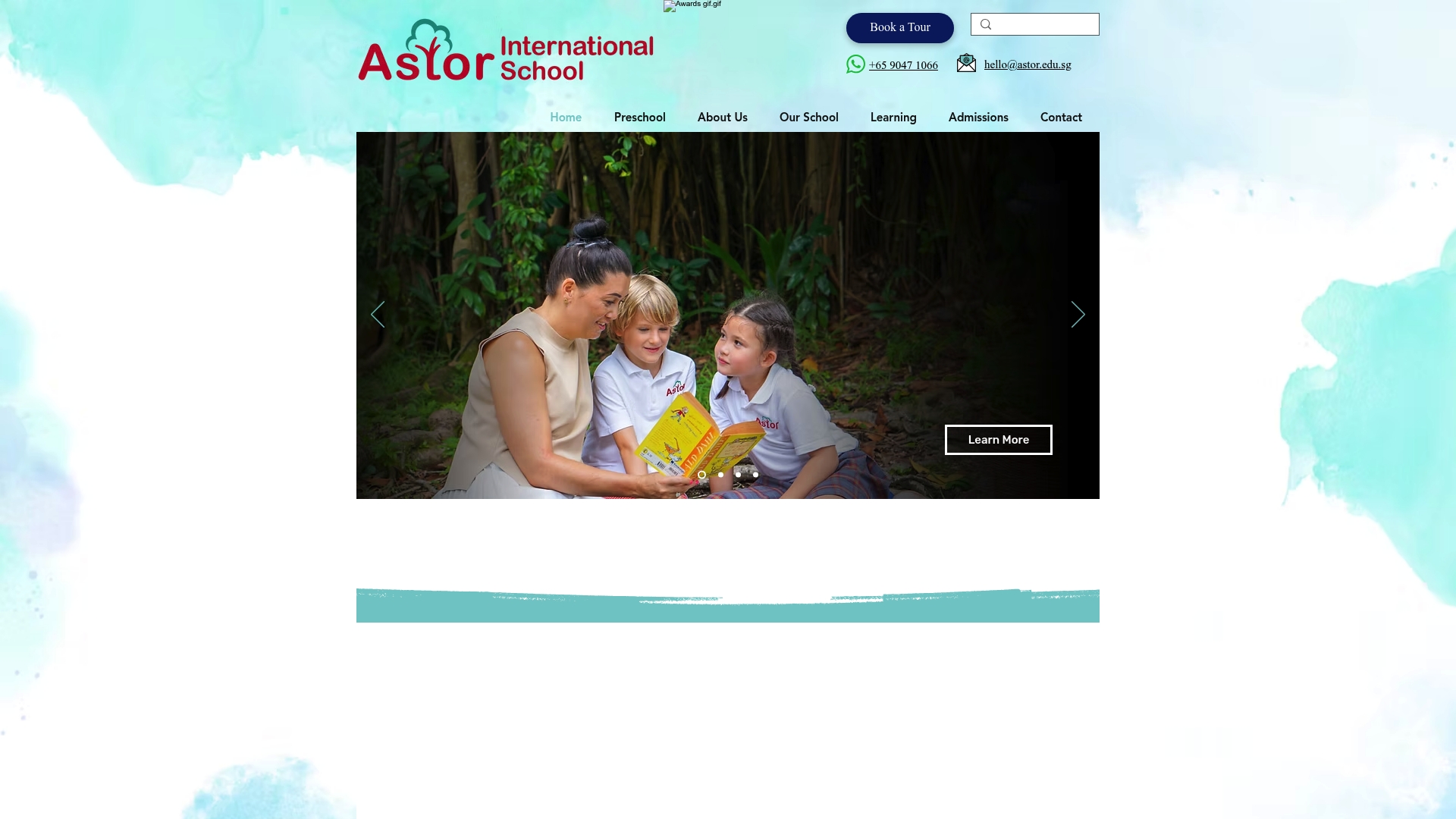
Astor’s IPC-aligned curriculum integrates the IB learner profile across every subject, so principled behavior is practiced in science, humanities, and the arts, not just in a weekly values lesson. If you are a parent looking for a school where your child’s character development receives the same care as their academic progress, we warmly invite you to explore our curriculum or schedule a visit to see the school in action.
Sources
These are the primary sources used throughout this article. Each one is freely accessible and worth bookmarking if you are a parent, educator, or student exploring the IB learner profile in depth.
IB Learner Profile (learner-profile-en.pdf)
Recommended
I found this resource helpful because it explains the topic without using complicated words. The information is organized in a simple way, so readers can quickly see what the page is about.