


Copy Paste 5E Template: Eight Inquiry Activities for Primary Teachers
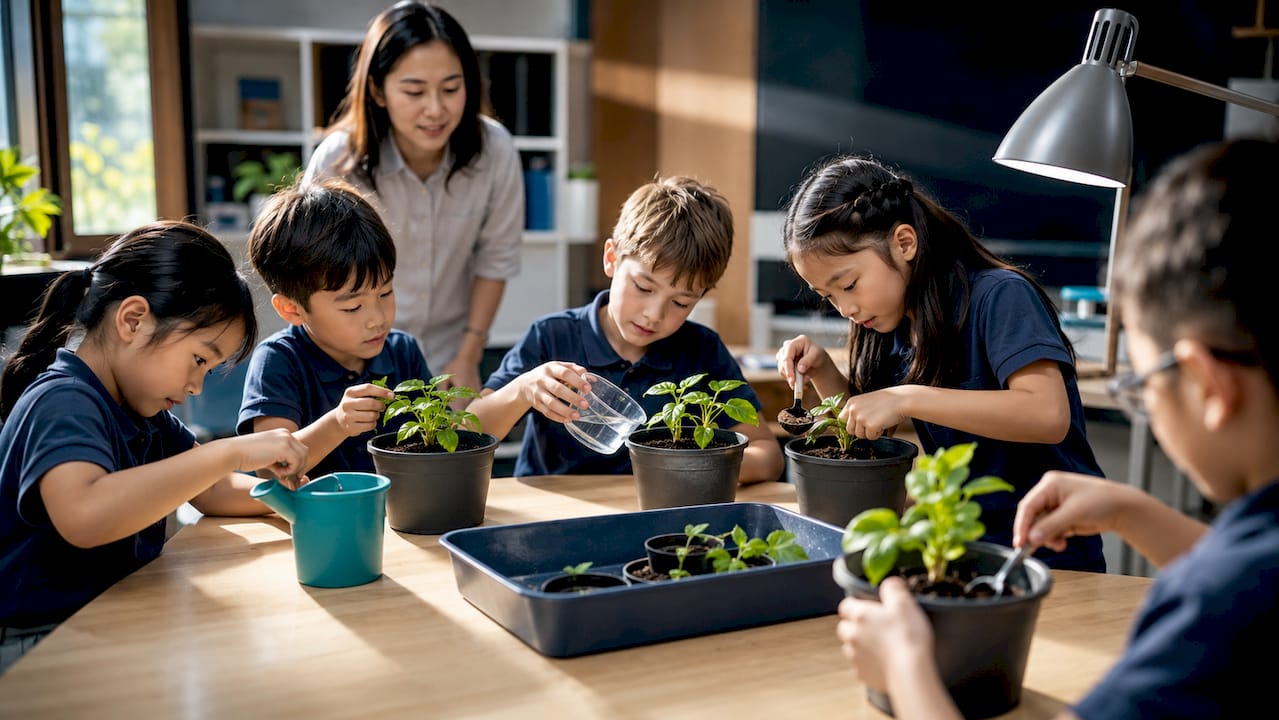
This article gives you eight ready-to-use inquiry based activities primary teachers can run this week, a copy-paste 5E lesson template, and clear guidance for adapting each task across ages 5 to 12. Every activity lists materials, timing, and one classroom shortcut, backed by research on engagement and retention, plus a real small-class example of how it plays out when children truly get to lead their own thinking.
TL;DR:
Inquiry activities for primary students work best when tailored to age, managing one variable at a time for younger children and multiple variables for older students.
Small classes significantly enhance inquiry learning by allowing every child’s questions to be addressed and explored in depth, rather than lost in large groups.
The 5E lesson plan framework—Engage, Explore, Explain, Elaborate, Evaluate—provides a reliable structure for inquiry lessons like shadow investigations.
Asking open-ended, specific questions and guiding students to generate, test, and refine their own inquiries greatly improves engagement and understanding.
Structured follow-up through simple recording, questioning, and formative assessments helps ensure inquiry leads to meaningful learning rather than busywork.
Table of Contents
What Are Some Inquiry Based Learning Activities for Primary Students?
Inquiry-based learning asks children to investigate a question themselves rather than receive a ready-made answer. Common formats include experiments, mystery object investigations, structured dialogue, concept mapping, and hands-on construction projects, and each one can be run with materials you likely already own. Below are eight activities we have found work reliably across a primary classroom, whether your students are five or twelve.
Mystery object investigation. Goal: build observation and inference skills. Materials: a sealed box or bag with an everyday object (a shell, a gear, a seed pod). Time: 20 minutes. Steps: have pairs describe what they notice using only touch and sound, then record guesses before revealing the object, then discuss which clues were most reliable. Age adaptation: younger children draw their guess; older children write a claim with supporting evidence.
My favorite mistake. Goal: normalize error as part of learning. Materials: none, just a worked example with an intentional error (a math problem, a plant-care instruction). Time: 15 minutes. Steps: present the flawed work, ask students to find what went wrong, then ask them to explain why the mistake is a reasonable one to make. Age adaptation: for younger students, use a simple counting error; for older students, embed a logical fallacy in a science claim.
Simple classroom experiment. Goal: test a testable question through direct observation. Materials: everyday items like ice cubes, salt, or paper airplanes. Time: 30 to 40 minutes. Steps: pose a question (“Does salt make ice melt faster?”), have groups predict and test, then compare results across groups. Pro tip: Prep five identical trays the night before so no class time is lost gathering materials.
Concept mapping. Goal: organize prior knowledge before or after a unit. Materials: large paper and markers. Time: 25 minutes. Steps: write a central topic, brainstorm connected ideas, then draw lines showing relationships. Age adaptation: younger students use pictures instead of words.
Jigsaw learning. Goal: build shared expertise through peer teaching. Materials: short reading or fact cards split into four topics. Time: 40 minutes. Steps: form expert groups on one sub-topic, then reshuffle into mixed groups where each student teaches their piece. This works well for social studies units on communities or cultures.
Question development exercise. Goal: teach children to ask better questions, not just answer them. Materials: a picture, artifact, or short video clip. Time: 15 minutes. Steps: show the stimulus, generate a list of questions it raises, then sort questions into “we can test this” versus “we need to research this.”
Construction-based inquiry. Goal: apply science concepts through building. Materials: recycled cardboard, tape, string. Time: one to two class periods. Steps: pose a design challenge (“build a bridge that holds five blocks”), test and record failures, then redesign based on evidence. This pairs well with a hands-on learning approach that favors tactile problem-solving over worksheets.
Classroom dialogue circle. Goal: build reasoning through talk rather than debate. Materials: none. Time: 20 minutes. Steps: pose an open question, use a talking object to slow the pace, then ask students to build on (not argue against) a peer’s idea.
For each activity, save prep time by keeping a labeled bin of reusable materials, tape, string, cardboard scraps, so you are never scrambling the morning of a lesson.
How Do You Adapt Inquiry Activities for Ages 5, 8, and 12?
The same activity can stretch across a primary classroom if you adjust the language, the recording format, and how many variables a group manages at once.
Ages 5 to 7: Use simple language stems like “What do you see?” and “What do you think will happen?” Children draw observations rather than write them, and success looks like completing one clear observation with a teacher-guided conclusion. A 2024 MDPI classroom study found guided inquiry worked well with 27 first-level primary pupils when teachers scaffolded each step of a plant-growth investigation.
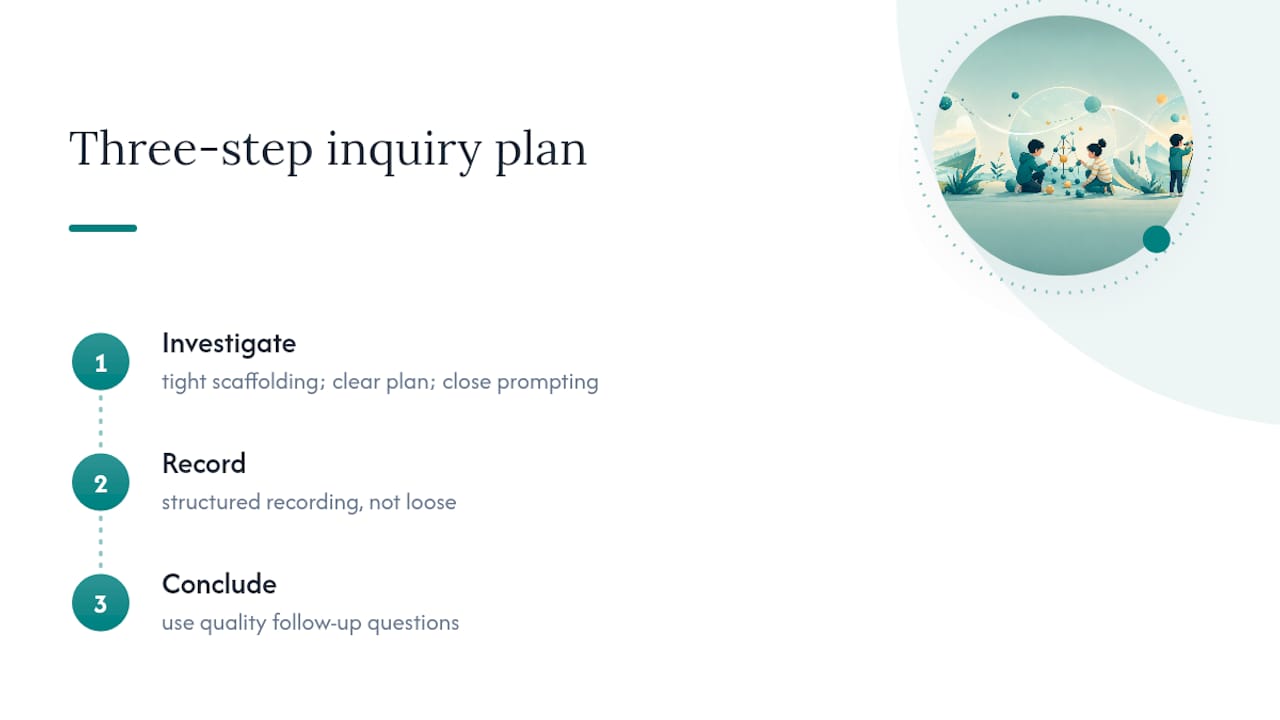
Ages 8 to 10: Introduce a simple written plan (investigate, record, conclude) and let groups manage one variable at a time. Success criteria include a written prediction, a labeled diagram, and one sentence of reasoning.
Ages 11 to 12: Push toward multi-variable investigations and evidence-based argument. Language stems shift to “What evidence supports that?” and “How could we test this differently?” Success criteria include a claim backed by data and an acknowledgment of a limitation in the method.
Pro tip: Keep a single lesson template for the whole year and simply swap the language stems by age band. It saves replanning time and keeps your inquiry structure consistent.
A Copy-Paste 5E Lesson Plan for “What Makes Shadows Change?”
The 5E model, Engage, Explore, Explain, Elaborate, Evaluate, gives you a reliable skeleton for any inquiry lesson. Here is a full template mapped to a shadow investigation for ages 7 to 9, adjustable for other age bands.
Engage (5 minutes): Show two photos of the same tree’s shadow at different times of day. Ask, “What do you notice? What questions does this raise?”
Explore (20 minutes): Groups go outside with chalk and trace their own shadow at three different times. Prompt: “What is changing, and what stays the same?”
Explain (10 minutes): Groups share tracings and propose an explanation for the change. Formative check: can each group state one pattern they observed?
Elaborate (15 minutes): Ask, “Would this pattern hold in a different season or location?” Groups sketch a prediction.
Evaluate (10 minutes): Exit ticket asking students to explain, in their own words, why shadows change length during the day.
Materials checklist: chalk, a sunny outdoor space, clipboards, and a simple observation sheet. Success criteria: each student produces one dated shadow tracing and one written or drawn explanation.
How Do You Ask Better Questions During Inquiry Lessons?
Productive questioning keeps students investigating instead of guessing. Useful stems include “What do you notice?”, “Why do you think that happened?”, “How could we test that idea?”, and “What evidence supports your claim?” When a student rushes to an answer, redirect with “What did you observe first?” rather than confirming or correcting.
Set a norm early: dialogue builds on ideas, debate tries to win. Use a shared object or hand signal to slow competitive talk.
Rotate group roles (recorder, materials manager, reporter) so the same three students do not dominate every task.
Set a visible timer for each phase so materials management does not eat into thinking time.
Pro tip: When a group gets stuck, resist giving the answer. Ask “What have you tried so far?” instead. It keeps ownership with the students.
How Do You Assess Learning During Inquiry Without a Test?
Three fast formative checks work well: a one-line exit ticket, a classroom “evidence wall” where groups pin their findings, and a quick observation checklist you carry while circulating. A simple rubric can score four areas: questioning quality, investigation process, use of evidence, and communication clarity, each on a three-point scale.
Notebook excerpt showing an observation entry and a separate inference entry.
A group poster summarizing their investigation and conclusion.
A short oral report, even 60 seconds, explaining what the evidence showed.
How Does a Small-Class Setting Support Inquiry-Based Learning?
Astor’s classrooms stay small by design, which means every child’s question actually gets followed up rather than lost in a large group rotation. In one science unit, a class adapted a plant-growth investigation into small teams of three, letting each child manage a single variable, such as watering, light, or soil type, and compare notes as a whole group. You can read more about this approach in Curiosity with Purpose: How Inquiry-Based Learning Works or explore how inquiry pedagogy empowers your child’s learning.
Where Can You Find More Research and Lesson Templates?
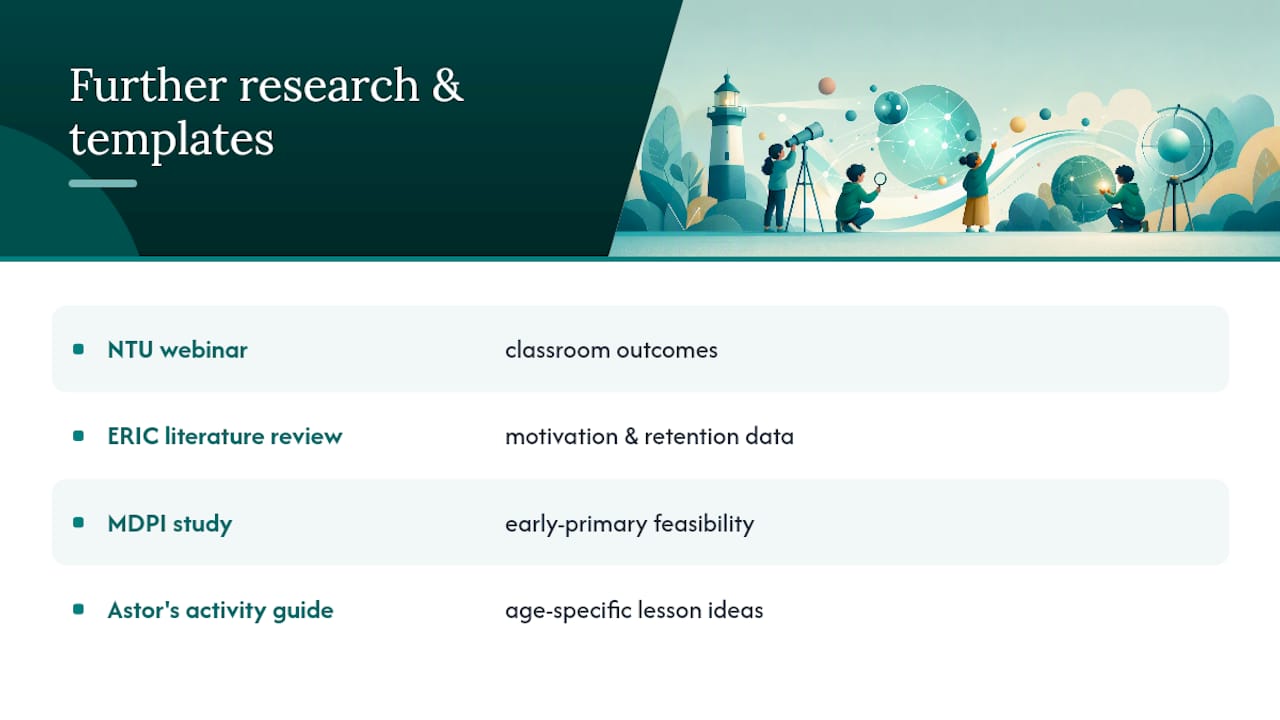
The NTU webinar on inquiry-based learning covers classroom outcomes; the ERIC literature review covers motivation and retention data; the MDPI study covers early-primary feasibility; and Astor’s activity guide offers age-specific lesson ideas.
What Actually Makes Inquiry Work in a Real Classroom?
Most advice on inquiry based learning activities treats it as an all-or-nothing philosophy: either you hand over the whole lesson to student curiosity, or you are “not really doing inquiry.” That framing has done real damage. It scares off teachers who have thirty minutes, one set of shared markers, and a curriculum map to cover. The research tells a more forgiving story. The MDPI classroom study found first-level primary pupils built genuine scientific understanding when teachers kept the scaffolding tight, a clear plan, close prompting, structured recording, not loose.
What gets overrated is the tech layer. A polling app or digital tracker can help, but a shared notebook and a chalk-drawn shadow tracing teach the same reasoning skills at zero cost and zero login friction. What gets underrated is question quality. Teachers spend hours designing activities and minutes designing the follow-up questions, when the follow-up questions are usually what separates a lesson that produces thinking from one that produces busywork.
If you take one thing from this article, prioritize the three-step plan, investigate, record, conclude, over any specific activity. The structure is what makes small, imperfect classroom moments add up to real learning.
— Elena
Bring This Kind of Learning Into Your Child’s Classroom
If you have read this far, you already sense why small classes make inquiry work better than any worksheet or app ever could. Small class sizes help ensure every child’s question gets a real answer, not a queued one, whether they are five years old and tracing shadows or twelve and testing a bridge design under load.
At Astor International School, inquiry is not an occasional project week, it runs through the IPC curriculum every term, across science, language arts, and social studies alike. Families choosing between a large international school and a boutique one often find the deciding factor is simple: does the school have room to actually follow a child’s question? If you want to see how that plays out for your own child, book a visit to Astor and ask to see an inquiry lesson in progress.
Recommended
Comments