


Outdoor Learning Benefits: What the Research Really Shows
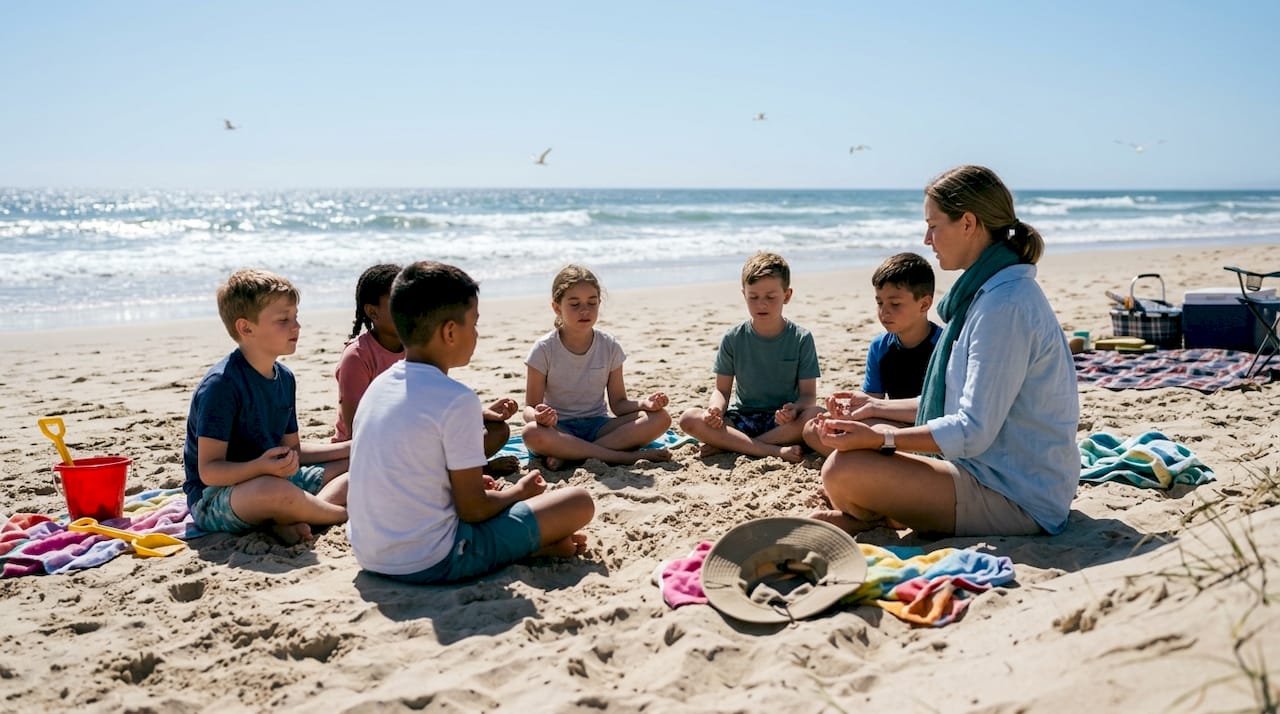
Children who learn outdoors are calmer, more engaged, and more motivated than their indoor-only peers. That is not an opinion. A systematic review of 147 studies confirms measurable gains across social skills, wellbeing, and academic performance when outdoor learning is thoughtfully implemented. Here is a quick picture of what the evidence shows:
Mental health: Outdoor lessons reduce cortisol levels and disruptive behaviors
Nature connection: Regular exposure builds pro-environmental attitudes and caring behaviors
Inclusiveness: Natural settings help students who struggle in traditional classrooms find their footing
Academic gains: Higher reading, writing, and science scores compared to indoor-only groups
Physical health: Greater physical activity, stronger motor skills, and cleaner air per CDC guidance
Cognitive growth: Sharper attention and better self-discipline after outdoor sessions
Social skills: Stronger cooperation, trust, and communication across diverse groups
1. How outdoor learning benefits children’s mental health
Nature genuinely calms children down. Research published in Frontiers in Psychology found significant drops in cortisol after outdoor lessons compared to indoor-only groups, a measurable sign that stress is easing, not just shifting. Children in greener settings also show fewer disruptive behaviors like talking out of turn or pushing, and those who previously struggled with self-control demonstrate noticeably better regulation outdoors.
Research spotlight: Teachers were able to sustain instruction nearly twice as long without redirecting student focus after outdoor lessons compared to indoor sessions on the same topics.
The benefits extend to resilience, too. Students who spend time in natural settings develop a greater capacity to meet challenges and cope with stress. For children navigating difficult home situations, greener everyday environments can buffer the impact of stressful life events.
2. How nature connection grows through outdoor education
Children who learn in natural settings develop a genuine emotional bond with the environment, and that bond shapes how they think and act. Over fifty studies point to nature playing a key role in developing pro-environmental behavior, particularly through fostering an emotional connection rather than just factual knowledge about ecology.
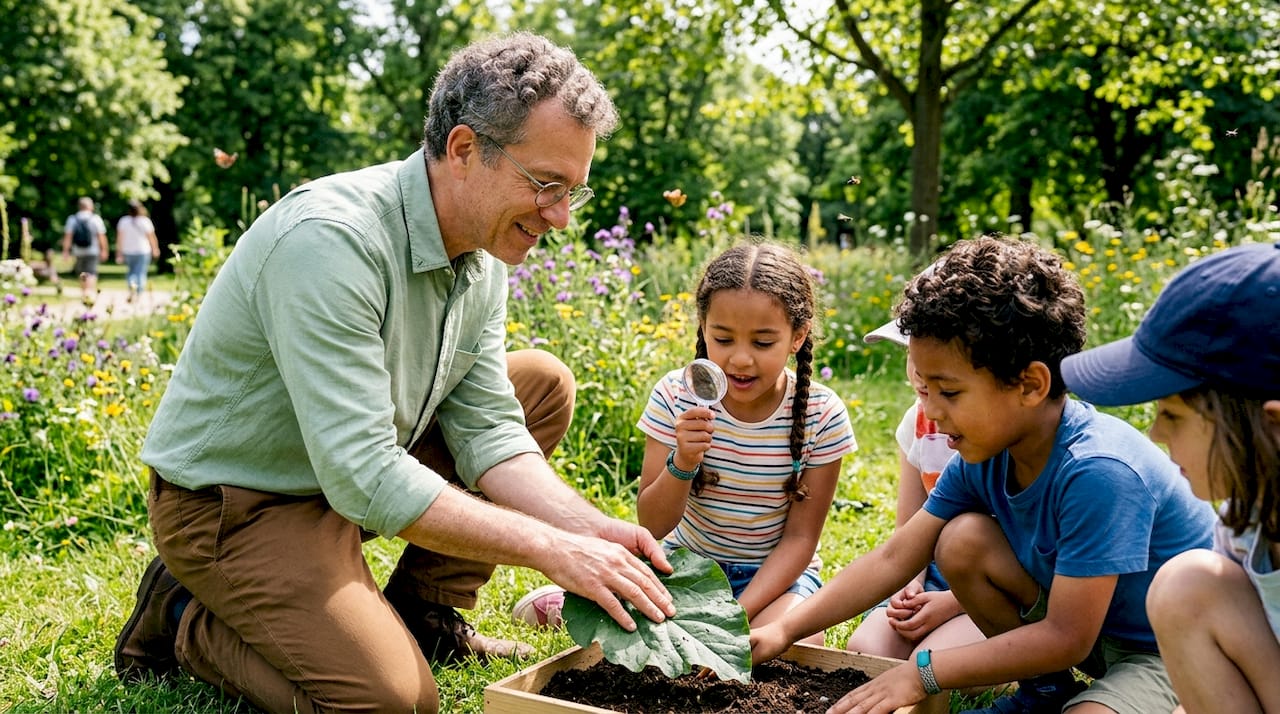
School gardens give children direct, repeated contact with living systems
Field trips to forests, wetlands, and parks build place-based understanding
Curricular outdoor lessons link science content to real environments children can observe and touch
Environmental awareness appears as a common outcome across 13 evaluated studies of school-based outdoor programs
When children care about a place, they want to protect it. That shift from knowledge to stewardship is one of the most consistent findings across outdoor education research.
3. Why outdoor learning reaches every kind of learner
Traditional classrooms work well for some children and poorly for others. Outdoor settings level that playing field in a meaningful way. Nature-based instruction increases intrinsic motivation, which is the kind that sustains long-term engagement, and it tends to improve motivation most in students who are least engaged in conventional settings.
Natural environments reduce interpersonal barriers and bridge socio-cultural differences
Students cooperate more freely when the setting feels less hierarchical
Children with disengaged patterns show improvements in attendance and punctuality after regular outdoor sessions
Teamwork and communication skills develop organically through shared outdoor tasks
The outdoor environment also changes the teacher-student dynamic. When a teacher is exploring alongside children rather than standing at a board, students often see them as a partner in learning. That shift encourages quieter children to speak up and gives every child a genuine role.
4. Academic gains you can actually measure
Outdoor learning does not pull children away from academics. It strengthens them. One evaluated study found significantly higher reading and writing scores for students in outdoor programs compared to control groups, alongside gains in science process skills, problem-solving, and technology application. Parents of students in those programs reported their children were learning science, math, and writing better than they would have in a standard classroom.
Research spotlight: 98% of parents from students in one outdoor science program stated their children learned core subjects better than they would have in a normal school setting.
Hands-on learning, real-world application, and interdisciplinary instruction are the conditions parents and students themselves identify as driving those gains. Knowledge gained outdoors also transfers more readily to new situations, which is the kind of deep learning that shows up on standardized assessments.
Pro Tip: Integrate outdoor sessions into existing curriculum units rather than treating them as add-ons. A science lesson on plant life cycles taught in a school garden produces stronger retention than the same lesson delivered indoors with a textbook.
5. Physical health and cognitive development outdoors
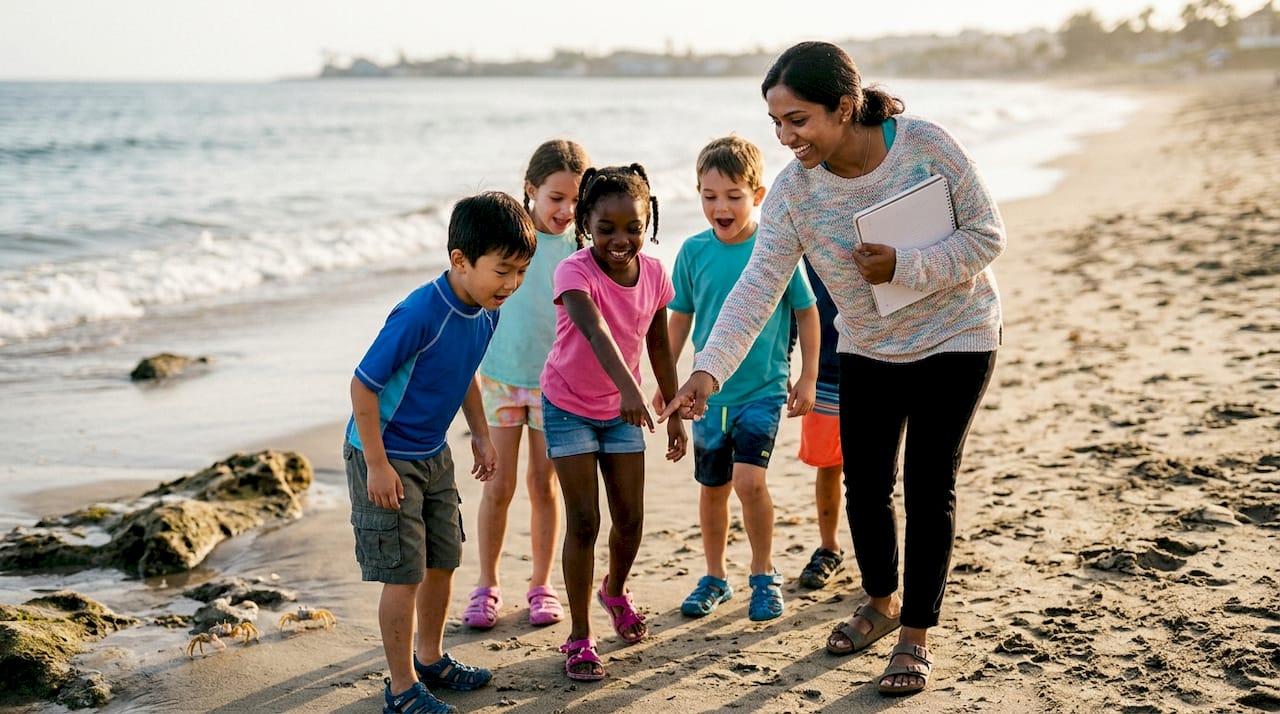
Moving, climbing, and exploring are not distractions from learning. They are part of it. Outdoor play supports gross motor skill development, including walking, jumping, throwing, and lifting, which forms the foundation for fine motor skills children need for writing and detailed tasks. Physical activity outdoors also increases endorphins and reduces stress, giving children a natural mental health buffer.
The CDC recommends holding activities and classes outdoors when circumstances allow, partly because outdoor air dramatically reduces the concentration of airborne virus particles compared to indoor spaces. Cleaner air means fewer sick days and more consistent attendance.
Attention sharpens after time in nature, making subsequent indoor lessons more productive
Self-discipline improves in children who regularly access green spaces
Physical fitness gains compound over time with regular outdoor activity
6. What the research says about making it work
The evidence on outdoor learning is strong, but outcomes vary depending on how programs are designed. A PROSPERO-registered systematic review found that benefits are most consistent when outdoor learning is woven into the curriculum rather than offered as occasional outings. There is also a dose-response relationship at work: more frequent and sustained nature exposure tends to produce stronger academic and wellbeing gains.
Factor | What the evidence shows |
Curricular integration | Consistent gains in academic and social outcomes vs. isolated trips |
Teacher training | Critical for quality; pre-service and in-service education both matter |
Frequency and duration | Longer programs produce stronger effects across all dimensions |
Local context | Benefits vary by setting; program design should reflect the school’s environment |
Safety and air quality | CDC outdoor air guidance supports health and reduces illness transmission |
Teacher preparation stands out as a recurring theme. The systematic review explicitly recommends that teacher education programs include training on how to use natural settings effectively for learning. Without that support, even well-resourced outdoor spaces go underused.
Pro Tip: Start with one subject area, such as science or language arts, and build a repeatable outdoor lesson sequence. Teachers who pilot a single unit outdoors consistently report the confidence to expand from there.
7. Long-term impact on environmental stewardship
The effects of outdoor learning do not stop at graduation. Children who develop an emotional connection to nature during their school years carry pro-environmental attitudes into adulthood. Research consistently links nature-based education to lasting shifts in behavior, including reduced waste, greater conservation awareness, and active participation in environmental causes.
Adventure education programs in particular show strong outcomes for resilience and personal development, qualities that shape how young people respond to environmental challenges later in life. One study found that regular adventure sessions improved overall school attendance and engagement in previously disengaged students, a behavioral shift that reflects a broader change in how those children relate to learning and community.
8. Practical examples of outdoor learning activities
Getting started does not require a forest or a nature reserve. Schools in urban settings have turned parking areas, concrete playgrounds, and sidewalks into productive learning spaces using simple materials.
School gardens: Children plant, tend, and harvest crops while learning biology, math, and responsibility
Nature journaling: Students sketch plants, insects, and weather patterns, building observation and writing skills
Outdoor math: Measuring tree circumferences, counting species, and mapping paths apply classroom concepts to real contexts
Walking field trips: Local parks, community gardens, and green corridors become science and geography classrooms
Outdoor language arts: Reading aloud and storytelling in natural settings improve fluency and confidence, as seen in foreign language classes held outdoors where students’ spoken fluency improved alongside motivation
Sensory exploration: Younger children benefit from unstructured time with natural materials, supporting creativity and imaginative play
Collaborative projects: Building shelters, designing rain gardens, or conducting wildlife surveys develop teamwork and problem-solving together
The outdoor learning advantages of these activities compound when they are repeated across a school year rather than offered once. Consistency is what turns a memorable experience into a lasting developmental gain.
At Edu, outdoor learning is woven into daily life at both Astor International School and Astor International Preschool. The preschool’s two playgrounds blend structured and free outdoor time, giving even the youngest children regular access to nature. For families considering an international school curriculum that takes outdoor learning seriously, Edu’s small class sizes mean every child gets the individual attention that makes these experiences truly meaningful.
Key Takeaways
Outdoor learning produces measurable gains in children’s mental health, academic performance, social skills, and physical development when it is integrated consistently into the curriculum with trained teacher support.
Point | Details |
Mental health improves | Cortisol drops after outdoor lessons, and self-control and focus improve measurably. |
Academic scores rise | Studies show higher reading, writing, and science scores in outdoor program students. |
Frequency matters | A dose-response relationship means more sustained outdoor learning produces stronger gains. |
Teacher training is critical | Systematic reviews consistently identify educator preparation as a key success factor. |
Stewardship develops over time | Emotional connection to nature in childhood drives pro-environmental behavior into adulthood. |
Recommended
Really nice and interesting post. I was looking for this kind of information and enjoyed reading this one. Keep posting. Thanks for sharing. Lucht-lucht warmtepompen
I want you to thank for your time of this wonderful read!!! I definately enjoy every little bit of it and I have you bookmarked to check out new stuff of your blog a must read blog! Zonnepanelen met batterij
I really loved reading your blog. It was very well authored and easy to understand. Unlike other blogs I have read which are really not that good.Thanks alot! Lucht-lucht warmtepompen
I have checked this link this is really important for the people to get benefit from. Warmtepompen
Great post! I am actually getting ready to across this information, is very helpful my friend. Also great blog here with all of the valuable information you have. Keep up the good work you are doing here. Zonnepanelen installateur