


6 Preschool Ready Toilet Training Steps for Parents Before School
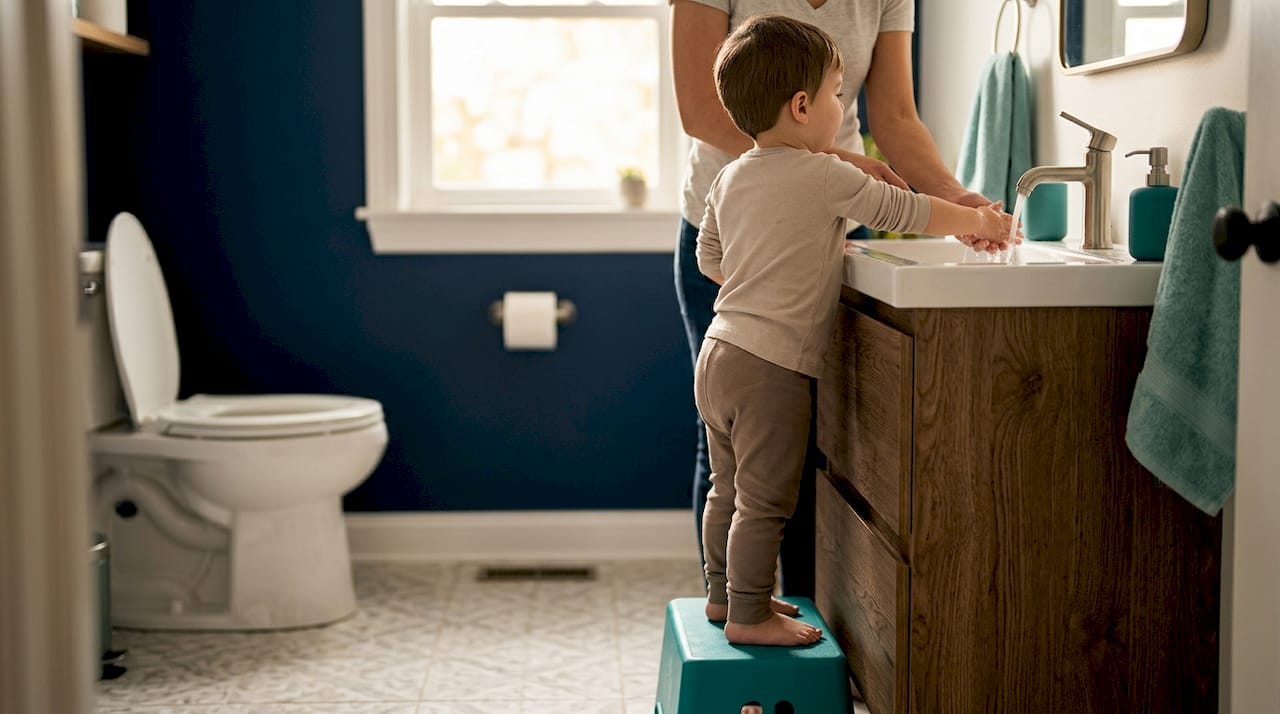
Preschool toilet training works when a child shows real readiness signs, not just a school deadline: staying dry for a period of time, telling you before or after they go, and managing pants on their own. If those markers are missing, wait rather than push. When they’re present, the safest approach is short, consistent practice runs woven into your daily routine, paired with calm patience and close coordination with your child’s teacher.
TL;DR:
Children should show physical control for at least one to two hours of dryness, along with clear communication and practical skills like independent pants removal before starting training.
Using elastic waistbands and training pants during early stages simplifies clothing management, and a freestanding potty or seat insert can reduce initial anxiety.
Preparation weeks before starting training, including teaching simple words, modeling behavior, and ensuring no major life disruptions, significantly improve success.
Progress typically takes several weeks, with nighttime dryness often developing years after daytime control, requiring patience and separate routines.
Differences in cultural approaches and preschool logistics mean families should follow their child’s individual readiness and communicate clearly with caregivers to avoid mixed signals.
Table of Contents
What Are the Signs of Preschool Toilet Training Readiness?
Readiness shows up in the body, the words, and the small daily habits indicating readiness, not on a calendar. Most children display a cluster of these signs somewhere between 18 months and three years, though the range is wide and perfectly normal on either end.
Physical control comes first. A child who can walk steadily, sit down without help, and stay dry for stretches of one to two hours has the bladder maturity that toilet training depends on. Without that stretch of dryness, training usually turns into a frustrating cycle of misses.
Language and behavior matter just as much. Watch for a child who tells you, in words or gestures, that they’re wet or about to go, who copies you or older siblings in the bathroom, and who can follow a short two-step instruction like “pull your pants down, then sit.”
The practical skills round it out:
Pulls elastic-waist pants up and down without a fight
Can sit still on a potty or toilet seat for a few minutes without climbing off
Shows curiosity about the bathroom or asks questions about it
Dislikes the feeling of a wet or dirty diaper
One caution worth repeating: hold off if your family is in the middle of a move, a new sibling, a divorce, or any other major disruption. Pediatric guidance consistently points to stable routines as the backdrop training needs to succeed, and starting during chaos tends to backfire.
What Equipment Actually Makes Toilet Training Easier?
Gear doesn’t make or break toilet training, but the right choices remove friction your child doesn’t need. A freestanding potty chair sits low to the ground, feels less intimidating for a first attempt, and travels easily between rooms. A seat insert with a step stool works well for children who are already curious about the “big toilet” and want to feel grown up using it. Many families use both: the potty chair at home, the insert for outings once confidence builds.
Clothing choices matter more than most parents expect:
Elastic waistbands on pants and skirts, so your child can undress independently
Avoid overalls, onesies, and belts during the early weeks
Training pants for the transition phase, since they’re easier to pull down than diapers but still catch accidents
Save pull-ups for naps, car rides, and outings rather than as a daytime crutch
Regular cotton underwear once your child strings together several dry days in a row
For outings, pack a spare outfit, a couple of waterproof bags for soiled clothes, and, if you haven’t already, a waterproof mattress protector for home. None of this needs to be expensive. A $10 seat insert and a stack of hand-me-down elastic-waist pants do the job just as well as anything marketed as premium.
How Do You Prepare a Child Before Toilet Training Begins?
The days and weeks before you formally start matter more than most guides admit. Preparation lowers resistance later.
Teach neutral, simple words. Pick “pee,” “poop,” and “potty” (or your family’s preferred terms) and use them consistently during diaper changes so the vocabulary feels familiar, not new, on day one.
Model the behavior. Let your child watch you or an older sibling use the toilet. Toddlers learn an enormous amount through imitation, and toileting is no exception.
Practice sitting, no pressure. Have your child sit on the potty fully clothed while playing with a toy, just to get comfortable with the object itself.
Try an empty-diaper demonstration. Dump the contents of a diaper into the potty so your child connects where things are supposed to go.
Introduce training pants briefly. Let your child feel what wetness feels like in training pants for short stretches, which builds body awareness diapers don’t allow.
Check hydration and fiber. Constipation is one of the most common hidden reasons training stalls, so keep water intake steady and include fiber-rich foods like fruit, oats, and vegetables in the weeks before you start.
None of this needs to feel like a program. Five minutes here and there, repeated daily, builds the foundation.
How Do You Actually Start Toilet Training in the First Weeks?
Pick a start day when your schedule is calm. A weekend or any period with fewer distractions works better than the middle of a hectic week, but the real commitment is the weeks that follow, not just the launch day.
Set a practice-run schedule. Bring your child to the potty every 1.5 to 2 hours, plus right after meals and naps, when the urge to go is highest.
Keep sitting windows short. Three to five minutes is plenty. Longer than that, and sitting turns into a battle rather than a habit.
Praise the attempt, not just the result. A dry pair of pants and a successful sit both deserve a quick “nice job,” whether or not anything actually happened in the potty.
Move to underwear once successes stack up. After several consistent dry days, retire the training pants for daytime and let regular underwear reinforce the feeling of wetness.
Plan ahead for outings. Bring a spare outfit and use pull-ups as backup insurance, not as a signal that you’ve given up on underwear.
Use a sticker chart if it helps. Simple visual rewards work for some children, but skip anything elaborate. A big toy prize creates pressure that undermines the whole point.
Pro Tip: Skip the food rewards entirely. A high-five and genuine enthusiasm work better long term than candy, because they don’t create a dependency your child later has to unlearn.
Expect this phase to run several weeks, not several days. Progress that looks steady one week and stalls the next is normal, not a sign you’re doing something wrong.
How Should Naps and Nighttime Differ From Daytime Training?
Daytime and nighttime dryness are two separate skills, and treating them the same way sets families up for frustration. Bladder control during sleep depends on hormonal changes your child can’t rush, and many kids don’t achieve consistent night dryness until somewhere between ages 5 and 7, often years after they’ve mastered daytime training.
Keep naps and nights in diapers or thick training pants until you see real evidence of overnight dryness, like waking up dry multiple mornings in a row.
Schedule a toilet break immediately before naptime and again right before bed
Keep a waterproof mattress protector on at all times during this phase
Shift big drinks earlier in the evening rather than cutting fluids altogether
Never restrict water intake to try to force dryness. Dehydration risk isn’t worth the shortcut
Treat a wet nap or wet morning the same way you’d treat a daytime accident: no drama, no discussion, just a fresh diaper or pants
Forcing night training before a child’s body is ready almost never works, and it tends to create anxiety around sleep that outlasts the wet sheets.
How Do You Handle Accidents, Resistance, and Regression?
Accidents are part of the process, not evidence that training has failed. The calmer your response, the faster your child moves past them.
Keep the clean-up matter-of-fact: change clothes quickly, say something neutral like “let’s get you dry,” and move on. Punishing or shaming a child for an accident tends to create secrecy and stress rather than faster progress.
Stress, a new sibling, or a change in routine often triggers sudden resistance or regression
A child who’s fighting for control elsewhere in life sometimes turns toileting into the battleground, so loosen your grip rather than tighten it
If sitting on the potty becomes a daily fight after two or three weeks of trying, it’s a sign you started too soon. Pause for a month and try again
Persistent withholding, painful bowel movements, or zero daytime progress by age 3 warrants a call to your pediatrician
Pro Tip: If your child seems to be regressing right after starting preschool, that’s often adjustment stress talking, not a skill they’ve lost. Give it two weeks of calm consistency before assuming you need to start over.
How Do You Coordinate Toilet Training With Preschool?
Preschools vary widely in what they expect and what they can realistically provide, so ask directly rather than assume.
Ask about the school’s specific toileting policy before enrollment, including whether pull-ups are allowed and how staff handle accidents
Share your child’s current readiness profile so teachers know what to reinforce rather than starting from scratch
Agree on the same words for “potty,” “pee,” and “poop” that you use at home, since inconsistent language confuses toddlers
Send a labeled spare outfit and understand that most preschools can reinforce your training but can’t run a full program from zero
If a school expects children to be fully trained on arrival and yours isn’t there yet, ask about a temporary pull-up arrangement or look for a program with more flexibility
A quick daily note between home and classroom, even just a line or two, keeps everyone working from the same playbook. Reviewing a sample preschool routine before enrollment can also help you time potty breaks around nap and meal schedules the school already follows.
When Should You Worry About Constipation or Withholding?
Most toileting struggles are developmental, but a small number point to something that needs medical attention.
Watch for painful bowel movements, blood in the stool, a pattern of holding stool for days at a time, or zero daytime progress by age 3. These are the red flags pediatric guidance flags for follow-up, not just quirks to wait out.
Increase fiber (fruits, vegetables, whole grains) and fluids before assuming a bigger problem
Build a fixed toilet routine after meals, since the gut is naturally most active then
Start with your pediatrician, who can rule out physical causes and refer you to a pediatric urologist or child psychologist if the resistance runs deeper than diet or timing
Bring a simple log of bathroom timing and any pain complaints to the appointment. It saves time and helps the clinician spot patterns you might miss
Do Toilet Training Approaches Differ Across Cultures?
The idea that toilet training follows one universal timeline is more American assumption than global fact. In much of the United States and United Kingdom, toilet training clusters around ages 2 to 3, often timed to preschool enrollment. In many East Asian, African, and South Asian households, “elimination communication,” where caregivers learn an infant’s cues from birth and hold them over a toilet, starts far earlier, sometimes in the first months of life.
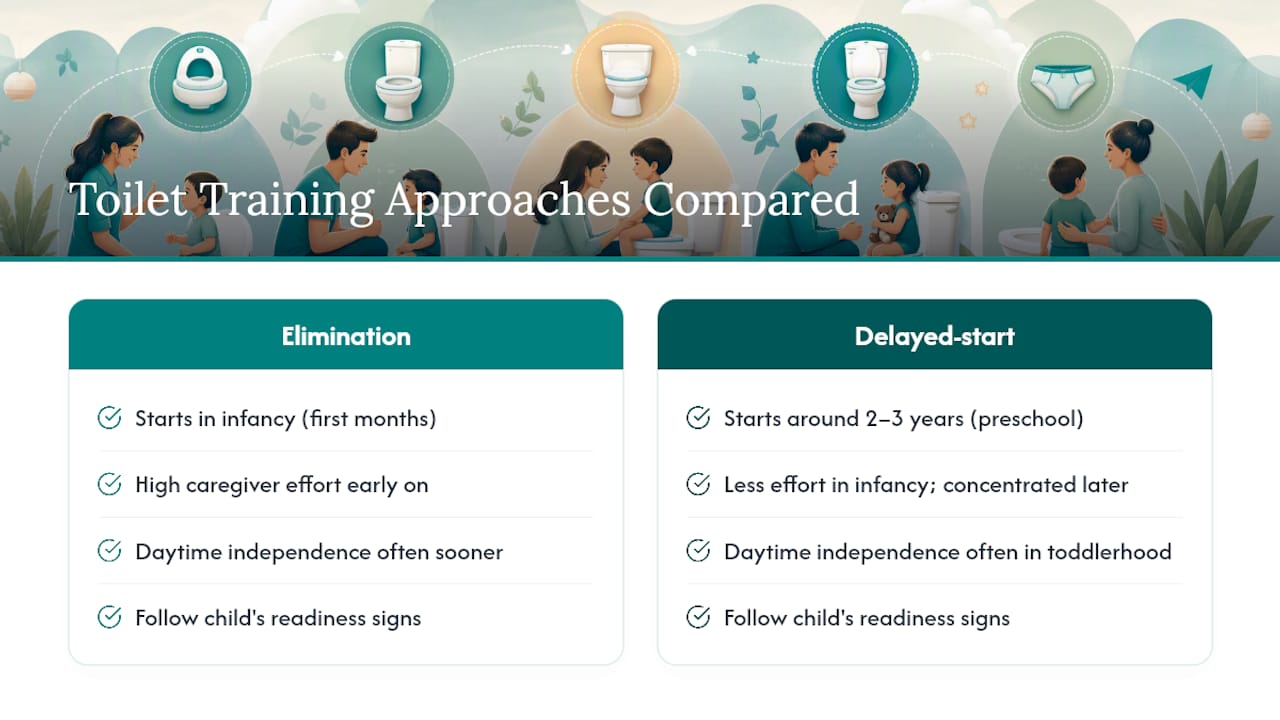
Neither approach is inherently superior. Elimination communication asks more of caregivers early on but can produce daytime independence sooner. The Western delayed-start approach asks less of infancy but concentrates the work into toddlerhood instead.
Family structure shapes the process too. Households with grandparents or extended family involved in daily care often see faster daytime training, simply because more adults are consistently modeling and reinforcing the same behavior throughout the day. Climate plays a role as well: families in warmer regions frequently let toddlers go without pants at home during the training window, which makes it easier for a child to notice the sensation of needing to go.
For families navigating between cultural expectations, whether that’s grandparents pushing for an earlier start or a Western-style preschool assuming a later one, the practical answer is the same: follow your child’s own readiness signs over any single tradition’s timeline. Communicate your approach to caregivers and teachers so a child isn’t getting mixed signals from the adults around them.
What Nighttime Training Tips Differ From Daytime Methods?
Nighttime training rewards patience over technique, since it depends on physical maturity daytime methods can’t accelerate.
Start only after your child has had several weeks of solid daytime success. Trying to run both processes at once usually overwhelms a toddler and slows daytime progress too.
A consistent bedtime routine helps more than any specific product: bathroom trip right before lights out, a nightlight if your child needs to get up, and a clear path to the bathroom with no obstacles in the dark. Some families use a “dry night” reward chart separate from the daytime chart, since the milestones happen on different timelines and mixing them confuses the incentive.
Waking a child for a scheduled overnight bathroom trip works for some families in the early phase, but it’s a bridge, not a long-term fix. The goal is a child who wakes on their own when they need to go, not one who’s roused by a parent on a timer. If wetting continues most nights past age 7, that’s worth mentioning to your pediatrician, since it’s outside the typical range rather than a training failure.
Keep a waterproof mattress protector in place well after daytime training is finished. Occasional nighttime accidents can continue for months or years after a child is fully dry during the day, and that gap is normal, not a regression.
What Makes Toilet Training Harder in a Preschool Setting?
A few obstacles show up specifically once a child moves from home into a classroom, and they catch parents off guard because home practice went smoothly.
Peer influence cuts both ways. A child who watches classmates confidently use the bathroom often speeds up. But a child who’s a step behind peers can feel embarrassed, which sometimes triggers withholding at school even when they’re accident-free at home.
Limited bathroom access is a real logistical issue. Preschool bathrooms often serve a full classroom on a shared schedule, so a child can’t always go the instant they feel the urge the way they can at home. This is exactly why teaching your child to recognize and act on early body signals, rather than waiting until the last second, matters more in a classroom than anywhere else.
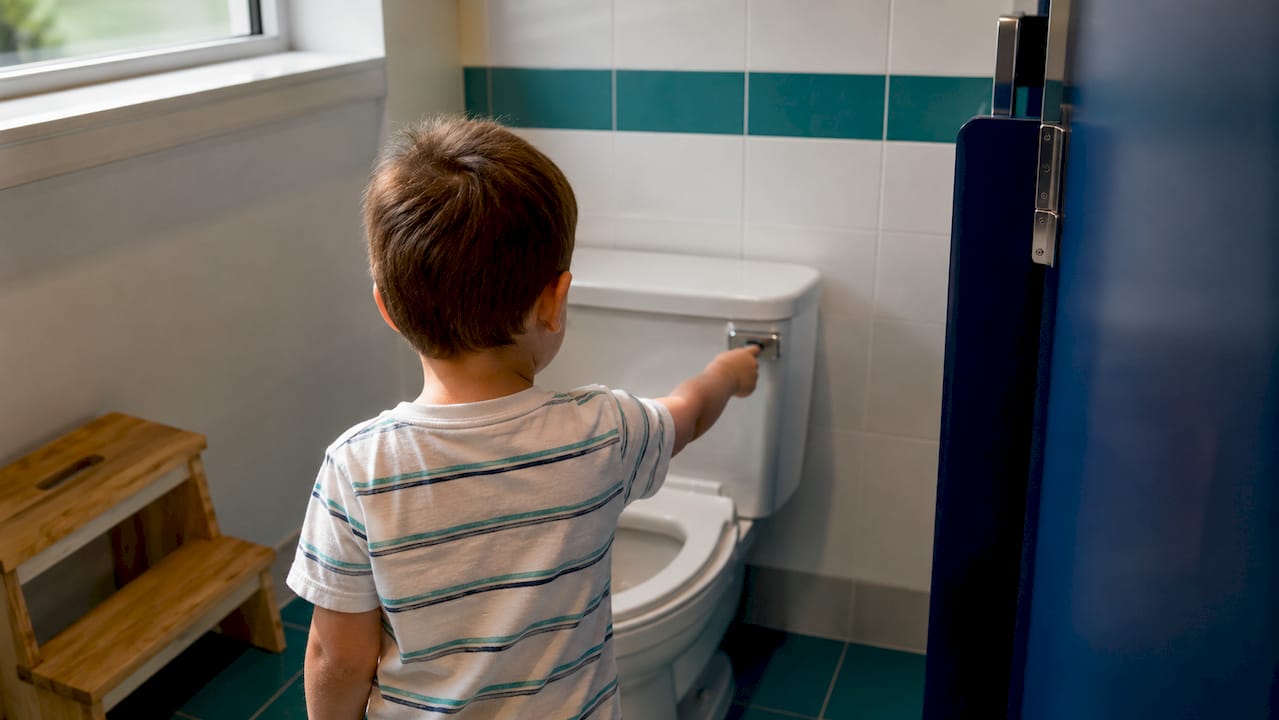
Unfamiliar equipment throws some children off too. A child used to a specific potty chair or seat insert at home may hesitate with an unfamiliar toilet, different flush mechanism, or communal bathroom layout at school.
Finally, transitions between activities eat into bathroom time. A child absorbed in play may ignore a full bladder until it’s too late, especially in the first weeks of a new classroom routine. Reviewing classroom routine examples ahead of enrollment can help you understand how a specific school structures transitions and where potty breaks naturally fit in.
Astor Perspective: What Small-Class Preschools Can Offer Families
Toilet learning goes more smoothly when a classroom mirrors your home routine instead of working against it. In small-class settings, teachers can realistically keep a short daily log of bathroom timing, use the exact words you’ve established at home, and give a child unhurried reminders after meals rather than rushing through a packed schedule. Parents can reasonably ask their child’s preschool for a clear spare-clothes policy, a brief daily note on how the day went, and consistent, low-pressure praise that matches what happens at home. Explore Astor’s preschool program to see how a smaller classroom supports exactly this kind of family partnership.
— Elena
Sources
Recommended

Comments