


Parents: 4 Phase Plan for Primary to Secondary Transition
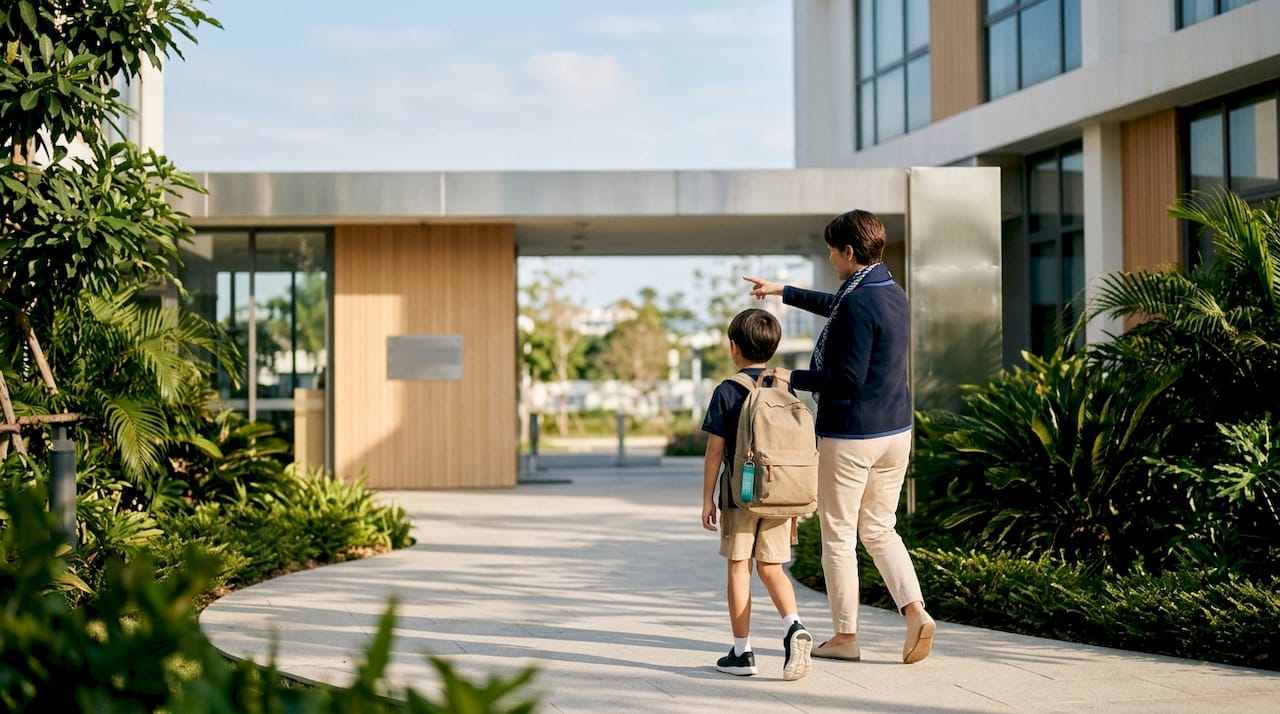
The fastest way to improve your child’s move from primary to secondary school is to treat it as a process, not a single day in January. Families and schools who start early, during the preparation months before entry, and stay attentive through the first weeks after term begins, see steadier academic and emotional outcomes. That view is backed by MOE’s own transition guidance and a recent scoping review of student wellbeing across this exact transition.
TL;DR:
Starting preparations early and maintaining attentive support during the first weeks help stabilize academic and emotional outcomes during the transition.
Breaking the process into four phases—preparation, transfer, induction, and consolidation—guides manageable actions and monitoring points for parents and students.
Building a homework log early, addressing unfamiliar subjects quickly, and normalizing asking teachers questions can significantly ease academic struggles.
Supporting emotional wellbeing through peer mentors, regular check-ins, and emotion coaching reduces the risk of withdrawal and anxiety.
Confirming logistics, engaging with teachers, and reviewing progress after the first report card help address issues before they become ingrained problems.
Table of Contents
What Are the Phases of the Primary to Secondary Transition?
Researchers and education departments increasingly frame the shift from primary to secondary school as four connected phases: preparation, transfer, induction, and consolidation. This structure, used in policy guidance from Victoria’s Department of Education, gives families a way to break an overwhelming change into manageable, timed actions instead of one giant leap.
Preparation runs in the months prior to entry. Your child is still in primary school, but this is when orientation visits, campus tours, and early conversations about expectations do the most good.
Transfer covers the weeks around results and placement, when logistics take over: uniforms, transport routes, and school-to-school handover of records.
Induction spans the first several weeks of Secondary 1, when your child is learning new routines, new teachers, and a much bigger campus.
Consolidation follows in the second term, once the novelty fades and real habits, both good and bad, start to settle in.
Each phase has its own short list of priorities:
Preparation: attend open houses, discuss subject choices, and normalize nervousness as expected, not alarming.
Transfer: confirm transport, buy uniforms and supplies early, and request a meeting with the form teacher if your child has specific needs.
Induction: track homework load, ask about friendships weekly, and resist over-scheduling extracurriculars in the first month.
Consolidation: review the first report card as a diagnostic tool, not a verdict, and adjust routines based on what actually happened.
Breaking the process into phases also gives you a built-in monitoring schedule. Instead of vaguely worrying for a year, you know exactly what to watch for and when.
How Does the Academic Workload Change in Secondary School?
Secondary school does not simply add more homework. It changes the entire structure of how your child learns. Primary school typically means one main teacher who knows your child’s habits, strengths, and moods across every subject. Secondary school means five to ten subject specialists, each with different expectations, deadlines, and grading styles, and none of them see your child for more than a few hours a week.
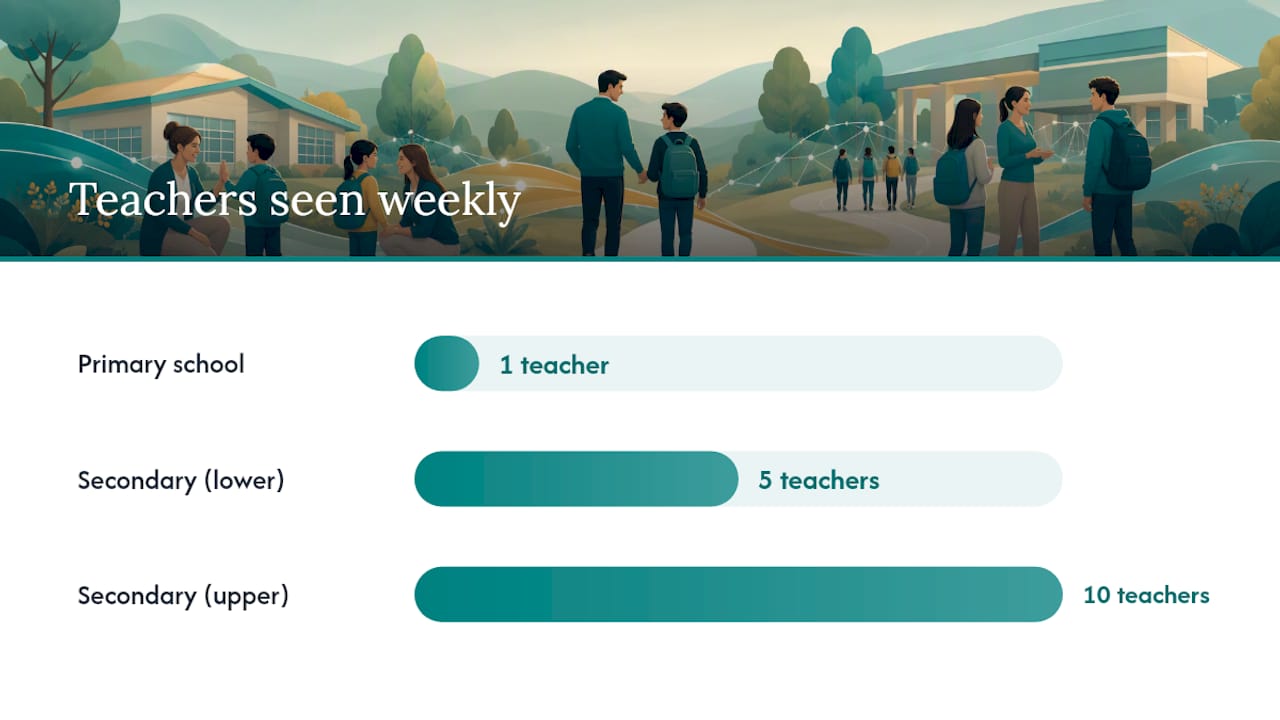
This shift explains why the scoping review on transition wellbeing links this period to measurable dips in academic performance and motivation, particularly in literacy and numeracy continuity. A student who wrote confidently in Primary 6 English may suddenly struggle with a secondary English teacher’s rubric for structured essays. A student who breezed through primary math can hit a wall when Secondary 1 math assumes independent problem-solving rather than guided practice.
Three practical shifts help bridge that gap:
Build a homework log before it’s needed. A simple notebook or shared calendar where your child records what’s due and when, started in the first week, prevents the panic that comes from six deadlines colliding in week four.
Separate “hard” subjects early. Ask your child which subjects feel unfamiliar by week two, not week eight, so extra help can start while the gap is small.
Normalize asking subject teachers questions. Many children hesitate to approach a specialist teacher the way they’d approach a familiar primary teacher. Rehearsing a simple question at home lowers that barrier.
Pro Tip: Ask your child to describe one thing each subject teacher expects that their primary teacher never mentioned. This single question often surfaces the real friction point faster than asking, “How was school?”
Why Do Kids Struggle Emotionally With Secondary School?
The emotional weight of this transition often surprises parents more than the academic side. Your child is not just changing buildings. They are often navigating early puberty, a much larger student population, and the loss of the small, familiar peer group they built over six years, all at once. The Be You fact sheet on this transition notes that a strong start to secondary school predicts better long-term engagement, and that consistent family support is one of the most reliable protective factors available.
Some withdrawal, irritability, or a sudden reluctance to talk about school is common in the first few weeks and does not automatically signal a crisis. What matters is whether it fades or deepens.
Supports that align with the evidence include:
Buddy systems or peer mentors, often arranged by the school, pairing new Secondary 1 students with older students who remember exactly what week one feels like.
Brief, regular check-ins from a form teacher, rather than waiting for a formal parent-teacher conference to surface problems.
Emotion coaching at home, where you name a likely feeling (“that sounds like it felt embarrassing”) instead of jumping straight to solutions.
At home, open with specific prompts rather than broad ones. “Who did you sit with at lunch?” gets further than “Did you make friends?” And teach the actual words for asking for help: “Can I talk to you about something?” is a phrase many 12-year-olds have never practiced saying out loud.
Pro Tip: Keep a running list of your child’s small daily details, a locker combination struggle, a new nickname, a seating change. Reviewing that list weekly often reveals a pattern you’d otherwise miss in scattered conversations.
What Should Parents Do Before and After Secondary School Placement?
A timed checklist turns a vague sense of “we should probably prepare” into concrete tasks you can actually finish.
Before results are out (roughly October to December): Attend the secondary school’s open house, discuss what your child hopes for and fears about the move, and revisit study routines that may have slipped in Primary 6.
Once placement is confirmed: Sort transport logistics immediately, since bus and MRT routes fill up and school-specific shuttle arrangements often need early registration.
Two to three weeks before term starts: Buy uniforms, textbooks, and stationery with your child present, letting them handle some of the shopping to build a sense of ownership.
In the first week of term: Request a brief introductory meeting or email exchange with the form teacher, especially if your child has any learning support needs.
Weeks one through four: Establish a fixed homework time and a consistent bedtime, even if your child resists; secondary schedules are demanding enough that erratic sleep compounds every other problem.
Weeks five through eight: Hold a short weekly check-in, five minutes is enough, asking specifically about one class, one friendship, and one thing that felt hard that week.
End of term one: Use the first report card as a planning document. Identify one subject needing support and one habit worth reinforcing, rather than reacting to the overall grade alone.
Following this sequence means nothing gets left to the last minute, and it matches the timing the MOE transition guidance recommends for orientation activities and early study-skills workshops.
How Do Schools Share Student Information During the Transition?
One of the most consistent gaps in this transition is informational, not emotional. Primary teachers often hold years of insight about how a child learns best, and much of it never reaches the secondary school unless parents actively push it forward.
A one-page student profile, written with your child’s primary teacher or on your own, can close that gap quickly. It should include:
Academic strengths and specific areas that need continued attention
Learning style notes (visual learner, needs written instructions repeated, works better in small groups)
Social context (a longtime friend moving to the same school, a past difficulty with bullying, a preference for quiet environments)
Any existing support plans, allergies, or medical considerations
If your child has additional learning needs, ask the secondary school directly whether a Student Support Group or equivalent structured plan can be set up before term begins rather than after problems surface. Share only what is relevant and necessary, and confirm with both schools how sensitive details, such as past mental health support or family circumstances, will be stored and who can access them.
What Are Warning Signs That a Child Is Struggling With the Transition?
Watch for these signals in the first 6 to 8 weeks, the period both research and practitioner guidance treat as the most critical window for catching problems early:
Sudden drop in grades across multiple subjects, not just one
Persistent reluctance to go to school, especially on specific days tied to particular classes
Withdrawal from friends they previously mentioned often
Physical complaints (stomachaches, headaches) clustering around school mornings
Uncharacteristic anger or tears over homework
If you notice two or more signs lasting beyond two weeks, start with a direct but low-pressure conversation at home. If that doesn’t surface the cause, request a short meeting with the form teacher and describe specific incidents rather than general worry. If concerns persist, ask the school whether counseling support or a learning specialist can be looped in. Keep brief written notes of dates and incidents. This documentation makes any escalation faster and clearer for everyone involved.
What Does a Small-School Approach Look Like in Practice?
Some of the friction in this transition comes from sheer scale: a child who knew one teacher intimately for years suddenly becomes one face among hundreds. Some international schools are built around the opposite premise, small class sizes and a tight-knit teaching team, which changes what handover and induction actually look like day to day.
Parent briefings before entry, campus familiarization sessions, and teachers who know every student by name from week one are not abstract ideals here; they are the operating model. That maps directly onto the phase framework: preparation happens through direct conversation instead of a generic orientation packet, and induction benefits from teachers who can spot a quiet week before it becomes a pattern.
Small class sizes mean a form teacher isn’t guessing which student seems off this week; they already know the baseline well enough to notice the change.
A Closing Thought From Elena
Treat this transition as a process you can shape, not a leap your child makes alone. If you take one action this week, make it small: ask your child to name one specific thing about their new school that feels unfamiliar, then help them practice one sentence to say to a teacher about it. That single conversation often does more than a month of general reassurance. This guide draws on published education research and official transition guidance, and the views here are editorial, not clinical advice.
— Elena
A Small-School Pathway for Families Weighing Transition Support
For families who want the phase framework built into daily school life rather than managed entirely at home, a small-school setting offers a different kind of support. Some schools structure their curriculum around small class sizes, so subject-specialist teachers still know each child personally, closing much of the information gap that larger secondary transitions often create.
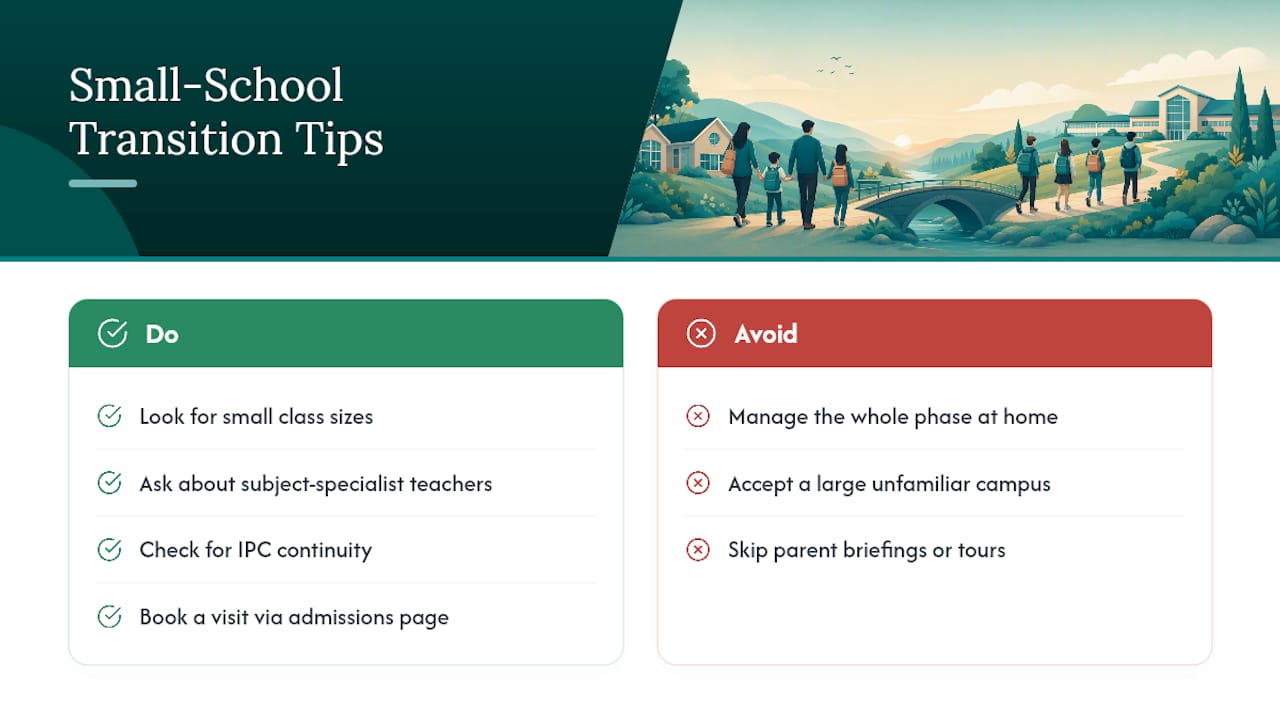
Some families choose this path specifically because it keeps the induction and consolidation phases closer to the personalized attention children had in primary school, rather than trading it for a much larger, less familiar campus. An IPC curriculum is sometimes designed with that continuity in mind, alongside parent-briefing and familiarization practices described earlier. If a smaller, closely connected school environment sounds like the right fit for your child’s move into secondary education, book a visit through the school’s admissions page to see the classrooms and meet the teaching team directly.
Sources
FAQ
How Successful Is the Transition From Primary to Secondary School?
Most children adjust within the first term, but the scoping review of transition wellbeing links this period to real, measurable dips in academic performance and motivation for a meaningful share of students, which is why early monitoring matters.
What Is the Hardest Part of the School Transition?
The biggest challenge is usually the combined shift from one familiar teacher to multiple subject specialists, alongside a much larger, less personal school environment, happening at the same time as early puberty and peer group changes.
Is It Normal for a Young Child to Struggle With Transitions?
Yes. Difficulty adjusting to change is developmentally typical at almost any age, and it becomes a concern mainly when the struggle is severe, prolonged, or paired with regression in skills the child previously had.
What Is a Secondary Transition in Education?
A secondary transition refers to the structured process of moving a student from primary school into secondary school, covering academic, social, and logistical changes, and it is commonly organized into phases: preparation, transfer, induction, and consolidation.
How Long Does the Secondary School Adjustment Period Typically Last?
The first 6 to 8 weeks of term are generally considered the most critical window for adjustment, though full settling into new routines and friendships often continues through the first term.
Recommended
Comments