


Parents: How Team Sports Help Kids, Backed by Research
Team sports reliably boost children’s physical fitness, mental wellbeing, social skills, and cognitive function. Research shows team-based play often yields stronger psychosocial gains than solo training. That said, the benefits depend heavily on program quality and whether a child feels genuinely included, so how a team is run matters just as much as whether your child joins one.
TL;DR:
The quality of team programs and whether children feel genuinely included greatly influence the mental, social, and physical benefits they receive.
Consistent participation in organized team sports improves cardiovascular fitness, bone density, motor skills, and supports healthy weight over time.
Team sports lower the risk of anxiety, depression, and social problems, primarily through social support and routine, but poor coaching can negate these advantages.
Participation enhances communication skills, friendships, and teamwork, especially when programs prioritize inclusivity and collective activities beyond just winning.
Evidence indicates team sports are linked to reduced substance use, lower mental health issues, and improved cognitive control during adolescence.
Table of Contents
Physical Health and Fitness Benefits of Team Sports
Team practices and games give kids consistent moderate-to-vigorous physical activity, the kind that actually moves the needle on the 60 minutes of daily activity health guidelines recommend for children. Unlike a solo jog a child has to talk themselves into, a scheduled practice with teammates waiting creates built-in accountability.
The physical payoff shows up in several places at once:
Stronger cardiovascular fitness from repeated bouts of running, sprinting, and recovery during games.
Better bone density during childhood and adolescent years, when bones respond most to load-bearing activity.
Improved motor skills and coordination from sport-specific movement patterns practiced week after week.
Healthier long-term weight management tied to sustained activity habits rather than short-term exercise pushes.
Variety matters too, as explained in Schwimmen und Gesundheit: Vorteile für Kinder, Schulen und Vereine. A child who only ever plays one sport tends to overuse the same muscle groups. Rotating between seasons, or pairing team sports with outdoor play and free movement, gives growing bodies a broader range of physical demands.
Mental Health and Emotional Regulation Benefits
Kids on organized teams show measurably better emotional outcomes than kids who sit out sports entirely. A cohort study drawing on the Adolescent Brain Cognitive Development (ABCD) study found team sport participants scored 10% lower on anxious/depressed measures and 19% lower on withdrawn/depressed measures compared with non-sport peers.
Statistic Callout: The same ABCD analysis found team-sport kids scored lower on social problems and attention problems than non-participants, a pattern that held even after adjusting for other factors.
Two mechanisms likely drive this. First, belonging to a team creates a form of social buffering, a built-in support network that softens everyday stress. Second, regular practice schedules give kids routine and structure, which tends to stabilize mood on its own.
None of this is automatic, though. A team can just as easily do harm:
Constant yelling from a coach or a parent on the sideline erodes confidence fast.
Pressure to win at all costs turns a fun activity into a source of dread.
Being benched repeatedly without explanation can undo any social benefit the sport was supposed to provide.
Social Skills, Friendships, and Teamwork
Practicing and competing alongside the same group of kids week after week builds communication skills that are hard to teach any other way. Kids learn to call for the ball, negotiate who plays which position, resolve on-field disagreements, and occasionally mentor a younger or less experienced teammate.
The friendship payoff is real and measurable. Organized team settings give kids a built-in peer group, which lowers loneliness and often produces friendships that outlast the season itself. A 2026 systematic review found the team component specifically, not just physical activity in general, drove stronger gains in self-esteem, life satisfaction, and social belonging compared with individual sports.
Program design shapes how much social benefit a child actually gets:
Inclusive coaching that rotates positions and playing time builds broader peer connections.
Mixed-ability practice sessions reduce the sense that only the “best” kids matter.
Team rituals like post-game snacks or shared celebrations reinforce belonging beyond the scoreboard.
Schools that build collaborative work into the broader school day tend to see these teamwork skills reinforced both on the field and in the classroom.
Cognitive and Academic Benefits: Sharper Focus, Better Grades
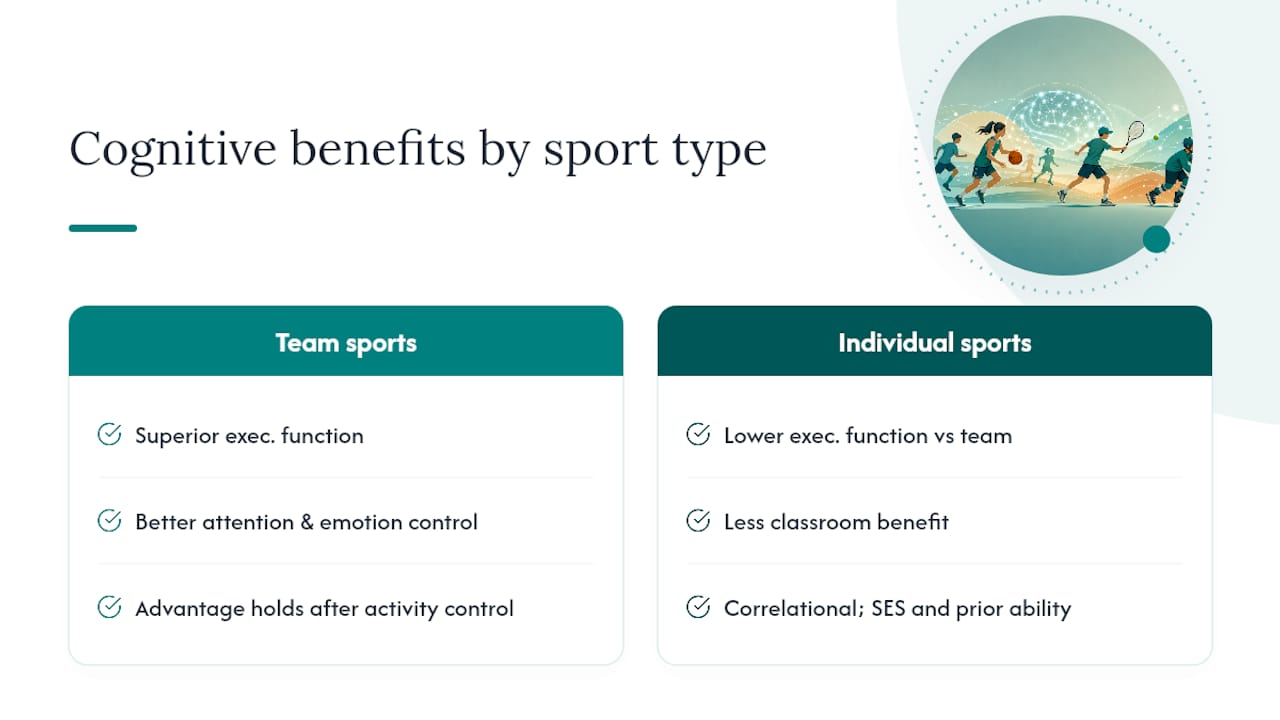
A study published in JAMA Network Open found kids who played team sports showed superior executive function, including working memory, task switching, and emotional control, compared with kids who only did individual sports. That advantage held even after accounting for total physical activity, suggesting the social complexity of team play, not just the exercise itself, drives the gain.
Better executive function translates directly into classroom behavior: kids who can shift attention and regulate emotions tend to concentrate longer and handle frustration better during schoolwork. Worth flagging, though: these are correlational studies. Socioeconomic factors and a child’s prior abilities can influence both sports participation and academic performance, so team sports are one contributing factor among several, not a guaranteed grade booster.
Character, Resilience, and Sportsmanship
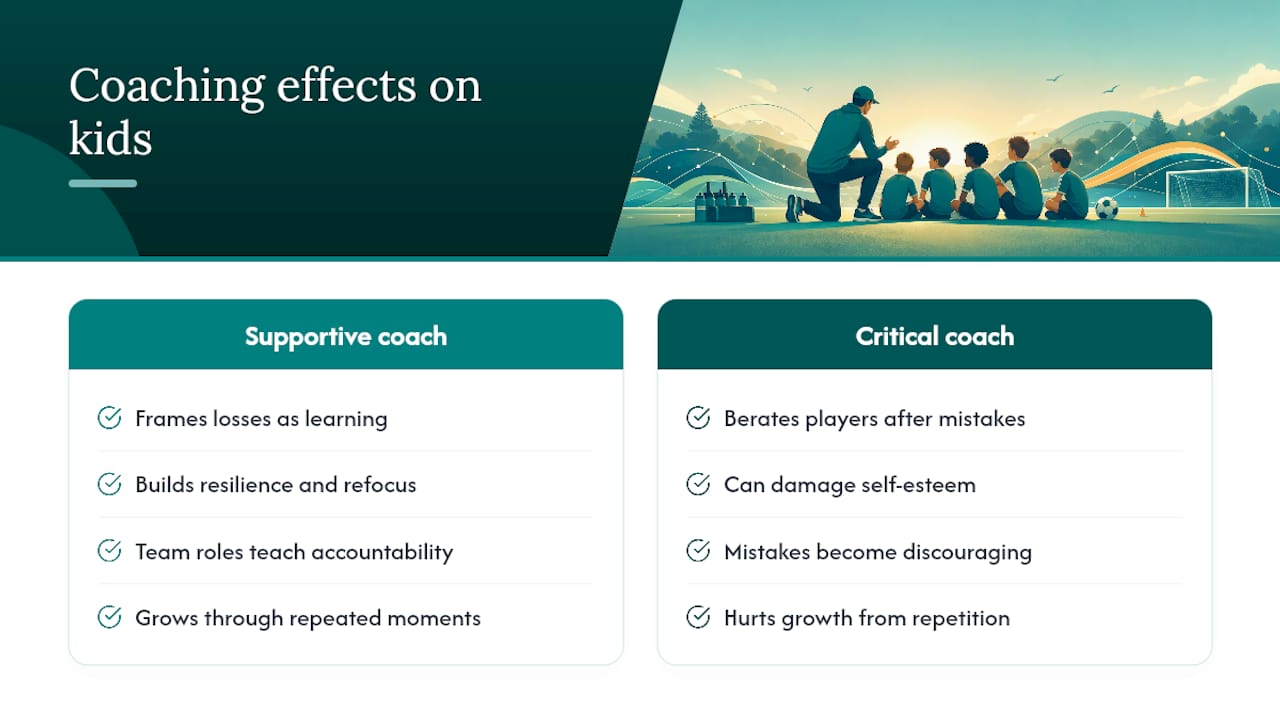
Team roles teach accountability in ways a solo activity rarely can. A kid captaining a small squad learns to encourage a struggling teammate. A defender who lets in a goal learns to shake it off and refocus for the next play. These moments build resilience gradually, through repetition, not through a single big lesson.
Whether competition builds resilience or damages self-esteem comes down almost entirely to coaching culture. A coach who frames losses as learning opportunities produces a very different kid than one who berates players after every mistake.
Pro Tip: After a tough game, ask your child “What’s one thing you’re proud of today?” before asking about the score. It reinforces effort and sportsmanship over pure outcome.
How Parents Can Keep Team Sports Safe and Fun
Choosing the right program matters as much as choosing the right sport. Before signing up, work through a short checklist:
Watch a practice and evaluate the coach’s tone: encouraging and instructive, or harsh and win-obsessed?
Ask about the team’s safety policy, including concussion protocols and injury response.
Check whether practice structure balances skill development with actual playing time for every kid, not just the strongest athletes.
Confirm the program’s stated goals: is development the priority, or is winning the only thing that gets praised?
Watch for red flags that signal a program isn’t serving your child well: verbal abuse from coaches or parents, chronic injuries that get brushed aside, or a pattern where only top performers get meaningful playtime.
Not every child takes to team sports right away, and that’s fine. A child who dislikes one particular team culture may still thrive in a different sport type or coaching style; matching the child to the right environment often matters more than the sport itself. Programs built around active movement in schools can offer a lower-pressure entry point before committing to a competitive league.
Pro Tip: If your child resists joining a team, try a single trial practice with zero pressure to continue. Removing the commitment often lowers the anxiety enough for them to actually enjoy it.
What the Research Says: A Quick Evidence Summary
The strongest evidence for team sports comes from large cohort work and meta-analyses, not single small studies. A systematic review and meta-analysis found team sport participation was associated with lower odds of tobacco use, lower odds of alcohol or drug use, and notably lower rates of depression and anxiety.
The ABCD cohort’s pattern is one of the clearer findings in this field: team-sport kids showed double-digit percentage reductions across anxious/depressed, withdrawn/depressed, social problems, and attention problems, all versus non-sport peers of similar backgrounds.
Statistic Callout: Combine the ABCD and meta-analysis figures and a consistent picture emerges: team sport participation tracks with meaningfully lower odds of both mental health struggles and risky substance use during adolescence.
Author’s Practical Takeaways and Next Steps
Three things I’d tell any parent weighing this decision: try before committing, choose programs that prioritize development over winning, and keep checking in on how your child actually feels about the team. Sign up for one trial practice, have a real conversation with the coach about their approach, and set goals around fun and effort rather than scoreboards.
— Elena
Sources
Primary evidence: the ABCD cohort study, team sports meta-analysis, JAMA Network Open study, AAP clinical report, and HealthHub Singapore.
Families exploring structured options closer to home can also look at how school-run programs build sport into the school day. Astor’s enrichment classes fold sports, arts, and language activities into a small-class setting, and the school’s curriculum approach leans on outdoor and inquiry-based learning that echoes many of the benefits covered above, from motor skill development to teamwork practice, without requiring a separate club sign-up.
This article is general information, not a substitute for advice from a qualified doctor. Consult a qualified healthcare professional about your own circumstances before acting on anything here.
FAQ
What Are the Main Benefits of Playing Team Sports?
Team sports support four main areas: physical fitness (cardiovascular health, bone density, healthy weight), mental health (lower anxiety and depression), social skills (friendship, teamwork, belonging), and cognitive function (executive function, attention, and classroom behavior).
Why Is Good Sportsmanship Important for Kids?
Good sportsmanship teaches kids to handle both winning and losing with grace, a skill HealthHub Singapore links directly to better stress management and long-term emotional resilience.
What Are the Physical Activity Benefits of Sports for Kids?
Regular sports participation helps kids meet daily activity targets, builds cardiovascular fitness and bone density, improves motor coordination, and supports healthy weight management through consistent movement rather than sporadic exercise.
Do Team Sports Really Help Kids Do Better in School?
Research in JAMA Network Open found team-sport participants showed stronger executive function, including working memory and emotional control, than individual-sport-only peers, which plausibly supports better focus and behavior in class. The relationship is correlational, so other factors like socioeconomic background also play a role.
How Many Benefits Come From Playing Sports Overall?
Researchers group sport benefits into broad categories rather than a fixed count: physical (fitness, bone health, weight), mental (lower anxiety and depression), social (friendship, belonging, teamwork), and cognitive (attention, executive function), with team sports showing particularly strong gains in the social and mental health categories.
Recommended
Comments