


The Role of Modern Classrooms in Children's Learning
- sasha2644
- 4 days ago
- 8 min read
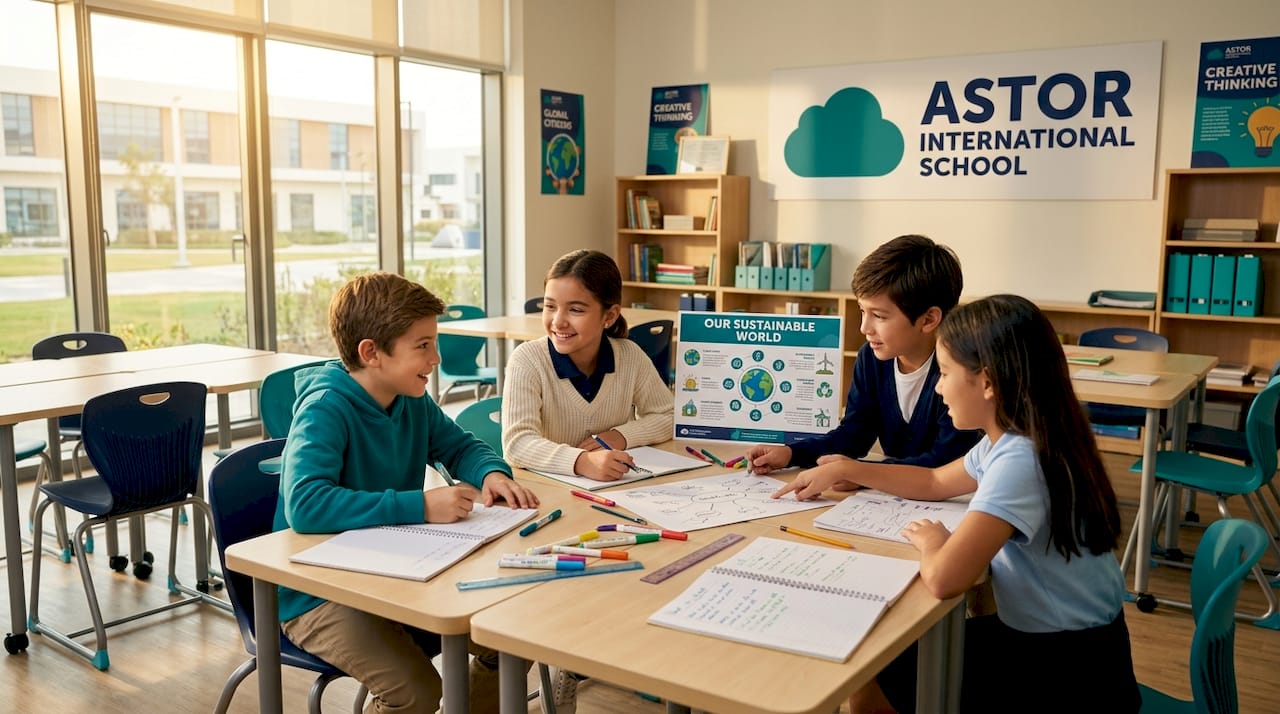
Modern classrooms are defined as adaptable learning environments that blend flexible physical spaces, purposeful technology, and research-informed teaching methods to support every child’s growth. The role of modern classrooms goes well beyond replacing chalkboards with screens. These spaces function as ecosystems where room design, digital tools, and pedagogy work together to personalize learning, encourage collaboration, and build genuine curiosity. For parents and educators, understanding how these environments work is the first step toward making the most of them. UNESCO’s Six Pillars Framework explicitly identifies adaptable learning spaces alongside devices and connectivity as core infrastructure for quality digital education, confirming that the physical and digital dimensions of a classroom are inseparable.
What is the role of modern classrooms in student learning?
Modern classrooms serve one primary function: creating conditions where every child can learn in the way that works best for them. That means moving away from the single-format lecture and toward environments that support blended learning, small-group collaboration, and self-paced exploration. The shift is not cosmetic. When space, technology, and teaching methods align, children engage more deeply, retain more, and develop stronger problem-solving skills.
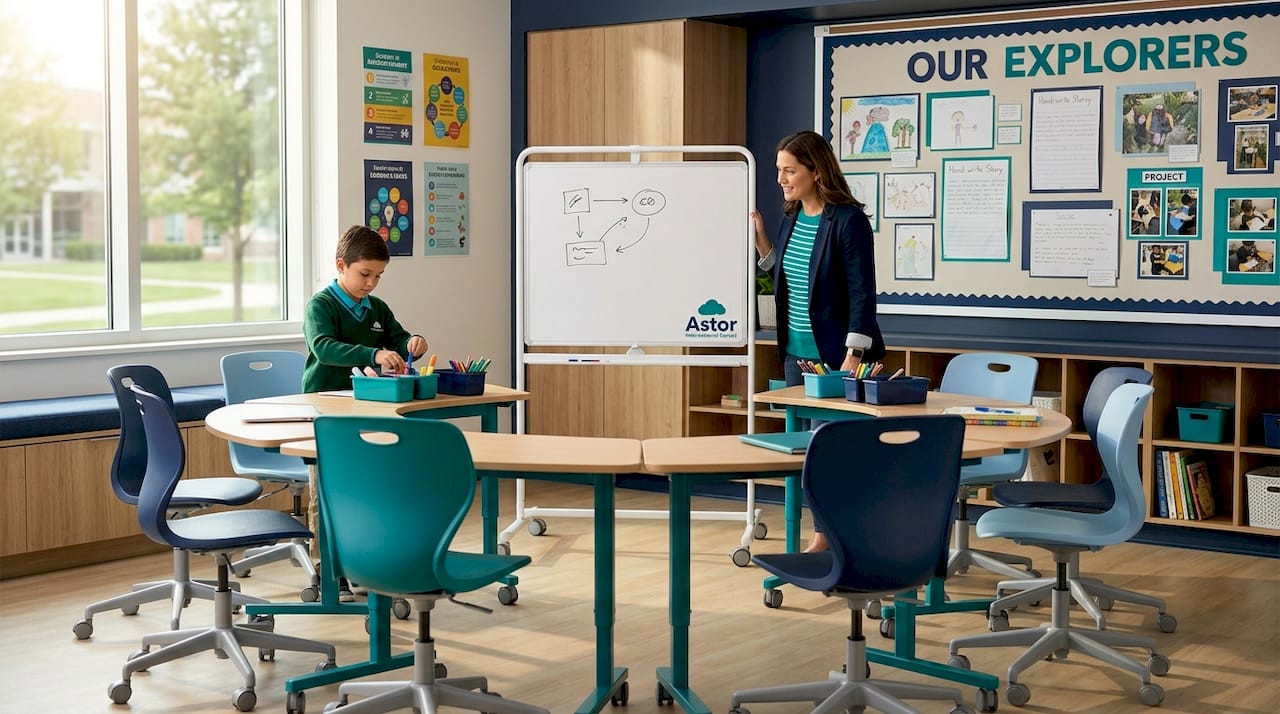
The design of a modern classroom reflects an understanding of how children actually learn. Configurable furniture allows a teacher to shift from whole-class instruction to small-group work within minutes. Multi-purpose zones give students space to move, create, and reflect. Student-centered layouts that prioritize student agency over passive reception are central to this model. The result is a learning environment that responds to the rhythm of a lesson rather than constraining it.
How physical space shapes the learning experience
Stanford’s Wallenberg Learning Space is one of the most studied examples of flexible classroom design. It uses configurable furniture and large, multi-input displays to allow instructors to switch between whole-group and small-group modes without disruption. This design principle, building spaces around instructional rhythms rather than fixed formats, is what separates a genuinely modern classroom from one that simply has newer equipment.
Physical environment also affects attention and wellbeing. Natural light, acoustic design, and clear visual organization reduce cognitive load and help children stay focused longer. When a classroom feels calm and purposeful, children are more likely to take intellectual risks, ask questions, and collaborate openly.
Movable tables and chairs allow rapid reconfiguration for different activities
Designated quiet zones support children who need focused, independent work time
Display areas for student work build a sense of ownership and pride in learning
Outdoor access or nature-connected spaces, like those at Astor International Preschool’s two playgrounds, extend learning beyond four walls
Pro Tip: If you are visiting a school, pay attention to how the furniture is arranged. A classroom where all chairs face the front suggests a lecture-first model. A room with clustered tables and open floor space signals a more interactive, child-centered approach.
How does technology impact learning outcomes in modern classrooms?
Technology improves learning most when it is aligned with clear instructional goals rather than simply made available. Access alone does not improve learning. The difference between a distraction and a learning tool is almost always the quality of the teaching design around it. This is a critical point for parents evaluating schools: the presence of tablets or smartboards matters far less than how teachers use them.
Artificial intelligence is the most discussed addition to modern classrooms right now, and its practical value is more specific than the headlines suggest. Research shows that teachers use generative AI primarily for instructional planning, creating personalized materials, and generating adaptive feedback rather than replacing core teaching. AI helps a teacher prepare differentiated worksheets for a mixed-ability class in minutes, or identify which students need additional support based on assessment patterns. That is genuinely useful, and it frees teachers to spend more time on the human work of teaching.
Responsible technology use in schools
The impact of AI on teaching effectiveness depends heavily on teacher preparation and risk management, including bias prevention and data privacy. Schools that introduce AI tools without adequate teacher training or governance frameworks often see inconsistent results. UNESCO’s guidance on generative AI in education emphasizes human-centered governance, including data privacy protections and age-appropriate ethical frameworks, as non-negotiable foundations for responsible adoption.
Screen time is another dimension that deserves honest attention. The U.S. Surgeon General’s office has advised schools to limit student screen time and maintain paper-and-pencil activities to support health and sustained attention. This does not mean technology is harmful. It means balance is the goal, and the best schools design their technology use with that balance in mind.
Here is a practical framework for evaluating technology use in any classroom:
Purpose first. Every digital tool should connect to a specific learning goal. If the goal is unclear, the tool is likely a distraction.
Teacher confidence. Effective technology integration requires clear routines and teacher support. Ask whether teachers receive ongoing professional development.
Privacy and governance. Schools should have clear policies on student data, AI use, and age-appropriate access.
Balance with offline learning. Strong programs combine digital tools with hands-on activities, discussion, and writing by hand.
Feedback loops. Technology should generate useful information for teachers, not just keep students busy.
Pro Tip: Ask your child’s school which specific AI or digital tools are used and how teacher training is structured around them. A school that can answer this clearly is one that has thought carefully about technology’s role.
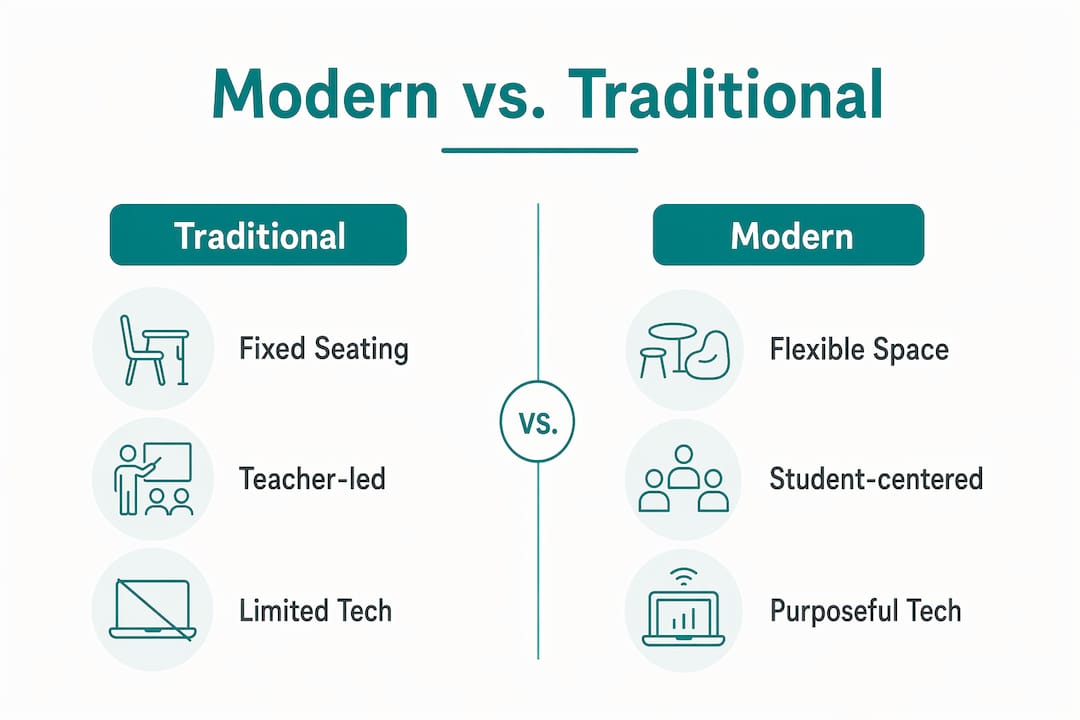
Traditional vs. modern classrooms: what actually changes?
The contrast between traditional and modern classrooms is not simply about technology. It is about who drives the learning and how instruction is structured.
Dimension | Traditional classroom | Modern classroom |
Instruction format | Front-of-class, teacher-led lecture | Blended, self-paced, and mastery-based learning |
Student role | Passive recipient of information | Active participant with agency over learning pace |
Physical layout | Fixed rows facing a single point | Flexible zones supporting multiple activity types |
Technology use | Minimal or supplementary | Integrated and purposeful, aligned to learning goals |
Assessment approach | Summative tests at fixed intervals | Ongoing formative feedback, including AI-assisted review |
Teacher role | Primary source of knowledge | Facilitator, coach, and learning designer |
Modern classrooms address real limitations of the traditional model. Fixed seating and one-pace instruction leave many children behind, either bored or struggling. Blended and mastery-based approaches allow children to consolidate understanding before moving forward, which is particularly valuable in small-class environments where teachers can monitor individual progress closely.
The challenges are real too. Screen time management, equitable access to devices, and the risk of technology becoming a novelty rather than a tool are genuine concerns. Teacher training and thoughtful pedagogical redesign are not optional extras. They are what make the modern classroom model work. Exploring game-based learning and active learning strategies are two ways schools bridge the gap between engagement and academic rigor.
How parents and educators can support learning in modern classrooms
Parents and educators play a direct role in making modern classroom environments effective. Understanding the tools and methods your child’s school uses is the starting point.
Learn the technology your child uses. You do not need to be an expert, but knowing whether your child uses platforms like Google Classroom, Seesaw, or similar tools helps you have informed conversations about their learning.
Encourage balanced screen use at home. Reinforce what good schools already practice. Set clear times for screens and make space for reading, drawing, outdoor play, and conversation.
Ask about classroom culture. Modern teaching methods work best in environments where children feel safe to ask questions and make mistakes. Ask teachers how they build that culture.
Support digital citizenship. Talk with your child about privacy, respectful online behavior, and the difference between using technology as a tool versus using it passively.
Stay in communication with educators. Modern classrooms generate more data about student progress than traditional ones. Use that information. Request regular updates and ask how you can reinforce learning at home.
The importance of interactive learning extends beyond the classroom walls. When parents understand and support the methods used at school, children experience a more consistent and confident learning journey.
Key takeaways
Modern classrooms function as ecosystems where adaptable space, purposeful technology, and skilled teaching combine to support every child’s learning and growth.
Point | Details |
Space design drives engagement | Flexible furniture and multi-purpose zones allow teachers to shift between instruction styles quickly. |
Technology needs teaching design | Access to devices alone does not improve outcomes; clear goals and teacher training are what make tools effective. |
AI supports teachers, not replaces them | Generative AI adds value in planning and feedback, not in replacing the human relationships at the core of teaching. |
Balance is non-negotiable | Screen time limits and offline activities protect children’s health and attention alongside technology use. |
Parent involvement amplifies impact | Children learn more consistently when parents understand and reinforce the methods used in their classroom. |
What I have learned watching modern classrooms evolve
By Elena
After years of observing how schools implement modern classroom principles, the pattern I see most often is this: schools invest in the technology and the furniture, then underinvest in the people. A room full of tablets and movable chairs does not become a modern classroom until the teacher knows exactly how to use that environment to serve each child’s learning.
The schools that get this right treat teacher professional development as a permanent commitment, not a one-time training day. They also treat governance, privacy, and ethical AI use as foundational, not as afterthoughts. What strikes me most is that the best modern classrooms I have visited are not the ones with the most technology. They are the ones where children look genuinely absorbed. Where a teacher can move from a whole-class discussion to a small-group activity without losing a single child’s attention. That kind of environment requires coordination across space, tools, and pedagogy that most schools are still learning to achieve.
The honest truth is that modern classroom design is not a destination. It is an ongoing practice. The schools worth trusting are the ones that know that.
— Elena
See modern classroom principles in action at Astor International School
Astor International School in Singapore’s Tanglin area puts these principles into practice every day. With small class sizes and an award-winning reputation as both the best small school and best affordable international school in Singapore, Astor gives every child the personal attention that makes modern teaching methods genuinely work. The IPC curriculum at Astor integrates technology, collaborative projects, and flexible learning environments designed to build curiosity and confidence in children aged 5 to 12. Astor’s enrichment programs extend that learning further, offering engaging experiences that connect classroom skills to the wider world. If you want to see what a thoughtfully designed modern learning environment looks like for your child, we warmly invite you to explore what Astor has to offer.
FAQ
What is the role of modern classrooms in education?
Modern classrooms combine adaptable physical spaces, integrated technology, and research-informed teaching methods to support personalized, collaborative, and self-paced learning. Their primary role is to create conditions where every child can engage meaningfully and grow at their own pace.
How do modern classrooms enhance learning for children?
Modern classrooms enhance learning by giving teachers the tools and space to respond to individual needs, shifting between whole-class instruction and small-group work fluidly. Flexible design and purposeful technology together support deeper engagement and stronger retention.
What is the impact of technology in classrooms on student outcomes?
Technology improves outcomes when it is aligned with clear learning goals and supported by trained teachers, not simply made available. Research confirms that teaching design and teacher confidence are the deciding factors in whether technology helps or hinders learning.
How should parents evaluate a modern classroom environment?
Parents should look at how furniture is arranged, ask which digital tools are used and how teachers are trained to use them, and find out how the school balances screen time with offline activities. A school that answers these questions clearly has thought carefully about its approach.
What makes small-class modern classrooms particularly effective?
Small class sizes allow teachers to monitor each child’s progress closely and adjust instruction in real time, which amplifies the benefits of modern teaching methods. Personal attention and flexible learning environments work best when teachers know every student well.
Recommended
Comments