

Why Choose Private School for Your Child: A Parent's Guide
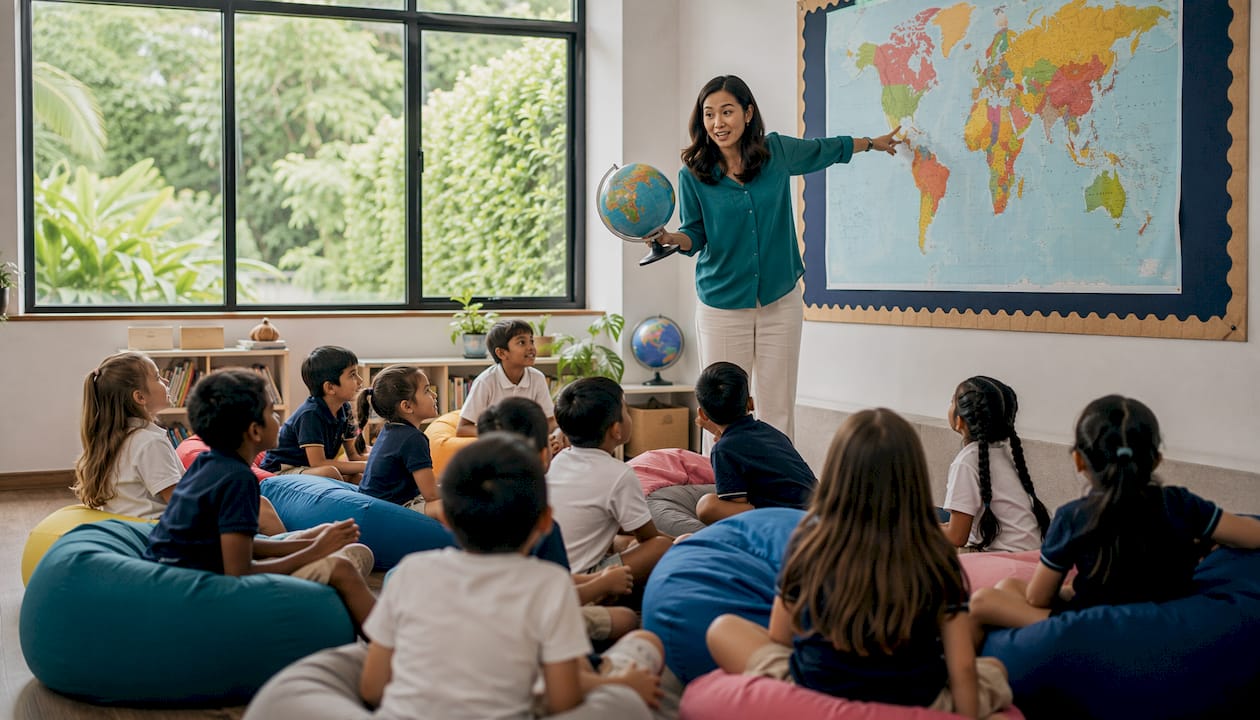
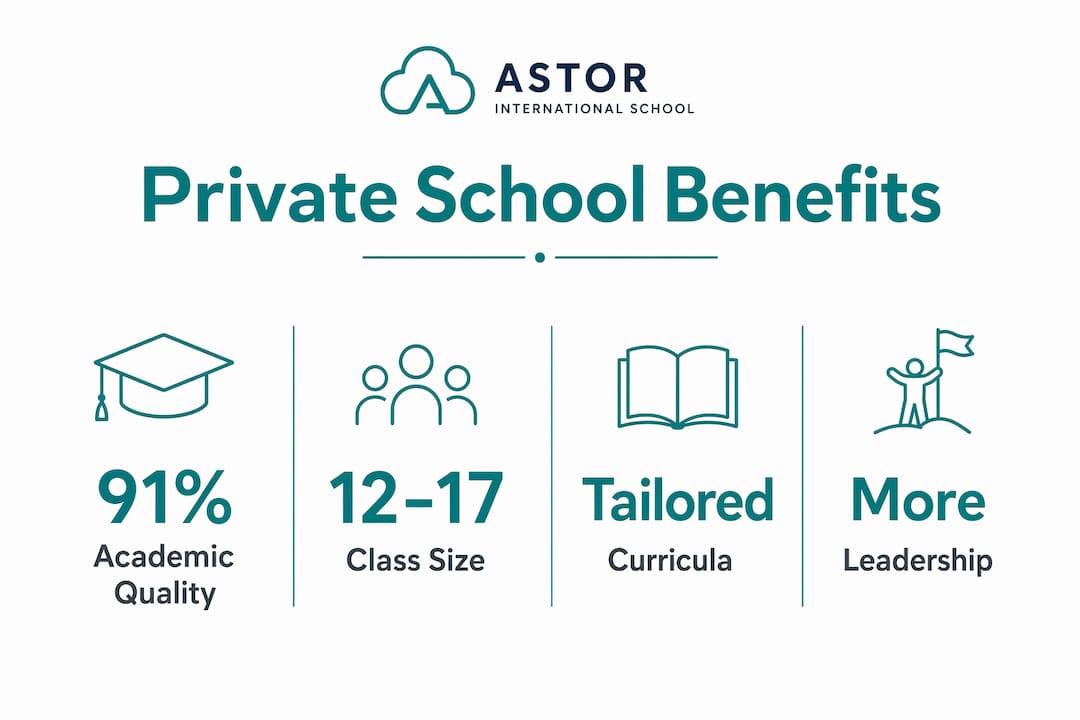
Private schooling is defined as a fee-based educational model where schools operate independently from government funding, giving them the freedom to set their own curricula, class sizes, and community values. That independence is exactly why choose private school remains one of the most searched questions among parents of young children. Academic quality is the top reason for enrollment, cited by 91% of parents who select private education. The core advantages are consistent: smaller classes, tailored learning, and a community built around shared values. For children aged 1.5 to 12, those factors shape not just academic results but confidence, curiosity, and a genuine love of learning.
Why choose private school? The class size advantage
The most immediate benefit of private education is the student-to-teacher ratio. Private school classes average 12–17 students, compared to 24–30 in public schools. That difference is not cosmetic. When a teacher manages 13 children instead of 28, every child gets more direct attention, more chances to speak, and faster feedback on their work.
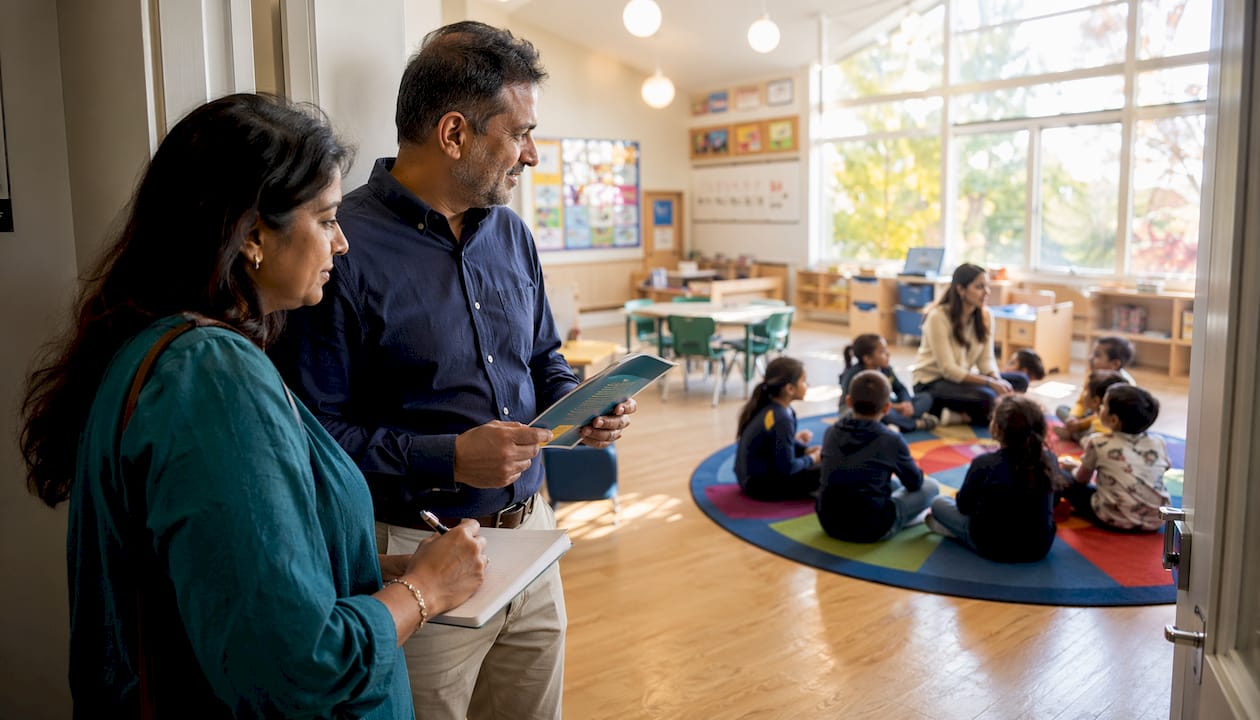
For children aged 1.5 to 12, this matters enormously. Early childhood and elementary years are when foundational skills in reading, numeracy, and social interaction are built. A teacher who knows each child’s strengths and struggles can adjust her approach daily. That kind of responsiveness is structurally impossible in a large class.
Smaller classes also change the social dynamic. Children in smaller groups tend to participate more, feel less anonymous, and develop stronger relationships with their teachers. Those relationships build the trust that makes learning feel safe rather than stressful.
Every child is called on regularly, not just the loudest voices.
Teachers spot learning gaps weeks earlier than in larger settings.
Quieter or more introverted children thrive when the room is less overwhelming.
Behavioral issues are addressed before they escalate.
Parents receive more specific, meaningful feedback at check-ins.
Pro Tip: When visiting a school, count the chairs in a classroom and ask the teacher how many students she sees daily. The answer tells you more than any brochure.
You can read more about small class size benefits and what the research says for children in Singapore specifically.
How do private schools offer more flexible curricula?
Private schools can adopt specialized curricula such as Montessori, classical education, or faith-based programs that public schools cannot easily replicate. That curricular freedom is one of the strongest reasons parents consider private schooling for young children. A child who learns best through hands-on exploration thrives in a Montessori environment. A family with strong religious values finds alignment in a faith-based school. Neither option exists in a standard public school.
Private schools also move faster. They do not need to wait for government approval to update a unit, introduce a new language program, or redesign how they teach mathematics. That agility means children benefit from current, evidence-based approaches rather than outdated mandated syllabi.
Here is how curriculum flexibility translates into real benefits for children aged 1.5 to 12:
Learning style matching. Schools can design lessons around how children actually learn, whether through movement, visual input, or structured repetition.
Bilingual and multilingual programs. Many private schools introduce a second language in preschool, when language acquisition is fastest.
Project-based learning. Inquiry-driven models build critical thinking from an early age, not just memorization.
Character and values integration. Schools with a clear mission weave social-emotional learning into every subject, not just a weekly class.
Enrichment depth. Private schools can go deeper into arts, science, or physical education without sacrificing core academics.
Alignment between a child’s temperament and the school’s teaching philosophy produces measurably better engagement. A child who feels understood by her school shows up curious, not reluctant.
What role does school culture and community play?
Private schools build mission-driven communities where parents, teachers, and students share a common purpose. That shared purpose is not incidental. It shapes how conflicts are resolved, how teachers communicate with families, and how children treat each other. When everyone in a school community agrees on what education is for, the environment becomes more consistent and more supportive.
Smaller communities also produce stronger social bonds. Children in boutique international schools know their classmates well across year levels, not just within their own class. That familiarity builds a sense of belonging that is harder to achieve in a school of 1,500 students.
Parent engagement is higher. Private school families tend to be more involved in school events, governance, and feedback loops.
Teacher turnover is often lower. Stable staff means children build lasting relationships with trusted adults.
Social-emotional development is prioritized. Smaller schools can track how each child is doing socially, not just academically.
Shared values reduce friction. When families choose a school for its mission, the community pulls in the same direction.
Private school students also access more extracurricular opportunities and leadership roles because the smaller pool means every child can lead a club, perform in a play, or captain a team. That breadth builds confidence and self-advocacy from a young age.
What financial considerations should parents weigh?
Private schooling is a significant financial commitment. Average tuition in some regions exceeds $22,000 per year, and that figure does not include uniforms, activity fees, or school trips. Parents need a clear-eyed view of the total cost before enrolling.
The opportunity cost is real. Money spent on tuition is money not growing in a retirement account or university savings fund. Families should model both scenarios honestly before committing. Financial aid and scholarships exist at many private schools, but they are not guaranteed and often require early application.
Ask for a full breakdown of fees, not just base tuition.
Request information on financial aid deadlines and eligibility criteria.
Calculate the total cost across the years your child will attend.
Consider whether the school’s specific advantages justify the cost for your child’s needs.
Pro Tip: Ask the admissions office for the “total cost of attendance” figure, including all mandatory and optional fees. Then compare that number to the school’s stated outcomes and community fit, not just its reputation.
Affordability does not mean settling. Some private schools offer benefits of affordable education without the premium price tag of elite institutions. The goal is value, not prestige.
How do you evaluate if private school fits your child?
School fit matters more than school reputation. Educational consultants consistently find that a child thriving in a well-matched school outperforms a child struggling in a prestigious one. The right school is the one that sees your child clearly and supports who she actually is.
Evaluating fit requires more than reading a website. Here is a practical process:
Visit multiple schools in person. Observe how teachers speak to children, how children interact with each other, and whether the environment feels calm and purposeful.
Assess your child’s learning style. A highly kinesthetic child needs movement built into the day. A child who needs quiet focus needs a calm, structured environment.
Ask about support services. Public schools provide legally mandated special education services that private schools are not required to offer. If your child has an individualized education plan, verify what accommodations the private school provides.
Talk to current parents. Their candid experience reveals what no open house presentation will.
Trust your observation over rankings. A school that feels right during a visit usually is right. A school that feels off, regardless of its awards, deserves a second look.
School quality varies widely within both public and private sectors. Family engagement and school fit predict outcomes more reliably than the private or public label alone.
Key Takeaways
Private schooling delivers the most value when the school’s size, culture, and curriculum genuinely match your child’s needs and your family’s priorities.
Point | Details |
Smaller classes change outcomes | Private schools average 12–17 students per class, enabling more personalized attention for each child. |
Curriculum flexibility is a real advantage | Private schools can adopt Montessori, classical, or bilingual models that public schools cannot easily offer. |
Community alignment matters | Mission-driven schools create consistent, supportive environments that benefit social-emotional development. |
Financial cost requires honest planning | Total annual costs often exceed base tuition; families should model opportunity costs before committing. |
Fit outweighs prestige | A well-matched school produces better outcomes than a prestigious school that does not suit your child. |
What I’ve learned after years of watching families choose schools
Parents often arrive at school visits with a checklist built around reputation and price. I understand why. Those are the easiest things to compare. But after years of working in and around international education, I’ve seen the pattern clearly: the families who are most satisfied are not the ones who chose the most decorated school. They are the ones who chose the school that felt right for their specific child.
The private school sector is not monolithic. Quality varies enormously. A school with a beautiful campus and a long waiting list can still be the wrong fit for a child who needs a quieter, more flexible environment. Conversely, a smaller, less famous school can be exactly where a child finds her confidence and her voice.
The financial sacrifice is only worth it when the benefits are tangible for your child, not theoretical. I’ve watched families stretch their budgets for schools that did not deliver what their child needed. I’ve also watched families find extraordinary value in smaller, more affordable private schools that most people had never heard of.
My honest advice: visit more schools than you think you need to. Bring your child when possible. Watch how the teachers speak to the children in the room, not just to you. The best learning happens when every child is truly seen and supported. That is not a slogan. It is the clearest indicator of a school worth choosing.
— Elena
Private education at Astor: small, personal, and purposeful
Edu, the Astor education network in Singapore, was built on exactly the principles this article describes. Astor International School in the Tanglin area serves children aged 5 to 12 in small classes, with a curriculum designed for individual growth. The school has been recognized as both the best small school and the best affordable international school in Singapore.
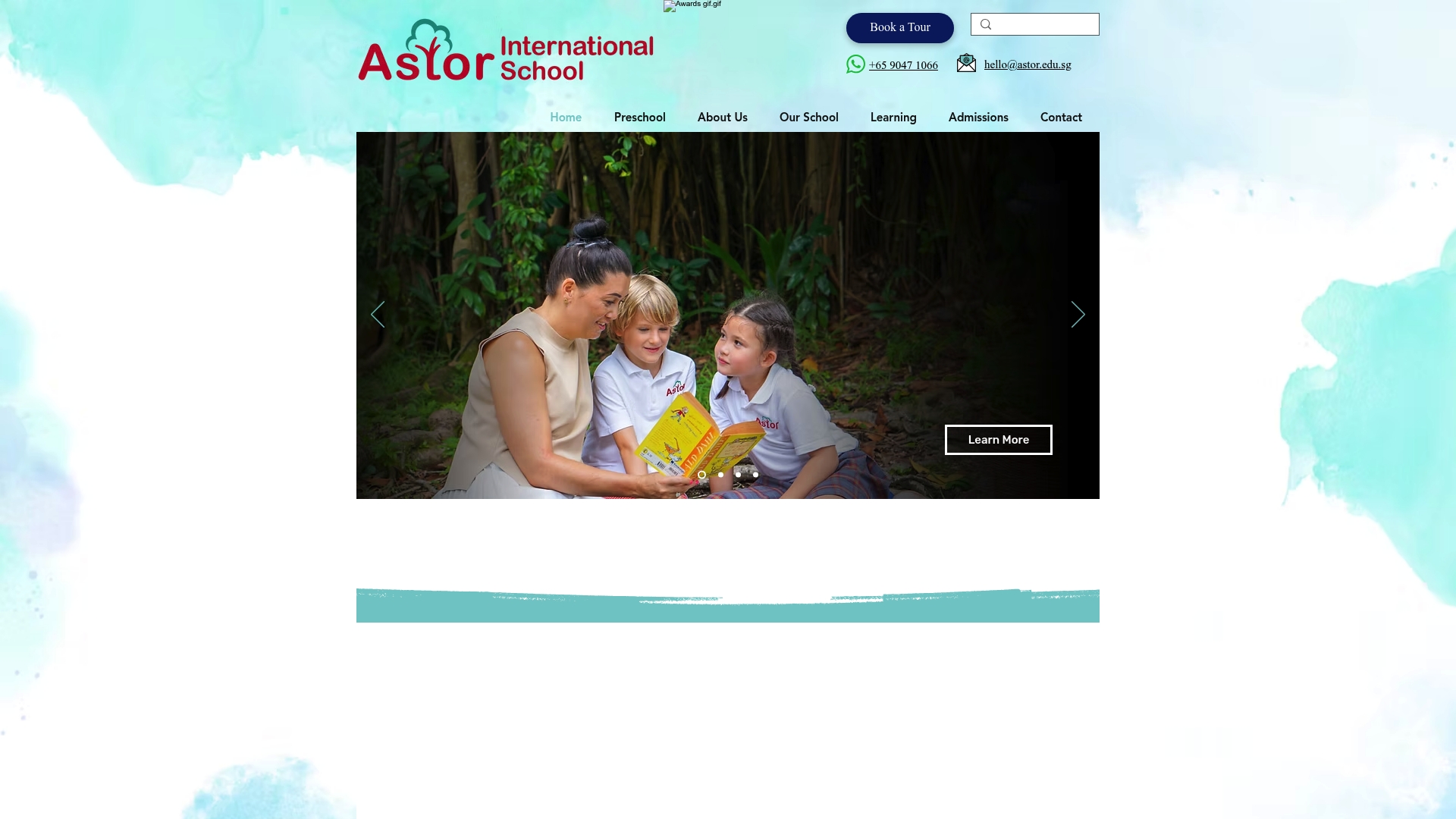
Astor’s International Primary Curriculum gives children a structured, engaging framework that connects learning to real-world curiosity. For younger children aged 1.5 and up, the Astor preschool in Holland offers a nurturing environment with two playgrounds and a blend of outdoor and classroom learning. Families are welcome to arrange a private school tour or join a virtual tour with founder Elena to see the community in action before making any decisions.
FAQ
Why do most parents choose private school?
91% of parents cite academic quality as their primary reason for choosing private education. Smaller class sizes and tailored curricula are the most commonly reported practical benefits.
What is the average class size in a private school?
Private school classes average 12–17 students, compared to 24–30 in public schools. That smaller ratio allows teachers to give each child more direct attention and faster feedback.
Do private schools have to provide special education services?
Private schools are not legally required to provide the same special education services as public schools. Parents of children with individualized education plans should ask each school directly about available accommodations.
Is private school worth the cost?
Private school is worth the cost when the school’s environment, curriculum, and community genuinely match your child’s needs. The opportunity cost of tuition is real, so families should weigh tangible benefits against long-term financial trade-offs.
How do I know if a private school is the right fit?
Visit the school in person, observe how teachers interact with children, and ask about support services. Fit and family engagement predict educational outcomes more reliably than school type or reputation alone.
Recommended
Admiring the time and effort you put into your blog and detailed information you offer!.. Enphase batterij
Nice knowledge gaining article. This post is really the best on this valuable topic. Sunpower Maxeon zonnepanelen
I really enjoy reading and also appreciate your work. SolarEdge thuisbatterij
I really enjoy reading and also appreciate your work. REC zonnepanelen
Took me time to understand all of the comments, but I seriously enjoyed the write-up. It proved being really helpful to me and Im positive to all of the commenters right here! Its constantly nice when you can not only be informed, but also entertained! I am certain you had enjoyable writing this write-up. Sma thuisbatterij