


Multicultural Classrooms: Benefits Every Educator Should Know
- sasha2644
- Aug 9
- 11 min read
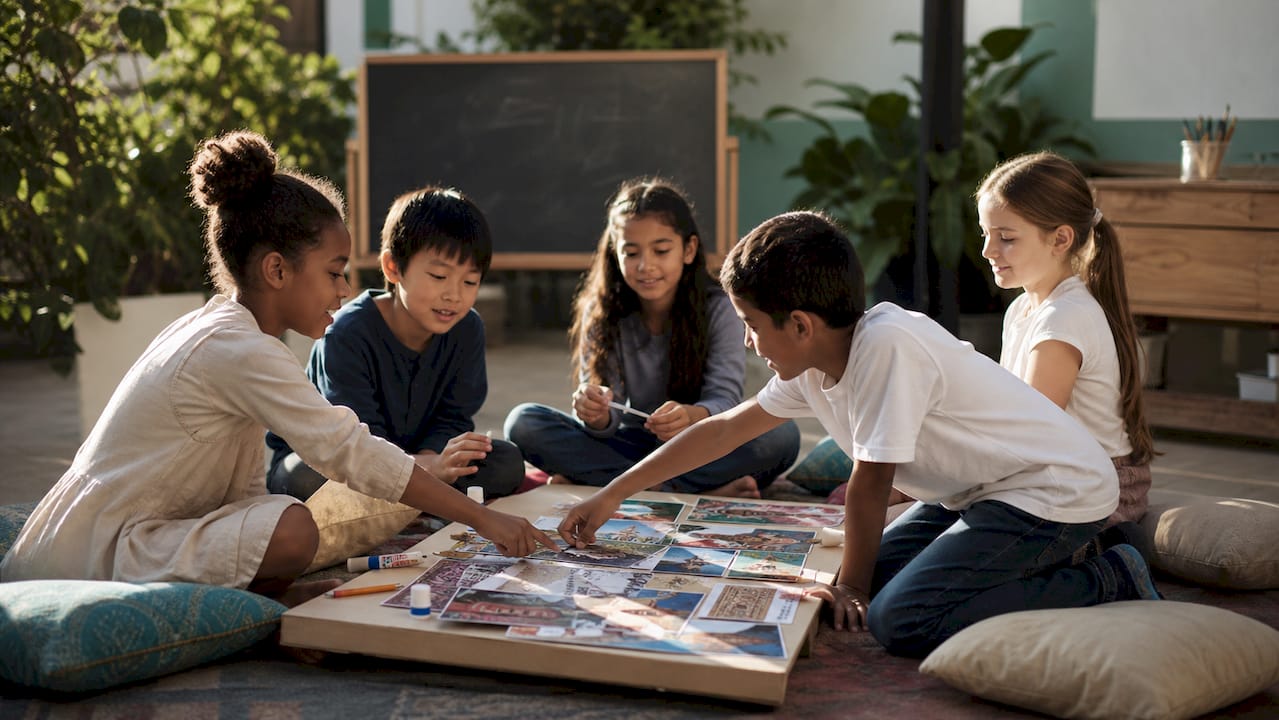
Multicultural classrooms produce measurable gains across four areas that matter most to families and educators: academic achievement, social-emotional growth, language development, and civic and career readiness. A meta-analysis of 79 studies involving 56,552 students found that multiculturalism-focused school climates are significantly and positively related to academic achievement, motivation, belonging, and intergroup outcomes. These benefits reach every child in the room, not just students from minority backgrounds. The catch is that they don’t arrive automatically. Demographic diversity alone is not enough. The benefits of multicultural classrooms depend on active, intentional inclusive practice every single day.
Key Takeaways
Multicultural classrooms produce academic, social-emotional, language, and civic benefits for all students when schools pair demographic diversity with active, intentional inclusive practice.
Point | Details |
Research base is strong | A meta-analysis of 79 studies (56,552 students) found multiculturalism-focused climates positively linked to achievement, motivation, belonging, and intergroup outcomes. |
Friendships are the mechanism | Classroom diversity increases cross-ethnic friendships, and those friendships drive reduced prejudice over time, not diversity alone. |
Banks’s five components work together | Content integration, knowledge construction, prejudice reduction, equity pedagogy, and empowering school culture produce the strongest results when combined. |
Colorblindness undermines benefits | Climates that ignore cultural difference show no consistent positive outcomes; explicitly valuing difference is what produces gains. |
Measure and adjust each term | Track belonging scores, cross-group friendships, participation equity, and disciplinary patterns to confirm practices are benefiting all students. |
Table of Contents
What does the research actually say about multicultural classrooms?
What social-emotional advantages do diverse classrooms create?
How do multicultural classrooms support language and communication skills?
What civic and career benefits come from multicultural education?
How does James A. Banks’s framework explain why these benefits happen?
What classroom and school strategies actually maximize these benefits?
How can schools measure whether multicultural practices are working?
What are the most common pitfalls, and how do you avoid them?
An educator’s perspective on what multicultural classrooms really produce
What does the research actually say about multicultural classrooms?
The evidence base here is stronger than most educators realize. That 79-study meta-analysis is the most comprehensive synthesis to date, covering small-to-medium positive effects for optimal contact conditions and consistent positive associations between multiculturalism-focused climates and academic, belonging, and intergroup outcomes. It’s not a single promising trial. It’s a pattern across tens of thousands of students.
Longitudinal work adds another layer. A five-year study of adolescents found that classroom diversity increases the likelihood of cross-ethnic friendships, and those friendships are what actually drive reduced anti-immigrant attitudes over time. Diversity doesn’t change attitudes directly. Friendships do. That distinction shapes how schools should design their programs.
Two consensus points emerge from the broader literature. First, climates that explicitly value difference outperform colorblind approaches. A climate that ignores difference shows no consistent positive association with academic or social-emotional outcomes. Second, structured contact and inclusive pedagogy are the active ingredients. The Century Foundation’s policy review confirms that racially and ethnically diverse settings produce cognitive, social, and civic benefits for both majority and minority students, but only when the school environment is designed to make that diversity meaningful.
Moderators matter too. Age level, school climate, and academic tracking all influence how strongly benefits appear. A diverse school that sorts students into racially homogeneous tracks can undercut most of what the research promises.
How do multicultural classrooms improve academic outcomes?
The academic case for culturally inclusive learning is grounded in how thinking works, not just in equity values. When students encounter multiple perspectives on the same problem, they are pushed to examine their own assumptions, consider alternative explanations, and build more complex mental models. That process is the engine of critical thinking.
University of Kansas School of Education guidance synthesizes research showing that inclusive curricula and multicultural classroom practices are associated with higher student achievement, cultural competence, and increased empathy. The gains show up in measurable ways:
Improved academic achievement across subject areas, particularly when curriculum reflects students’ own cultural knowledge and experiences.
Stronger motivation and engagement, because students who see themselves in the material invest more in it.
Deeper critical thinking, driven by exposure to multiple cultural frameworks for understanding the same concept.
Richer classroom discussion, as students bring genuinely different lived experiences to collaborative tasks.
A history class that examines World War II through American, Japanese, and European perspectives produces a different quality of analysis than one that covers a single viewpoint. Students argue more carefully, question sources more readily, and produce more nuanced written work. Teachers who have made this shift often describe it as one of the most noticeable improvements in classroom quality they’ve experienced.
The UCLA equity report on diversity within the classroom reinforces this, noting that meaningful engagement with diverse content promotes cognitive development in ways that surface-level exposure does not. Depth of engagement is what produces the academic lift.
What social-emotional advantages do diverse classrooms create?
The social-emotional benefits of inclusive classrooms are among the most durable findings in education research. Students in well-designed multicultural environments develop stronger empathy, form more cross-ethnic friendships, and report higher levels of belonging and well-being. These are not soft outcomes. They predict behavior, safety, and long-term civic engagement.
Reduced prejudice, particularly when diverse students work together on shared goals through structured cooperative learning.
Cross-ethnic friendships that persist even after students transition to new schools, as the longitudinal adolescent study demonstrated.
Stronger sense of belonging, which is one of the most consistent predictors of academic persistence.
Greater empathy and perspective-taking, developed through regular, guided interaction with peers from different backgrounds.
Structured cooperative learning is the classroom mechanism that makes these gains reliable. When students from different backgrounds work together toward a shared outcome, with clear roles and accountability, attitude shifts tend to follow. A jigsaw activity, where each student becomes the “expert” on one piece of a larger topic and then teaches it to peers, is a well-documented example. Every student contributes knowledge the group needs, which builds mutual respect naturally.
The important caveat is that these benefits depend on active inclusion, not passive proximity. Placing students from different backgrounds in the same room without structured interaction and a genuinely welcoming climate produces little. Building a positive classroom culture where every student feels seen and valued is the prerequisite, not the bonus.
How do multicultural classrooms support language and communication skills?
Language development is one of the most practical and immediate advantages of culturally inclusive learning environments. Students who grow up in multilingual classrooms tend to develop stronger bilingualism outcomes, better executive function, and more sophisticated communication and listening skills than peers in monolingual settings.
Stronger bilingualism and multilingualism, with research favoring dual-language approaches over English-only instruction for long-term academic outcomes.
Improved executive function, including attention control and cognitive flexibility, which are associated with managing two or more language systems.
Better listening and communication skills, developed through regular practice navigating different communication styles and registers.
Greater metalinguistic awareness, meaning students develop a sharper understanding of how language itself works by comparing structures across languages.
KU School of Education guidance notes that multilingual approaches often lead to better academic outcomes and stronger English proficiency than English-only programs. This runs counter to the instinct some schools have to suppress home languages in favor of English immersion. The evidence points the other way.
Pro Tip: Treat multilingual students as classroom assets rather than students who need remediation. Ask a student who speaks Mandarin or Spanish to share how a concept is expressed in their home language, then discuss what that reveals about the concept itself. This builds metalinguistic awareness for the whole class while affirming the multilingual student’s identity.
What civic and career benefits come from multicultural education?
The long-term payoff of multicultural education extends well beyond the classroom walls. Students who learn in genuinely inclusive environments develop civic dispositions and workforce skills that follow them into adulthood.
On the civic side, the APA’s practitioner resources summarize evidence that inclusive curricula and guided discussions reduce prejudice and increase critical thinking and civic attitudes in K–12 settings. Students who engage meaningfully with diversity tend to show:
Greater civic participation and democratic dispositions in later life.
Increased awareness of systemic inequality, particularly when taught through structured inquiry rather than passive exposure.
Stronger motivation to engage with communities different from their own.
The career case is equally compelling. Employers consistently report that cross-cultural collaboration, creativity, and problem-solving are among the skills most difficult to find in new graduates. The Century Foundation review notes that diversity experiences predict more diverse workplaces and higher civic participation later in life. Students who have practiced navigating difference in a safe, structured environment arrive at work already fluent in the skills that global teams require.
Teamwork across difference, comfort with ambiguity, and the ability to synthesize perspectives from multiple cultural frameworks are not soft skills. They are the competencies that define high-performing teams in virtually every sector.
How does James A. Banks’s framework explain why these benefits happen?
James A. Banks’s five-component framework is the most widely used and empirically supported model for understanding how multicultural education produces its benefits. The ERIC review of Banks’s framework shows that combined implementation of all five components most reliably improves outcomes. Using one or two in isolation produces weaker results.
Content integration. Teachers draw on examples, data, and perspectives from multiple cultures to illustrate concepts across all subjects. In practice: a math teacher uses statistical examples drawn from different countries; a science teacher includes contributions from non-Western scientific traditions.
Knowledge construction. Students learn to examine how cultural assumptions shape the production of knowledge itself. In practice: students analyze primary sources from multiple cultural perspectives on the same historical event and discuss whose voices are absent.
Prejudice reduction. Structured activities and guided discussions are designed specifically to reduce bias and build cross-cultural understanding. In practice: a bias-literacy module where students examine their own implicit associations, followed by structured small-group discussion.
Equity pedagogy. Teachers adapt their instructional methods to support the learning styles and cultural backgrounds of all students, not just the dominant group. In practice: offering multiple ways to demonstrate mastery, including oral presentations, visual projects, and written work, so no single format advantages one cultural group over another.
Empowering school culture. The school’s structures, policies, and climate actively support equity. In practice: reviewing grouping and tracking policies to prevent racialized academic sorting; celebrating cultural events in ways that go beyond tokenism.
Student-centered classroom approaches pair naturally with this framework, since both prioritize student voice, cooperative learning, and differentiated instruction.
What classroom and school strategies actually maximize these benefits?
Research points to a clear set of practices that convert the promise of multicultural education into daily reality. These work at both the classroom and school level.
For teachers:
Structured cooperative learning with intentional cross-cultural grouping. Assign roles, set shared goals, and debrief the process as well as the product.
Culturally relevant materials that reflect the backgrounds of students in the room. Audit your reading lists and resource sets annually.
Discussion norms for hard conversations. Establish sentence starters, listening protocols, and clear agreements about respectful disagreement before tackling sensitive topics.
Multilingual supports such as bilingual glossaries, translated family communications, and space for home-language use during collaborative tasks.
Inclusive assessment practices that offer multiple formats and avoid penalizing students for cultural communication differences.
For schools:
Schedule cross-grade cultural projects that bring older and younger students together around shared inquiry.
Invest in professional development focused on equity pedagogy, not just cultural awareness. Teachers need practical instructional tools, not only sensitivity training.
Conduct tracking audits at least annually to identify whether advanced and remedial courses are racially or ethnically homogeneous. Racialized tracking is one of the most common ways diverse schools reproduce internal segregation.
Run family and community events that invite genuine cultural exchange, not just performance. The importance of celebration days in international school settings offers practical guidance on doing this well.
Classroom activities worth trying:
Cultural Carousel: stations around the room, each featuring artifacts, texts, or questions from a different cultural tradition. Students rotate and respond in writing before a whole-class debrief.
Global Friendship Project: students research a peer school in another country, exchange questions, and present findings to the class.
Bias-literacy modules: short, structured sessions where students examine a specific bias, discuss its origins, and practice reframing.
Pro Tip: Reach out to one family from a cultural background underrepresented in your current curriculum and ask if they’d be willing to share a story, a recipe, a song, or a professional skill with the class. That single conversation often opens a sustained partnership that enriches the whole year.
How can schools measure whether multicultural practices are working?
Measurement doesn’t require expensive tools. The most useful indicators are ones teachers and administrators can track with existing data and simple surveys.
Key indicators to monitor each term:
Changes in cross-group friendship counts, gathered through brief sociometric surveys where students list their closest friends by name.
Student belonging scores, using a validated short-form survey such as the Psychological Sense of School Membership (PSSM) scale.
Participation equity in classroom discussions, tracked informally by noting which students speak, ask questions, and contribute to group work.
Disciplinary referral patterns, disaggregated by race, ethnicity, and language background to identify disproportionality.
Language proficiency gains for multilingual learners, tracked against district benchmarks.
A simple three-question end-of-term student reflection (“Do you feel your background is respected here? Do you have friends from different backgrounds? Do you feel comfortable sharing your ideas in class?”) can surface issues that formal data misses.
Involve students, teachers, and families in the measurement process. Students notice things adults don’t. Families can report whether children are talking about school differently at home. Teachers can share what they observe in group dynamics. Reviewing results together, rather than in administrative isolation, builds the shared ownership that sustains improvement. School leadership practices that distribute this kind of reflective work across the whole staff tend to produce more consistent progress.
What are the most common pitfalls, and how do you avoid them?
The research is clear that multicultural education can fail, and the failure modes are predictable. Knowing them in advance is the most practical form of preparation.
Colorblind approaches. Treating all students “the same” by ignoring cultural difference sounds fair but produces no measurable benefit. Climates that explicitly value difference consistently outperform colorblind ones. Mitigation: name and celebrate difference deliberately, not just during heritage months.
Racialized academic tracking. A school can be demographically diverse and internally segregated at the same time. When advanced courses are predominantly one race and remedial courses another, the benefits of diversity never reach the students who need them most. Mitigation: conduct annual track audits and review placement criteria for cultural bias. The Greater Good research summary from UC Berkeley addresses this directly.
Tokenistic culture days. A single “International Food Fair” does not constitute multicultural education. It can actually reinforce stereotypes when it reduces cultures to food and costumes. Mitigation: integrate cultural perspectives into daily instruction rather than confining them to special events.
Microaggressions left unaddressed. When students make dismissive or stereotyping comments and teachers don’t respond, the message to affected students is that their discomfort doesn’t matter. Mitigation: establish clear classroom agreements and practice brief, calm response scripts before incidents occur.
Insufficient teacher preparation. Teachers who feel unprepared to facilitate difficult conversations often avoid them, which leaves the hardest work undone. Mitigation: prioritize professional development that builds specific facilitation skills, not just awareness. Cultivating respect in the classroom offers practical routines that support this work.
Red flags for administrators: rising disciplinary disproportionality, declining belonging scores among minority students, or a curriculum audit that reveals only one cultural perspective across core subjects. Any of these signals that the practices are not yet benefiting all students.
An educator’s perspective on what multicultural classrooms really produce
The most striking thing about multicultural education, from where I sit, is how often its critics and its champions both miss the same point: the benefits are not primarily about the students who are “different.” They are about what happens to every child’s thinking when the room contains genuine difference and the teacher knows how to use it.
I’ve watched a class of ten-year-olds spend forty minutes debating whether a historical decision was “right” after reading accounts from three different cultural perspectives. The quality of reasoning in that room was unlike anything a single-perspective lesson produces. Students were checking each other’s logic, asking for evidence, and changing their minds out loud. That is the cognitive gain the research describes, and it is visible in real time.
The temptation for schools is to treat multicultural education as a values project, something you do because it’s the right thing. It is the right thing. But it is also a performance lever. Schools that implement Banks’s five components with fidelity, that build harmonious classroom environments where every student’s background is a resource rather than a footnote, tend to see gains in exactly the outcomes families care most about: engagement, achievement, and the kind of confidence that carries children forward.
Start with one strategy this week. Pick one lesson and add a second cultural perspective to it. Notice what changes in the discussion.
Sources
These sources represent the strongest evidence base and most practical implementation guidance available for educators and school leaders.
Recommended

Comments