


How to Choose Preschool: A Practical Checklist
Updated: Sep 29
Choose the preschool where your child’s temperament, your family’s daily logistics, and verified quality markers all line up, not just the one with the prettiest brochure. That means confirming a valid ECDA licence, checking whether the centre carries SPARK accreditation, and watching how teachers actually talk to children before you sign anything.
Every legitimate preschool operating must hold a current ECDA licence, and you can check this on the public register in under two minutes. SPARK, by contrast, is voluntary. A centre that has earned it has been independently assessed against a quality benchmark, so it tells you something a licence alone doesn’t. Neither one, though, tells you whether your particular three-year-old will thrive in that particular classroom. That part still requires a visit, a set of sharp questions, and a little trust in your own eyes.
Here’s where to start today:
Pull up the ECDA register and confirm licence status for every centre on your list.
Check each centre’s SPARK status and note whether it’s “Achieving” or “Sustaining” level.
Call ahead to ask about class sizes, teacher qualifications, and staff turnover before you book a tour.
Then move through these steps in order:
Shortlist three to five centres based on location, hours, and licence class.
Schedule a visit or trial day during normal operating hours, not a staged open house.
Compare notes using a simple checklist so the decision doesn’t come down to which lobby smelled nicest.
Key Takeaways
Choosing a preschool comes down to verifying ECDA licence and SPARK status first, then prioritizing teacher quality and genuine fit over facilities or price.
Point | Details |
Verify licensing first | Check every shortlisted centre’s ECDA licence and SPARK status before booking a visit. |
Teacher quality outranks facilities | Research from Harvard links warm, stable teacher relationships to better outcomes than fancy buildings. |
Match service type to your schedule | Confirm whether infant care, child care, or kindergarten hours actually fit your family’s daily logistics. |
Budget beyond tuition | Ask for an itemized fee schedule covering registration, deposits, materials, meals, and transport. |
Consider Astor as a small, inquiry-based option | Astor’s Holland preschool and Tanglin school offer small classes and outdoor learning, but still verify their ECDA/SPARK status like any centre. |
Visit during regular operating hours, not a staged event, and trust what you observe in how teachers actually talk to children over what any brochure claims.
Table of Contents
What Types of Preschool Are Available in Singapore?
Preschool isn’t one product. It’s a set of licence classes that each solve a different family problem, and matching the right class to your child’s age and your work schedule saves you from touring centres that were never going to fit.
Infant care covers children from about two months to 18 months old, typically running full-day hours to support working parents. Child care, sometimes labeled full-day preschool, spans roughly 18 months to six years and blends structured curriculum time with rest, meals, and play across a long day. Kindergarten programs, often half-day, generally serve children aged four to six and focus more tightly on school-readiness skills ahead of Primary 1.
Service Type | Typical Age Range | Typical Hours | What It Solves For |
Infant care | 2 to 18 months | Full-day (around 7 AM to 7 PM) | Working parents needing consistent daily care for babies |
Child care | 18 months to 6 years | Full-day | Working families needing curriculum plus extended care |
Kindergarten | 4 to 6 years | Half-day (morning or afternoon sessions) | Families wanting focused school-readiness without full-day hours |
Pro Tip: If you and your partner both work full-time, ruling out half-day kindergarten options early saves hours of touring centres that simply can’t cover your day. Ask about operating hours before you even ask about curriculum.
Some centres also offer a mix, letting families start with half-day kindergarten and add extended hours as needs change. Ask directly whether a centre’s licence class covers the flexibility you’ll likely need next year, not just this year.
What Should Parents Look for When Choosing a Preschool?
Teacher quality sits above everything else on this list, and it isn’t close. Research from the Harvard Graduate School of Education identifies warm, responsive teacher-child relationships as one of the strongest predictors of how well a child does in preschool, ahead of facilities, brand name, or marketing polish. That single finding should reorder how you weigh every other factor on your list.
Your top-priority checklist:
Teacher quality and interactions: Do teachers get down to a child’s eye level, respond to questions, and redirect behavior calmly rather than sharply?
Curriculum approach: Is the centre genuinely implementing the Nurturing Early Learners framework, or just using the term in a brochure?
Class size and ratios: Smaller groups generally mean more individual attention and fewer moments where a child gets lost in the shuffle.
Staff stability: Ask how long the lead teacher for your child’s likely class has been there.
Secondary factors that still matter:
Location and commute time, especially for daily drop-off logistics.
Operating hours and whether subsidy programs like KCare apply to your household income.
Extra fees beyond the headline tuition figure.
Outdoor play space and how often it’s actually used, not just how it looks in photos.
Health and hygiene protocols, including how allergies and illness are handled.
Bring these questions on your visit. They map directly to the priorities above and tend to surface answers a glossy tour won’t:
What are the qualifications of the teacher assigned to my child’s class?
How long has that teacher been with the centre?
What does a typical day look like, hour by hour?
How do you handle a child who’s having a hard day emotionally?
What does NEL-aligned learning look like in this specific classroom?
How often do children play outdoors, and for how long?
What’s your teacher-to-child ratio for this age group?
How do you communicate with parents about daily progress or concerns?
What’s included in tuition, and what costs extra?
Do you participate in HPB’s healthy meals program?
What’s your policy for reporting incidents or injuries?
How do you handle transitions, like moving up a class or preparing for Primary 1?
On costs, budget for more than the sticker price. Registration fees, security deposits, monthly tuition, materials fees, meal charges, enrichment add-ons, and transport can each show up as separate line items, and fees vary widely between subsidized and private options. Ask for an itemized fee schedule before you commit, not after.
Pro Tip: Choosing on price alone, or because a centre threw a spectacular open house, is the fastest route to a decision you’ll regret by term two. A quiet Tuesday morning tells you more than any launch event ever will.
How Do You Search and Shortlist Preschools?
Start by searching the ECDA register or the LifeSG preschool search tool to confirm which licensed centres actually operate near your home or workplace. From there, check SPARK status for each one, then scan parent forums and reviews for patterns rather than one-off complaints. A structured five-step process, moving from priorities to research to shortlist to visit to comparison, tends to produce better decisions with less second-guessing than an open-ended search that never quite narrows down.
Timing matters more than most parents expect. Popular centres, especially those near MRT stations or business districts, often fill up months before a term starts.
Statistic Callout: Preschool fees in Singapore range dramatically depending on whether a family qualifies for subsidies, with subsidized options running far cheaper than private international programs, according to a comparative review of Singapore preschools. That gap makes early subsidy checking worth doing before you fall in love with a centre you can’t actually afford.
Pro Tip: Start your search at least four to six months before your intended enrollment date, and longer if you’re targeting a popular centre near your workplace. Waitlists move slowly, but decisions made under time pressure move fast, in the wrong direction.
Once you’ve narrowed to three to five centres, prepare your documents (birth certificate, immunization records, proof of address), confirm subsidy eligibility, and call each centre to schedule a visit during normal hours. Ask specifically to meet the teacher who would lead your child’s class, not a generalized admissions staffer.
What Should You Look for During a Preschool Visit?
A thirty-minute walkthrough during actual class hours tells you more than any prospectus. Watch for these signs of a well-run classroom:
Teachers speaking to children warmly and at eye level, not issuing instructions from across the room.
Age-appropriate play that looks purposeful rather than chaotic or overly rigid.
Posted daily routines and schedules visible on classroom walls.
Genuine outdoor time built into the day, not a token five minutes.
Learning materials that show wear from actual use, not display pieces.
Red flags deserve equal attention, and they’re often easier to spot than the positive signs:
Frequent staff turnover, especially if multiple parents mention it independently.
Heavy reliance on worksheets and drilling for very young children.
Children left unsupervised, even briefly, in play areas.
Visible hygiene lapses, from unclean surfaces to poor handwashing habits.
Vague or evasive answers about incident reporting and injury policies.
Bring this short script to your tour:
Can I see the classroom my child would actually join?
How do you handle separation anxiety in the first weeks?
What’s your daily schedule, and can I see it posted somewhere?
How many staff changes has this class had this year?
What happens if my child gets hurt or falls ill during the day?
How is outdoor time structured, and how often does it happen?
Can I speak briefly with the lead teacher?
What does parent communication look like week to week?
How do you support children with different learning paces?
What would a typical Tuesday look like for a child my child’s age?
A director who answers these clearly and specifically, rather than looping back to marketing language, is usually running a centre worth a second visit.
How Do ECDA Licensing, SPARK, and NEL Affect Quality?
Every licensed preschool must meet ECDA’s baseline requirements, covering staff qualifications, facility safety, and group size limits. That’s the floor, not the ceiling. SPARK accreditation sits above it as a voluntary quality mark, with centres assessed at “Achieving” or “Sustaining” levels depending on how consistently they meet defined benchmarks across curriculum, teaching, and leadership.
NEL, the Nurturing Early Learners framework, shapes what’s taught rather than how a centre is licensed. It emphasizes play-based learning across literacy, numeracy, physical development, and social-emotional growth. The trouble is that “NEL-aligned” has become a phrase almost every preschool prints somewhere, whether or not the daily classroom reflects it.
What to Check | Where to Verify | What It Tells You |
Licence status | ECDA public register | Whether the centre meets baseline legal and safety requirements |
SPARK status and level | ECDA SPARK information page | Whether an independent assessor has rated the centre’s quality |
Curriculum implementation | Direct observation on a visit | Whether NEL claims match actual classroom practice |
Licence tenure and history | ECDA register, parent inquiries | How long the centre has operated and whether any complaints surface |
To verify NEL claims yourself, watch for children learning through hands-on play, guided by a teacher who asks questions rather than delivers lectures. If most of the day involves seated worksheet time, that’s a mismatch between marketing and practice worth raising directly with the director.
Confirm licence tenure by asking how long the centre has held its current licence.
Ask about the centre’s inspection history, since ECDA conducts periodic reviews.
Search for any public complaints or enforcement actions tied to the centre’s name.
Cross-check SPARK level against the centre’s own claims on its website.
What Does Research Say Makes a Preschool Truly High Quality?
That’s the core finding running through Harvard’s research on preschool selection, and it should reshape how you weigh a fancy campus against a modest one with a settled teaching team. Staff stability and genuine warmth outperform architecture almost every time.
Here’s how those research findings translate into things you can actually check on a visit:
Ongoing professional development: Ask whether teachers attend regular training, since this correlates with more responsive, informed teaching practice.
Posted routines and predictable structure: Children thrive on consistency, and a visible daily schedule is a low-cost signal that the centre has thought this through.
Low visible turnover: If the same lead teacher has been there two or three years, that’s a genuinely good sign, not a coincidence.
Play-led activities with adult scaffolding: Teachers who join play and extend it with questions are applying NEL principles in practice, not just on paper.
Evidence of individualized attention: Look for teachers who know children’s names, preferences, and quirks within the first weeks of term.
These aren’t abstract academic points. They’re the difference between a centre that photographs well and one that actually supports your child’s development day to day.
Balancing the Ideal Preschool Against Real-World Constraints
No preschool checks every box. I’ve yet to see one that combines the smallest class sizes, the shortest commute, the lowest fees, and a waitlist you can actually get off. Somewhere in that list, you’ll have to give ground, and the honest question isn’t which centre is perfect. It’s which trade-off you can live with for the next two or three years.
My rule, after weighing everything the research and the checklists point to, is simple: prioritize teacher quality and genuine fit for your child’s temperament first, then logistics, then everything else. A slightly longer commute to a centre with a warm, stable teaching team beats a five-minute walk to one with high turnover and a beautiful lobby. Budget matters too, of course, but it should be the tiebreaker between two centres that already pass the teacher-quality and fit tests, not the first filter you apply. Smaller, inquiry-based programs, like the boutique preschools some Singapore families are drawn to for exactly this reason, often make that trade-off easier because continuity and individual attention are built into how the class is structured, not bolted on as a marketing point.
How Astor’s Preschool and School Fit This Checklist
If small class sizes and genuine hands-on learning are near the top of your list, Astor’s approach was built around exactly that trade-off. Astor International Preschool, located in the Holland area, runs as a small, boutique program with two playgrounds and a deliberate mix of outdoor and classroom learning, rather than one long indoor day punctuated by worksheets. Its sibling campus, Astor International School in Tanglin, extends that same small but mighty philosophy through the primary years for children aged five to twelve, and has been recognized as one of Singapore’s best small schools and best affordable international schools.
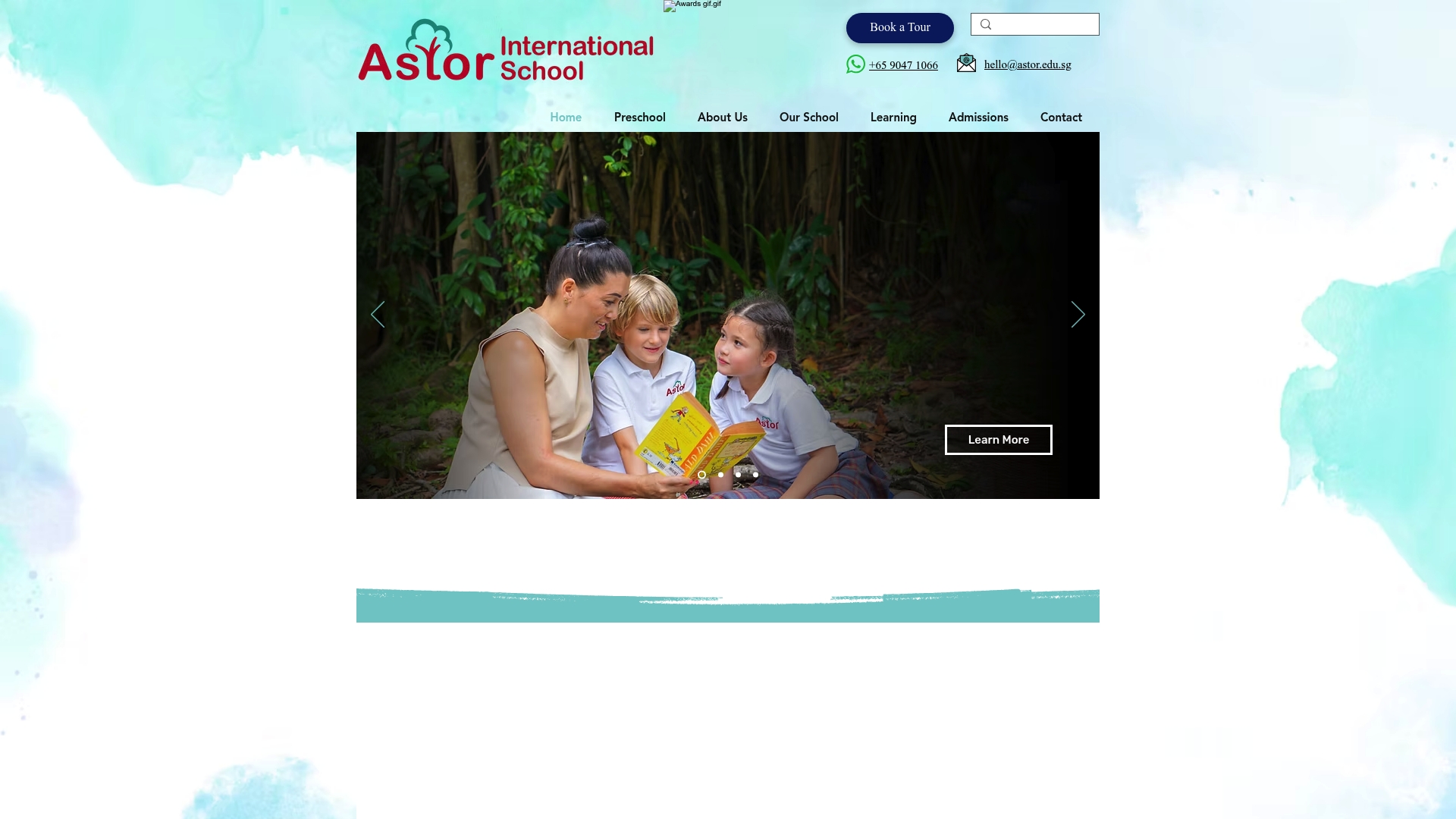
Both campuses lean into inquiry-based learning and flexible scheduling designed around how young children actually learn best: through curiosity, play, and consistent relationships with teachers who know them well. That said, don’t take our word for it as the only step. Whichever preschool you’re weighing, including Astor’s, still verify its ECDA licence and SPARK status yourself before enrolling.
If Astor’s approach sounds like the fit you’ve been looking for, the next step is simple: take a look at the IPC early years curriculum to see how the program structures learning day to day, or browse the broader curriculum philosophy to understand how it carries through from preschool into primary school. From there, reaching out to schedule a visit is the clearest way to see whether it matches what your child needs.
Where to Verify These Facts Yourself
Source | What It Helps You Check |
Confirms licence status and official guidance on choosing a preschool | |
Explains accreditation levels and how to recognize a certified centre | |
Government perspective on curriculum fit and age-appropriate learning | |
Shows which centres participate in nutrition and meal standards | |
Skoolopedia’s shortlisting guide | Offers a step-by-step process and checklist for narrowing your options |
Frequently Asked Questions
What’s the single most important factor in how to choose preschool? Teacher quality and the warmth of teacher-child relationships matter more than facilities, branding, or price, according to research from the Harvard Graduate School of Education. Check this directly by observing an actual class, not just a tour of empty rooms.
Is SPARK accreditation required for a preschool to operate legally? No. Every centre must hold an ECDA licence to operate at all, but SPARK is a voluntary accreditation on top of that baseline, indicating an independent quality assessment.
How early should I start looking for a preschool? Start four to six months before your intended enrollment date, earlier for popular centres near MRT stations or business districts, since waitlists can move slowly.
What questions should I ask during a preschool visit? Ask about the lead teacher’s qualifications and tenure, daily schedules, outdoor time, incident policies, and how NEL-aligned learning shows up in daily practice, not just in marketing copy.
Are full-day and half-day preschool options equally available? Both exist, but availability depends on licence class and location. Child care centres generally run full-day, while kindergarten programs are often half-day, so confirm hours match your family’s work schedule before shortlisting.
How much should I budget beyond tuition? Ask for an itemized breakdown covering registration fees, deposits, materials, meals, enrichment classes, and transport, since these often add meaningfully to the headline tuition figure.
This article provides general guidance only and isn’t a substitute for verifying current rules, fees, and eligibility directly with ECDA, MOE, or the specific preschool you’re considering.
Sources
Recommended
Comments