


Best Educational Playground Features for Learning and Growth
- sasha2644
- Aug 5
- 12 min read
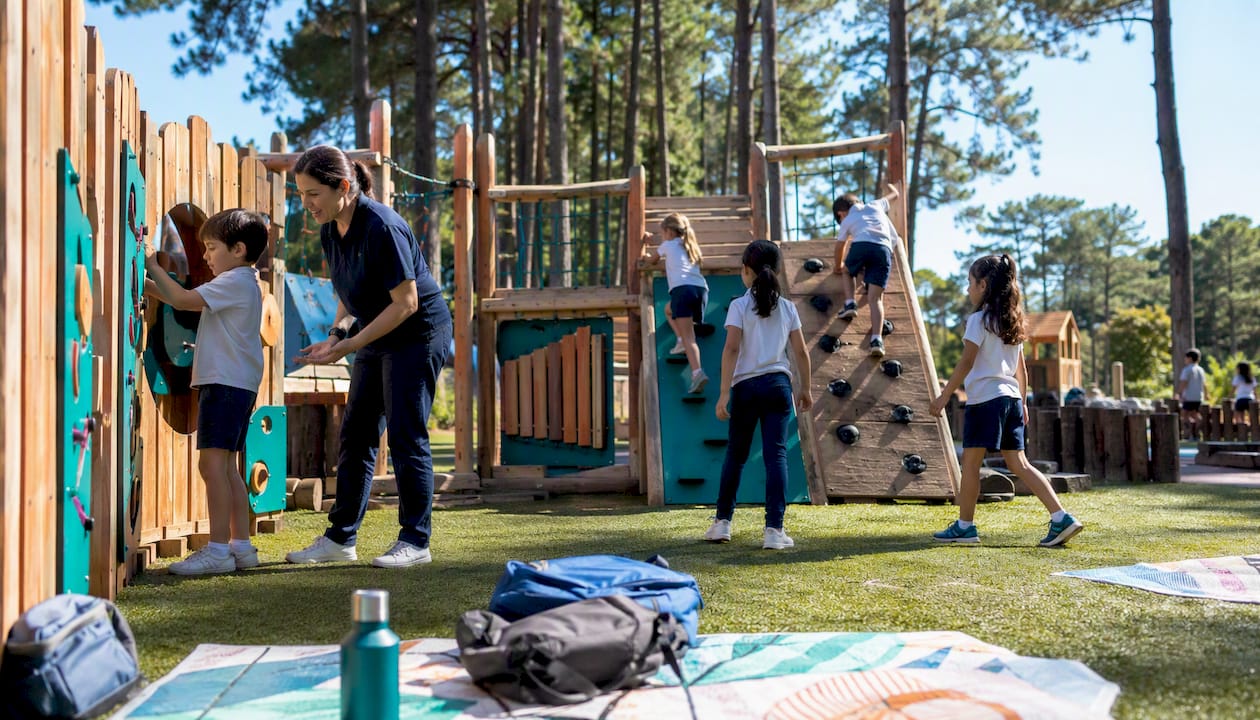
The best educational playground features combine sensory zones, music and sound play, activity and learning panels, climbing and gross-motor structures, balance and vestibular equipment, loose parts and natural construction, water and sand play, and social-play hubs. Each feature group targets a specific developmental domain: sensory zones and STEM panels build cognitive skills; climbing and balance equipment strengthen physical development; social hubs and pretend-play zones grow communication and cooperation; quiet nooks and self-regulation spaces support emotional wellbeing. When specifying any of these features, three questions cut through the noise immediately.
Quick planning checklist:
What is the primary learning goal? (literacy, numeracy, motor development, social skills)
What is the target age range? (6–24 months, 2–5 years, 5–12 years)
What is the available footprint? (compact, medium, or multi-zone)
Any specification should also reference CPSC playground safety guidance, ASTM F1487 equipment standards, and IPEMA certification for surfacing and equipment. National Head Start research consistently reinforces that adult-facilitated, multi-feature environments produce the strongest developmental gains.
Feature Group | Primary Developmental Domain | Quick Trust Signal |
Sensory zones and gardens | Cognitive, emotional | ASTM F1487, IPEMA |
Music and sound play | Cognitive, social | CPSC guidance |
Activity and learning panels | Cognitive | ASTM F1487 |
Climbing and gross-motor rigs | Physical | CPSC, IPEMA surfacing |
Balance and vestibular equipment | Physical, cognitive | ASTM F1487 |
Loose parts and natural construction | Cognitive, social | CPSC guidance |
Water and sand play | Cognitive, social | ASTM F1487 |
Social-play hubs and pretend-play zones | Social, emotional | CPSC guidance |
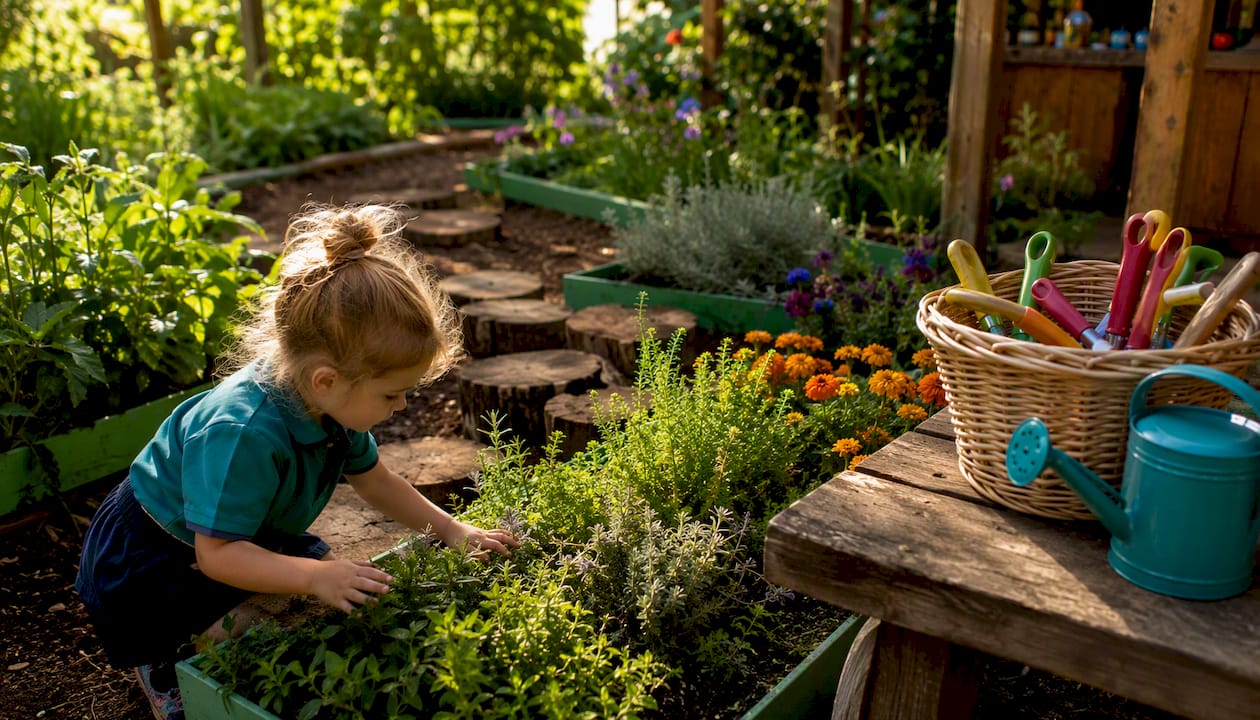
Table of Contents
What actually makes a playground “educational”?
A playground becomes educational when the environment intentionally embeds curriculum concepts and developmental affordances into every feature, rather than simply providing equipment for physical activity. The difference is design intent: an educational play area gives children repeated, open-ended opportunities to practice numeracy, language, scientific thinking, and social negotiation through play.
Five core design principles guide this kind of space:
Heterogeneity of zones: No single “hero” piece dominates. Diverse, adjacent zones create richer learning affordances than one large structure.
Adult-child interaction affordances: Multi-user panels, conversation-starter prompts, and social nooks invite caregivers and teachers into the play.
Inclusivity and accessibility: Ramps, low-level panels, tactile ground cues, and sensory pathways ensure all children participate fully.
Nature integration: Planting, loose natural materials, and sensory gardens connect children to the living world and support executive function.
Challenge within safe limits: Appropriate risk, such as a balance beam or a low climbing net, builds confidence and resilience without compromising safety.
Research on nature-based outdoor environments identified 20 distinct outdoor play and learning zones, from sensory gardens to water play and loose parts areas, that each align with specific developmental domains. That breadth is the benchmark.
The role of playgrounds in learning goes well beyond physical exercise. When design principles are applied thoughtfully, the outdoor environment becomes as intentional as any classroom.
The best educational playground features, explained
Sensory zones and gardens
Sensory pathways, herb gardens, textured stepping stones, and scented planting beds engage all five senses and build the neural connections that underpin later cognitive learning. Place a sensory garden adjacent to a gross-motor area so children naturally transition between stimulation and movement. Maintenance is low when native, hardy plants are chosen; budget for seasonal replanting.
Music and sound play
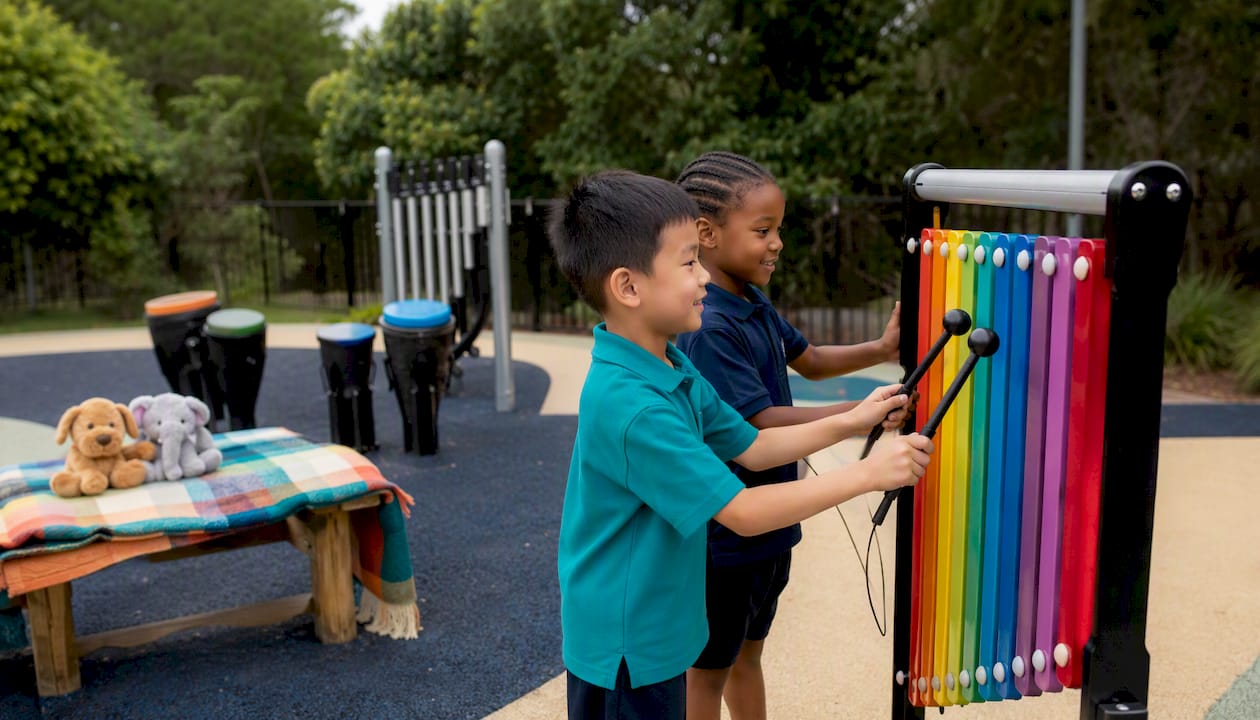
Outdoor xylophones, drums, chimes, and resonating tubes develop pitch recognition, rhythm, and early mathematical patterning. Music instruments and tactile panels specifically foster sensory exploration and fine motor skills. Mount instruments at two heights to serve both wheelchair users and standing children.
Activity and learning panels
Math counting boards, alphabet panels, TouchMath-style number lines, gear and pulley walls, and mirror panels turn a fence or post into a curriculum tool. Gear walls are particularly effective for cause-and-effect reasoning and early physics concepts. Panels should be mounted at child eye level, with a lower panel for seated or younger users.
Climbing and gross-motor structures
Rope nets, rock walls, and arch climbers develop upper-body strength, spatial awareness, and motor planning. A vine climber, for example, builds coordination and grip strength simultaneously. Choose powder-coated steel or HDPE components for durability in high-traffic settings; inspect connection points quarterly.
Balance and vestibular equipment
Wobble boards, balance beams, spring rockers, and spinning bowls stimulate the vestibular system, which directly supports reading readiness and attention regulation. Spinners and rockers need a 6-foot use zone clearance on all sides per CPSC guidance.
Loose parts and natural construction
Planks, crates, large stones, stumps, and mud kitchens invite open-ended construction and imaginative play. Design guidance recommends dedicated, lockable storage with a refill schedule so materials remain available and usable. Without accessible storage, loose parts disappear within weeks.
Water and sand play
Water tables with measuring cups, channels, and pumps teach volume, flow, and cause-and-effect in a hands-on way. Sand areas with scoops and molds support fine motor development and cooperative play. Both features need good drainage and a shade structure to extend usable hours.
Social-play hubs and pretend-play zones
A market café, puppet stage, or small-world village gives children a context for language-rich, cooperative play. These zones are where vocabulary grows fastest, especially when adults use open-ended questions to scaffold the narrative.
Quiet nooks and self-regulation spaces
A vegetated alcove, a low canopy, or a simple bench tucked behind planting gives children a place to decompress. Self-regulation is a foundational executive function skill, and having a designated retreat reduces behavioral incidents during high-stimulation sessions.
Pro Tip: When space or budget is constrained, compact multi-activity systems that pack up to 20 interactive components into a small footprint can span ages 6 months to 12 years, making them a practical starting point for schools with limited outdoor areas.
Feature | Best for (age/goal) | Developmental domain | Footprint | Accessibility notes |
Sensory garden | 1–12 yrs / sensory & cognitive | Cognitive, emotional | Medium | Paved pathways, tactile cues |
Outdoor xylophone | 2–12 yrs / music & STEM | Cognitive, social | Small | Dual-height mounting |
Learning panels | 2–12 yrs / literacy & numeracy | Cognitive | Minimal | Low-level panel option |
Climbing structure | 3–12 yrs / motor & spatial | Physical | Medium–large | Ramp access, low entry points |
Balance beam / spinner | 2–12 yrs / vestibular | Physical, cognitive | Small–medium | Ground-level entry |
Loose parts area | 2–12 yrs / creativity & STEM | Cognitive, social | Medium | Accessible storage height |
Water and sand play | 1–8 yrs / STEM & sensory | Cognitive, social | Small–medium | Wheelchair-height tables |
Social-play hub | 3–12 yrs / language & social | Social, emotional | Medium | Open, step-free entry |
Quiet nook | All ages / self-regulation | Emotional | Small | Low-threshold seating |
How should you zone and sequence features by age?
Zoning prevents conflict, supports supervision, and creates natural developmental progressions. A well-planned layout typically includes five areas: a toddler zone, a preschool cluster, a mixed-age challenge area, a social and quiet zone, and a utility area with loose-parts storage.
Age guidance at a glance
Age group | Recommended features | Suggested min. footprint per child |
6–24 months | Sensory garden, low rockers, sand/water table, soft climber | — |
2–5 years | Learning panels, music instruments, loose parts, balance beams, pretend-play hub | — |
5–12 years | Climbing structures, gear walls, spinners, social hubs, quiet nooks | — |
Inclusive design means avoiding strict age segregation wherever possible. A 4-year-old with an older sibling benefits from access to the mixed-age challenge area with appropriate supervision. UK Early Years Design Guidance recommends free-flow access between zones and adaptable layouts that serve different developmental stages without rigid barriers.
Installation sequencing for planners
Start with durable surfacing and core circulation paths. These are the most expensive to retrofit later.
Add fixed large-play elements: climbing structures, social hubs, and sensory gardens.
Install panels, music instruments, and manipulatives, tied to curriculum phases.
Introduce loose parts and water/sand play once storage and drainage are in place.
Add quiet nooks and planting as the final layer, using them to soften edges and define zones naturally.
What safety standards apply to educational playground features?
Safety is the baseline, not the ceiling. Three bodies set the standards every U.S. specification should reference.
CPSC: — The Consumer Product Safety Commission publishes the Handbook for Public Playground Safety, covering fall heights, use-zone clearances, and entrapment hazards. It is the practical starting point for any procurement.
Surfacing options compared
Engineered wood fiber (EWF): Good fall attenuation, accessible when properly maintained, lower upfront cost; requires regular raking and top-up.
Poured-in-place rubber: Excellent accessibility, consistent fall attenuation, ADA-compliant; higher upfront cost, minimal ongoing maintenance.
Synthetic turf with padding: Visually appealing, accessible; heat retention in direct sun can be a concern in warmer climates.
Sand: Natural, sensory-rich; poor accessibility for wheelchair users and requires frequent raking to maintain depth.
Safety baseline: CPSC guidance and ASTM F1487 are the minimum compliance expectations for any U.S. educational playground. IPEMA certification provides independent verification that a product meets those standards.
Spinners and swings require a 6-foot use-zone clearance on all sides. Climbers need a use zone extending 6 feet beyond the structure’s perimeter at fall height. Design circulation paths so children moving between zones do not cross active swing or spinner use zones.
Budget for annual professional inspections and a quarterly visual check by staff. Loose parts need a refill schedule; surfacing depth must be verified after heavy rain or high-traffic periods.
How do you choose the right features for your space?
Start with outcomes, not equipment catalogs. A clear goal, a defined age range, and a realistic footprint narrow the field quickly.
Selection checklist
Define the primary educational outcomes: literacy, numeracy, STEM, motor development, social-emotional learning, or a combination.
Identify the target age range and any inclusion requirements (wheelchair access, sensory sensitivities, mixed-ability groups).
Measure the available footprint and note any shade, drainage, or surface constraints.
Set a realistic budget, including installation, surfacing, and a 10–15% contingency for maintenance in year one.
Prioritize features that support multiple developmental domains simultaneously. A water-play station with measurement tools, for example, covers sensory, STEM, and social learning in one compact feature.
Questions to ask every vendor
Does the equipment carry ASTM F1487 compliance and IPEMA certification?
What are the specific accessibility options (ramp access, low-level panels, tactile cues)?
What is the warranty period, and what does it cover?
What is the recommended maintenance schedule, and are replacement parts readily available?
Can the system be expanded modularly as the program grows?
Red flags to watch for
No third-party certification (ASTM or IPEMA) on equipment or surfacing.
Vague accessibility claims with no specific ADA or ASTM compliance reference.
Maintenance promises that seem unrealistically low for the feature type.
Single-function novelty pieces with no clear developmental rationale.
For tight budgets, screen-free, hands-on activity tools can extend playground learning into the classroom, bridging outdoor features with curriculum objectives without additional capital spend.
What does the research say about designing for learning?
The strongest evidence points to a few consistent themes that go beyond individual feature choices.
Nature-based outdoor environments support sensory, motor, cognitive, and social-emotional development across early childhood, with the greatest gains when zones are diverse and well-connected.
Placing a sensory garden adjacent to a gross-motor structure increases both cognitive and social interaction affordances, because children naturally carry sensory experiences into physical play.
Play areas that invite adult-child interaction through multi-user panels and social nooks support language-rich experiences critical for early brain development, per National Head Start recommendations.
Transition zones and vegetated quiet nooks are among the most overlooked elements. Without them, children who become overstimulated have nowhere to self-regulate, and behavior challenges increase.
Inclusive features such as low-level panels, ramps to elevated play, and sensory ground cues increase social mixing across ages and abilities, not just access for children with disabilities.
Pro Tip: Attach curriculum-aligned lesson plans to specific playground features. A gear wall becomes a physics lesson; a water table becomes a measurement activity. Adult facilitation with open-ended questions multiplies the learning value of every piece of equipment.
The benefits of outdoor learning are well-documented, but the research is clear that design quality matters as much as the presence of outdoor space itself.
Outdoor vs. indoor educational playground features
Outdoor and indoor play environments each have distinct strengths, and the best programs use both deliberately rather than treating one as a substitute for the other.
Outdoor spaces offer scale, natural light, and the sensory richness of weather, texture, and living plants. Gross-motor development, risk-taking, and nature connection are genuinely harder to replicate indoors. A climbing structure, a sensory garden, or a loose-parts construction area needs the space and the unpredictability that only an outdoor setting provides.
Indoor educational play features, by contrast, offer controlled conditions that suit fine motor work, focused cognitive tasks, and quieter social play. Tabletop gear systems, indoor sand trays, puppet theaters, and block-building areas can mirror outdoor features in a smaller, weather-independent footprint. They also allow year-round access in climates where outdoor play is seasonal.
The most effective approach integrates both. UK Early Years Design Guidance specifically recommends free-flow access between indoor and outdoor spaces so children can move between environments according to their needs, rather than being confined to one or the other during a session. At Edu’s preschool, both outdoor playgrounds and classroom learning areas are designed to complement each other, giving children the full developmental range that neither environment alone can offer.
How do cultural inclusivity and diversity shape playground design?
A playground that reflects only one cultural experience sends a quiet but clear message to children whose backgrounds are not represented. Inclusive design goes beyond physical accessibility to encompass cultural belonging.
Concrete strategies include incorporating musical instruments from multiple traditions, such as steel drums, hand drums, and wind chimes drawn from diverse musical cultures, rather than defaulting to a Western instrument set. Story panels and literacy boards can feature scripts from multiple languages, images of children from varied backgrounds, and narratives drawn from different cultural traditions. Pretend-play zones benefit from props that reflect a range of family structures, occupations, and community settings.
Natural materials are culturally neutral by nature. Stones, water, sand, and plants invite play that crosses cultural boundaries, which is one reason nature-based zones tend to be among the most inclusive features on any playground.
For schools serving international communities, like Edu’s campuses in Singapore, cultural representation in playground design is not a peripheral concern. It is part of how children develop a sense of belonging and respect for others. Commissioning community input during the design phase, whether through parent surveys or student workshops, surfaces cultural priorities that a standard equipment catalog will never anticipate.
Key Takeaways
The most effective educational playgrounds combine diverse, well-zoned features with adult facilitation and accessible design to support cognitive, physical, social, and emotional development simultaneously.
Point | Details |
Prioritize zone diversity | Combine sensory, motor, social, and quiet zones rather than relying on a single large structure. |
Adult facilitation multiplies learning | Multi-user panels and social hubs produce the strongest gains when adults use open-ended questions. |
Verify CPSC, ASTM, and IPEMA compliance | These three standards are the non-negotiable baseline for any U.S. educational playground specification. |
Start with surfacing and circulation | Retrofitting these later is the most expensive mistake in playground installation sequencing. |
Choose multi-domain features first | A water-play station with measurement tools covers sensory, STEM, and social learning in one compact feature. |
For parents: Ask your child’s school which developmental domains each playground feature is designed to support, and whether adult facilitation is built into outdoor play sessions.
For school leaders: Audit your current outdoor space against the zone checklist above and identify which developmental domains are underserved.
For community planners: Prioritize inclusive surfacing, multi-cultural representation, and modular features that can grow with the community’s needs.
A perspective on what really matters in playground design
The gap between good equipment and genuine learning
There is a version of educational playground design that looks impressive on a brochure and delivers very little in practice. A gear wall bolted to a fence with no adult nearby to ask “what happens if you turn this one?” is just a colorful object. The research is consistent on this point: equipment creates the opportunity; facilitation creates the learning.
What I find most reassuring for parents and school leaders working with limited budgets is that the most educationally powerful features are rarely the most expensive. Loose parts, a sensory garden, and a well-placed learning panel cost a fraction of a large climbing structure, yet they often generate more sustained, varied, and language-rich play. Start small, choose features that serve multiple developmental domains, and add complexity as your program grows.
Edu’s approach at its Singapore campuses, blending two outdoor playgrounds with classroom learning at the preschool level and integrating outdoor learning with the International Primary Curriculum at the school level, reflects exactly this principle. The outdoor environment is not a break from learning. It is where some of the most meaningful learning happens.
Useful sources and further reading
These are the most credible references for anyone specifying or evaluating educational playground features.
Source | Why it’s useful |
CPSC Playground Safety Handbook | U.S. baseline for fall heights, use-zone clearances, and entrapment hazards |
Performance standard for playground equipment for ages 2–12; specify compliance on every purchase order | |
Third-party certification body; verify the IPEMA badge on equipment and surfacing products | |
eePRO / NAAEE: Nature-Based Outdoor Play Environments | Literature-based framework mapping 20 outdoor zones to developmental domains |
Play England: Design for Play | Principles for inclusive, flexible, and maintainable play space design |
UK Early Years Design Guidance | Recommendations on free-flow access, sensory opportunities, and adaptable layouts |
KOMPAN Educational Playground Inspiration | Practical examples of how specific features map to learning outcomes |
When reviewing vendor pages, check for ASTM F1487 and IPEMA certification badges, a clear accessibility statement, and a published maintenance guide.
For curriculum integration, Edu’s International Primary Curriculum page shows how outdoor learning connects to structured classroom outcomes.
The play-based learning resource from Edu explains how play spaces are used within a primary school setting, useful for educators aligning playground features with program goals.
Recommended

Comments