


How to Make Learning Fun for Kids Ages 1.5–12
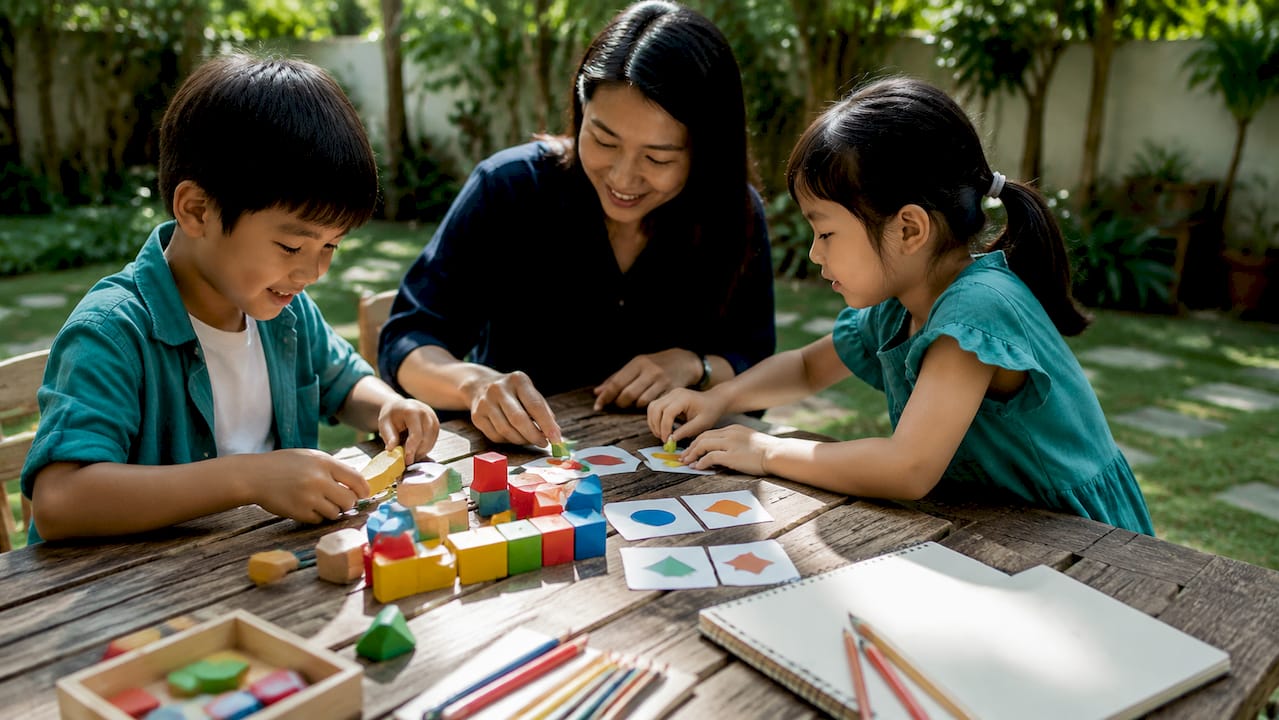
Making learning fun is defined as creating active engagement where children think, solve, and create rather than sitting back and absorbing information passively. Research confirms that tools like Quizlet Live and Blooket, combined with strategies rooted in agency and peer interaction, produce stronger retention and deeper curiosity than passive instruction alone. This guide gives you practical, research-backed ways to make education enjoyable for your child, whether they are a toddler exploring the world or a 12-year-old tackling complex concepts. Every strategy here is designed to fit real family life, not just a classroom.
How to make learning fun: the core elements that actually work
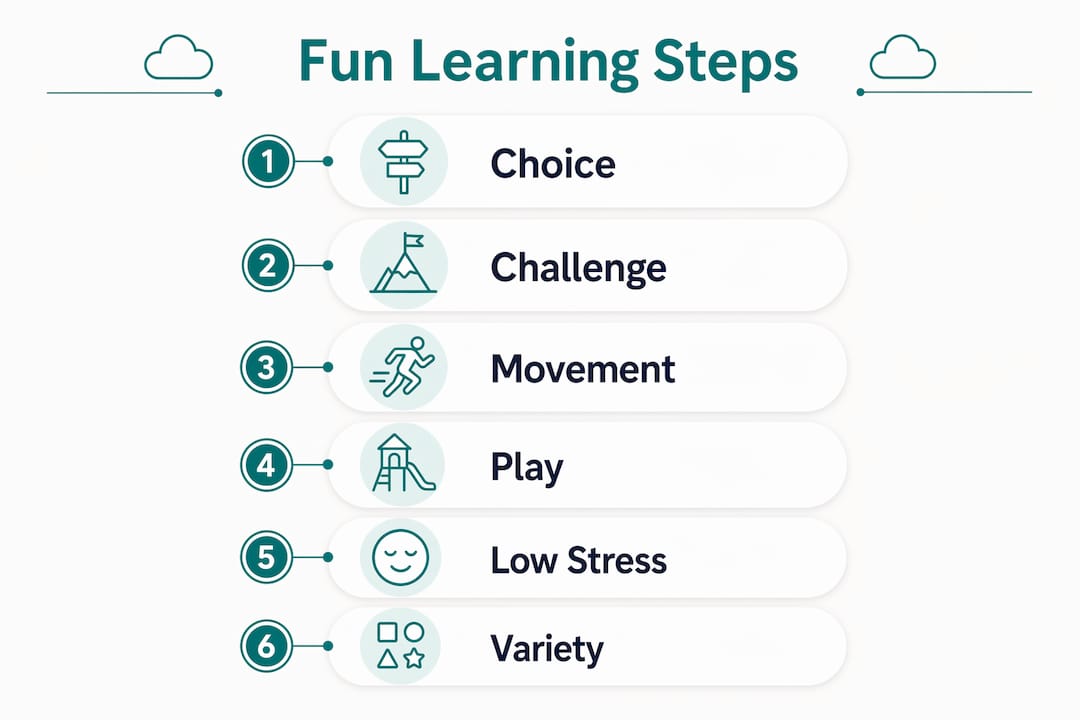
Fun learning is not the same as easy learning. A 2026 study published in Instructional Science identified six non-gamification elements that make learning genuinely enjoyable for children: agency, appropriate challenge, diversity in methods, pleasure, a low-stress climate, and peer interaction. The study drew from 48 student observations, 12 focus groups, and expert interviews. That breadth of evidence makes these six elements the most reliable foundation you can build on.
Each element plays a distinct role:
Agency means your child gets to make real choices during learning. Picking which book to read or which math problem to solve first gives them ownership.
Appropriate challenge keeps children in the productive zone. Too easy equals boredom; too hard causes frustration. The sweet spot is a task that requires real thinking but remains achievable.
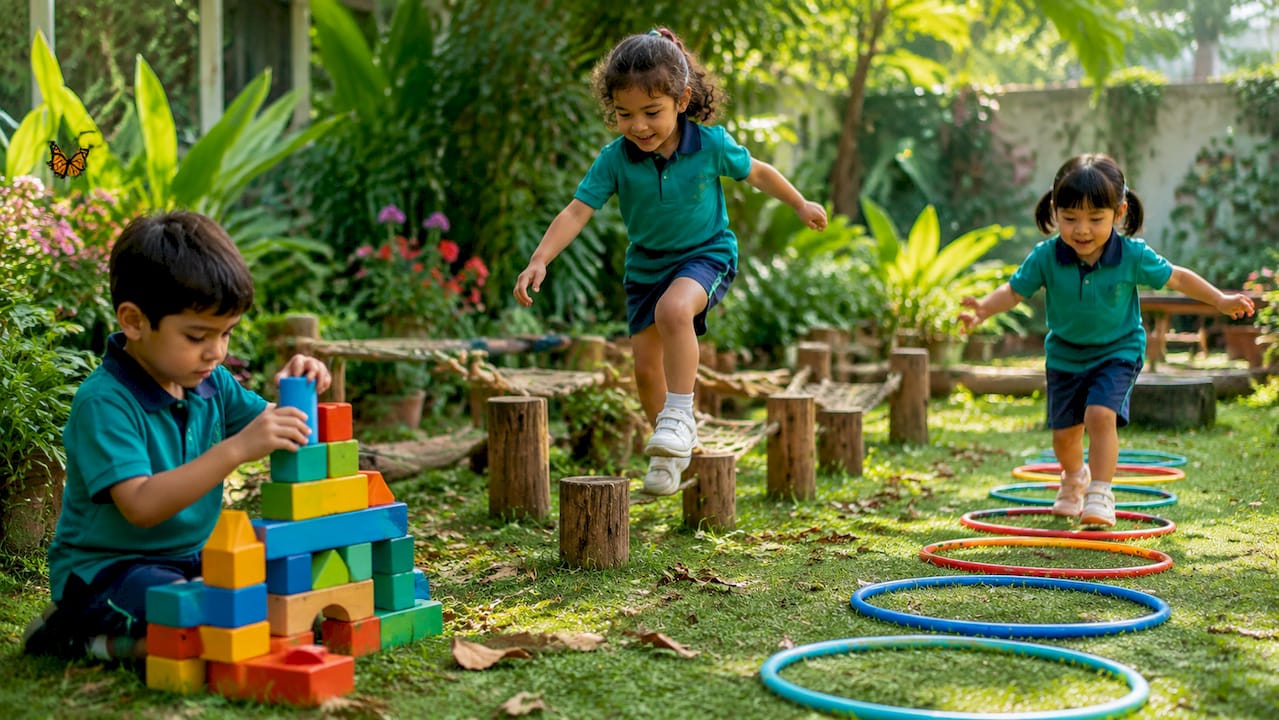
Diversity in methods prevents monotony. Mixing drawing, building, storytelling, and movement keeps the brain alert.
Pleasure is the emotional signal that learning is worthwhile. Laughter, discovery, and pride all count.
Low-stress climate is where memory and critical thinking thrive. Fun creates this climate, which is why enjoyment is a precursor to academic success, not a distraction from it.
Peer interaction adds social motivation. Children learn more when they collaborate, explain ideas to each other, and receive support from peers.
Understanding these six elements changes how you approach every activity at home. You stop asking “Is this fun?” and start asking “Does this give my child a choice, a challenge, and a connection?”
What engaging learning activities work best at home?
Practical implementation is where most parents get stuck. The good news is that gamification methods like scavenger hunts and team competitions work for ages 3–12 and require as little as five minutes of preparation. Here is a step-by-step approach you can start this week.
Give your child a choice first. Before any activity, offer two options. “Do you want to practice counting with blocks or with snacks?” Offering choices raises engagement without adding prep time. Children invest more when they feel the activity is partly their decision.
Start with a warm-up game. A five-minute word game, a quick puzzle, or a silly trivia round signals that learning time is enjoyable. This lowers resistance and primes the brain for focus.
Use a scavenger hunt to teach concepts. Hide letters around the house for a toddler to find and name. For older children, create a math scavenger hunt where each answer leads to the next clue. This classroom activity approach works equally well at home and builds critical thinking naturally.
Add humor deliberately. Humor lowers stress and makes the learning environment feel safe. Use funny examples when explaining a concept. Laugh together when your child makes a mistake. That emotional safety is what allows children to take intellectual risks.
Connect learning to real life. A 7-year-old who helps measure ingredients for a recipe is practicing fractions without knowing it. A 10-year-old who plans a family trip budget is learning multiplication with genuine stakes. Real-world connections make abstract ideas concrete and memorable.
Try Minute-to-Win-It challenges. Set a one-minute timer and challenge your child to write as many words as they can that start with a given letter, or solve as many addition problems as possible. The time pressure creates excitement without real consequences.
Pro Tip: Rotate the format every 15–20 minutes. Children aged 1.5–6 have attention spans of roughly 5–10 minutes per task. Children aged 7–12 can sustain focus for 15–20 minutes. Matching the activity length to your child’s age prevents frustration and keeps energy high.
Adapting these strategies by age matters. Toddlers need sensory and movement-based activities. Children aged 5–8 respond well to storytelling and role play. Children aged 9–12 engage most with challenges that feel competitive or creative. The underlying principle stays the same: give them agency, keep the challenge real, and make the environment feel safe.
How do digital tools help kids learn more effectively?
Digital tools work best when they support the six core elements rather than replace them. Quizlet Live turns vocabulary review into a team game where children must collaborate to win. Blooket wraps quiz questions inside game formats that children choose themselves. Both tools take under two minutes to set up and work well as warm-up activities before deeper learning.
Here is a practical framework for using digital tools without losing educational value:
Segment learning into blocks. A 45-minute session works better as three 15-minute blocks with different formats. Start with a Blooket round, move to a hands-on activity, then finish with a short discussion or drawing task.
Keep children active participants. Watching a video is passive. Pausing the video to ask your child to predict what happens next makes it active. Curiosity fuels deeper understanding, and a simple question reactivates it instantly.
Balance screen time with physical interaction. After 20 minutes of digital activity, shift to something tactile. Building with LEGO, drawing a diagram, or acting out a story reinforces what the screen introduced.
Use virtual manipulatives for math. Tools like Google’s interactive math games or Khan Academy’s visual models help children aged 5–12 see abstract concepts. Seeing a fraction as a colored bar is more meaningful than a number on a page.
Tool | Best Age Range | Primary Benefit | Setup Time |
Quizlet Live | 7–12 years | Vocabulary and team collaboration | Under 2 minutes |
Blooket | 6–12 years | Quiz review in game format | Under 2 minutes |
Khan Academy | 4–12 years | Structured skill-building with visuals | 5 minutes |
Google Arts & Culture | 8–12 years | Creative exploration and curiosity | Instant |
The goal with any digital tool is to keep your child thinking, not just clicking. If they can complete an activity without reading or reasoning, the tool is not adding educational value.
What mistakes should parents avoid when motivating kids to learn?
The most common mistake is confusing passive entertainment with genuine engagement. Putting a child in front of an educational video feels productive, but true fun in learning is active. It requires thinking, deciding, and creating. A child who watches a science video learns less than one who conducts a simple kitchen experiment based on the same concept.
Watch out for these specific pitfalls:
Over-relying on screens. Digital tools are useful, but they become a crutch when they replace conversation, movement, and hands-on exploration entirely.
Making tasks too easy to avoid tears. Easy tasks feel boring within minutes. Children disengage not because learning is hard but because it is not hard enough. Calibrate the challenge upward slightly and watch engagement rise.
Ignoring stress signals. A child who is crying, shutting down, or refusing to participate is not being difficult. They are overwhelmed. Reduce the complexity, add humor, or take a physical break before continuing.
Skipping peer interaction. Learning alone every day removes a key motivator. Arrange study playdates, join a homeschool co-op, or use tools like Quizlet Live that require collaboration.
Pro Tip: If your child resists a learning activity, ask them to change one thing about it. Let them pick the topic, the format, or the reward. That single act of giving ownership often turns resistance into participation.
A positive learning environment is not about removing all difficulty. It is about removing unnecessary stress while keeping the intellectual challenge intact. That balance is what separates a child who loves learning from one who dreads it.
Key takeaways
Making learning enjoyable requires combining agency, appropriate challenge, and a low-stress environment rather than relying on entertainment or screens alone.
Point | Details |
Six core elements drive fun learning | Agency, challenge, diversity, pleasure, low-stress climate, and peer interaction all matter beyond games. |
Choices increase engagement immediately | Offering two options before any activity raises your child’s investment without extra preparation. |
Humor builds psychological safety | Laughing at mistakes together lowers anxiety and makes children more willing to try difficult tasks. |
Digital tools need active participation | Quizlet Live and Blooket work best as warm-ups, not replacements for hands-on or social learning. |
Match challenge to skill level | Tasks that are slightly above your child’s current ability keep them engaged and growing. |
What i’ve learned about joy and learning after years in education
I have spent years watching children light up and shut down in learning environments, and the pattern is always the same. The children who thrive are not the ones with the most resources or the most screen time. They are the ones whose curiosity is treated as a gift rather than a distraction.
The biggest shift I have seen in parents is when they stop trying to make learning feel like school and start letting it feel like discovery. A child who asks “why does the sky change color at sunset?” is already doing science. Your job is to hand them a flashlight and say “let’s find out together.” That phrase, more than any app or curriculum, is what keeps a child’s love of learning alive.
I also think we underestimate humor. Laughing together during a lesson is not wasted time. It is the moment your child’s brain relaxes enough to absorb what comes next. The schools and parents who understand this produce children who ask better questions, as explored in this piece on asking better questions in class.
One more thing: do not wait for the perfect activity. A walk where you count red cars, a bedtime story where your child invents the ending, a cooking session where they measure the flour. These moments are learning. They do not need a lesson plan. They need your attention and a little curiosity of your own. The best learning happens when every child is truly seen and supported, and that starts with you.
— Elena
How astor supports joyful, engaging learning every day
At Astor International School in Singapore’s Tanglin area, small class sizes mean every child gets the personal attention that makes learning genuinely enjoyable. Astor has been recognized as both the best small school and the best affordable international school in Singapore, and that recognition reflects a real commitment to nurturing curiosity and confidence in every student aged 5–12.
Astor’s International Primary Curriculum is built around inquiry-based, active learning that connects subjects to real-world experiences. Children are not passive recipients of information. They investigate, collaborate, and create. For families with younger children, Astor International Preschool in Holland offers a nurturing environment with two playgrounds and a blend of outdoor and classroom learning. Explore Astor’s full curriculum to see how every element of the school day is designed to make education meaningful and enjoyable.
FAQ
What is the best way to make learning enjoyable for young children?
Give children real choices during activities and keep tasks at the right level of challenge. A 2026 Instructional Science study confirms that agency and appropriate challenge are two of the six core elements that make learning genuinely fun.
How does humor improve learning outcomes?
Humor lowers stress and builds rapport, making children more open to engaging with difficult content. When children feel safe enough to laugh at mistakes, they take more intellectual risks and retain information more effectively.
Can online games like blooket and quizlet live be truly educational?
Yes, when used as active participation tools rather than passive entertainment. Both platforms wrap review content in game formats that require children to think and collaborate, which supports memory retention and peer interaction.
How do i know if a learning activity is too easy or too hard?
Watch your child’s behavior. Boredom signals the task is too easy; tears or shutdown signals it is too hard. The productive zone is where your child is working hard but still succeeding most of the time.
How can i make learning fun for a toddler aged 1.5 to 3 years?
Focus on sensory and movement-based activities such as sorting objects by color, singing counting songs, or exploring textures outdoors. At this age, inquiry-based exploration through play is the most natural and effective form of learning.
Recommended
Comments