


How to Meet Teachers: A Guide for Singapore Parents
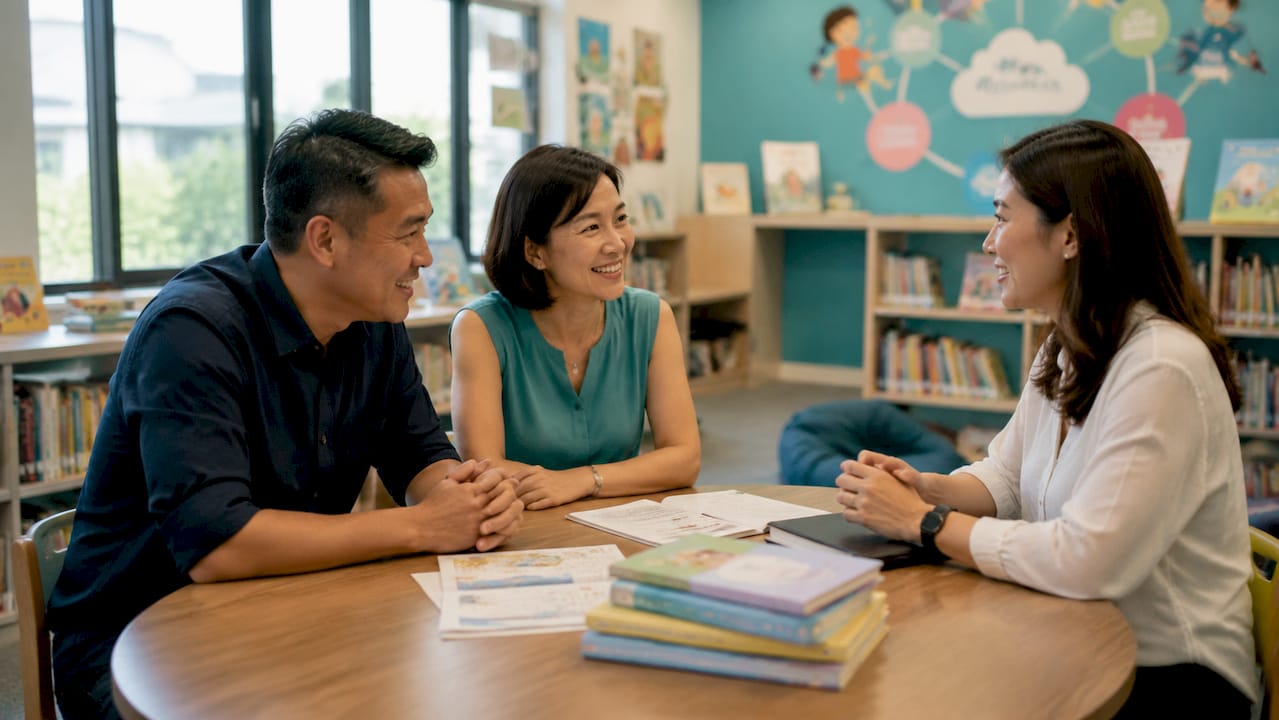
Knowing how to meet teachers well is the single most effective step a parent can take toward supporting their child’s success at school. Parent-teacher communication, the formal term for this practice, goes far beyond a handshake at orientation. It shapes how teachers understand your child, how quickly concerns get resolved, and how confident your child feels knowing their two worlds are connected. This guide gives you a clear, practical framework for every stage of that relationship, from your first Meet-the-Teacher event to the emails you send throughout the year.
How to meet teachers at school events in singapore
Meet-the-Teacher events are designed for introductions and logistics, not deep conversations. Most last 60–90 minutes and involve multiple families moving through stations simultaneously. That format tells you exactly what to do: gather information, make a warm impression, and save complex topics for a private meeting later.
Here is what you should realistically accomplish at these events:
Collect classroom logistics. Pick up the class schedule, homework policy, and any supply lists the teacher has prepared. This saves you from sending an email the next day asking basic questions.
Introduce yourself briefly and warmly. Give your name, your child’s name, and one positive detail. “Hi, I’m Sarah’s mom. She’s been so excited about starting this year” takes ten seconds and leaves a strong impression.
Identify volunteer or supply needs. Many teachers post sign-up sheets at these events. Signing up immediately signals that you are an engaged, supportive parent.
Note the teacher’s preferred contact method. Some teachers prefer email; others use school apps like Seesaw or ClassDojo. Ask directly so you start the year communicating the right way.
Schedule a follow-up if needed. If you have a concern that requires more than two minutes, arrange a private meeting after the event. Trying to hold a detailed conversation while other families wait is uncomfortable for everyone.
One of the most practical tools you can bring to these events is a “Help Me Get to Know Your Child” sheet. This is a brief, structured document that lists your child’s strengths, learning preferences, any challenges, and a few personal details. Teachers manage many families during the opening weeks of school. A concise, organized sheet is far more useful to them than an informal verbal summary they will not remember by the end of the evening.
Pro Tip: Prepare your child’s info sheet before the event and hand it to the teacher with a smile. Keep it to one page. Teachers will refer back to it when they need context about your child.
What to say when you first connect with teachers
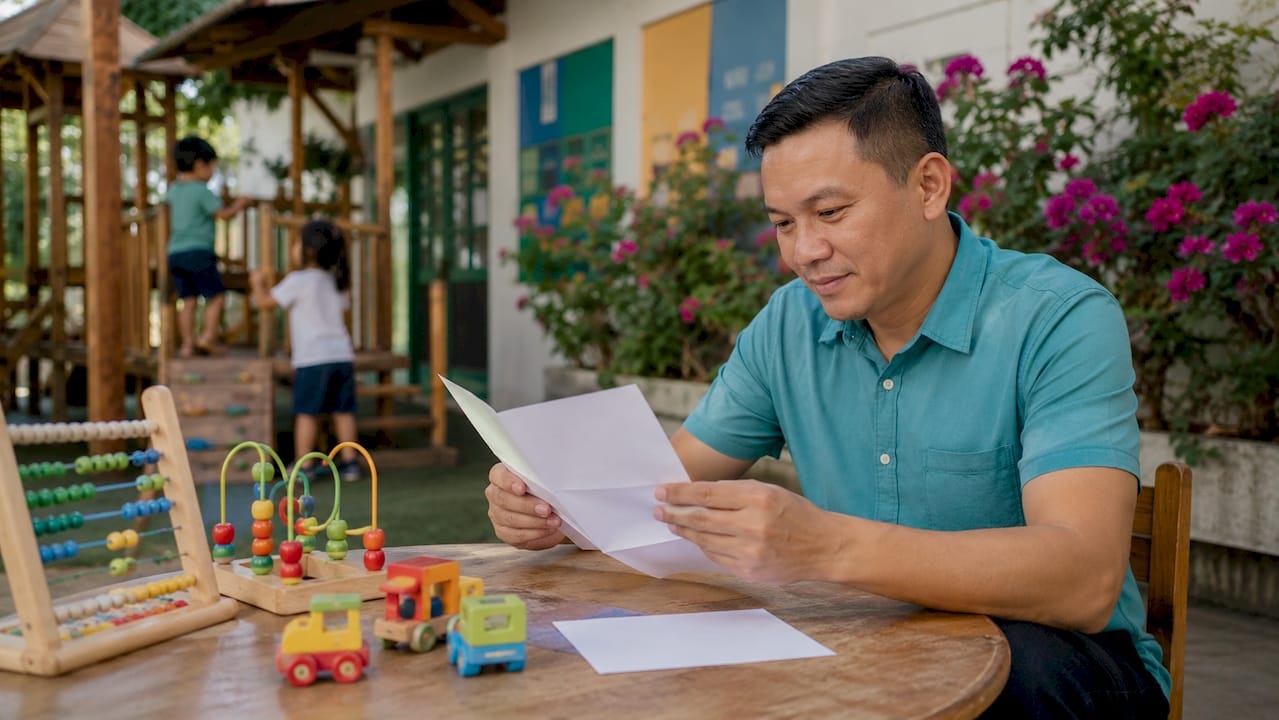
The first written contact you make after meeting a teacher sets the tone for the entire year. The Positive Contact Blueprint recommends sending one brief, purposeful note within the first 30 days of term. This note should focus on your child’s strengths or a specific need, not a complaint or a lengthy backstory.
Effective first contact has a few non-negotiable qualities:
Keep emails under three paragraphs. Concise emails with clear subject lines and a single specific request are far easier for teachers to act on. A message that asks three different questions often gets a delayed or partial reply.
Use a clear subject line. “Question about Maya’s reading group” is better than “Hi” or “A few things I wanted to ask.” The teacher can prioritize and respond faster.
Make one specific ask per message. “Could you let me know the best time to schedule a call this week?” is clear. “I wanted to ask about homework, her friendships, and also the field trip” is not.
Use formal titles until invited otherwise. Address the teacher as “Mr. Tan” or “Ms. Lim,” not by their first name. Formal titles signal respect and reflect the professional norms expected in Singapore schools.
Ask about preferred communication methods. Some teachers check email daily; others prefer messages through the school’s platform. Knowing this prevents frustration on both sides.
For sensitive topics, email is the wrong channel. Complex or emotional issues are best handled by phone or in person, where tone and nuance come through clearly. A written message about a bullying concern or a learning difficulty can easily be misread. Request a call or meeting instead.
Pro Tip: End your first email with a line like “I’m happy to work with whatever schedule suits you best.” It signals flexibility and respect for the teacher’s time, which goes a long way.
How do you build a respectful relationship with teachers?
Building relationships with teachers is a long-term practice, not a single event. The parents who develop the strongest partnerships with educators are the ones who show up consistently, communicate respectfully, and treat teachers as professionals.
Use formal address as your default
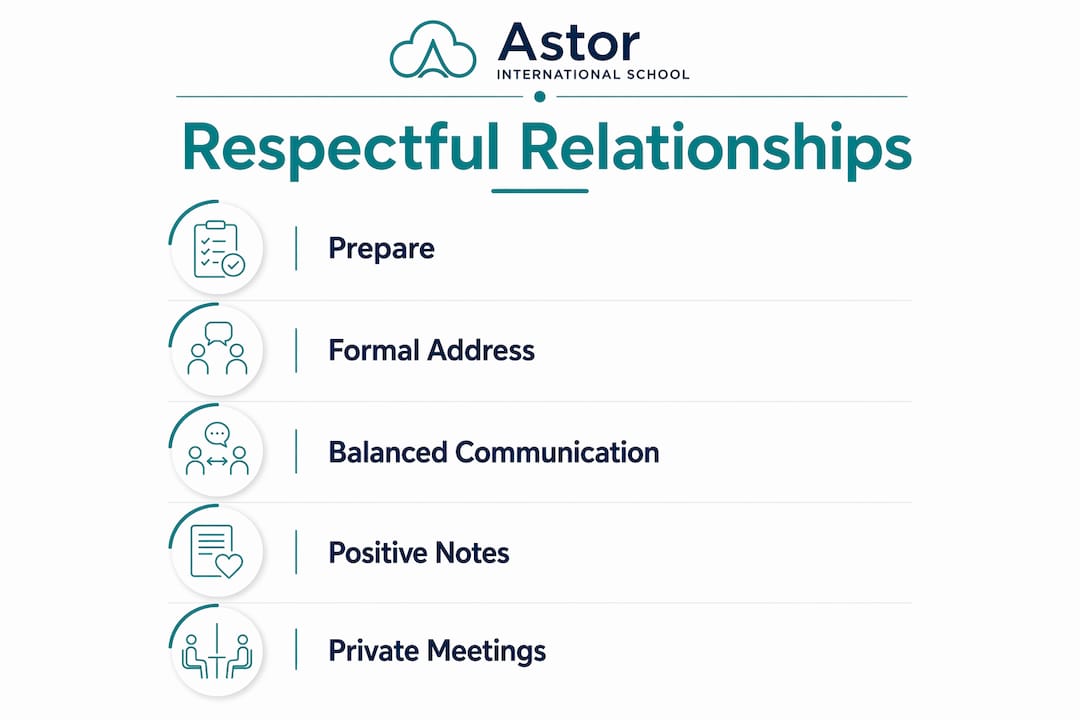
Using titles like “Mr.” or “Ms.” is the standard in Singapore schools and reflects the cultural value placed on professional respect. This also models the behavior you want your child to practice. Switch to a first-name basis only if the teacher explicitly invites it.
Avoid communication overload
Teachers in Singapore manage large workloads across multiple classes and administrative duties. Sending multiple messages in a short period, or following up the same day you sent an email, creates pressure and can damage the relationship. Give teachers at least 48 hours to respond before following up.
Break the “problem only” pattern
Most teachers hear from parents primarily when something is wrong. Sending a brief positive note about something your child enjoyed or achieved in class is genuinely appreciated. It reframes the relationship as a partnership rather than a complaint channel. Teachers who feel appreciated are more receptive when you do need to raise a concern. You can read more about how this dynamic works in positive classroom culture and why it matters for every child.
Know when to request a private meeting
Not every concern belongs in an email. If your child is struggling academically, experiencing social difficulties, or showing signs of anxiety, request a formal conference. Come prepared with specific observations and questions. Avoid arriving unannounced and expecting an immediate conversation.
Common mistakes parents make when meeting teachers
Even well-intentioned parents make missteps that can slow down relationship building. Knowing what to avoid is just as useful as knowing what to do.
Using Meet-the-Teacher events for complaints. These events are not designed for problem-solving. Raising a concern in front of other families is uncomfortable and unproductive. Schedule a private meeting instead.
Sending long, unfocused emails. A message that covers five topics in four paragraphs is hard to act on. Keep each message focused on one point.
Expecting immediate replies. Teachers are in classrooms most of the day. A 24–48 hour response window is standard and reasonable.
Assuming informal address is welcome. Calling a teacher by their first name without an invitation can feel disrespectful, particularly in Singapore’s school culture.
Only contacting teachers when there is a problem. This creates a dynamic where the teacher braces for bad news every time your name appears in their inbox.
Skipping the thank-you. After a productive meeting or a helpful email exchange, a brief “thank you, this was really helpful” takes 30 seconds and builds genuine goodwill.
“The best learning happens when every child is truly seen and supported.” That partnership starts with the adults in a child’s life choosing to communicate with care, consistency, and mutual respect.
For a deeper look at how to support your child’s learning beyond school events, the guide on supporting learning in Singapore offers practical strategies that complement strong parent-teacher communication.
Key takeaways
Strong parent-teacher relationships are built through consistent, respectful communication that starts at the first school event and continues throughout the year.
Point | Details |
Prepare before events | Bring a “Help Me Get to Know Your Child” sheet to Meet-the-Teacher events for quick, useful reference. |
Contact early and positively | Send a brief, positive note within the first 30 days to establish trust before any problems arise. |
Keep emails focused | Write under three paragraphs with one clear ask and a specific subject line for faster responses. |
Use formal titles | Address teachers as “Mr.” or “Ms.” until they invite a first-name basis, especially in Singapore schools. |
Match topic to channel | Use email for routine updates and phone or in-person meetings for sensitive or complex concerns. |
What i’ve learned about connecting with teachers early
I’ve watched hundreds of parent-teacher relationships play out over the years, and the pattern is always the same. The parents who make contact early, positively, and briefly are the ones who have the smoothest year. Not because they have easier children or more cooperative teachers. Because they set a tone of partnership from day one.
The most common mistake I see is parents waiting until something goes wrong to introduce themselves. By that point, the teacher has already formed an impression of the family based on silence. Walking into a difficult conversation as a stranger is so much harder than walking in as someone the teacher already knows and trusts.
One thing that surprises many parents is how much teachers value a simple “thank you.” A short message after a productive conference, or a note saying your child came home excited about a lesson, genuinely matters. Teachers do not see these messages as a bother. They see them as a signal that you are paying attention and that you are on the same team.
My honest advice: treat the first month of school as your relationship-building window. Send that positive note. Show up to the Meet-the-Teacher event prepared. Ask the teacher how they prefer to communicate. Those three steps alone will put you ahead of most parents and give your child a real advantage.
— Elena
How astor supports parent-teacher partnerships
At Astor International School in Tanglin, Singapore, parent-teacher communication is not an afterthought. It is built into how the school operates. Small class sizes mean teachers genuinely know every child, and families are welcomed as active participants in that process.
Astor’s IPC curriculum is designed around inquiry and collaboration, which naturally invites families into the learning conversation. Parents can also explore enrichment classes that extend learning beyond the classroom and give teachers and families more to connect over. If you are looking for a school where your involvement truly makes a difference, Astor is a place where every child is seen, every family is heard, and every teacher is a genuine partner in your child’s growth.
FAQ
What happens at a meet-the-teacher event?
Meet-the-Teacher events typically last 60–90 minutes and involve brief introductions, classroom tours, and information sharing. They are not designed for private consultations or in-depth discussions.
How do i introduce myself to my child’s teacher?
Give your name, your child’s name, and one warm detail about your child. Keep it brief and positive, and hand over a prepared info sheet if you have one.
When should i email versus call a teacher?
Use email for routine questions and updates. Phone or in-person meetings are better for sensitive, emotional, or complex topics where tone and nuance matter.
How soon should i contact a teacher at the start of the year?
Send a brief, positive note within the first 30 days of term to establish a foundation of trust before any concerns arise.
Is it appropriate to use a teacher’s first name in singapore?
No, not initially. Formal titles like “Mr.” or “Ms.” are standard in Singapore schools and should be used until the teacher explicitly invites a more casual address.
Recommended


Comments