


6 MOE Checks Singapore Parents Need for Pastoral Care in Intl Schools

A Singapore international school with strong pastoral care delivers a tiered support system, qualified counsellors, an embedded wellbeing or SEL program, and active parent partnerships. These are the things you can verify on a school visit, not just claims on a website. On-site counselling, a clear welfare policy, and a warm homeroom or house system are the first cues to look for. The sections below walk through what to check, and how a school like Astor puts these practices into daily life.
TL;DR:
Schools with effective pastoral care have clear referral pathways, qualified counsellors, and actively monitor student wellbeing through data tracking.
Small class sizes around 15 students enable teachers to notice emotional or behavioral changes early and offer personalized support.
Strong family and community engagement, along with staff wellbeing programs, are essential for maintaining a consistent pastoral culture.
During visits, look for concrete resources like counsellor offices, wellbeing posters, and staff greeting students warmly to verify support practices.
Astor International School exemplifies these qualities with small classes, embedded SEL, and a focus on transitions, making it a compelling option for families prioritizing pastoral care.
Table of Contents
What pastoral care means in Singapore international schools
Pastoral care is the network of support a school builds around a child’s emotional, social, and physical wellbeing, separate from, but connected to, their academic progress. It covers everything from how a teacher notices a quiet child at recess to how a school handles a family’s sudden relocation mid-term. Done well, it gives every student a sense that someone is watching out for them, not just marking their work.
Singapore’s own education system offers a useful reference point. The Ministry of Education describes a three-level counselling and student welfare model: a teacher notices and responds first, then refers to a school counsellor or student welfare officer if the concern needs more attention, and finally escalates to an external specialist or community agency for cases requiring professional care. International schools in Singapore tend to mirror this structure, even when their own language for it differs, because it gives families a predictable path from a small concern to serious support.
It helps to separate three things that often get blurred together.
Pastoral care is the everyday relational and emotional support: check-ins, mentoring, and a sense of belonging.
Safeguarding is the formal system for protecting children from harm, with reporting duties and legal obligations.
Academic support addresses learning gaps and classroom performance, and works best when it is informed by, but distinct from, pastoral concerns.
A school that treats these as one undifferentiated blob of “student support” usually cannot tell a parent exactly who does what.
Singapore’s international school population adds a layer most local frameworks do not fully anticipate: a highly transient community. Families arrive mid-year, leave after two or three years, and children often lose their closest friend to a relocation more than once before secondary school. Strong pastoral care in this context puts real weight on belonging and transition support, not as an afterthought but as a core design feature. Mental Health Education under Singapore’s Character and Citizenship Education curriculum points to resilience, distinguishing everyday stress from genuine distress, and help-seeking as central skills, and these matter even more for a child who has just changed countries, schools, and friend groups in the same year.
Concrete components of an effective pastoral program parents can verify
The difference between a school that talks about wellbeing and one that lives it usually comes down to specific, checkable elements. Here is what to look for when you tour a campus or read a prospectus.
Daily and weekly connection routines: homeroom check-ins, mentoring pairs, or house systems that give every child a consistent adult and peer group they see often.
A taught wellbeing or SEL curriculum: lessons on emotional literacy, resilience, and help-seeking built into the timetable, not left to a single assembly a term.
Qualified counselling staff with clear referral pathways: a named counsellor, a documented process for how a concern moves from teacher to counsellor to outside specialist.
Data-informed monitoring: schools that track attendance, behavior patterns, and wellbeing indicators so a struggling child gets noticed before a crisis, not after.
Family and community engagement: parent workshops, accessible channels to reach teachers, and genuine two-way communication rather than one-way newsletters.
Staff wellbeing programs: training and support for teachers themselves, because a stretched, unsupported staff struggles to notice and respond to a struggling child.
Sector guidance on international school practice lists similar building blocks, including accessible counselling, mental health workshops, peer support, and staff wellbeing programs as parts of a genuinely comprehensive approach, alongside physical activity and healthy eating routines that support a child’s baseline resilience.
Pro Tip: Ask a school for a copy of their weekly homeroom schedule, not just their policy document. It shows you whether connection time is protected or squeezed out when the curriculum gets busy.
Staff wellbeing deserves more attention than parents usually give it. A teacher who is exhausted, under-supported, or new every term cannot build the steady relationships pastoral care depends on. When you ask about staff turnover and support, you are really asking whether the adults around your child have the capacity to notice when something is wrong.
How to evaluate a school’s pastoral care: questions, evidence and red flags
A school visit is your best chance to test whether pastoral care is real or just a page on the website. Come prepared with specific questions rather than general ones.
Ask what the staff-to-student ratio looks like for pastoral and counselling support, not just classroom teaching.
Ask about the qualifications of the counselling team and how a concern gets escalated from a classroom teacher to a specialist.
Ask what the school’s actual crisis response procedure looks like, and who a parent calls first if something goes wrong.
Beyond conversation, request documents. A genuine pastoral or wellbeing policy, an anti-bullying policy, a referral flowchart, and a recent parent survey summary all tell you more than a glossy brochure. A school confident in its practice will hand these over without hesitation.
What you observe matters as much as what you are told. Watch how staff greet children at the start of the day: is it a warm, individual acknowledgment or a rushed headcount? Notice whether visible resources, such as a counsellor’s office, a calm-down corner, or wellbeing posters, exist in the spaces children actually use, not just in the reception area designed for visitors.
A few signs should give you pause. Vague or defensive answers about how concerns are handled, no dedicated counselling provision at all, high staff turnover with no explanation, and an absence of any formal SEL curriculum are all worth treating as red flags rather than minor gaps.
Finally, weigh pastoral care against academic reputation based on your own child’s needs. A younger child, or one going through a major transition such as a first move abroad, usually benefits more from strong relational support than from an accelerated academic track. An older, settled child heading toward specific university goals may need the balance to tip further toward academic rigor, provided the pastoral foundation is still solid underneath it.
How pastoral care supports learning, transitions and long-term wellbeing
Pastoral care is not separate from academic performance, it is one of the conditions that makes real learning possible. A child who feels unsettled, unseen, or anxious struggles to concentrate, take academic risks, or engage with challenging material, regardless of how good the curriculum is on paper.
Wellbeing is increasingly treated as a core measure of school quality rather than an extra. Industry coverage of the sector notes that international schools are being told to prioritize student wellbeing as a defining performance metric, built on three pillars: a genuine wellbeing culture, a formal curriculum for resilience, and data-informed support systems. Schools that treat this as central, rather than decorative, tend to see the benefit show up in attendance and day-to-day engagement.
For internationally mobile families, transitions are where pastoral care earns its keep most visibly. A strong orientation program, a buddy system that pairs a new student with a peer from their first day, and genuine onboarding for the whole family rather than just the child all reduce the disruption of arriving mid-year in an unfamiliar country. These are not luxuries for expat families moving through Singapore every two or three years, they are the difference between a smooth start and months of quiet struggle.

Staff practices matter here too. Research into international school staff wellbeing found that belonging, appreciation, and strong relationships sit at the center of a positive school culture, and the same holds for students moving through a transient community. A school that intentionally builds small, consistent groups, whether through house systems or tight-knit homerooms, gives children a stable anchor even as the wider community shifts around them each year.
How Astor demonstrates pastoral care in practice
Astor International School, on the Tanglin side of Singapore, and Astor International Preschool, in the Holland area, apply many of the practices this guide describes at a genuinely small scale. Classes average around 15 students, with a cap of 20, which is a deliberate design choice rather than a limitation, and it changes what a teacher can notice and respond to day to day.
Small class sizes mean a teacher who leads a homeroom knows each child well enough to spot a change in mood or behavior early.
The inquiry-based IPC curriculum weaves social and emotional themes into project work rather than isolating wellbeing to a single weekly slot.
Multilingual support helps children who are still building English fluency feel understood rather than isolated during a stressful transition.
Astor has received awards as a small school and affordable international school in Singapore, recognitions tied to the kind of personal attention pastoral care depends on.
The recent addition of Astor International Preschool, with its two playgrounds mixing outdoor and classroom learning, extends the same small-school model down to the earliest years.
Enrichment classes and after-school support provide families with options to extend the school day while maintaining a personal touch in the program.
For a family weighing a small school against a larger international campus, this is what “small but mighty” looks like on the ground: fewer students per teacher, and more of the daily relational contact that pastoral care is actually built on.
Balancing pastoral care with academic expectations in Singapore
Singapore parents often feel pulled between two goods: a school’s academic prestige and its pastoral warmth. My honest read is that this is a false trade-off for most families, and especially for younger children or anyone mid-transition, where wellbeing is the foundation academic progress sits on, not a competing priority.

Larger schools often bring more specialist services on paper, from dedicated counselling teams to broader enrichment. Smaller schools tend to offer closer, more consistent relationships instead, which for many children matters more day to day. Neither model is automatically right.
What matters most is staying an active partner rather than a passive recipient of whatever a school offers. Ask questions, request the policy documents, and revisit the fit as your child grows.
— Elena
Why Astor is worth a closer look
Astor was built around the exact features this guide asks parents to check for, so it is worth seeing in person rather than taking on faith.
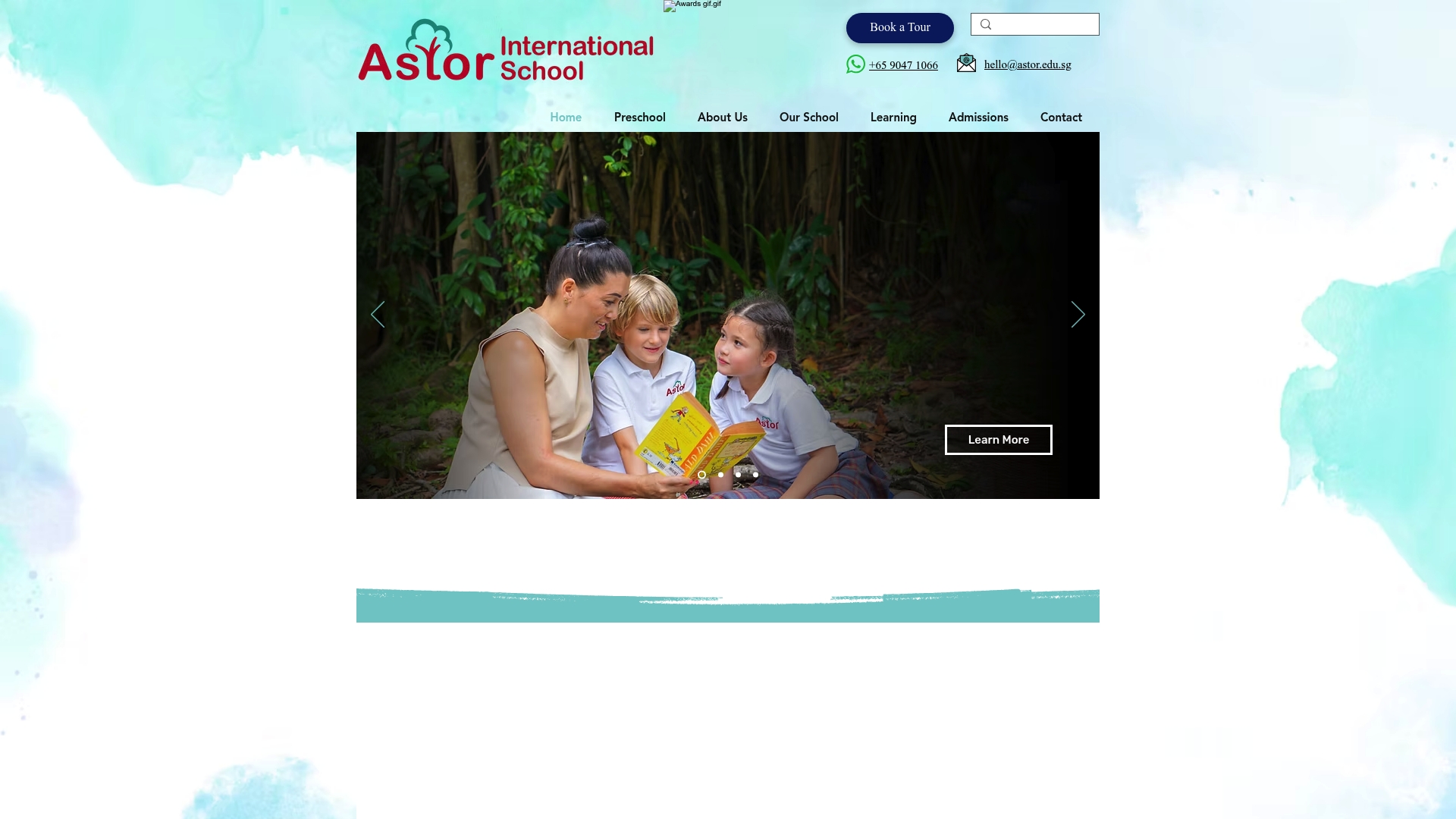
Small classes, averaging 15 students, mean your child is genuinely known, not just enrolled.
Awards for Best Small School and Best Affordable International School reflect a model built around personal attention.
The inquiry-based IPC curriculum keeps wellbeing woven into everyday learning rather than bolted on separately.
A linked preschool in Holland gives families a consistent pastoral approach from the earliest years through primary school.
If this matches what you are looking for, visit the fees and enrolment page to see the options, or explore the campus before booking a tour.
Sources
The Ministry of Education’s counselling and student welfare page explains the official tiered support model. Its mental health education resources cover the resilience and help-seeking skills taught in Singapore schools. Sector reporting on staff and student wellbeing practices offers practical benchmarks for comparing programs. For a wider view of school types, see this guide to types of international schools in Singapore.
FAQ
What are the top international schools in Singapore?
There is no single official ranking of the best international schools in Singapore, since quality depends on a family’s priorities, whether that is academic track record, campus size, or pastoral care. Parents are better served comparing schools against a specific checklist, such as staff-to-student ratios, counselling provision, and SEL curriculum, than chasing an informal “top three” list.
What are the 9 SAP schools?
The nine Special Assistance Plan (SAP) schools are government-aided, bilingual secondary schools in Singapore, and they are entirely separate from the international school system. They are listed by the National Library Board and are not an option for families seeking an international curriculum.
Can Singaporean citizens attend international schools like UWCSEA?
Singapore citizens can generally attend international schools, though some institutions apply their own admissions criteria or place limits on local enrolment depending on their operating agreements. Families should check directly with the specific school, since policies vary and are not standardized across the sector.
Can local students attend SJI International?
Local Singaporean students can attend certain international schools, including SJI International, subject to that school’s own admissions policy and any enrolment conditions it sets. It is best to confirm current eligibility directly with the school, since these terms can change.
How can parents check if a school’s pastoral care is genuine?
Ask for the school’s written pastoral or wellbeing policy, its referral flowchart, and a recent parent survey summary, then compare what you read against what you observe on a visit. Genuine pastoral care shows up in specifics, such as named counselling staff and a taught SEL curriculum, not just general reassurances.
Recommended


Comments