


Phased Entry Preschool Singapore: MOE Rules Explained
If your child is enrolled in a partner Early Years Centre (EYC) by mid-March of their Nursery 2 year, and you register through the EYC form during the MOE Kindergarten Registration Exercise, your child is guaranteed a K1 place at a partner MOE Kindergarten (MK). That is the entire mechanism behind phased entry in Singapore, and it applies to Singapore Citizens and Permanent Residents.
This matters because it removes the anxiety of general balloting. Instead of competing in open registration phases, families who plan ahead secure continuity from preschool straight into kindergarten.
Here is what determines whether your family qualifies:
Your child attends a partner EYC (linked to an Anchor Operator such as those in the MK–EYC partnership)
Enrollment is confirmed by 15 March in the Nursery 2 year
You submit the EYC registration form during the MK Registration Exercise window, not the general form
Many Singapore families miss the mid-March cutoff simply because they assume kindergarten registration works like primary school registration. It doesn’t. Phased entry rewards early planning, not last-minute applications. The rest of this guide walks through the timeline, eligibility nuances, and the steps you need to take now.
Key Takeaways
Phased entry guarantees a K1 place only when EYC enrollment is confirmed by 15 March in the Nursery 2 year and the EYC registration form is submitted during the MK exercise.
Point | Details |
Mark 15 March now | EYC enrollment must be active and confirmed by this date in your child’s N2 year. |
Use the right form | Submit the EYC registration form, not the general MK form, during the registration exercise. |
Confirm your center is a partner | Only Anchor Operator EYCs feed into guaranteed MK placement clusters. |
Have a fallback plan | Track posted vacancies and stay flexible on session timing if your first choice fills. |
Consider transition fit, not just placement | Astor’s small class sizes and inquiry-led curriculum support continuity beyond the guaranteed MK spot. |
Table of Contents
What Is the Phased Entry Registration Timeline?
The MK Registration Exercise runs on a schedule set by MOE each year, and it typically opens in the middle of the year for children entering K1 the following January. Parents whose children are in a partner EYC receive communication directly from their center about the exercise, while families outside the EYC pathway need to track the official MK registration page themselves.
The single most important date on your calendar is 15 March of your child’s Nursery 2 year — miss it, and the guaranteed pathway closes even if you still submit a registration form later. Exact registration exercise dates shift slightly from year to year, so confirm the current window directly with MOE or your EYC rather than relying on last year’s calendar.
Here’s a practical sequence to follow:
Before 15 March (N2 year): Confirm your child’s EYC enrollment is active and continuous. If you’ve had any lapse or are switching centers, resolve this immediately.
During the MK Registration Exercise: Submit the EYC registration form (not the general public form) through your center’s process.
After submission: Watch for confirmation from your EYC or MOE that your registration has been received and processed.
If applying outside the EYC pathway: Register during the general public phases, which open later and operate on a different set of priorities and vacancies.
Post-exercise: Check posted outcomes and, if unsuccessful, monitor vacancy postings for later phases.
Registration timelines and exact dates vary by year and operator, so parents should monitor the MK registration exercise page and their EYC’s own communications each cycle.
Who Qualifies for Guaranteed MK Placement?
Eligibility for the guaranteed phased entry pathway comes down to citizenship status, EYC enrollment, and timing. Understanding where the lines fall saves families from assuming they qualify when they don’t, or missing out when they actually do.
Singapore Citizens (SC): Fully eligible for the guaranteed K1 place if EYC enrollment and the 15 March cutoff are met.
Permanent Residents (PR): Also eligible under the same terms as SC children, though some MKs may prioritize SC applicants in oversubscribed phases.
International students: Not covered under the guaranteed EYC pathway; families on student passes or dependent passes typically go through separate application channels and should check directly with MOE or the school of interest.
Partner EYC enrollment: Only children enrolled in a partner EYC feed into the guaranteed placement. Selected Anchor Operators run these partner EYCs, which link into MK partner clusters in areas such as Ang Mo Kio, Jurong West, Punggol, Sembawang, and Tampines.
One MK per phase: Parents may register for only one MK during each registration phase. Withdrawing after acceptance to try a different center in a later phase means giving up your guaranteed slot and re-entering the process with no priority.
If your family lives outside a partner cluster area, or your preschool isn’t an Anchor Operator center, the guaranteed pathway simply doesn’t apply. That’s not a flaw in the system. It just means your route into K1 runs through general registration instead.
How Do You Register for a Phased Entry Spot?
The steps differ depending on whether your child is already in a partner EYC or not, but both pathways demand the same thing: attention to dates and paperwork.
If your child is in a partner EYC:
Confirm with your center, well before 15 March, that your child’s enrollment record is accurate and active.
When the MK Registration Exercise opens, request the EYC registration form from your center rather than the general MOE form. These are processed differently.
Submit the form within the window your EYC specifies. Centers often set an internal deadline earlier than MOE’s official cutoff to allow processing time.
Retain a copy of your submission and any acknowledgment your EYC provides.
If your child is not in a partner EYC:
Register during the general MK registration phases, which open in stages and prioritize by criteria such as citizenship, distance from home, and sibling links.
Expect a phased structure similar to primary school registration, where earlier phases have fewer applicants but stricter priority rules, and later phases open to a broader pool.
If unsuccessful in earlier phases, check subsequent phases and posted vacancies.
Pro Tip: Submit your EYC registration form on the first day the window opens rather than the last. Centers process forms in the order received, and early submission protects you if there’s a technical hiccup or a document you need to resubmit.
Once submitted, you’ll typically receive an outcome notification within a few weeks. If your child isn’t offered a place in the first pass, don’t panic. Later phases and posted vacancies exist precisely for this situation.
What Documents Do You Need Before Registration Opens?
Getting your paperwork ready before the registration window opens is the difference between a five-minute submission and a stressful scramble. Have these ready in digital form:
Your child’s birth certificate
NRIC (for SC/PR parents) or relevant PR documents
Proof of current EYC enrollment or a confirmation letter from your center
Updated contact details, including a mobile number and email you check regularly
A recent photo of your child, if the form requires one
Any relevant health or immunization notes, if your MK or EYC specifically requests them
Scan documents as PDFs rather than photos where possible. File sizes are more predictable and most portals accept PDF uploads more reliably than image files. Preparing digital copies of required documents ahead of registration, and confirming your EYC’s exact submission procedure, helps avoid missed deadlines caused by last-minute scanning or formatting issues.
If a document is genuinely pending (say, a PR application still in process), contact your EYC directly rather than waiting. Most centers can advise on provisional submission with a note that the outstanding document will follow.

How Does Phased Entry Change Your Child’s Kindergarten Experience?
Moving from an EYC into an MK isn’t just an address change. It usually means a shift in schedule and instructional structure that’s worth understanding ahead of time.
MK programs typically run in half-day sessions, morning from 8am to noon or afternoon from 1pm to 5pm, with Kindergarten Care options at some centers for extended hours.
Curriculum in MKs follows the Nurturing Early Learners (NEL) framework, which favors play- and inquiry-based learning over rote instruction.
Because NEL principles typically carry through from a well-aligned EYC, children moving into a partner MK often experience continuity in teaching style even as the setting changes, highlighting the importance of pretend play development in toddlers. Programs that lean into inquiry-based learning tend to make this shift feel less like starting over.
Transition research consistently points to the same supports working best: staggered entry over the first week or two, orientation visits before the term starts, and shared portfolios or notes passed between the EYC educator and the incoming MK teacher.
Ask your EYC and the receiving MK directly whether they offer staggered entry or an orientation morning. Not every center volunteers this information unless a parent asks.
What Registration Strategies Improve Your Odds?
Even with a guaranteed pathway, a bit of planning goes a long way toward a smooth outcome, especially if you’re navigating general registration instead of the EYC route.
Shortlist two or three partner MKs near your home or workplace, not just one, and keep their contact information handy in case your first choice fills up.
Contact centers directly if you’re on a waitlist. Ask where you stand numerically and whether flexibility on morning versus afternoon sessions might move you up.
Watch posted vacancies. MOE and individual MKs post vacancies after each phase closes, and reapplying promptly when a slot opens matters more than reapplying persistently.
Pro Tip: If your first-choice MK is full, ask specifically about nearby partner clusters. Centers in the same Anchor Operator network sometimes have vacancies even when the most popular branch nearby doesn’t.
Being flexible on session timing, rather than fixed on one specific center, is often the fastest route to a confirmed place.

Why Astor’s Approach Supports a Smoother Transition
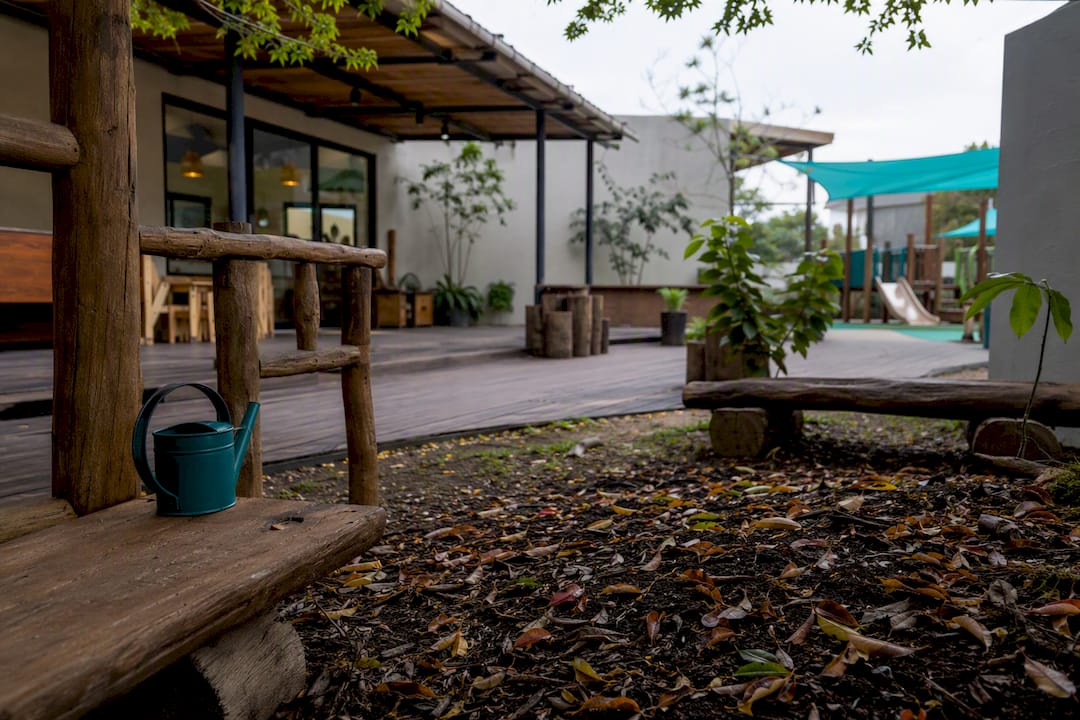
Small centers notice things large ones miss. At Astor International Preschool in Holland, two playgrounds split outdoor and classroom learning, and small class sizes mean educators can flag exactly which children need extra support before a big transition like K1.
Recognized as one of the best small schools in Singapore and among the more affordable international options
Small class sizes that allow closer tracking of each child’s readiness milestones
Two playgrounds supporting a mix of outdoor and indoor learning day to day
Curriculum built around inquiry-based pedagogy, which lines up with NEL’s play- and inquiry-based approach
Astor Feature | Why It Matters for Transition |
Small class sizes | Teachers can flag readiness gaps early and adjust pacing |
Two playgrounds | Balances outdoor play with structured classroom time |
Inquiry-led curriculum | Mirrors NEL principles, easing the shift into K1 style learning |
Families exploring transition support can look at Astor’s curriculum page or book a private school tour to see how the approach works day to day.
What Should You Prioritize First?
Most guidance on phased entry treats the 15 March cutoff as a footnote buried under general enrollment advice. That’s backward. The date is the entire hinge of the system, and families who treat it as a soft suggestion rather than a hard line are the ones who end up scrambling through general registration with no guaranteed outcome.
What gets underestimated is how much the EYC pathway rewards early, boring consistency rather than clever maneuvering. There’s no strategy that beats simply confirming enrollment status months in advance and marking the registration exercise window on a calendar the day it’s announced.
Where conventional advice falls short is in treating all preschools as interchangeable feeders into MK. They aren’t. Only partner EYCs linked to Anchor Operators carry the guarantee, and a center’s overall reputation says nothing about whether it sits in that network. Before touring any preschool, ask directly whether it’s a partner EYC. That single question does more for your child’s K1 outcome than almost anything else on this list.
— Elena
Considering a Preschool With a Clear Transition Plan?
If you’re comparing partner EYCs mainly to lock in a guaranteed MK place, it’s worth asking what happens after that guarantee gets your child through the door. A guaranteed placement gets your child into K1. It doesn’t guarantee the small class sizes, close teacher attention, or play-based continuity that actually make the first weeks of kindergarten feel steady rather than overwhelming for a four-year-old.
Astor International Preschool in Holland offers exactly that continuity, with small class sizes and an inquiry-led curriculum that carries the same NEL-aligned approach your child would experience moving into any MK cluster. Families who want to see it firsthand can book a private school tour or join a virtual tour with founder Elena to walk through how the curriculum and daily schedule actually work. If you’re weighing your options before the registration window opens, start with a tour and see whether the fit feels right before the deadlines start pressing in.
Recommended
Comments