


Preschool Routine Guide: Ready-to-Copy Schedules
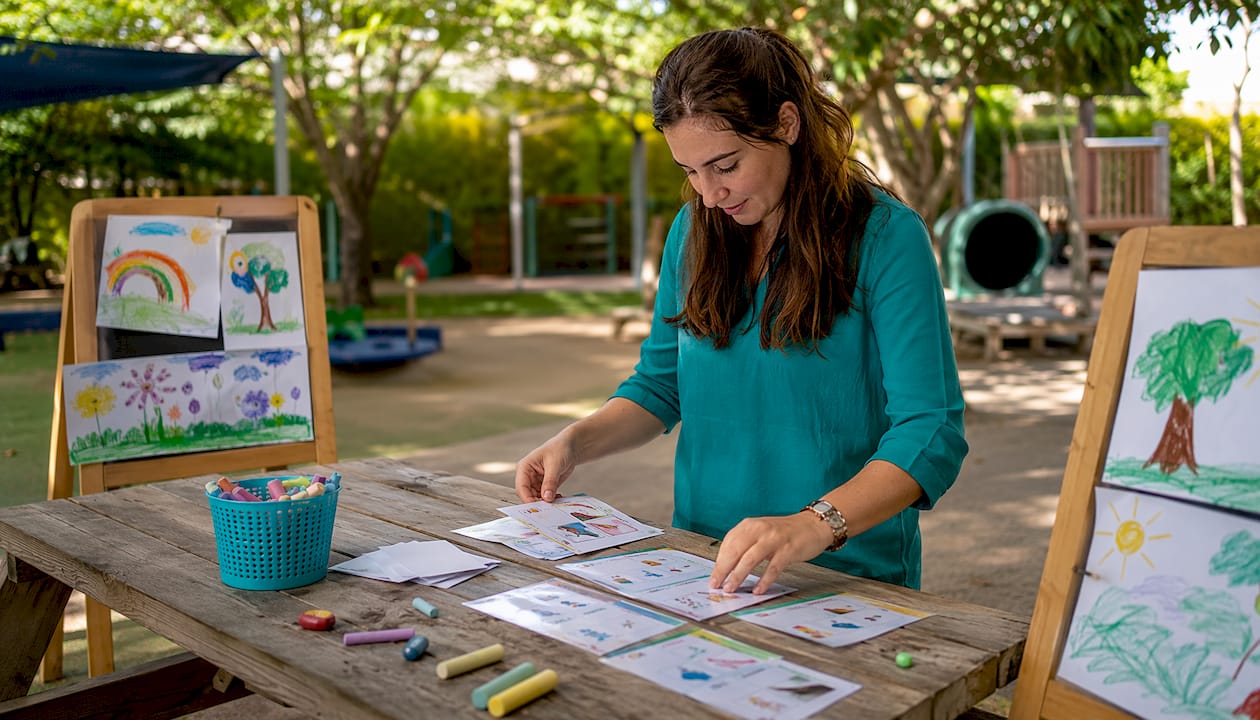
A developmentally appropriate preschool routine pairs predictable daily anchors with flexible timing so children feel secure enough to learn and curious enough to explore. The sequence matters far more than the clock. Whether you’re building a morning routine at home or designing a full classroom day, the same core rhythm applies: arrival, free choice, circle time, outdoor play, meals or snack, rest, and a warm closing.
Quick-copy routines to get you started:
Routine A — Home-friendly morning to afternoon:
Arrival/wake-up and self-help tasks (a short period)
Free-choice play or centers (a moderate length period)
Circle time: songs, stories, discussion (a brief period)
Outdoor/gross motor play (a moderate length period)
Handwashing and snack (a short period)
Small-group activity or project (a brief period)
Rest or quiet time (a moderate length period)
Closing and family connection (a brief period)
Routine B — Classroom full-day sample:
Arrival, greeting, and choice activities (30 min)
Group meeting/circle time (15–20 min)
Choice time/play centers (a moderate length period)
Cleanup, handwashing, and snack (15–20 min)
Small-group activities (15–20 min)
Outdoor choice time (a moderate length period)
Lunch and read-aloud (a moderate length period)
Rest and quiet activities (a varying length period based on age and program)
Afternoon snack and centers (a moderate length period)
Closing group meeting and departures (a brief period)
At a glance — the anchor blocks every schedule needs:
Arrival and self-help routines
Free-choice play or learning centers
Large-group/circle time
Outdoor and gross motor play
Meals and snack
Rest or quiet time
Closing ritual
Table of Contents
What are the six essential blocks every daily preschool schedule needs?
How do you design a structured-but-flexible preschool routine?
Copyable sample schedules for full-day, half-day, and home settings
Transition strategies and short scripts that reduce behavior challenges
How to create a visual schedule preschoolers can actually read
What does the research say about effective preschool schedules?
Why predictable routines support preschool development
Children ages 3–5 are still building the executive function skills that help them shift attention, manage impulses, and regulate emotions. A predictable routine acts like an external scaffold for that developing nervous system. When children know what comes next, they spend less mental energy on anticipating the unknown and more on the actual work of learning, playing, and connecting with peers.
The concrete benefits show up quickly in a well-structured classroom or home setting:
Emotional regulation: Knowing the sequence reduces anxiety and meltdowns at transition points.
Easier transitions: Children who can predict “after snack, we go outside” move between activities with far less adult redirection.
Growing independence: Repeated self-help routines, like hanging a backpack or washing hands, build confidence children carry into new settings.
Better learning windows: Alternating active and quiet blocks keeps attention fresh and prevents the fatigue that shuts down curiosity.
Social skill development: Shared routines create natural opportunities for turn-taking, cooperation, and language practice.
Research note: Head Start guidance confirms that consistent schedules and routines are foundational to children’s sense of security and their ability to engage meaningfully in learning throughout the day.
The key insight is that structure and flexibility are not opposites. A schedule that bends when a child needs more time at the sensory table, or when an unexpected caterpillar shows up on the playground, is not a failed schedule. It’s a responsive one.
What are the six essential blocks every daily preschool schedule needs?
Developmentally appropriate schedules include six core blocks, each targeting a distinct set of skills. Skipping any one of them creates gaps in children’s daily experience.
Free-choice play / learning centers Purpose: self-directed exploration, language, creativity, and problem-solving. Children choose from art, blocks, dramatic play, sensory, or literacy stations. This is the longest block of the day for good reason: play-based learning is where children consolidate everything they’ve been taught. Aim for 45–70 minutes so children can enter deep, sustained play rather than just sampling activities.
Outdoor and gross motor time Purpose: vestibular development, large-muscle coordination, social negotiation, and emotional regulation. Outdoor active play supports regulation in ways indoor activities simply cannot replicate. In full-day settings, outdoor play should total roughly 60 minutes across the day when feasible. Protect this block even on busy days.
Small-group activities Purpose: targeted skill instruction, language development, and close observation by the teacher. Groups of 4–6 children allow adults to introduce new concepts, ask probing questions, and notice individual needs. Keep these to 15–20 minutes and tie them to a current study topic or developmental goal.
Large-group / circle time Purpose: community building, shared language, and early literacy and numeracy. Large-group time should run 15–20 minutes — brief and interactive, with songs, movement, a read-aloud, or a discussion prompt. Preschoolers’ postural control and attention spans make longer sit-down sessions counterproductive.
Transitions and self-help routines Purpose: sequencing, fine motor control, and independence. Hanging a bag, washing hands, and tidying a center are not interruptions to learning. These tasks build motor planning and sequencing skills that transfer directly to writing, self-care, and classroom participation. Treat them as intentional teaching moments, not chores.
Rest and quiet time Purpose: sensory recovery, emotional reset, and consolidation of new learning. Even children who don’t sleep need a period of reduced stimulation. Offer quiet activities — puzzles, books, or soft music — for non-sleepers, and adjust the length based on the group’s age and energy.
Duration at a glance:
Free choice/centers: moderate length period
Outdoor/gross motor: moderate length period, aiming for about an hour in full-day settings
Small groups: brief periods
Circle/large group: brief periods
Transitions and self-help: short intervals per transition
Rest/quiet: varying length depending on age and program length
How do you design a structured-but-flexible preschool routine?
Building a schedule that actually works in practice takes more than listing activities in order. Here is a step-by-step process you can follow whether you’re setting up a classroom or a home learning day.
Define your anchors first. Identify the three or four non-negotiable moments that will stay fixed every day: arrival, lunch, outdoor time, and closing. Everything else can flex around them.
Map the six core blocks. Place each essential block in a logical sequence. Active blocks (outdoor play, movement) should follow or precede quieter ones (small group, rest) to honor children’s natural energy rhythms.
Group complementary activities. Pair circle time before free choice so children have a shared context for their play. Follow outdoor time with handwashing and snack — the physical sequence reinforces the self-help routine naturally.
Plan every transition deliberately. High-quality programs treat transitions as learning events, not gaps between activities. Assign each transition a cue: a song, a visual timer, or a classroom job. Budget 5–10 minutes per transition in your planning.
Set visual cues and share the schedule. Post the daily sequence at child eye level. Send a simplified version home to families at the start of each week. When children and caregivers share the same mental map of the day, arrivals and pickups go more smoothly.
Build in a review point. At the end of each week, note which blocks ran long, which transitions were rough, and where children seemed most engaged. Adjust the following week’s plan accordingly.
On pacing and energy: sequence high-energy activities before natural rest points, not after. Outdoor play before lunch works well; outdoor play right after rest often leads to overtired, dysregulated behavior. For mixed-age groups, offer tiered choices within each block so younger children can opt for simpler tasks while older ones extend their work.
Pro Tip: Protect free-choice time fiercely. When schedules get compressed, free play is usually the first block cut — but it’s the one children need most for language, creativity, and self-regulation. If you must shorten something, trim transitions before you touch play.
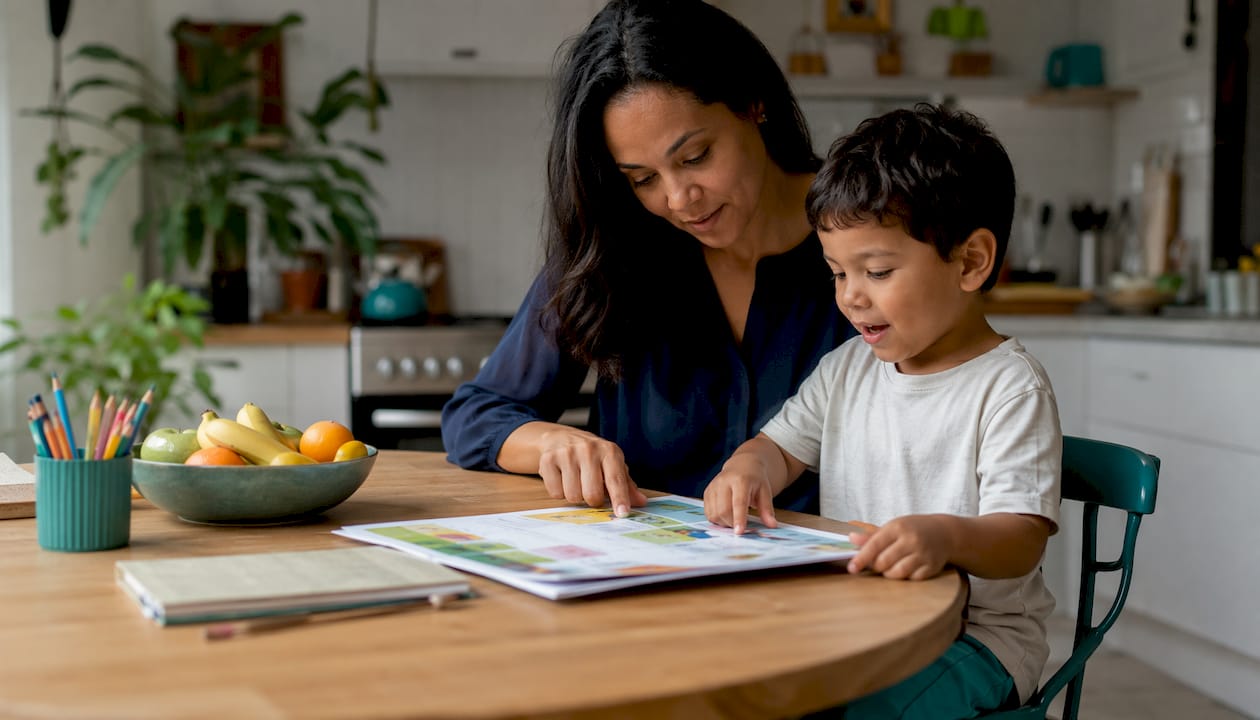
Copyable sample schedules for full-day, half-day, and home settings
These templates draw from The Creative Curriculum Daily Schedule, a widely used framework in U.S. early childhood programs. Adapt the times to your program’s start and end points.
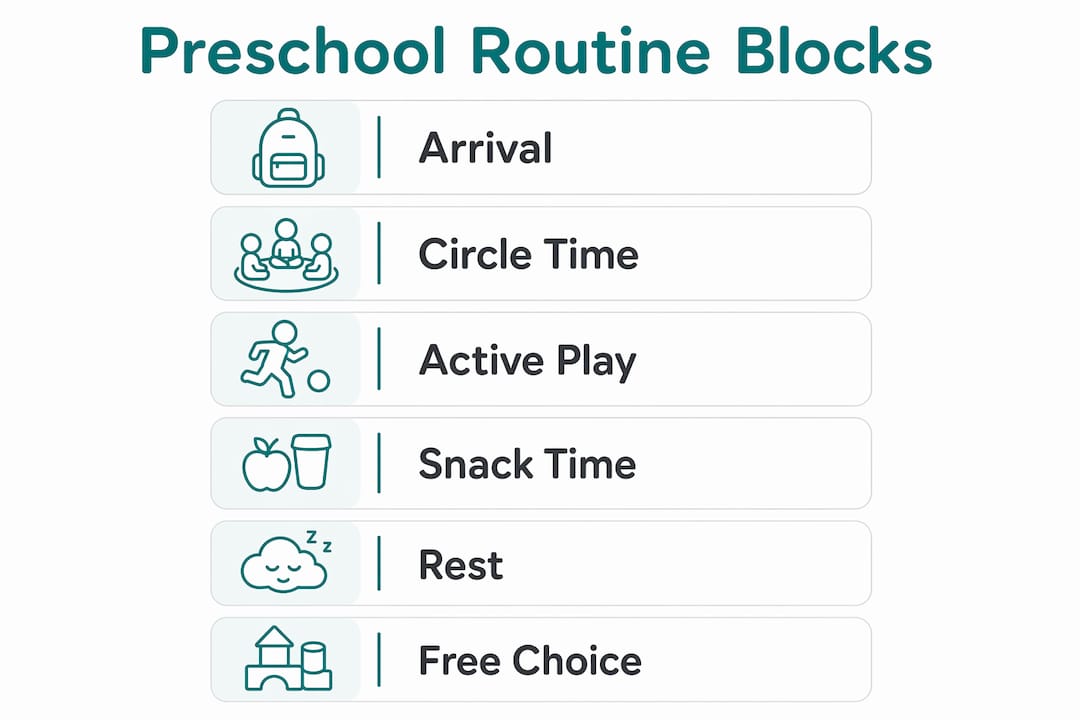
Full-day classroom schedule (7–8 hour day)
Time | Block | Learning focus |
— | Arrival, preparation, and choice activities | Self-help, language, peer connection |
— | Breakfast/snack and conversation | Nutrition, social language |
15–20 min | Group meeting / circle time | Community, literacy, numeracy |
moderate length period | Choice time / play centers | Self-direction, creativity, problem-solving |
15–20 min | Cleanup, handwashing, and snack | Sequencing, fine motor, self-help |
15–20 min | Small-group activities | Targeted skill instruction |
about an hour | Outdoor choice time | Gross motor, social negotiation |
15–20 min | Read-aloud | Literacy, listening comprehension |
moderate length period | Lunch | Self-help, conversation |
moderate length period | Rest and quiet activities | Sensory recovery, consolidation |
moderate length period | Afternoon snack, centers, and small groups | Review, language, fine motor |
brief period | Outdoor time | Gross motor, regulation |
brief period | Closing group meeting and departures | Reflection, family connection |
Half-day classroom schedule (2.5–3 hours)
Arrival, preparation, and choice activities (a brief period)
Group meeting / circle time (a brief period)
Choice time / play centers (a moderate length period)
Cleanup, handwashing, and snack (a brief period)
Small-group activities (a brief period)
Outdoor choice time (a moderate length period)
Read-aloud (a short period)
Music, movement, closing, and departures (a brief period)
Home-friendly preschool schedule
Wake-up routine and self-help tasks (a short period)
Free-choice play (a moderate length period)
Circle time: songs, books, or discussion (a short period)
Outdoor play or movement (a moderate length period)
Handwashing and snack (a short period)
Focused activity: art, sensory, or simple project (a brief period)
Read-aloud (a short period)
Lunch (a moderate length period)
Rest or quiet time (a moderate length period)
Afternoon free play and closing (a moderate length period)
Pro Tip: At home, the “circle time” block doesn’t need a rug or a song chart. A consistent spot — the same couch corner or kitchen table — signals the same mental shift. Consistency of place matters as much as consistency of time.
Transition strategies and short scripts that reduce behavior challenges
Transitions are the most common trigger for challenging behavior in preschool settings. The good news is that planned transitions with visual and auditory cues convert those friction points into genuine learning moments.
Effective transition tactics:
Advance warnings: Give a 5-minute verbal notice before any transition. “In five minutes, we’ll start cleaning up the blocks.” Children who feel surprised resist; children who feel prepared cooperate.
Visual timers: A sand timer or a digital countdown visible to children gives a concrete, non-verbal cue that time is ending. Many children respond to a visual far better than a verbal reminder.
Transition songs: A consistent cleanup song or “time to go outside” chant signals the shift without confrontation. The melody itself becomes the cue over time.
Classroom jobs: Assigning a “line leader,” “door holder,” or “materials collector” gives children a purposeful role during transitions and reduces the aimless energy that leads to conflict.
First/then language: “First we clean up, then we go outside.” This simple structure reduces negotiation and helps children with limited language understand the sequence.
Short scripts for common transitions:
Centers to circle: “I see our cleanup song is starting. Let’s put our materials away and find our spot on the rug.”
Outdoor to lunch: “Outdoor time is ending in two minutes. Start walking toward the door when you hear the bell.”
Rest to afternoon activities: “Rest time is over. When you’re ready, put your mat away quietly and choose a book or puzzle.”
Pro Tip: Use movement as a bridge, not a reward. Marching to the sink, tiptoeing to the rug, or “flying like birds” to the door channels the physical energy that builds up during transitions rather than fighting it. When a group is particularly restless, lengthen the movement bridge — not the warning time.
How to create a visual schedule preschoolers can actually read
A visual schedule is one of the most powerful tools in an early childhood classroom, and one of the most underused. Placed at child eye level and referenced actively throughout the day, it helps children internalize the daily rhythm far more effectively than a schedule posted for adult reference alone.
Step-by-step setup:
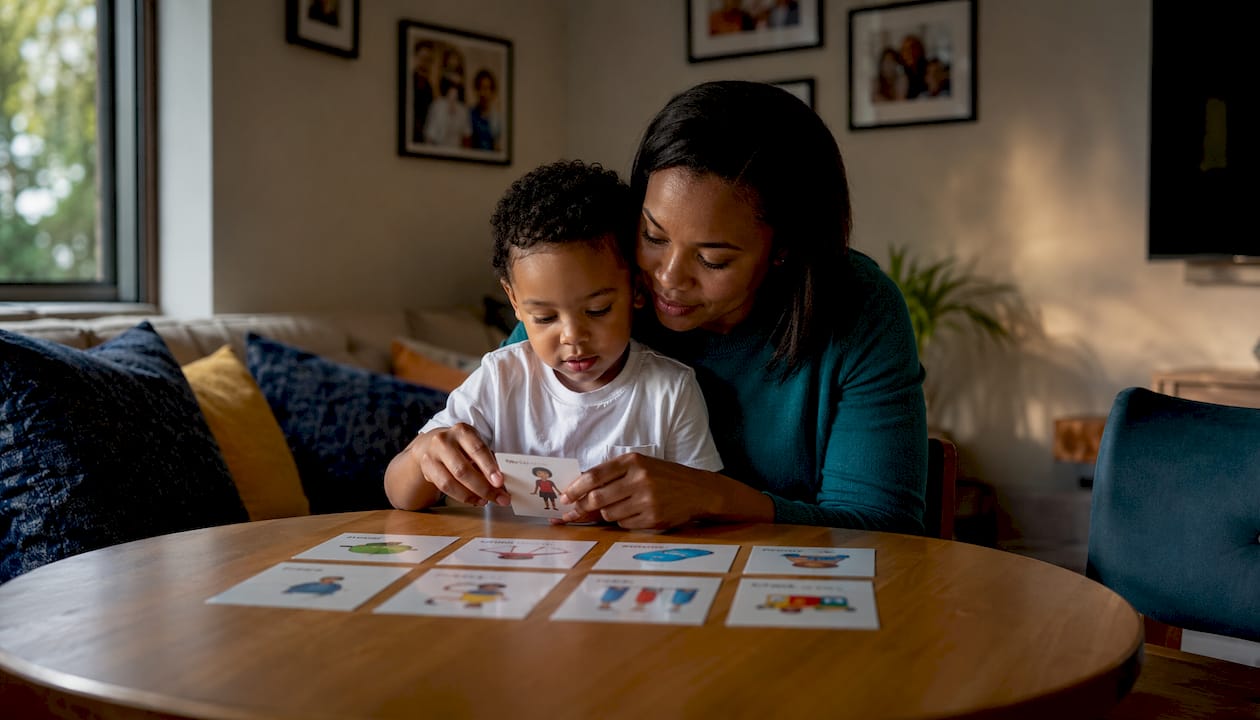
Choose your visuals. Photos of your actual classroom and children work best for toddlers and younger preschoolers — they’re concrete and familiar. Simple icons or clip art work well for older preschoolers who can generalize. Pair images with printed words so children connect the visual with the label.
Place the schedule at child eye level. Roughly 36–42 inches from the floor is the right range for most 3–5 year olds. A schedule mounted at adult height is decoration, not a tool.
Teach the routine explicitly. Spend the first week pointing to each card as you move through the day. “We just finished circle time. What comes next? Let’s check our schedule.” Children who are taught to use the schedule become self-directed; children who are never shown it ignore it.
Use it during transitions. Before each shift, walk to the schedule with the group and move or flip the card for the completed activity. This physical act reinforces the sequence and gives children a sense of agency.
Involve children in building it. Let children help arrange the cards at the start of the week or after a schedule change. Ownership increases engagement.
Icons vs. photos:
Photos: Best for children new to preschool, language learners, and children with visual processing differences. Concrete images of the actual space reduce ambiguity.
Icons/clip art: Appropriate for children who have been in the program for a few months and can generalize symbols. Faster to prepare and easier to update.
Low-tech visual supports that work:
Now/Next cards: A two-card strip showing only the current and next activity. Ideal for children who find a full-day schedule overwhelming, including those with special needs or anxiety.
Pocket schedules: A small personal schedule a child carries in their pocket or wears on a lanyard. Useful for children who need frequent individual reminders.
Picture clipboards: A clipboard with the day’s sequence attached. Children check off each block as it’s completed, building a satisfying sense of progress.
For language learners, pair each visual with a word in the child’s home language when possible. For children with visual impairments, add a tactile element — a textured card or a small object representing each activity.
What does the research say about effective preschool schedules?
The evidence base for structured daily routines in early childhood is consistent across decades of research and practitioner guidance. A few key findings stand out:
Predictable flow beats rigid timing. Activity sequence — Arrival, then Movement, then Snack — gives children security even when exact clock times shift. Children anchor to “what comes after” rather than “what time it is.”
Six core blocks are the consensus structure. The Texas Education Agency’s guidance, the Creative Curriculum framework, and Head Start resources all converge on the same essential blocks: free choice, outdoor time, small group, large group, transitions, and rest.
Short large-group times are non-negotiable. Keeping circle time to 15–20 minutes is not a compromise — it’s developmentally correct. Longer sessions produce disengagement, not more learning.
Outdoor play deserves protection. The research on gross motor activity and self-regulation is clear: children who get adequate outdoor time show better attention and fewer behavioral incidents indoors.
Transitions are learning time. The CSEFEL (Center on the Social and Emotional Foundations for Early Learning) framework specifically identifies transition planning as a primary strategy for reducing challenging behavior in preschool settings.
“Schedules and routines in the early childhood setting help children feel safe and secure, and they help children understand what is expected of them. When children know what to expect, they are better able to focus on learning.” — Head Start Early Childhood Learning and Knowledge Center
A simple pilot test to try this week: Run a two-week trial of a reworked schedule and track three measures each day: average transition time, number of adult redirections, and length of uninterrupted child-led play. Most educators see a meaningful shift in all three within the first week when transitions are planned deliberately and the visual schedule is used actively.
Key Takeaways
A well-designed preschool routine balances six predictable anchor blocks with flexible timing, active transition planning, and visual supports that children can read and use independently.
Point | Details |
Sequence over clock | Children thrive on activity order, not exact times — anchor to “what comes next,” not the minute hand. |
Six essential blocks | Every daily schedule needs free choice, outdoor play, small group, circle time, transitions, and rest. |
Short group times | Keep large-group/circle time to 15–20 minutes; longer sessions reduce engagement, not increase it. |
Visual schedules work | Place the schedule at child eye level and reference it actively — static wall art alone has little effect. |
Edu’s approach | Astor International Preschool (Edu) integrates structured daily rhythms with outdoor learning across two playgrounds, supporting the routine principles in this guide. |
What actually makes a preschool routine stick
The most common mistake I see in schedule design is treating flexibility as a failure. An educator adjusts the plan because a child is having a hard morning, or because the group is deeply engaged in a block-building project that deserves ten more minutes. That’s not losing control of the day. That’s the highest form of responsive teaching.
What I’ve found consistently is that the routines which stick are the ones where the sequence is sacred, not the clock. Children don’t know it’s 9:47 AM. They know that after snack comes outdoor time, and that knowledge alone is enough to carry them through a transition that would otherwise unravel. One small change that produces a noticeable shift: adding a single, consistent transition song. Not a different song for each move, just one. Within a week, children begin singing it themselves before the adult does. That’s internalization. That’s the routine working.
For educators who want to test this: pick one transition that currently generates the most friction in your day. Add a visual timer and a consistent verbal script for just that one move. Run it for five days without changing anything else. The results will tell you everything you need to know about whether the rest of your schedule is worth rebuilding.
Helpful sources for deeper reading
These are the most authoritative resources used in building this guide. Each one is worth bookmarking for classroom planning, family handouts, or professional development.
Texas Education Agency — Daily Schedules in the Early Childhood Classroom: The clearest state-level guidance available on structuring the six core blocks, planning transitions, and using visual schedules. Directly applicable to U.S. preschool classrooms.
The Creative Curriculum Daily Schedule (NJ DOE): A full-day and half-day schedule template with annotated time blocks and learning goals. One of the most widely adopted frameworks in U.S. early childhood programs — copy it directly or use it as a baseline.
Head Start ECLKC — Importance of Schedules and Routines: The federal early childhood program’s rationale for consistent routines, grounded in child development research. Useful for family communication and program documentation.
CSEFEL — Routine Cards for Home: Practical visual routine cards from the Center on the Social and Emotional Foundations for Early Learning. Ready to print and use with families or in the classroom.
Bowdoin College Children’s Center — Transitions Resource: A practitioner-focused guide to planning and executing smooth transitions, with specific strategies for common challenging moments.
IRIS Center — Classroom and Behavior Management: Vanderbilt’s research-based module on arranging the early childhood environment to support routines and reduce behavioral challenges.
Community Storytime SEL Benefits for Parents and Educators: A practical look at how shared storytime builds the social-emotional skills that make circle time and closing rituals more meaningful for children.
Astor Edu — Examples of Classroom Routines for Young Learners: Adaptable classroom routine examples from Edu’s own early childhood educators, with practical notes on transitions and schedule sequencing.
Astor International Preschool brings this routine to life
If you’re looking for a preschool that already lives by these principles, Astor International Preschool (part of the Edu network) is worth a close look. The school’s daily rhythm is built around the same six-block structure described in this guide, with two dedicated playgrounds that make protecting outdoor time a structural reality rather than an aspiration. Small class sizes mean every transition, every circle time, and every quiet rest period is genuinely supervised and responsive to the children in the room.
What sets Edu apart for families coming from this guide is the combination of structured routine and genuine flexibility. The curriculum, including the IPC framework, is woven into the daily schedule rather than bolted on top of it, so learning goals and daily rhythms reinforce each other naturally. For parents who want their child’s preschool day to look and feel like the evidence-backed schedules described here, Astor International Preschool is a natural fit. Visit astor.edu.sg to learn more about the program and arrange a visit.
Recommended
It’s very informative and you are obviously very knowledgeable in this area. You have opened my eyes to varying views on this topic with interesting and solid content. Prijs Huawei thuisbatterij
Great post I would like to thank you for the efforts you have made in writing this interesting and knowledgeable article. www.thuisbatterijprijs.be
wow... what a great blog, this writter who wrote this article it's realy a great blogger, this article so inspiring me to be a better person Thuisbatterij kopen
Amazing knowledge and I like to share this kind of information with my friends and hope they like it they why I do Huawei batterij prijs
very interesting post.this is my first time visit here.i found so many interesting stuff in your blog especially its discussion..thanks for the post! Thuisbatterij merken vergelijken