


Digital Literacy in School: What Parents Should Look For

Schools that teach digital literacy well give children something bigger than device skills: they build the judgment, safety awareness, and creative confidence that shape how a child learns, connects, and eventually works. That is the role of digital literacy in school, stated plainly. It is not an elective add-on. Frameworks like UNESCO’s digital competence models treat it as a core literacy, on par with reading and math, because over 90% of professional roles across Europe now require at least basic digital knowledge.
Here’s what that looks like in daily school life:
Learning support: research skills, media evaluation, collaborative digital projects
Safety: privacy habits, recognizing manipulation, healthy online boundaries
Civic participation: understanding how information spreads and who benefits from it
Quick fact: A recent meta-analysis found a medium positive correlation (r ≈ 0.24) between students’ digital literacy and their academic achievement.
Key Takeaways
Schools build real digital literacy through cross-curricular integration, trained teachers, and progressive skill-building rather than isolated computer classes.
Point | Details |
Digital literacy is multidimensional | It spans operational, critical, cognitive, social, emotional, and projective skills, not just device use. |
Academic impact is measurable | Research has found a meaningful positive correlation between digital literacy and achievement. |
Co-teaching models work | Teacher-librarian collaboration showed improved student project outcomes compared to isolated instruction. |
Equity needs explicit attention | Ask schools how they support students with unequal home access to devices and internet. |
Small schools integrate more easily | Astor’s inquiry-based curriculum weaves digital skills into subject learning rather than a separate class. |
Table of Contents
What Does Digital Literacy Actually Mean for Your Child?
Most parents picture digital literacy as knowing how to use a laptop or navigate an app. That is only one slice of it. UNESCO-aligned frameworks describe digital competence as multidimensional, spanning six connected areas that go well past pressing the right buttons.
Operational: comfortably using devices, software, and basic troubleshooting
Cognitive: thinking clearly about what information to trust and why
Critical: spotting misinformation, bias, and manipulated content
Social: collaborating respectfully and communicating across digital platforms
Emotional: managing feelings tied to screen time, comparison, and online conflict
Projective: imagining how a digital choice today (a post, a search habit) shapes tomorrow
A child who can operate a tablet but cannot question a suspicious headline has only mastered one-sixth of what digital literacy actually asks of them.
This is why a “computer class” that only teaches typing or slideshow software falls short. Quality schools weave these six dimensions across subjects, not into a single weekly period.
Why Does Digital Literacy Matter for Learning and Safety?
The academic case is measurable. That meta-analysis of 35 effect sizes found digital literacy meaningfully predicts achievement, not just comfort with screens. Students who can evaluate sources, organize digital research, and collaborate online tend to perform better across subjects, not only in tech-related ones.
Employability adds a second layer. With more than 90% of European roles requiring basic digital skills, the habits your child builds at nine or ten years old are early groundwork for a job market that assumes digital fluency by default. Generative AI is accelerating this shift, changing which specific skills matter most for future work.
Ignoring digital literacy carries real costs. Children without guided instruction face:
Higher exposure to misinformation, especially as AI makes fake content harder to spot
Weaker privacy habits, including oversharing personal data
Widening achievement gaps for students with less structured access at home
Emotional strain from unmoderated social comparison and online conflict
Digital wellbeing is not separate from digital skill. Frameworks increasingly treat identity and emotional regulation as core competencies, taught alongside technical ones rather than left to chance.
What Does Good Digital-Literacy Teaching Look Like?
Strong programs share recognizable features. When you tour a school or read its curriculum guide, look for instruction that covers:
E-safety: age-appropriate rules on sharing, strangers, and reporting concerns
Information and media literacy: evaluating sources, spotting bias, fact-checking habits
Data and AI awareness: understanding how personal data is collected and how AI tools generate content
Digital creation: making presentations, videos, or simple code, not just consuming media
Collaboration: working on shared documents or projects with classmates
Assessment: teachers actually measuring these skills, not treating them as incidental
Skills should build with age. In the earliest primary years, expect structured digital play: supervised creative apps, guided typing, and simple problem-solving games with an adult nearby. By upper primary, children should be conducting basic online research, learning about data privacy, and getting introduced to coding logic and how AI tools work. A systematic review of critical digital literacies recommends exactly this kind of cross-curricular progression rather than a stand-alone tech subject.
None of this happens without prepared teachers. Reviews consistently point to professional development and collaborative teaching models as the difference between token tech use and real skill-building. A mixed-methods study of a teacher-librarian co-teaching model found students in that setup produced stronger project work, with researchers pointing to combined subject expertise and information-literacy coaching as the reason.
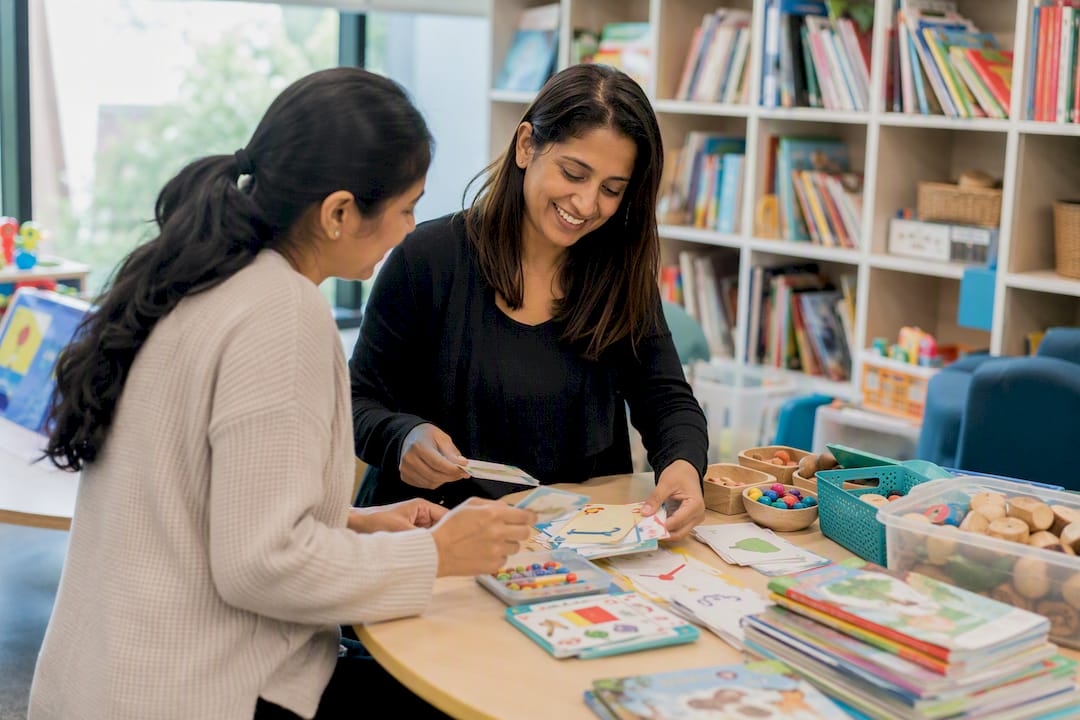
Pro Tip: Ask whether the school pairs classroom teachers with a librarian or media specialist on research projects. That partnership model has shown measurably better outcomes than teachers going it alone.
What Can Parents Do at Home to Support Digital Skills?
You do not need a technical background to reinforce what a good curriculum builds. Start with these habits:
Prioritize screen quality over screen time: creating a video beats passively watching one
Sit in on a research task occasionally and ask “how do you know that’s true?”
Talk openly about digital identity: what gets shared, who can see it, and why it matters
Encourage a personal project (a blog, a slideshow, a simple coding game) they can build over months
When you talk to a school, ask direct questions: How is digital literacy woven into subjects rather than isolated? What training have teachers had? Does a librarian or media specialist co-teach research units? How is progress assessed? What is the equity plan for students without strong home internet access?
Watch for red flags too. A school that offers only a once-a-week “computer lab” period, with no cross-curricular tie-in, no visible safety policy, and no teacher training plan, is treating digital literacy as an afterthought rather than a core competency.
At Astor, this integration shows up in how technology gets built into everyday learning rather than boxed into a separate period, an approach reflected in how the school structures its classroom learning path for families.
Pro Tip: Ask your child to build a small “digital portfolio” this year, even three or four pieces of work they created and can explain. It reveals more about their actual digital skill than any report card line item.
How Do You Evaluate a School’s Digital Literacy Program?
Run through this quick checklist during a school visit or curriculum review:
Ask for curriculum documents that show where digital skills appear across subjects, not just in a tech class.
Ask what training teachers receive and how often it is refreshed as tools change.
Ask whether librarians, media specialists, or co-teaching models support digital projects.
Ask to see a sample assessment rubric for a digital or research-based assignment.
Ask how the school addresses device and internet access gaps between students.
On that last point, equity deserves real scrutiny. Reviews of digital-literacy programs warn against models copied from one context and dropped into another without adjusting for students’ actual access and support at home. A program that works well for children with fast home internet and a personal laptop can quietly fail children without either.
If a school’s answers feel vague, that itself is useful information:
Curriculum evidence should be specific, not a general mission statement
Teacher training should be recent and ongoing, not a one-time workshop years ago
Equity measures should name what happens for students with limited access, not just assume everyone has the same setup
A Balanced View on Screens, Skills, and Childhood
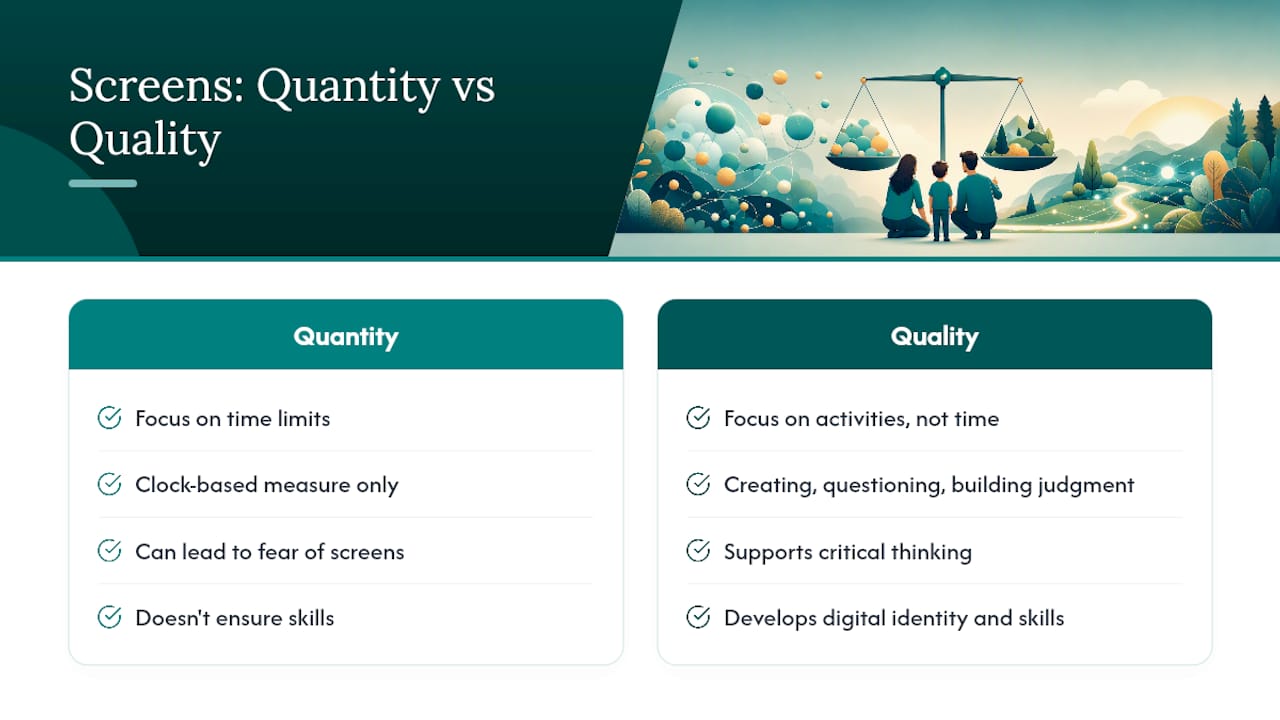
Parents get pulled between two extremes: fear the screen, or trust the app. Neither serves your child well. What matters more than time limits is what a child does on a device, whether they are creating, questioning, and building judgment, or just consuming passively. Focus conversations on critical thinking and digital identity, not just the clock.
Finding a School That Treats Digital Literacy as Core, Not Extra
If you are weighing schools right now, the practical move is simple: ask to see how digital skills show up across subjects, not just in a computer lab schedule. A small school with close teacher attention often has an advantage here, since integrating research skills, media literacy, and creative digital projects into daily lessons is easier in a class of fifteen than a class of thirty.

Astor’s curriculum approach builds this kind of integration into everyday classroom work rather than treating digital skills as a separate subject, and its IPC-based learning framework gives inquiry projects room to include research, media evaluation, and digital creation side by side. Language learning benefits from this too. Programs that pair technology with second-language instruction show how digital tools can support subjects far beyond computer class itself.
If you are touring schools this term, ask to see actual curriculum examples and a teacher training plan, not just a brochure description. Book a visit and bring your checklist.
Where to Read More on This Topic
For parents who want the underlying research rather than a summary:
UNESCO’s Digital Competence Frameworks lays out the multidimensional definition schools should follow.
EU digital literacy overview connects school skills to workforce readiness.
The academic achievement meta-analysis provides the evidence behind the achievement link.
The teacher-librarian co-teaching study shows a practical model schools can adopt.
The systematic review of critical digital literacies offers policy-level recommendations for curriculum design.
Reframing digital literacy research covers equity risks in program design.
Frequently Asked Questions
What is the role of digital literacy in school? It supports learning outcomes, keeps children safer online, and builds skills tied to future employability, all while developing judgment that goes beyond basic device operation.
At what age should digital literacy instruction start? Structured digital play with problem-solving and creation can begin in early primary years, progressing to research skills, privacy awareness, and basic coding by upper primary.
Does more screen time improve digital literacy? No. Experts emphasize screen quality, active creation and problem-solving, over screen quantity as the better predictor of skill development.
How can I tell if a school takes digital literacy seriously? Look for cross-curricular integration, ongoing teacher training, librarian or media specialist collaboration, and visible equity measures for students with limited home access.
Sources
Recommended
Ini adalah panduan yang sangat membantu dan komprehensif bagi para orang tua dalam menjalani proses pendaftaran prasekolah. Penjelasan langkah demi langkah membuat orang tua lebih mudah memahami jadwal penting, persyaratan dokumen, serta berbagai keputusan utama yang perlu dipertimbangkan dalam memilih prasekolah yang tepat. Saya sangat menghargai penekanan pada pentingnya perencanaan sejak dini dan mencari informasi tentang idebet beberapa pilihan sekolah untuk memastikan pilihan yang paling sesuai bagi setiap anak. Terima kasih telah menyediakan informasi yang praktis dan berharga bagi keluarga.