


School Readiness Workflow for Parents and Educators
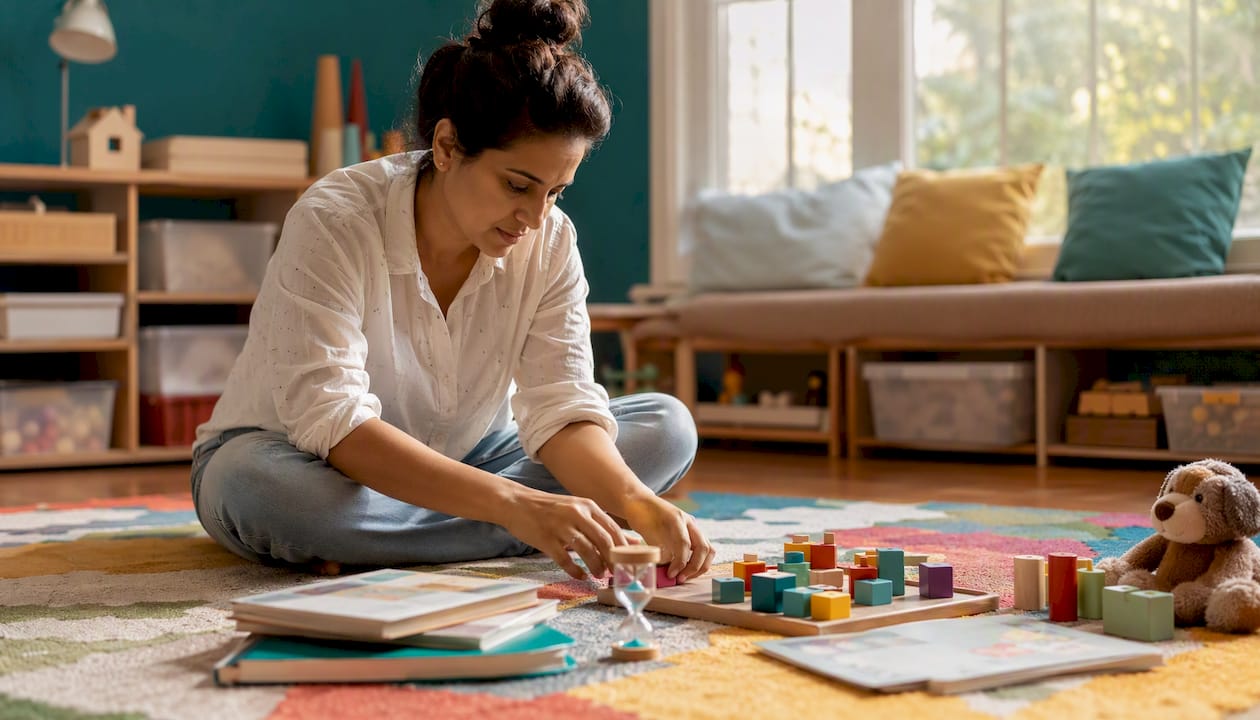
A structured school readiness workflow for Singapore families moves through six clear steps: Discovery, Screening, Baseline Assessment, Classroom Simulation, Individualised Plan, and Transition Follow-up. This guide gives parents and educators a shareable process they can start today.
Start here — three actions you can take right now:
Observe your child across five domains this week and jot down one example per area (see Section 3 for prompts).
Schedule a conversation with your child’s current preschool teacher to compare notes before any formal screening.
Download a school readiness checklist and mark what your child can already do confidently.
The 6-step workflow at a glance:
Discovery / Intake — gather parent observations and developmental history
Screening — a brief, structured check across all five domains
Baseline Assessment — deeper evaluation by teachers or allied professionals where needed
Classroom Simulation / Trial — observe the child in a group learning environment
Individualised Plan — set goals, assign supports, schedule parent coaching
Transition and Follow-up — hand over information to the receiving school and review progress
Key Takeaways
A six-step school readiness workflow, starting at least six months before school entry, gives Singapore families the clearest path to a confident, well-supported transition.
Point | Details |
Start the workflow early | Begin screening and baseline work six to twelve months before school entry, especially for the K2-to-P1 transition. |
Cover all five domains | Check language/literacy, cognitive/numeracy, social/emotional, physical/motor, and self-care — not just academic skills. |
Use classroom simulation | A trial group session reveals strengths and challenges that one-on-one assessments often miss. |
Build a child passport | A one-page summary of strengths, goals, and strategies helps teachers personalize support from day one. |
Astor’s personalised intake | Astor’s small-class model supports each child through a structured, individualised readiness and transition process. |
Table of Contents
What does “school readiness” actually mean for Singapore parents?
What are the five domains, and how do you check them at home?
How does the 6-step school readiness workflow actually work?
Practicing real classroom skills at home and in small groups
How to build home routines and communicate with your child’s school
Why a structured workflow changes everything for children and families
What does “school readiness” actually mean for Singapore parents?
School readiness is a developmental profile, not a test score. It describes how well a child’s current skills across multiple areas match the demands of a structured classroom environment. The Fayette County Public Schools readiness checklist captures this well: readiness spans physical, cognitive, social/emotional, self-help, and language/literacy areas, and children develop at genuinely different rates across each one.
For families in Singapore, this distinction matters especially at the K2-to-Primary 1 transition, where the academic jump feels steep. A child who cannot yet read independently but who listens attentively, follows instructions, takes turns, and manages their own belongings may be more ready in many practical ways than one who can decode words but struggles in other classroom routines. The five core domains are: language and literacy, cognitive skills and early numeracy, social and emotional development, physical and motor skills, and self-care and independence.
What are the five domains, and how do you check them at home?
Each domain has observable signs you can notice during everyday play and routines. The WCPSS Kindergarten Readiness Checklist highlights concrete skills like following multi-step directions, recognizing their own name in print, and basic number awareness as reliable home-observable markers.
Physical and motor skills
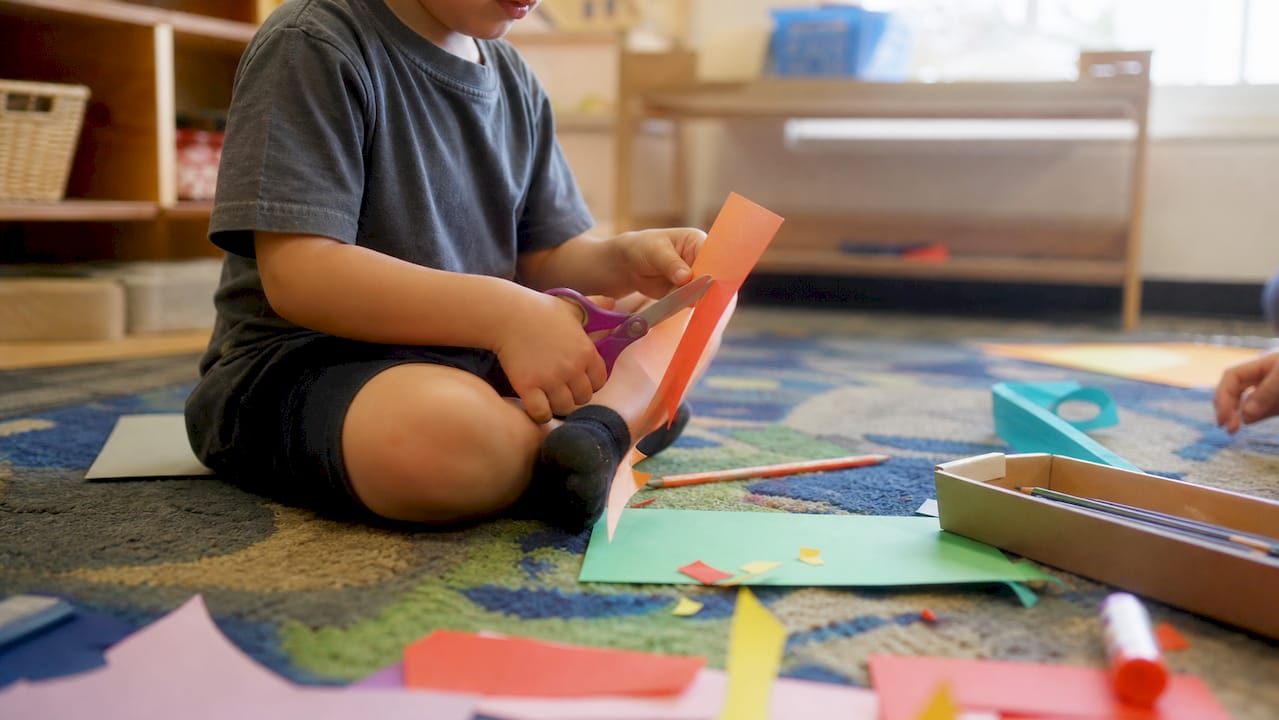
What to look for: Holds a pencil or crayon with a three-finger grip; cuts along a straight line with child-safe scissors; runs, hops, and climbs without frequent falls.
Parent prompt: Ask your child to draw a picture and write their name on it. Watch the grip and how they position the paper.
Social and emotional development
What to look for: Separates from a caregiver without prolonged distress; waits for a turn in a game; uses words to express frustration rather than hitting or shutting down.
Parent prompt: Play a simple board game and observe what happens when they lose a turn or have to wait.
Cognitive skills and early numeracy
What to look for: Sorts objects by color or shape; counts five to ten objects one-to-one; follows a simple two-step instruction without needing a reminder.
Parent prompt: Ask them to “put three red blocks in the box, then close the lid.” Note whether they complete both steps.
Language and literacy
What to look for: Speaks in sentences of four or more words; retells a simple story in order; recognizes some letters, especially those in their own name. Early literacy activities at home, like shared reading and rhyming games, build this domain steadily. You can find targeted ideas in Astor’s early literacy tips.
Parent prompt: Read a short picture book together, then ask: “What happened first? What happened at the end?”
Self-care and independence
What to look for: Manages their own toilet needs; opens a lunchbox and drinks from a water bottle independently; puts on and removes shoes with minimal help.
Parent prompt: Set up lunch as they would at school and step back. Note where they need prompting.
Recording and sharing observations: Keep a simple notes app or a small notebook. After each prompt, write one sentence: what the child did, any support needed, and the date. A week of these notes gives a preschool teacher or admissions coordinator far more useful information than a single observation session.
What does a school-readiness assessment involve?
Assessments range from a brief five-minute screening to a full multidisciplinary evaluation. Understanding which type applies to your child helps you plan the right timeline and know what to expect in any written report. For a broader look at how assessments work in primary school settings, Astor’s guide on types of assessment in primary schools explains the different formats clearly.
Three levels of assessment
Quick screen: Typically conducted by a preschool teacher or admissions coordinator. Takes 10–20 minutes. Covers basic language, motor, and social responses. Flags children who may need a closer look.
Baseline assessment: A structured observation or task-based session run by a teacher or early-years specialist. Covers all five domains in more depth and produces a written profile.
Multidisciplinary assessment: Involves allied professionals — an occupational therapist (OT) for motor and sensory concerns, a speech-language therapist for communication, and/or an educational psychologist for cognitive and learning profiles. This level is recommended when the baseline flags significant delays or when a child has a known developmental condition.
Who does what
Preschool teacher: Provides ongoing observational notes and completes a structured transition questionnaire for the receiving school.
School admissions coordinator: Runs the quick screen and determines whether a baseline or multidisciplinary assessment is needed.
Allied professionals (OT, speech therapist, educational psychologist): Conduct standardized assessments, write formal reports, and recommend specific accommodations or therapies.
What a written report typically includes
A summary of the child’s strengths across domains
Areas to monitor, with specific examples
Suggested goals for the first school term
Recommended accommodations (e.g., preferential seating, visual schedules)
Referrals for therapy if indicated
Pro Tip: When you receive a report from an allied professional, prepare a one-page summary of the key recommendations and bring it to your child’s first meeting with their new teacher. Most teachers appreciate a concise version they can act on immediately, rather than a full clinical document.
A standard readiness program in Singapore typically runs over six to ten weeks from initial screening to a completed individualised plan. Multidisciplinary assessments add two to four weeks depending on professional availability.
How does the 6-step school readiness workflow actually work?
This is the operational detail behind the workflow introduced at the top of this guide. Each step has a clear purpose, a typical duration, and decision points that tell you whether to move forward or escalate.
Discovery / Intake (Week 1) Gather your child’s developmental history, any previous assessment reports, and your own observational notes. Expect questions about sleep, feeding, communication milestones, family languages spoken at home, and any known medical or developmental concerns. Prepare a brief written summary to bring to the intake meeting. Decision point: If the intake reveals a known diagnosis or significant prior concern, move directly to a multidisciplinary assessment rather than a quick screen.
Screening and Baseline Tasks (Weeks 1–2) The child completes short, play-based tasks: matching shapes, following verbal instructions, drawing a person, and interacting briefly with an unfamiliar adult. The WCPSS checklist offers a useful reference for what observable skills look like at this stage. Decision point: If the screen flags two or more domains as significantly below age expectations, schedule a full baseline or refer to allied professionals.
Classroom Simulation / Trial (Weeks 2–3) The child joins a small group session that mirrors a real classroom: a circle time, a structured activity, a snack break, and a transition between tasks. Educators observe attention span, peer interaction, response to group instructions, and emotional regulation. This step is where many children’s real strengths and challenges become visible in ways a one-on-one assessment cannot capture. Decision point: If the child shows significant distress, sensory avoidance, or is unable to participate in any group activity, an OT or behavioral educator review is warranted before moving to goal-setting.
Individualised Plan (Weeks 3–4) Goals are set across the domains where support is needed. Each goal is specific and observable: “Child will follow a two-step verbal instruction without a visual prompt in four out of five attempts.” The plan includes the frequency of check-ins (typically every four to six weeks before school starts) and assigns parent coaching tasks.
Parent and Teacher Coaching (Weeks 4–8) Parents receive specific home activities tied to the plan’s goals. Teachers or therapists model strategies and observe the child practicing them. Progress is tracked against the baseline, and goals are adjusted as the child develops. Play-based, repeated activities that target fine motor skills, listening, and turn-taking translate directly into classroom readiness and are far easier for families to maintain than formal drills, as Shichida Australia’s readiness framework notes.
Transition and Follow-up (Final 2 weeks + first school term) A handover document is prepared: the child’s strengths, current goals, recommended accommodations, and any therapy contacts. This is shared with the receiving school before the child’s first day. A follow-up check-in is scheduled for four to six weeks into the new school term to review how the child is settling.
Practicing real classroom skills at home and in small groups
The goal is not to replicate school at home but to build the specific habits that make a classroom feel manageable. Shichida Australia’s play-based checklist reinforces that fine motor practice, listening games, and turn-taking activities are the highest-return investments for classroom readiness.
Core classroom skills to practice
Sitting on the floor or at a table for a meaningful period without prompting
Listening to a short story or set of instructions without interrupting
Waiting for their name to be called before responding
Sharing materials with one or two other children
Packing up and transitioning to a new activity when asked
Small-group games that replicate classroom dynamics
“Pass the object”: Children sit in a circle and pass an object while music plays. When the music stops, the child holding the object answers a simple question. Builds turn-taking and listening.
“Build together”: Two children share one set of blocks and must agree on what to build. Builds negotiation and shared-task skills.
“Story retell”: After a short read-aloud, each child adds one sentence to retell the story in order. Builds sequencing and listening.
For ready-made classroom routine structures you can practice at home, Astor’s classroom routines guide offers concrete morning and transition sequences.
A sample one-week practice plan
Monday: 10-minute sit-and-listen activity (story or puzzle)
Tuesday: Fine motor practice (cutting, threading beads, or drawing)
Wednesday: Turn-taking game with a sibling or parent
Thursday: Pack a school bag independently and practice opening lunchbox
Friday: Small-group play with one or two other children (playdate or sibling)
Inclusion note for bilingual families: Singapore’s bilingual environment means many children switch between English and Mandarin (or another home language) naturally. Allow children to respond in either language during home practice. The skill being built is the cognitive habit, not the specific language. For guidance on supporting early language development across both languages, Linda Mandarin’s resource on the best age to learn a new language is a practical starting point.
Safety note for motor activities: Always supervise scissor use and small-bead activities with children under five.
What signs suggest your child may need extra support?
Most children show some unevenness across the five domains. The question is whether the gap is within typical variation or whether it signals a need for earlier professional input.
Red flags that usually prompt a referral
No two-word phrases by age two, or limited vocabulary compared to peers at age four or five
Significant difficulty separating from caregivers beyond the first two to three weeks of a new setting
Frequent meltdowns that are difficult to de-escalate and occur multiple times daily
Avoidance of touch, loud sounds, or movement in ways that limit participation in daily activities
Unable to follow a single-step instruction by age three, or a two-step instruction by age four
Persistent difficulty making eye contact or showing interest in other children
Mild concerns: try these first
Increase predictability at home (consistent wake time, meal time, and bedtime)
Add more unstructured play with one or two peers to build social confidence
Practice separation in low-stakes settings (a grandparent’s home, a familiar playgroup)
Read together daily and ask simple recall questions to build language and listening
For practical strategies to support a child who shows anxiety around school transitions, Astor’s resource on managing school stress covers calming techniques and separation support in detail.
When to act and how quickly
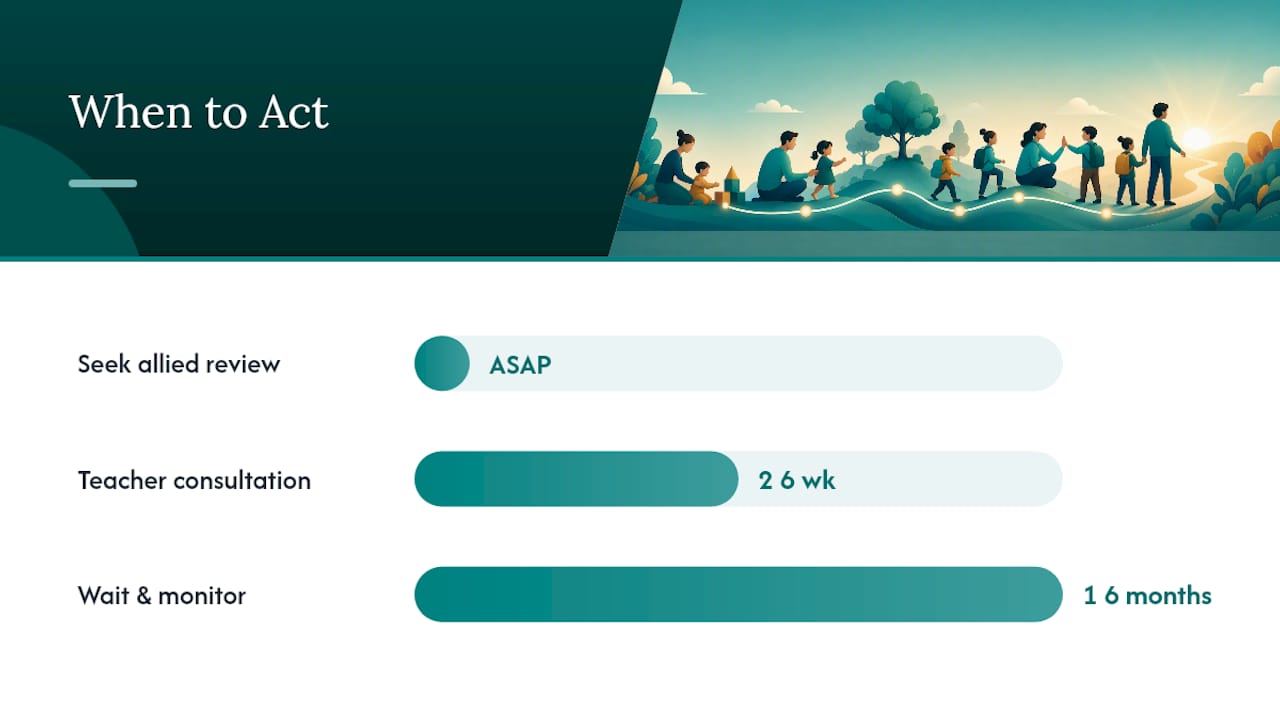
Wait and monitor (1–2 months): Mild concerns in one domain, no impact on daily functioning.
Schedule a teacher consultation (within 2–4 weeks): Concerns in two or more domains, or one domain significantly behind peers.
Seek an allied health review (as soon as possible): Any red flag from the list above, or a known diagnosis not yet assessed for school readiness.
A note on Singapore’s bilingual context: A child who is still sorting out two languages may appear to have a language delay when they are actually developing typically across both. If a child communicates well in their home language but is quieter in English, that is a different picture from a child who has limited vocabulary in both languages. When in doubt, a speech-language therapist who works with bilingual children can distinguish the two.
When should you start, and how long does preparation take?
Timing matters. Starting too late compresses the workflow and leaves less room to address concerns before the first day of school.
K1 (around age 4–5)
Begin informal domain observations and home practice routines.
No formal assessment needed unless a concern is already present.
Focus on self-care independence, turn-taking, and listening skills.
K2 (around age 5–6)
Start the full workflow six to twelve months before school entry.
Complete a quick screen by mid-K2 to allow time for a baseline assessment if needed.
Begin practicing classroom routines and separation from caregivers in structured settings.
Schedule any allied health assessments by the end of K2 so reports are ready for school admissions.
Year before Primary 1
Finalize the individualised plan and begin parent coaching by Term 1 of the year before P1 entry.
Arrange a school visit or classroom simulation at the receiving school if possible.
Prepare the handover document (child passport) by Term 3.
Adjust sleep and wake times gradually in the six to eight weeks before school starts, as Cleveland Clinic’s back-to-school guidance recommends, to reduce first-day fatigue.
What Singapore schools typically expect at Primary 1 entry: Children are expected to manage their own belongings, follow group instructions, and communicate basic needs in English. Academic mastery is not expected. Most P1 teachers describe the first term as a settling period, and schools build in structured support for children who need more time.
How to build home routines and communicate with your child’s school
Predictable routines reduce separation anxiety and help children adapt to school rhythms far more effectively than any single preparation activity. The Best Start in Life guidance makes the point clearly: everyday moments, consistent sequences, and independence-building habits are the foundation of a confident school start.
Daily routine checklist
Fixed wake time, at least six weeks before school starts
Morning sequence practiced in real time: wake, toilet, dress, breakfast, pack bag, leave
A consistent after-school or after-preschool wind-down routine
Bedtime at a consistent hour, incorporating calming activities before sleep
Gradual schedule shift: Move bedtime and wake time earlier by 10–15 minutes every few days rather than all at once. By the time school starts, the new schedule feels normal.
Sample parent-to-school email template
For a fuller set of communication scripts and intake templates, Astor’s parent-school communication guide has ready-to-use language for common situations.
Pro Tip: Create a one-page child “passport” that includes your child’s strengths, current developmental goals, any medical or dietary notes, and two or three strategies that help them settle. Give it to the class teacher on or before the first day. Teachers consistently say this kind of document helps them personalize support from the very first morning.
For bilingual families: Share which language your child is most confident in and which they use at home. Note whether they are still building English vocabulary or are fully bilingual. This context helps teachers calibrate their expectations and choose the right communication approach during the settling-in period.
The strongest school transitions happen when families and schools treat each other as equal partners, each holding information the other needs. Research from the National Institute of Education at NTU confirms that the most successful transitions use a balanced partnership model where family knowledge is treated as evidence alongside school observation, not as a secondary input.
Why a structured workflow changes everything for children and families
Most families I speak with arrive at school transition having done a lot of the right things in isolation: reading every night, practicing writing, visiting the school. What they often haven’t done is connect those efforts into a coherent sequence with clear decision points. That gap is where children fall through.
A structured school readiness workflow does something that informal preparation cannot: it surfaces concerns early enough to act on them, and it creates a shared language between parents and educators. When a parent arrives at intake with observational notes, a teacher can immediately build on that knowledge rather than starting from scratch. When a child has experienced a classroom simulation before their first real day, the environment is familiar rather than overwhelming. These are not small advantages.
What I find most compelling about Astor’s approach is the commitment to small class sizes and genuinely individualised attention. At a school where every child is truly seen, the transition workflow is not a bureaucratic checklist. It is a living conversation between the family, the child, and the educators who will spend the next several years with them. The transition to primary school matters not just academically but as a formative experience of what school feels like. Getting it right at the start shapes how a child relates to learning for years.
How Astor supports your child’s school readiness journey
Astor’s small-class environment at both the preschool in Holland and the primary school in Tanglin means that readiness support is personal, not procedural. Every child who joins Astor goes through a structured intake process that mirrors the six-step workflow in this guide: an initial conversation with parents, a brief screening, a classroom trial session, and a personalised transition plan developed with the family.
For families preparing for Primary 1 entry, Astor’s IPC primary pathway offers an inquiry-based curriculum that builds on exactly the skills this workflow develops: listening, curiosity, independence, and collaborative thinking. Class sizes stay small by design, which means teachers know each child’s profile from the first week. If you are ready to take the next step, book a school visit or submit an enquiry through Astor’s admissions page and bring your observational notes and any existing reports. The intake team will take it from there.
Useful resources to read next
These resources are worth bookmarking for checklists, activity ideas, and local policy context.
Fayette County Public Schools — School Readiness Checklist: A clear, domain-organized checklist that shows what observable readiness looks like across all five areas. Good for a first-pass audit of your child’s current profile.
Shichida Australia — School Readiness Skills Checklist: Organized around play-based activities across five development areas. Particularly useful for parents who want activity ideas rather than just a checklist.
Best Start in Life — Preparing for School: Practical guidance on routines, independence skills, and predictable sequences. Strong on the everyday habits that ease school transitions.
Cleveland Clinic — 9 Ways to Prepare Kids for School: Health-focused preparation advice covering sleep schedules, morning routines, and pre-term checkups.
Astor — Transition to Primary School Checklist for Parents: A Singapore-specific checklist with social-emotional milestones and handover templates designed for the local K2-to-P1 transition.
Sources
Recommended
Comments