


Types of Learning Environments: A Parent's Guide
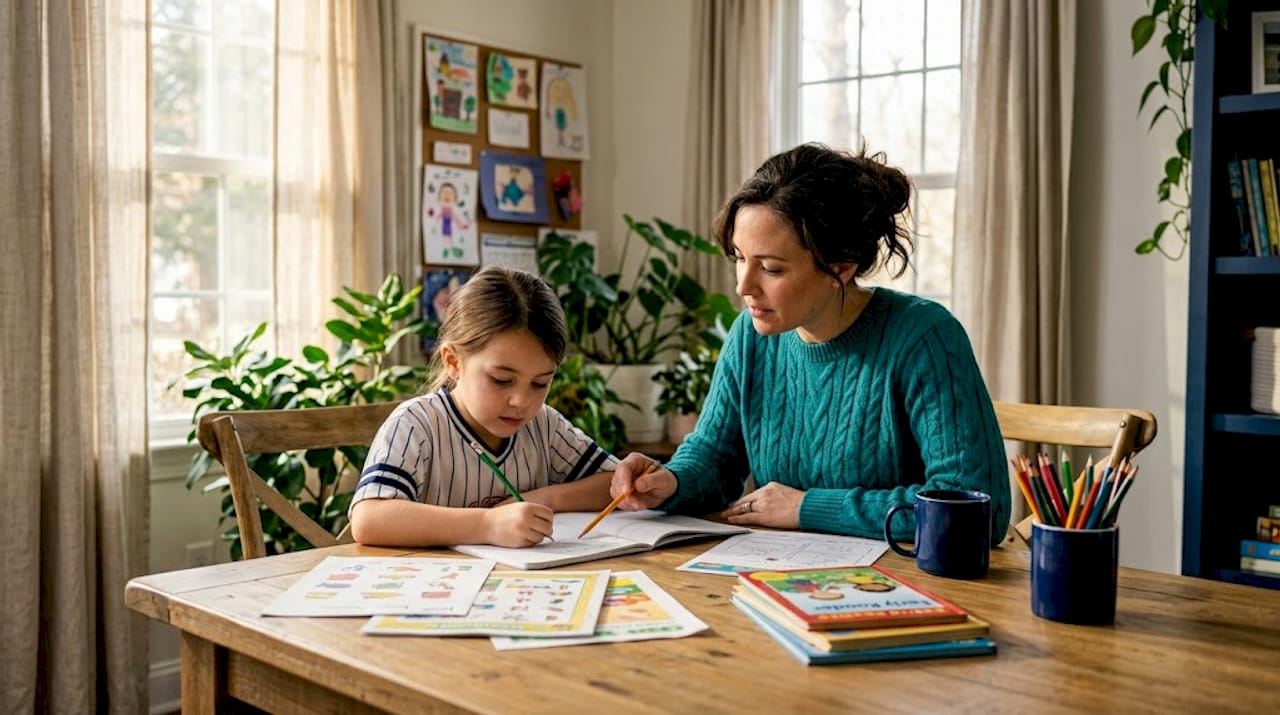
Every child learns differently, and where that learning happens matters just as much as what is being taught. The types of learning environments available to children today range far beyond the traditional four-wall classroom, spanning outdoor spaces, digital platforms, collaborative studios, and everything in between. For parents and educators, understanding these different learning settings is the first step toward making choices that genuinely fit each child’s strengths, needs, and curiosity. This guide breaks down the most meaningful types, what makes them work, and how to think about combining them well.
Table of Contents
Key Takeaways
Point | Details |
Learning environments go beyond classrooms | They include physical spaces, emotional climates, and instructional approaches that shape how children learn. |
Psychological safety matters deeply | Students retain more and take healthy risks when they feel accepted and supported in their environment. |
Blended models offer real flexibility | Combining online and in-person learning can maximize each child’s engagement and address varied learning styles. |
Active and experiential settings build life skills | Hands-on learning experiences develop communication, teamwork, and problem-solving beyond what lectures achieve. |
No single environment fits every child | The most effective approach thoughtfully combines types based on the individual child’s needs and learning stage. |
1. What “types of learning environments” actually means
Before exploring the categories, it helps to widen your definition. A learning environment is not just a classroom or a building. It encompasses educational approaches, cultural contexts, and physical spaces that shape how teaching and learning unfold. The culture in a room, the relationship between a teacher and student, and the way a lesson is structured all belong to the learning environment.
This means two classrooms in the same school can offer completely different learning environments depending on how they operate. Recognizing that helps parents and educators ask better questions: not just “Where does my child learn?” but “How does that space make them feel, think, and grow?”
2. How to evaluate any learning environment
When you look at a school, a program, or a digital platform, a few key factors help you judge whether the environment will genuinely serve a child.
Physical factors cover the space itself: lighting, room layout, access to materials, and outdoor areas. Research confirms that design of learning spaces directly impacts student engagement and the effectiveness of teaching strategies.
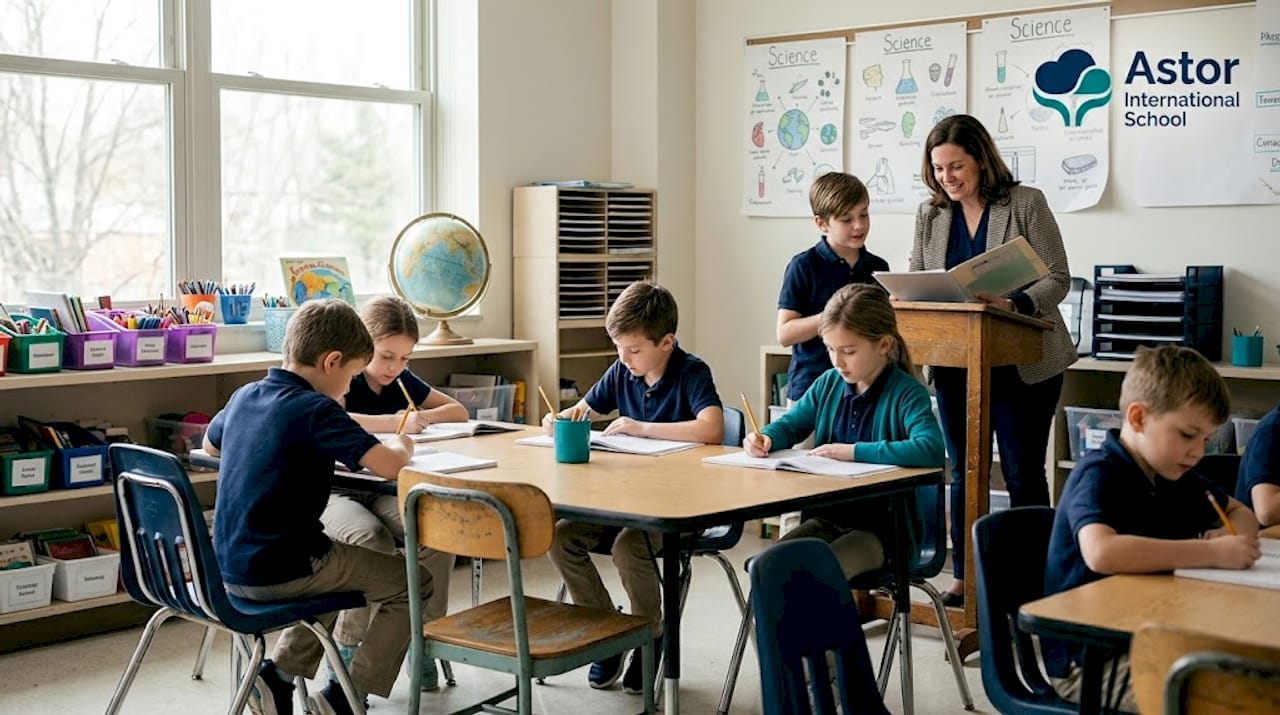
Emotional and psychological safety is non-negotiable. Children who feel anxious or unseen rarely perform at their best.
Instructional design refers to how lessons are structured. Does the environment support active participation, or does it rely entirely on passive listening?
Flexibility and differentiation matter because learners are not uniform. Differentiated instruction uses varied material complexity and planned scaffolds consistently, not as afterthoughts, to support diverse learners every day.
Technology and accessibility determine whether all students can fully participate, especially in blended or remote formats.
Pro Tip: When visiting a school or reviewing an online program, pay attention to how teachers respond to a child who gives a wrong answer. That single moment reveals more about the learning environment than any brochure.
3. Traditional and physical learning environments
The traditional classroom remains the most familiar formal learning environment, and when done well, it is genuinely effective. Direct instruction, structured routines, and face-to-face feedback all have strong foundations in learning science. The key is whether the physical setup supports more than just listening.
Outdoor learning spaces add a dimension that indoor classrooms cannot replicate. The benefits of outdoor learning include stronger sensory engagement, reduced stress, and opportunities for physical movement that support cognitive development. Children who learn outside regularly show measurable gains in attention and motivation.
Specialized physical settings round out this category:
Science labs support hypothesis testing and practical experimentation.
Makerspaces encourage creative problem-solving using physical materials and tools.
Gymnasiums and performance spaces tie movement and expression directly to learning goals.
Dedicated reading or quiet zones give children space to concentrate and build independent study habits.
Each of these spaces serves a specific type of thinking. A school that offers several of them gives children more ways to connect with learning on their own terms.
4. Psychological, emotional, and social learning environments
This is the dimension most parents overlook when touring schools, yet it may be the most powerful of all. The emotional environment shaped by teacher-student relationships, peer dynamics, and school culture determines how safe a child feels to take risks, ask questions, and be honest about what they do not understand.
Psychological safety enhances learning by reducing anxiety and actively promoting risk-taking. Students in emotionally supportive environments learn better because they are not spending cognitive energy on self-protection.
Social learning also thrives or withers depending on the relational environment. When peer relationships are healthy and collaborative, children internalize knowledge more deeply through conversation and shared problem-solving. When those relationships are competitive or unsafe, learning suffers regardless of curriculum quality.
“The best learning happens when every child is truly seen and supported.”
Effective inclusion requires relational supports built into daily routines, not added on when a child is struggling. Small class sizes support this naturally because teachers can observe each child closely and respond to social and emotional signals in real time. This is one reason why smaller schools often produce stronger relational environments than larger institutions, regardless of funding.
5. Virtual, blended, and hybrid learning environments
Remote learning options have expanded dramatically since 2020, and they now represent a legitimate and well-developed category of multimodal learning environments. Understanding what makes them work is important for any parent considering online or hybrid schooling.
Virtual learning environments operate through learning management systems. These platforms organize lessons, assignments, and feedback in structured formats. The challenge is deliberate: online learning platforms use forums, breakout rooms, and structured discussion formats specifically designed to replicate the engagement that happens naturally in physical classrooms.
The flipped classroom model is one of the most effective hybrid approaches. In this model, recorded instruction at home frees up classroom time for guided practice, discussion, and hands-on application. Children engage with new content at their own pace and arrive in class ready to apply it with a teacher’s support.
Here is how the main online learning types differ in practice:
Fully asynchronous learning gives students complete flexibility but requires strong self-regulation skills.
Synchronous online learning replicates class schedules through live video sessions, maintaining structure and social contact.
Blended or hybrid learning combines scheduled in-person sessions with digital components, balancing flexibility and structure.
The flipped classroom uses digital content for instruction and reserves face-to-face time for deeper application.
One important caution: virtual learning needs reliable technology and a distraction-minimized space at home to be effective. Without that physical foundation, even the best online program will underdeliver.
Pro Tip: If your child is learning in a hybrid environment, designate a specific physical space at home for online sessions. Consistency in the physical space reinforces consistency in focus and routine.
For strategies on keeping children engaged during online learning, explore guidance on engaging online learners to find approaches that maintain motivation and connection.
6. Experiential and active learning environments
This category sits at the heart of what many educators call student-centered learning environments, and the evidence behind it is strong. Active learning methods show measurable conceptual gains, with student-centered class activities consistently outperforming traditional lectures in knowledge retention and application.
Experiential learning environments are built around doing rather than passive receiving. Internships, simulations, and collaborative projects all fall under this umbrella. They build leadership, adaptability, teamwork, and communication skills that pure classroom instruction rarely develops as deeply.
Spaces like makerspaces and labs need to be paired with lesson plans that foster guided inquiry rather than just free exploration. The teacher’s role shifts from delivering information to facilitating discovery. This is a fundamental change in how classrooms operate, not just a change in furniture.
Here is a comparison of how different learning environment types approach the same learning goals:
Environment type | Primary strength | Best suited for |
Traditional classroom | Structured content delivery | Foundational literacy and numeracy |
Outdoor / nature-based | Sensory engagement and wellbeing | Science, movement, and curiosity |
Virtual / online | Flexibility and self-paced learning | Independent learners with strong routines |
Blended / hybrid | Balance of structure and flexibility | Most learners in modern school settings |
Experiential / project-based | Real-world application and soft skills | Problem-solving, creativity, collaboration |
For a practical look at how movement and student-centered activity can be woven into a school day, the approach to active learning at Astor offers concrete examples of what this looks like in a real classroom.
The most effective schools do not pick one type from this list. They design programs that draw from several, matching the environment to the learning goal rather than applying a single format to everything.
My honest take on choosing learning environments
I’ve spent years observing how children respond to different educational settings, and the pattern that consistently surprises educators and parents alike is this: children rarely struggle because of the curriculum. They struggle because the environment doesn’t fit who they are.
I’ve seen children labeled as disengaged transform completely when moved from a lecture-heavy formal setting to a project-based or outdoor environment. And I’ve seen the reverse, where children who needed structure and predictability became anxious in an unstructured experiential setting. Neither environment was wrong. The fit was wrong.
What I’ve learned is that the most important thing parents and educators can do is resist the pressure to find the “best” learning environment in the abstract. The best environment is the one that makes a specific child feel confident, curious, and capable. That changes over time, too. A child who thrives in a highly structured classroom at age six may need more collaborative and experiential settings by age ten.
The emotional and relational dimension deserves more weight than it typically gets. Physical, social, and pedagogical dimensions are deeply interconnected. You cannot separate the quality of a space from the quality of the relationships inside it. My honest recommendation: when evaluating any environment, pay as much attention to how teachers speak to children as to what the space looks like. That is where the real learning environment lives.
— Elena
How Astor approaches learning environments for your child
At Astor International School in Singapore, we believe small but mighty describes not just our size but our philosophy. Our small class sizes and intentional learning design mean every child is genuinely seen, supported, and challenged in ways that larger schools find difficult to replicate.
Our IPC curriculum draws on thematic, experiential learning that moves children across physical, collaborative, and reflective environments throughout each school day. At Astor Preschool in Holland, two dedicated playgrounds support both outdoor and classroom-based discovery for our youngest learners. Whether your child learns best through hands-on projects, social discussion, or structured guided inquiry, our programs are designed to meet them where they are. We invite you to explore our curriculum or book a school tour to see these learning environments in action.
FAQ
What are the main types of learning environments?
The main types include traditional classrooms, outdoor and experiential spaces, virtual and online platforms, blended or hybrid models, and social and collaborative environments. Each supports different kinds of thinking and skill development.
How does a learning environment affect a child’s development?
Learning environments shape a child’s confidence, motivation, and cognitive growth. Psychological safety and strong teacher-student relationships are among the most significant factors in determining how well children learn and retain knowledge.
What is a blended learning environment?
A blended learning environment combines in-person instruction with online components, giving students the structure of face-to-face teaching alongside the flexibility of digital learning. The flipped classroom is one widely used example of this approach.
How do I know which learning environment is right for my child?
Start by observing how your child responds to different formats: structured tasks, open-ended projects, group work, and independent exploration. Match the environment to the contexts where your child shows the most confidence and curiosity, then reassess as they grow.
Are hands-on learning experiences better than traditional instruction?
Research shows that active learning methods produce stronger conceptual gains than traditional lectures, particularly for applied problem-solving. That said, structured instruction remains valuable for foundational skills. The most effective programs combine both approaches.
Recommended
You completed a number of nice points there. I did a search on the issue and found nearly all people will have the same opinion with your blog. Server RAM Prices
A good blog always comes-up with new and exciting information and while reading I have feel that this blog is really have all those quality that qualify a blog to be a one. Zonnepanelen prijs berekenen
I like viewing web sites which comprehend the price of delivering the excellent useful resource free of charge. I truly adored reading your posting. Thank you! Zwembad bouwen
Your blog provided us with valuable information to work with. Each & every tips of your post are awesome. Thanks a lot for sharing. Keep blogging, Zonnepanelen met thuisbatterij
Really nice and interesting post. I was looking for this kind of information and enjoyed reading this one. Zonnepanelen met thuisbatterij