


Types of Classroom Activities for Kids Ages 1.5 to 12
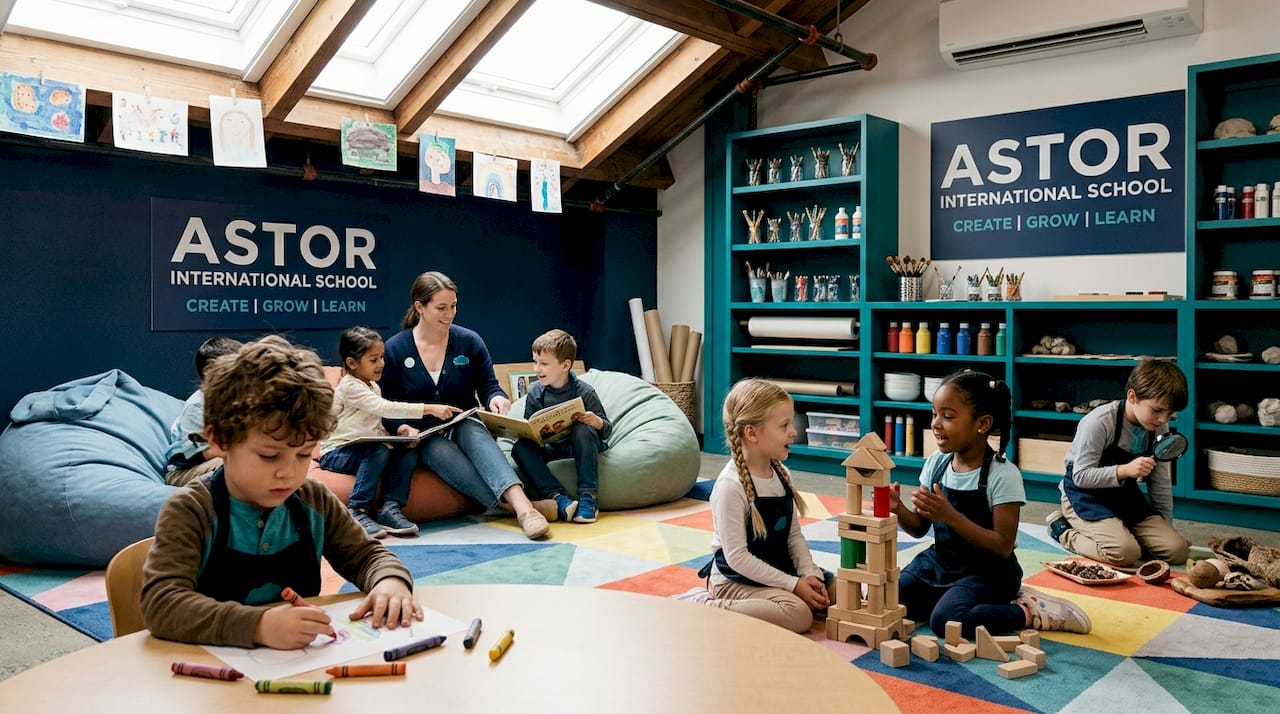
Choosing the right types of classroom activities for your child is not as simple as picking a worksheet or a coloring page. Children between ages 1.5 and 12 are at wildly different developmental stages, and the activities that spark genuine curiosity in a five-year-old will bore a ten-year-old flat. The good news is that research-backed active learning gives parents and educators a clear map. This guide covers the most effective activity types, explains why each one works, and shows you how to use them at home or in school with confidence.
Table of Contents
Key Takeaways
Point | Details |
Active beats passive | Student-centered activities produce stronger learning outcomes than lecture or passive observation. |
Reflection is not optional | Hands-on activities only become effective learning when paired with structured reflection. |
Games work, with limits | Gamification motivates children, but excessive competition can undermine intrinsic motivation. |
Rotation keeps energy up | Station rotation and gallery walks sustain engagement by giving children variety within a single session. |
Adapt, don’t abandon | Most classroom activity types can be simplified for home use with minimal materials. |
1. What makes types of classroom activities truly effective
Not every activity earns its place in a lesson. Before you spend time organizing materials or setting up a game, it helps to know what separates an activity that genuinely builds skills from one that just keeps kids busy.
The core criteria to look for are:
Active engagement. The child should be doing something, not just watching or listening. Student-centered activities like hands-on tasks and collaborative work produce significantly better conceptual gains than mostly passive approaches.
Developmental fit. An activity suited for a 10-year-old can frustrate a 6-year-old and bore a 12-year-old. Match the complexity to your child’s current stage.
Clear learning purpose. Fun matters, but every activity should tie to a skill or concept you want the child to develop. If you can’t name what the child is learning, the activity may need rethinking.
Collaborative or social elements. Children learn from each other. Activities that include a partner or small group component build communication skills alongside content knowledge.
Room for reflection. This is the step most parents skip. Asking “What did you figure out?” after an activity is what turns an experience into a lesson.
Pro Tip: When evaluating a new activity, ask yourself one question before starting: “What will my child be able to do or understand after this that they couldn’t before?” If you have a clear answer, the activity is worth trying.
2. Think-pair-share and structured discussion
Think-pair-share is one of the most underused yet effective classroom engagement techniques available to both teachers and parents. It works simply. You pose a question, give your child quiet time to think, then have them discuss their answer with a partner or sibling, and finally share with the group or with you.
The critical piece is the Think phase. Research shows that the individual Think phase is what makes this method work equitably. Without it, one confident child dominates the pair while the other disengages. When you give every child enough time to form their own ideas first, the discussion that follows is richer and more balanced.
At home, this works beautifully after reading a story together. Ask your child: “Why do you think the character made that choice?” Give them 30 to 60 seconds of quiet thinking, then talk through it together. You will be surprised how much deeper the conversation goes compared to asking the same question on the spot.
Group discussions work on the same principle, encouraging children to listen, question, and build on each other’s ideas rather than waiting for an adult to provide all the answers.
3. Jigsaw method and peer teaching
The jigsaw method takes collaboration a step further. Each child in a small group becomes the “expert” on one part of a topic, then teaches the others. It is one of the best classroom exercises for building both content knowledge and confidence, because children must understand something well enough to explain it.
For a child studying animals, for example, you might assign one child to research what a creature eats, another to study where it lives, and a third to learn how it protects itself. When they come back together, each child teaches the group what they discovered. The responsibility of being the expert pushes children to engage more deeply than they would if they were all studying the same thing at the same time.
Peer teaching is a close relative of this method. When a child explains a concept to another child, they consolidate their own understanding while helping their peer. This is why mixed-age group learning can be so powerful. Older children reinforce their knowledge by mentoring younger ones, and younger children benefit from hearing ideas explained in age-friendly language.
4. Hands-on and experiential learning activities
Hands-on teaching methods are not just about keeping children busy with materials. True hands-on learning requires four things: physical manipulatives, a student-driven inquiry process, an authentic real-world context, and structured reflection that transforms the experience into measurable understanding.
A simple example: a 7-year-old planting seeds is fun. But when you add a question (“Which soil will make the seed grow fastest?”), a prediction, a daily observation chart, and a conversation at the end about what they noticed, you have turned a pleasant activity into genuine scientific thinking.
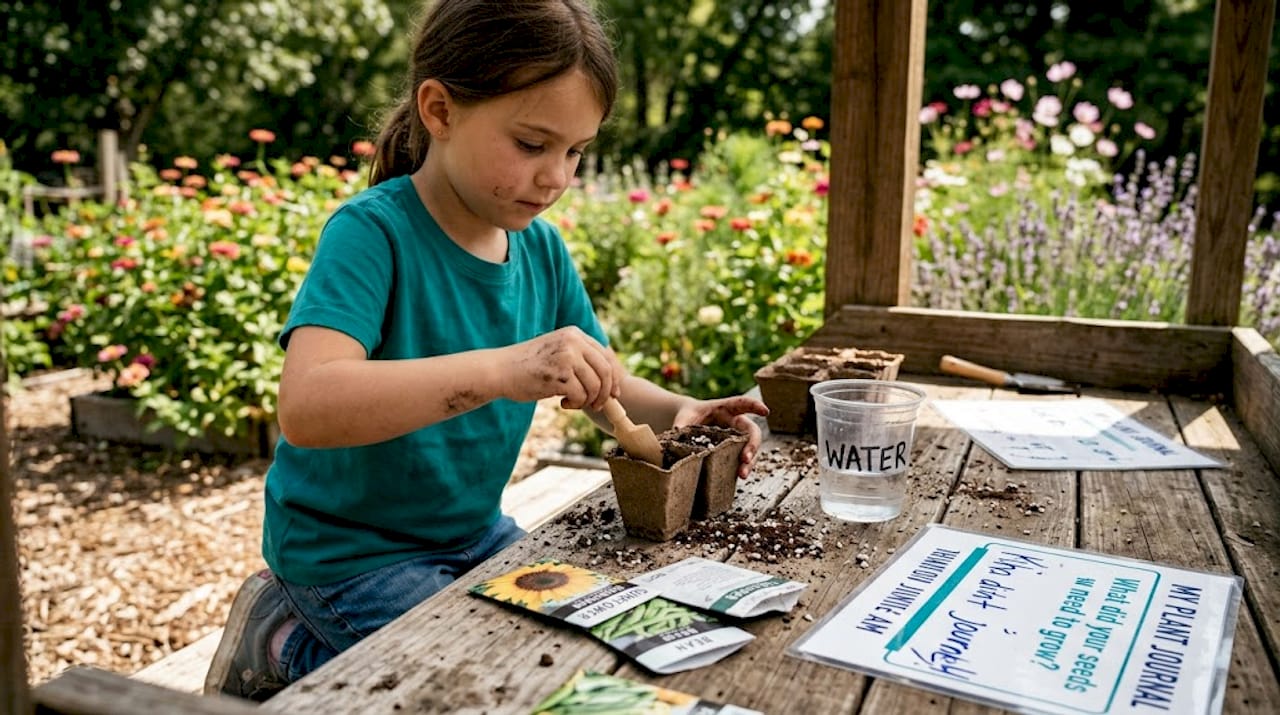
For parents wanting a structured approach, Edutopia’s 5-day mini-cycle PBL gives a practical framework that compresses project-based learning into a manageable week. Here is how the cycle looks adapted for home or small group use:
Day | Phase | What the child does |
Day 1 | Inquiry | Asks a question, gathers information, makes predictions |
Day 2 | Planning | Sketches a plan or design before building anything |
Day 3 | Building | Creates, experiments, or constructs the project |
Day 4 | Revision | Tests the result, identifies what to improve, makes changes |
Day 5 | Reflection | Explains what they learned and what they would do differently |
Pro Tip: Resist the urge to “fix” your child’s project during the Build phase. The mistakes they make on Day 3 are exactly what make the Revision and Reflection phases meaningful. Let the wobble happen.
Simple science experiments like mixing baking soda and vinegar, building a bridge from popsicle sticks, or growing crystals from salt water all fit this cycle beautifully. Explore more ideas on hands-on science learning to get started.
5. Gamified learning and classroom games
Games belong in learning. Full stop. The key is designing them with the right intent. A meta-analysis on gamification in education found a small-to-moderate positive effect on motivation when game elements like points, badges, and leaderboards align with what children genuinely need: a sense of autonomy, growing competence, and connection with others.
The caution is equally important. When games rely too heavily on external rewards or fierce competition, intrinsic motivation drops. Children start playing to win rather than to learn. Badges work best as feedback, telling a child “you have mastered this concept,” rather than as trophies.
Practical game ideas suited for ages 1.5 to 12 include:
Matching and sorting games for toddlers and preschoolers that build vocabulary and pattern recognition.
Spelling or math relay races for ages 6 to 9, where small teams score points by solving problems rather than just competing on speed alone.
Trivia rounds with topic-specific questions for ages 9 to 12, structured so every team member must contribute before a point is awarded.
Digital platforms like Kahoot! work well for ages 7 and up, but cap competitive rounds at 10 to 15 minutes and balance them with cooperative challenges.
Explore game-based learning methods that bring these principles into daily practice without overwhelming your setup at home.
6. Station rotation and gallery walks
Station rotation is one of the most effective learning strategies for keeping energy and attention up during longer learning sessions. Instead of having children sit through one long activity, you create three or four stations around the room, each offering a different way to practice the same concept or explore a related topic. Children rotate through the stations in small groups, spending 10 to 15 minutes at each one.
A gallery walk works differently but serves a similar purpose. Children create work, post it on the wall, and then circulate with sticky notes to leave comments or questions on each other’s work. It makes children’s thinking visible and teaches them to give and receive feedback.
Here is how the two approaches compare:
Feature | Station rotation | Gallery walk |
Best for | Skill practice, differentiated tasks | Reviewing work, building feedback skills |
Group size | Small groups of 2 to 5 | Whole class or small group |
Materials needed | Multiple activity sets | Sticky notes, posted work samples |
Pace | Timed rotations | Self-paced |
Age range | 4 years and up | 6 years and up |
At home, station rotation with just two or three spots works well. Set up a reading corner, a building corner, and a writing table, then let your child move between them with a gentle timer. The variety itself sustains focus far longer than any single activity would.
My honest take on bringing these activities home
I’ve worked with families who come to the learning process with tremendous enthusiasm, set up an elaborate project, and then feel deflated when their child loses interest after ten minutes. What I’ve learned from watching this happen repeatedly is that the activity type matters far less than the adult’s willingness to follow the child’s curiosity.
Think-pair-share with a six-year-old doesn’t require a formal setup. It can happen at the dinner table, on a walk, or after a movie. The structure is the value, not the setting. What I’ve found actually works is starting with one activity type your child already enjoys, learning its structure, and then gradually adding the reflection piece that most parents skip.
The uncomfortable truth is that skipping reflection is where most home learning falls apart. A child who builds a volcano and watches it erupt has had a fun afternoon. A child who then draws what happened and explains why the baking soda bubbled has learned chemistry. That five-minute conversation at the end is worth more than the entire build.
Common pitfall to watch for: in group activities with siblings, one child often dominates. Extend individual think time, assign specific roles, and make sure quieter children have a protected turn to speak. Engagement over perfection, always.
— Elena
How Astor brings these activity types to life
At Astor International School in Singapore, these types of classroom activities are not occasional extras. They are woven into daily learning through the International Primary Curriculum, which centers inquiry, collaboration, and hands-on exploration across every subject. With small class sizes, every child gets the personal attention that makes activities like jigsaw, station rotation, and project-based learning genuinely work rather than just look good on paper.
Astor has been recognized as both the best small school and the best affordable international school in Singapore, and that recognition reflects a real commitment to nurturing each child as an individual. If you are looking for an environment where your child is truly seen and supported through meaningful, research-backed learning, explore the full learning approach at Astor to see what that looks like in practice.
FAQ
What are the main types of classroom activities?
The main types include active learning methods like think-pair-share and jigsaw, hands-on and project-based activities, games and gamified exercises, and rotation models like station rotation and gallery walks. Each type serves different learning goals and suits different age groups.
Which classroom activities work best for young children ages 1.5 to 5?
Play-based and hands-on activities work best for this age group, including sorting games, sensory exploration, and simple building projects that combine physical engagement with guided conversation.
How do I use classroom engagement techniques at home?
Start with think-pair-share during everyday conversations, then add one hands-on project per week using the 5-day mini-cycle structure. The most important step is always the reflection conversation at the end of any activity.
Does gamification actually help children learn?
Yes, when designed well. Gamification has a positive effect on motivation, but the design must balance competition with mastery and cooperation to support genuine learning rather than just performance for rewards.
What is the jigsaw method and how does it support group project ideas?
The jigsaw method assigns each child a different piece of a topic to research and then teach to the group. It builds both content knowledge and communication skills, and it works as a natural foundation for deeper group project ideas and peer-led learning.
Recommended
I am genuinely thankful to the holder of this web page who has shared this wonderful paragraph at at this place Zonnepanelen Kontich
It is extremely nice to see the greatest details presented in an easy and understanding manner. Zonnepanelen Bilzen
wow... what a great blog, this writter who wrote this article it's realy a great blogger, this article so inspiring me to be a better person Zonnepanelen Kasterlee
Hi to everybody, here everyone is sharing such knowledge, so it’s fastidious to see this site, and I used to visit this blog daily Zonnepanelen As
I like viewing web sites which comprehend the price of delivering the excellent useful resource free of charge. I truly adored reading your posting. Thank you! Zonnepanelen Scherpenheuvel-Zichem