

Guide to Education for Expats in Singapore 2026

Singapore is one of the most education-focused cities in the world, and for expat families arriving with children aged 1.5 to 12, that intensity is both an asset and a challenge. This guide to education for expats covers every decision you will face: which schooling pathway fits your child, how curricula differ, when to apply, and what everything actually costs. Singapore offers local public schools, international schools with IB, British, American, and Australian curricula, and flexible homeschooling options. Planning ahead is not optional. The most sought-after schools fill their seats 12–18 months in advance, and the wrong curriculum choice can set your child back when your family moves again.
What schooling pathways are available to expat children in Singapore?
Expat families in Singapore have four main schooling pathways to consider, and each one suits a different family profile.
Local public and government-aided schools are the most affordable option, but access is tightly restricted. Seat allocation is based on vacancy after Singapore citizens and permanent residents are placed. Expat children must pass the AEIS (Admissions Exercise for International Students), which tests English and Math. The local system is also exam-driven and culturally intense, with high-stakes milestones like the PSLE (Primary School Leaving Examination). Many expat parents find the adjustment too significant for children coming from less competitive systems.
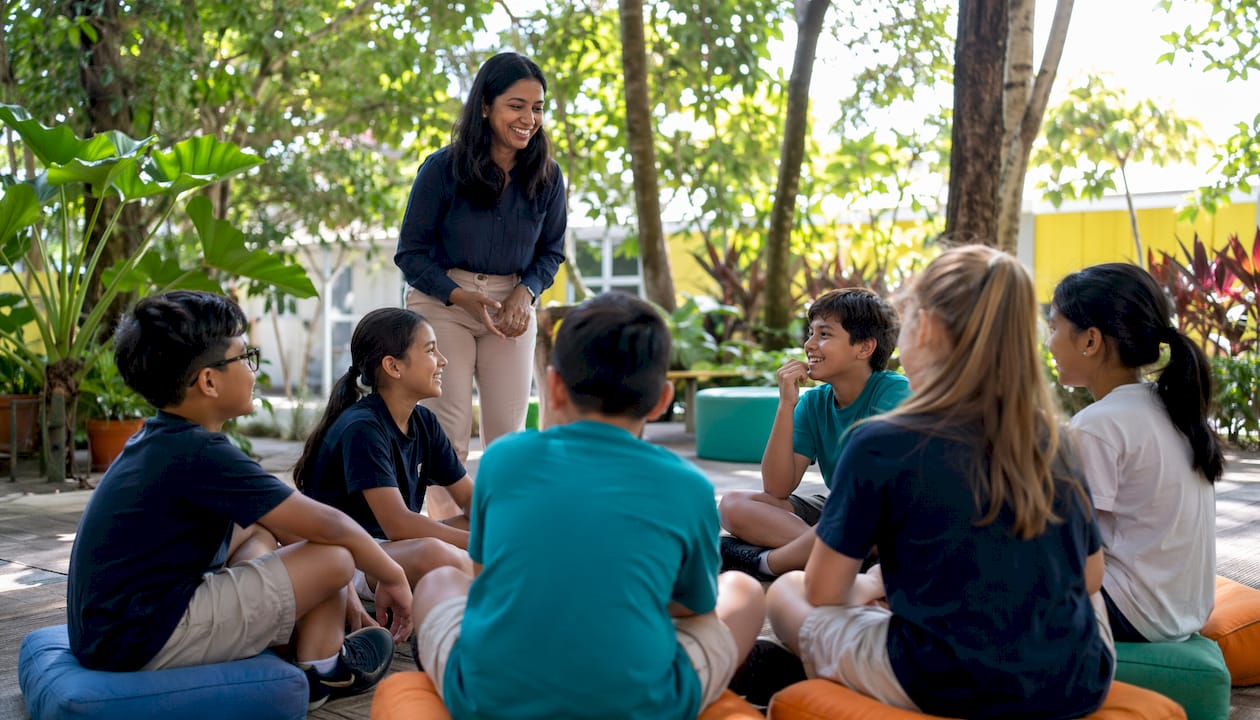
International schools are the most popular choice for expat families. They offer a range of globally recognized curricula including the International Baccalaureate (IB), British National Curriculum, American Common Core, and Australian ACARA. These schools cater specifically to internationally mobile families and typically provide strong pastoral support, English-medium instruction, and communities of fellow expat families. Tuition costs are higher, but the academic continuity they offer across countries is a clear advantage.
Preschool and early childhood programs serve children from 18 months onward. Singapore has a well-developed early childhood sector, ranging from government-subsidized childcare centers to private international preschools. For families with toddlers, this is often the first decision to make on arrival.
Homeschooling is a genuinely viable option for expat families in Singapore. Expat children under Employment or Dependent Passes are exempt from the Compulsory Education Act. This means you can follow a home curriculum, use an online school, or apply a foreign national curriculum without Ministry of Education oversight or mandatory exams. This flexibility suits families with irregular schedules, specific learning needs, or short-term postings.
Local public schools: restricted access, AEIS required, exam-focused culture
International schools: IB, British, American, Australian curricula available
International preschools: serve children from 18 months, mix of indoor and outdoor learning
Homeschooling: fully legal for expats, no MOE approval needed, no PSLE required
How do curricula and starting ages affect placement decisions?
Curriculum choice is one of the most consequential decisions you will make, and it affects far more than just daily schoolwork. Globally recognized qualifications like IB, British IGCSE, and American AP provide continuity when families relocate, which makes them the natural choice for internationally mobile families. The table below shows how entry ages and year groups differ across the main systems available in Singapore.
Curriculum | Entry age (Primary 1 / Year 1) | Academic year start | Key qualification at age 16–18 |
Singapore MOE | 6 years old | January | PSLE at 12, O-Levels at 16 |
British (UK) | 4–5 years (Reception) | September | IGCSE, A-Levels |
IB (PYP/MYP/DP) | Varies by school | August or September | IB Diploma |
American | 5–6 years (Kindergarten) | August | AP exams, SAT |
Australian | 5–6 years (Prep/Foundation) | January | ATAR |
These differences matter most when a child transfers mid-cycle. A child moving from a British Year 3 to an American Grade 3 may find the content overlaps, while a move from an American system to IB can require significant adjustment. The curriculum selection guide for expat parents in Singapore is a useful starting point for comparing these pathways in detail. Academic calendar differences also affect timing: British schools start in September, while Australian and MOE schools start in January. A child arriving in March may face a mid-year entry, which some schools handle better than others.
Pro Tip: If your family moves every two to four years, prioritize a curriculum that travels well internationally. The IB Primary Years Programme (PYP) is recognized in over 150 countries and creates minimal disruption when children change schools.
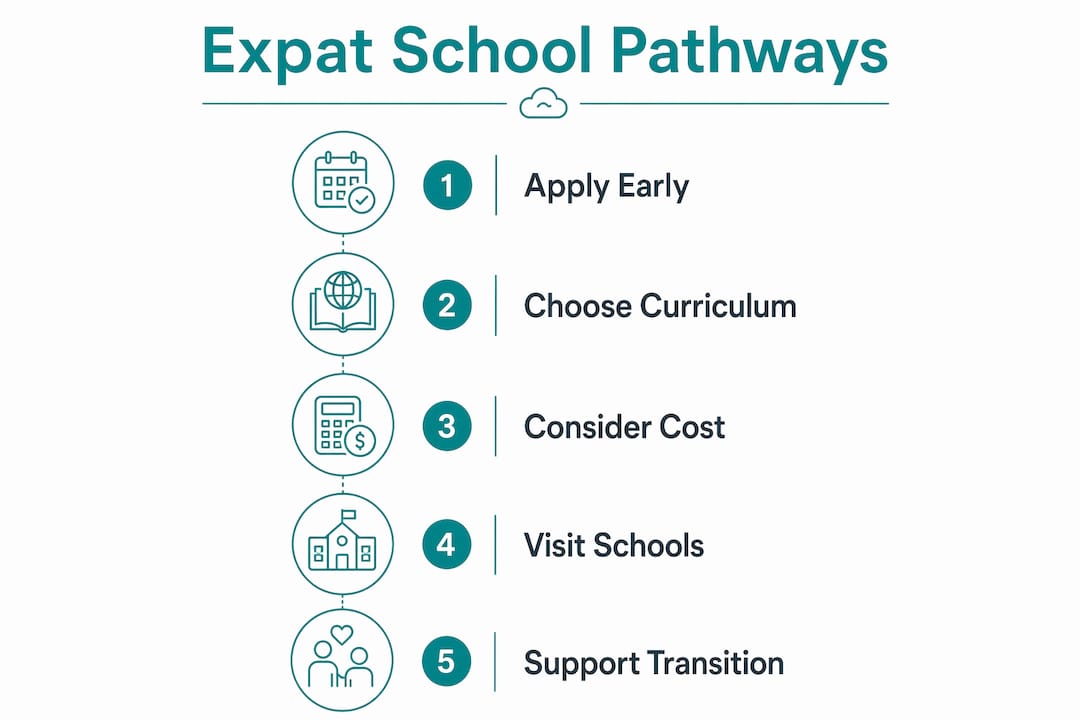
When and how should expat parents apply to schools in Singapore?
Admissions timing is where many expat families make their biggest mistake. Top-tier international schools in Singapore have waitlists of 1–3 years for popular entry years like Reception, Year 3, Year 7, and Year 12. Families are advised to apply 12–18 months ahead for September intake.
Research schools before you relocate. Start comparing curricula, locations, and fees at least 18 months before your planned move date. Shortlist three to five schools that match your child’s age, curriculum needs, and your family’s budget.
Register on waitlists immediately. Most international schools allow you to join a waitlist before you arrive in Singapore. Paying a registration fee to hold a spot is standard practice. Do not wait until you have a confirmed move date.
Prepare your documents early. Schools typically require birth certificates, previous school reports, immunization records, passport copies, and a copy of your Employment or Dependent Pass. Some schools also require an assessment or interview for the child.
Apply for local schools through AEIS if relevant. The AEIS is held twice yearly, in september and march. Children must pass English and Math tests to be considered. Seats are limited and allocated only after citizens and permanent residents are placed.
Stay active on waitlists throughout the year. Active communication with admissions offices improves your chances of filling unexpected vacancies. Expat communities turn over frequently, and mid-year spots open more often than most families expect.
Consider rolling admissions schools. Many Singapore international schools offer rolling admissions throughout the year, with mid-year vacancies often appearing in January or when families relocate unexpectedly. These schools are worth targeting if your move timeline is tight.
Pro Tip: Visit the school in person before committing. A campus tour tells you far more than a brochure. Bring your child if possible. Their comfort in the space matters as much as the curriculum on paper.
What does international schooling in Singapore actually cost?
International school tuition in Singapore is among the highest in Asia. Tuition ranges from SGD 20,000 to over SGD 55,000 per year, and first-year total costs for primary students can exceed SGD 55,000. That figure surprises many families who only look at headline tuition.
Hidden fees like registration, technology, transport, uniforms, and exam fees add 10–18% on top of headline tuition. Employer education allowances often underestimate total school costs because they focus on tuition alone, excluding these essential additional fees. Before you accept a relocation package, ask your employer to confirm exactly what the education allowance covers.
The main cost categories to budget for include:
Tuition fees: SGD 20,000–55,000+ per year depending on school tier and year group
Registration and capital levy fees: Often SGD 1,000–5,000 as a one-time or annual charge
Transport: School bus services typically add SGD 2,000–4,000 per year
Uniforms and materials: SGD 500–1,500 depending on the school
Exam fees: Relevant for older children sitting IGCSE, IB, or AP exams
Enrichment and co-curricular activities: Often charged separately
For families on tighter budgets, smaller international schools and boutique schools often offer strong academics at more accessible price points. Edu’s Astor International School has been recognized as the best affordable international school in Singapore, which makes it a practical option for families who want quality without the premium price tag. You can find a detailed breakdown of tuition ranges and what to expect at different school tiers on the Astor website.
How do you choose the right school for your child?
Choosing the right school is not just about rankings. The best fit depends on your child’s personality, your family’s mobility plans, and the kind of learning environment where your child will genuinely thrive.
Start with your child’s academic and emotional needs. A child who is naturally curious and thrives with project-based learning will do well in an IB school. A child who needs structure and clear benchmarks may settle better in a British or American curriculum school. Language needs also matter: if your child is not yet fluent in English, look for schools with strong English as an Additional Language (EAL) support.
Think carefully about your family’s future mobility. Curriculum choice should align with where you are likely to move next. If you expect to return to the UK, a British curriculum school makes the transition seamless. If your family moves frequently across different countries, the IB system offers the widest international recognition.
Proximity and campus environment also shape daily life in ways that are easy to underestimate. A school 45 minutes away by bus adds real stress to a young child’s day. Consider schools near your home or workplace, and look at campus facilities, outdoor space, and class sizes. Smaller class sizes mean teachers can give each child more attention, which is especially valuable during the settling-in period. You can read more about navigating school choices for expat children in Singapore to help frame your decision.
Finally, visit the school and speak with the admissions team. Ask how they support new expat students. Ask about the community of families. The warmth and responsiveness of the admissions office is often a reliable signal of how the school treats its students day to day.
Key Takeaways
Expat families in Singapore who apply early, choose a portable curriculum, and budget for total costs rather than headline tuition give their children the strongest foundation for a successful school experience.
Point | Details |
Apply 12–18 months early | Top international schools have waitlists of 1–3 years for popular year groups. |
Choose a portable curriculum | IB, British IGCSE, and American AP qualifications transfer across countries with minimal disruption. |
Budget beyond tuition | Hidden fees add 10–18% to headline tuition; first-year costs can exceed SGD 55,000. |
Expats can homeschool freely | Expat children are exempt from the Compulsory Education Act and need no MOE approval. |
Stay active with admissions offices | Consistent communication raises your chances of securing mid-year vacancies through rolling admissions. |
What I’ve learned from watching families navigate Singapore’s school system
After years of observing expat families work through Singapore’s education options, one pattern stands out clearly. The families who struggle most are not the ones with the smallest budgets. They are the ones who waited too long to start.
I have seen families arrive in Singapore with a six-week move timeline, discover their preferred school has a two-year waitlist, and spend their first term scrambling between temporary options. That stress lands on the child, not just the parents. Starting your school search before you start your apartment search is not an exaggeration. It is the right order of priorities.
The other thing I have noticed is that parents often over-index on prestige and under-index on fit. A large, well-known school with hundreds of students per year group is not automatically better for a seven-year-old who is adjusting to a new country, a new language environment, and a new social circle. Smaller schools, where teachers genuinely know every child by name, often produce better outcomes during the transition period. The best learning happens when every child is truly seen and supported, and that is harder to deliver in a school of 2,000 students than in one of 200.
Homeschooling and rolling admissions are also underused tools. Many families dismiss homeschooling as a last resort, but for families on short postings or with children who need a gentler transition, it is a genuinely good option. And rolling admissions mean that even if you missed the main intake, a spot may open in January or at any point during the year. Stay on the list. Keep in touch with the admissions office. It works more often than people expect.
— Elena
Astor International School: a nurturing fit for expat families in Singapore
Edu’s Astor International School in the Tanglin area of Singapore was built with exactly this kind of family in mind. It is a small school with small class sizes, which means your child gets personal attention from day one, not just during the settling-in period. Astor has been recognized as both the best small school and the best affordable international school in Singapore, which reflects its commitment to quality education without an unnecessarily high price tag.
Astor follows the IPC curriculum, an internationally recognized program designed for globally mobile children that builds academic skills alongside international mindedness. For families with younger children, the Astor preschool in the Holland area offers a warm, play-based environment with two playgrounds and a blend of outdoor and classroom learning. You can learn more about Astor’s curriculum and campus facilities, or reach out to the admissions team to arrange a visit.
FAQ
What are the main schooling options for expat children in Singapore?
Expat families can choose from local public schools (restricted access via AEIS), international schools offering IB, British, American, or Australian curricula, and homeschooling, which is fully legal for expat children under Employment or Dependent Passes.
How early should expat parents apply to international schools in Singapore?
Apply at least 12–18 months before your intended start date. Top-tier schools have waitlists of 1–3 years for popular year groups, so registering early is the single most effective step you can take.
What is the typical cost of international schooling in Singapore?
Tuition ranges from SGD 20,000 to over SGD 55,000 per year. Hidden fees for transport, uniforms, registration, and exams add another 10–18% on top of that figure.
Can expat families homeschool their children in Singapore?
Yes. Expat children are exempt from Singapore’s Compulsory Education Act, so families can homeschool or use a foreign curriculum without MOE approval or mandatory exams like the PSLE.
Which curriculum is best for internationally mobile expat children?
The IB (International Baccalaureate) is recognized in over 150 countries and creates the least disruption when families relocate. British IGCSE and American AP qualifications also transfer well across education systems worldwide.
Recommended
This is very useful post for me. This will absolutely going to help me in my project. Poolbau
Just saying thanks will not just be sufficient, for the fantasti c lucidity in your writing. I will instantly grab your rss feed to stay informed of any updates. Aanleg zwembad
Nice blog and absolutely outstanding. You can do something much better but i still say this perfect.Keep trying for the best. Poolbau in der Nähe
A great website with interesting and unique material what else would you need. Airco Leuven
I have checked this link this is really important for the people to get benefit from. Swimming pool