


Why Experiential Preschool Learning Shapes Better Kids
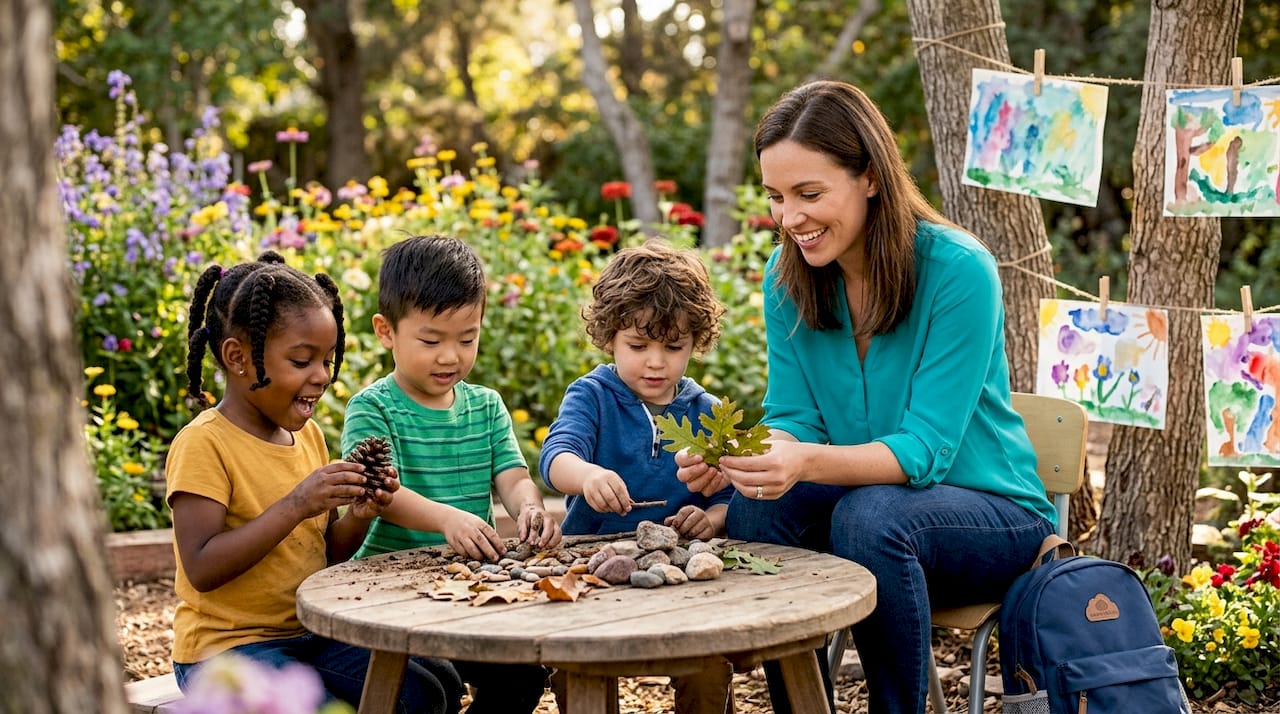
Experiential preschool learning is the process of enabling young children to acquire knowledge and skills through direct, hands-on experiences that connect learning to real-life contexts. Known in education research as experiential learning, this approach draws on frameworks like David Kolb’s learning cycle and Bloom’s Taxonomy to explain why active engagement produces deeper understanding than passive instruction. For parents of children aged 1.5 to 5 years, understanding why experiential preschool learning works is the first step toward choosing the right environment for your child’s growth.
How does experiential learning benefit preschool children’s development?
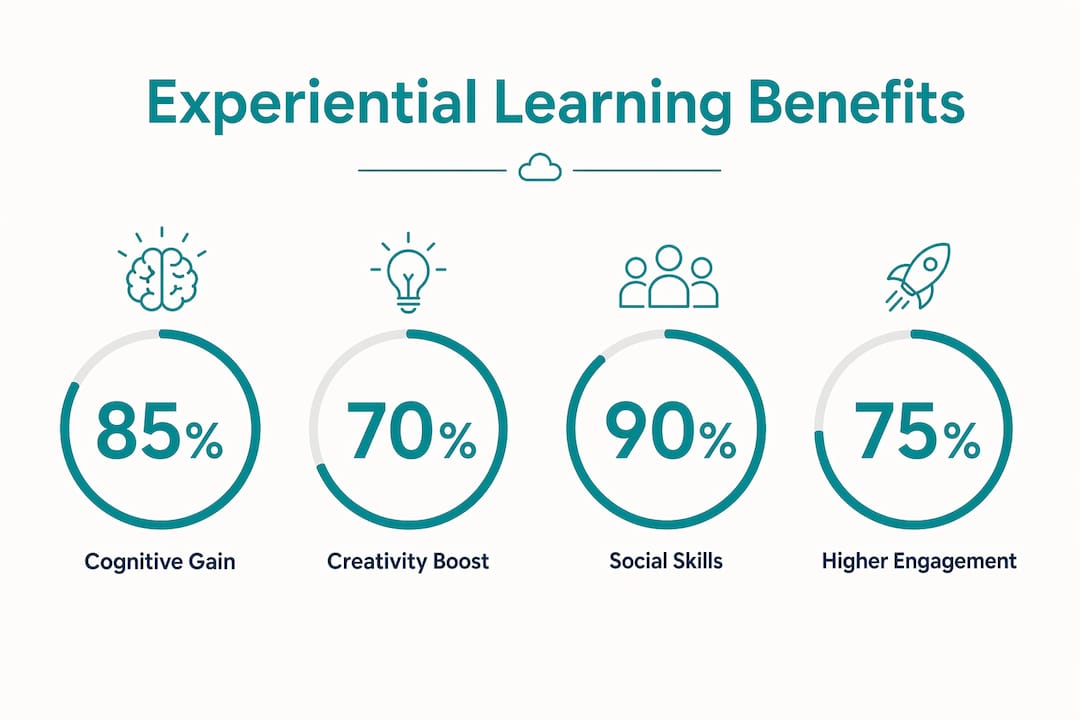
Experiential learning engages children in the highest cognitive actions on Bloom’s Taxonomy: analyzing, evaluating, and creating. These are not skills reserved for older students. Young children access them naturally when they touch, build, question, and experiment.
The cognitive gains are measurable. A 10-week structured intervention with 120 preschool children aged 5 to 6 showed significant improvement in spatial orientation skills through experiential activities. Spatial awareness at this age predicts later success in mathematics and science, making early investment in hands-on learning especially worthwhile.
Creativity also grows through experience. Project-based approaches produce superior outcomes for fostering autonomy and creative thinking compared to teacher-led instruction, according to research published in Frontiers in Psychology in 2026. The preschool years are peak imagination years, and structured play projects give that imagination a productive outlet.
The social and emotional benefits are equally strong. When children work together on a shared task, they practice negotiation, patience, and communication. These are not soft skills. They are the foundation of confidence and motivation that carry children through their entire education. Hands-on learning activates cognitive, linguistic, physical, and social-emotional development simultaneously, making it one of the most efficient approaches available for this age group.
Key developmental benefits of experiential learning in preschool include:
Spatial reasoning: Structured activities improve a child’s ability to understand position, direction, and relationships between objects.
Scientific thinking: Children who explore real phenomena develop clearer, more accurate mental models of how the world works.
Critical thinking: Hands-on problem solving builds the habit of asking “why” and testing ideas.
Creativity: Project-based cycles give children ownership over their learning, fueling original thinking.
Social confidence: Collaborative tasks teach children to listen, share, and lead in low-stakes environments.
What does experiential learning look like in preschool settings?
Experiential learning in preschool looks active, curious, and sometimes wonderfully messy. A classroom built on this approach does not look like rows of children listening quietly. It looks like children gathered around a water table testing which objects float, or crouched in a garden bed observing insects.
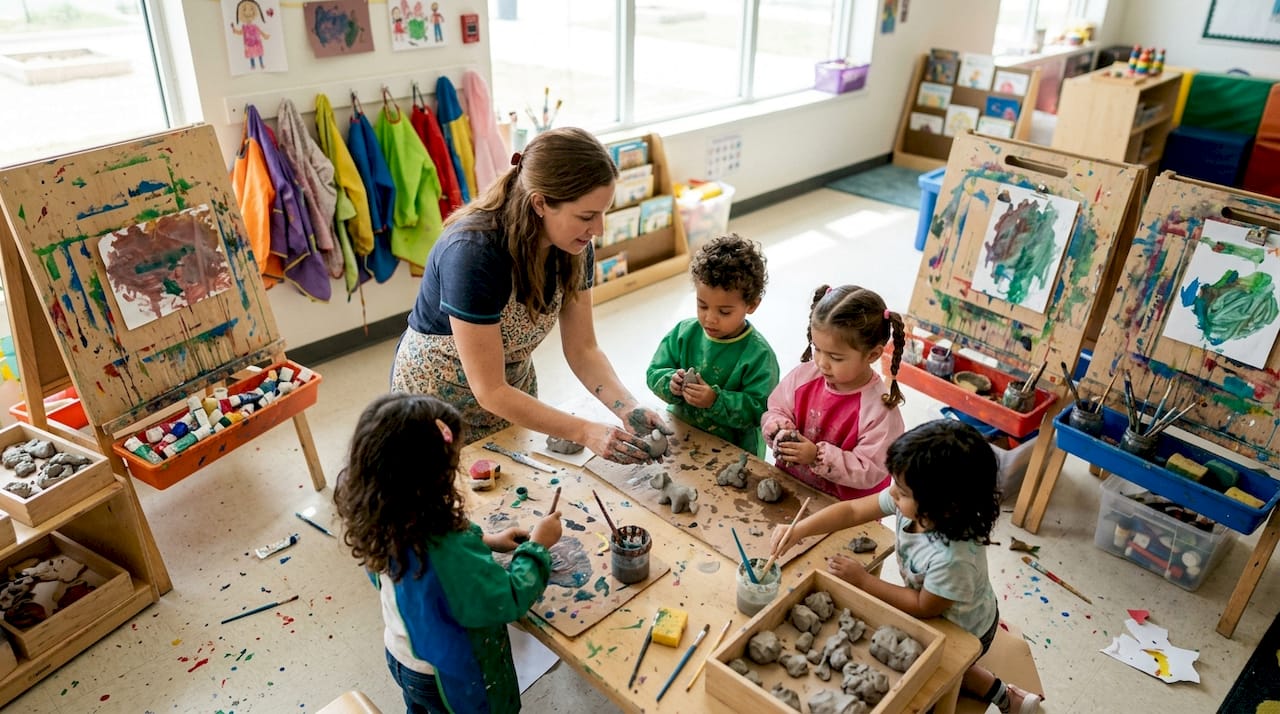
A two-month experiential program with children aged 4 to 6 helped them develop scientific understanding of pollution and ecosystems using multi-modal methods. Children in the study transferred what they learned into family conversations at home. That transfer, from classroom to real life, is the clearest sign that genuine learning has occurred.
Practical activities that embody experiential learning for ages 1.5 to 5 include:
Sensory exploration stations: Sand, water, clay, and natural materials let toddlers build physical understanding of properties like weight, texture, and volume.
Outdoor science walks: Observing plants, weather, and insects connects abstract concepts to living examples children can touch and smell.
Simple project cycles: A group decides to build a bridge from blocks, tests it, and rebuilds. This mirrors the full Kolb cycle of experience, reflection, concept, and action.
Creative role play: Pretend play develops language and social skills while letting children process real-world scenarios safely.
Cooking and growing activities: Planting seeds or making a simple snack connects math, science, and literacy in one meaningful task.
The teacher’s role in all of these is to facilitate, not direct. True experiential learning requires teachers to adapt the curriculum based on children’s genuine questions and interests rather than following fixed scripts. A child who asks why leaves change color has just opened a science lesson. A skilled teacher follows that question.
Pro Tip: When visiting a preschool, watch what the teacher does when a child asks an unexpected question. A facilitator-style teacher pauses, reflects the question back to the group, and builds a mini-investigation. That response tells you more about the school’s approach than any brochure.
What are common challenges in implementing experiential learning?
The biggest barrier to experiential learning in preschools is not philosophy. It is resources. A survey of 100 preschool teachers found high awareness of experiential learning’s importance but consistent implementation challenges due to limited materials, space, and structured frameworks. Teachers who believe in the approach often cannot deliver it fully because the environment does not support it.
Common challenges parents may notice or want to ask about include:
Limited outdoor space: Experiential learning thrives outdoors. Preschools without gardens, playgrounds, or nature access are structurally limited in what they can offer.
Inconsistent frameworks: Without a clear curriculum model, experiential activities become occasional events rather than a daily practice.
Resource gaps: Quality materials for sensory play, science exploration, and project work cost money. Under-resourced settings default to worksheets.
Teacher training: Facilitating child-led inquiry is a skill that requires specific professional development, not just goodwill.
As a parent, you can ask direct questions. Ask how teachers respond when a child’s interest pulls the lesson in a new direction. Ask what the outdoor space is used for. Ask whether the curriculum has a named framework. These questions reveal whether experiential learning is a genuine practice or a marketing phrase.
How can parents support experiential learning at home?
Parents are the most powerful extension of any preschool curriculum. Low-cost, curiosity-driven experiences at home reinforce what children explore in school, and they do not require expensive kits or structured programs.
The most effective thing you can do is slow down. When your child stops to examine a puddle, resist the urge to move on. Ask what they notice. Ask what they think will happen if they drop a stone in it. That moment of genuine inquiry is experiential learning in its purest form. Curiosity activates cognitive, linguistic, physical, and social-emotional development simultaneously, and you can trigger it with nothing more than a question.
Practical at-home activities that mirror preschool hands-on learning include cooking simple recipes together, sorting and categorizing household objects, building structures from recycled materials, and growing a small herb plant from seed. Each of these gives your child a real problem to solve and a real result to observe. The learning is embedded in the doing.
Pro Tip: Follow your child’s questions for one afternoon instead of your own agenda. If they ask why the ice in their drink melts, make it an experiment. Fill two cups, put one in the sun, and time them. You have just run a controlled science experiment with a three-year-old.
Listening is the most underrated parenting skill in early education. Children who feel heard ask more questions. Children who ask more questions learn more. The sensory and exploratory play you provide at home builds the same neural pathways that structured preschool activities target. You are not supplementing school. You are co-creating your child’s education.
Key Takeaways
Experiential preschool learning produces stronger cognitive, creative, and social outcomes than passive instruction because it engages children in direct, meaningful experiences that activate multiple areas of development at once.
Point | Details |
Cognitive gains are measurable | A structured 10-week program improved spatial orientation in preschool children aged 5 to 6. |
Creativity peaks with project-based learning | Project-based approaches outperform teacher-led instruction for fostering autonomy and original thinking. |
Teachers must be facilitators | Effective experiential classrooms require teachers to follow children’s questions, not fixed lesson scripts. |
Resources determine quality | Limited space, materials, and training are the primary barriers to consistent experiential learning in preschools. |
Parents extend the classroom | Low-cost, curiosity-driven activities at home reinforce preschool learning without expensive materials. |
Why I think we underestimate what young children can handle
Most parents I speak with worry that experiential learning means unstructured chaos. They picture children running freely with no direction and no outcomes. That worry is understandable, but it misreads what is actually happening.
What looks like chaos in an experiential classroom is active inquiry in motion. A child moving between a water table and a building station is not distracted. They are testing a hypothesis they formed two minutes ago. The movement is the mechanism, not the problem.
The deeper misconception is that young children need to be filled with information. They do not. They need to be given problems worth solving. A four-year-old who plants a seed and waits for it to grow has learned patience, biology, and the concept of cause and effect. No worksheet delivers that combination.
What I find most encouraging is the research on transfer. When children learn through experience, they carry that knowledge into new contexts. The children in the pollution study brought their learning home and discussed it with their families. That is the goal of education at any age: knowledge that travels beyond the classroom walls.
My honest advice to parents is this: trust the movement, trust the mess, and trust the questions. A child who asks “why” constantly is not being difficult. They are doing exactly what a developing brain is supposed to do. The best preschool environments honor that instinct rather than quiet it.
— Elena
Edu’s approach to experiential and inquiry-based learning
At Edu, the Astor International School network in Singapore brings experiential learning to life through a curriculum built around children’s natural curiosity and real-world exploration. The preschool at Holland features two playgrounds and a blend of outdoor and classroom learning designed for children aged 1.5 to 5 years.
The IPC curriculum at Astor International School integrates inquiry-based units that mirror the experiential principles described throughout this article. Small class sizes mean teachers can genuinely act as facilitators, following each child’s questions rather than managing a crowd. If you are exploring preschool options in Singapore and want to see how hands-on learning works in practice, Edu’s learning philosophy is a strong place to start.
FAQ
What is experiential learning in preschool?
Experiential learning in preschool is an approach where children acquire knowledge through direct, hands-on activities rather than passive instruction. It draws on frameworks like Kolb’s learning cycle and engages children in exploring, reflecting, and applying what they discover.
What age is experiential learning most effective for?
Experiential learning is effective from as early as 18 months, when children begin active sensory and motor exploration. Research shows structured experiential programs produce measurable cognitive gains in children aged 4 to 6.
How do I know if a preschool uses genuine experiential learning?
Ask whether teachers follow children’s questions to shape lessons, and observe whether the classroom includes open-ended materials, outdoor access, and project-based activities. A facilitator-style teacher who adapts to children’s interests is the clearest indicator.
Can parents support experiential learning without special materials?
Yes. Curiosity-driven activities like cooking together, observing nature, or building with household objects replicate the core principles of experiential learning at no cost. The key is slowing down and letting children lead the exploration.
Does experiential learning prepare children for formal school?
Experiential learning builds spatial reasoning, critical thinking, creativity, and social confidence, all of which are foundational skills for formal schooling. Project-based approaches in particular show superior outcomes for fostering the autonomy children need in structured academic settings.
Recommended
Comments