


What Is Project-Based Learning for Kids Ages 1.5 to 12
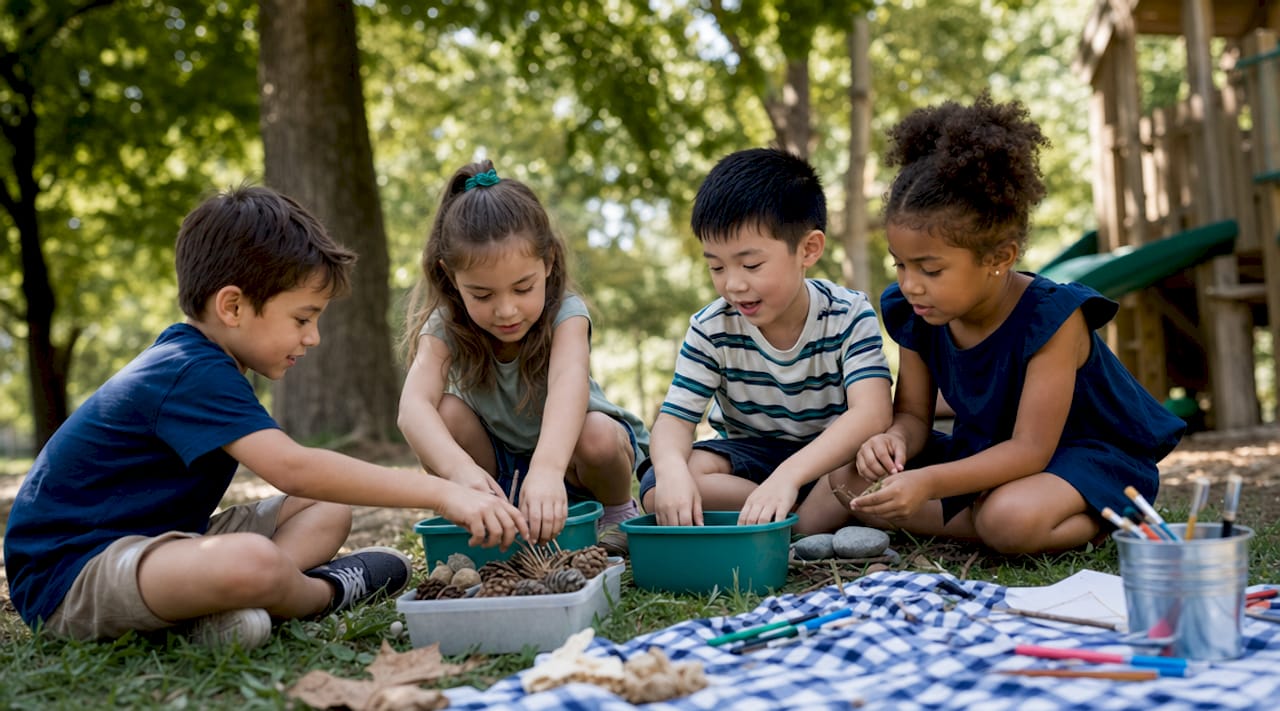
Project-based learning is defined as a teaching method where students investigate complex, real-world questions over an extended period and produce meaningful public products as evidence of their learning. Unlike a single worksheet or one-off craft activity, this approach, formally known as PBL, asks children to think deeply, collaborate, and apply knowledge to authentic problems. Frameworks like PBLWorks and NCEE have shaped how schools worldwide design and implement it. For parents and educators of children aged 1.5 to 12, understanding PBL means understanding how children can build genuine curiosity, confidence, and critical thinking from a very young age.
What is project-based learning and how does it work?
Project-based learning is structured around extended investigation of authentic, complex questions that culminate in public products, making it fundamentally different from short tasks or decorative projects. A child does not simply read about water conservation and answer questions. Instead, they might investigate how their school uses water, design a solution, and present findings to classmates or families.
PBLWorks identifies seven essential elements that distinguish rigorous PBL from lower-quality project work: a challenging question, sustained inquiry, authenticity, student voice and choice, reflection, critique and revision, and a public product. Each element serves a specific purpose. The challenging question gives the project direction. Sustained inquiry means children keep asking, researching, and refining rather than stopping at a first answer. Authenticity connects the work to real life.
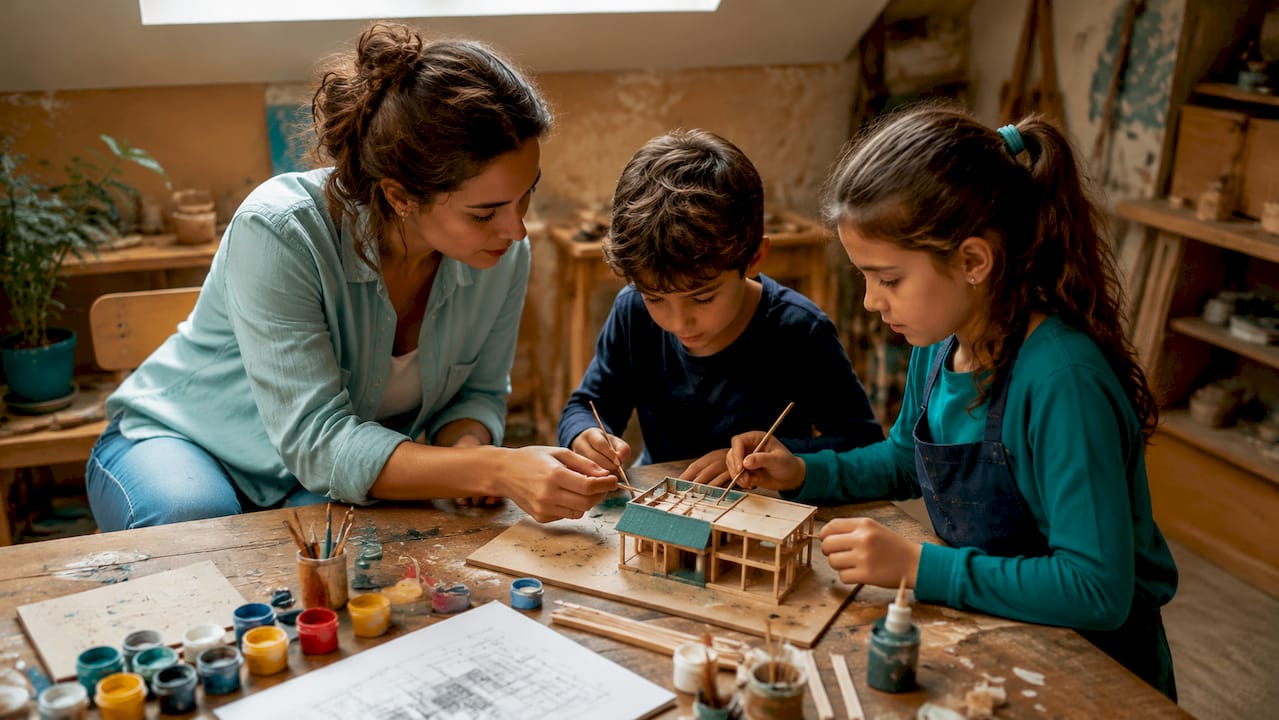
The NCEE framework organizes PBL into three core phases: project launch, project work, and final product. In the launch phase, the teacher introduces the driving question and sparks curiosity. During project work, students research, collaborate, draft, and revise. The final product phase is where children share their work with a real audience, which gives the entire process genuine purpose.
Pro Tip: Avoid what educators call “dessert projects,” where a project is added at the end of a unit as a fun reward rather than being the vehicle for learning itself. The project should be the learning, not a celebration of it.
Traditional project work | Project-based learning |
Assigned at end of unit | Drives the entire unit |
Teacher-directed steps | Student voice and choice built in |
One submission, no revision | Iterative critique and revision |
Audience is the teacher | Public product for real audience |
Single subject focus | Cross-disciplinary by design |
What does research say about the benefits of project-based learning?
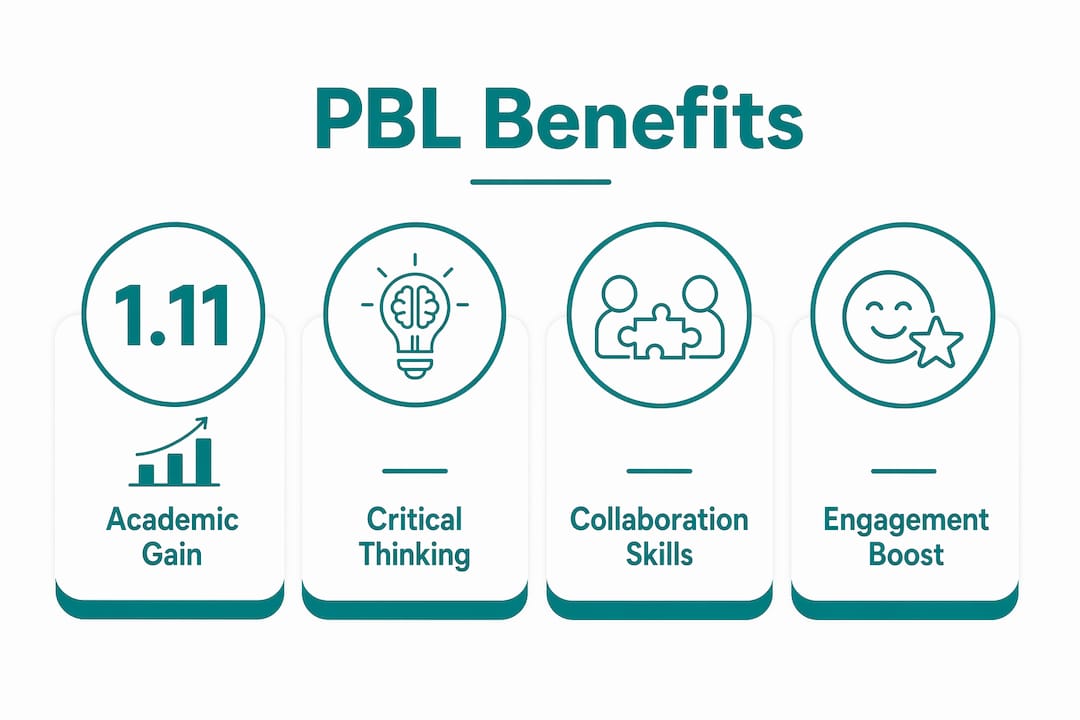
The evidence supporting PBL’s impact on young learners is strong and growing. A 2026 Springer meta-analysis found that PBL significantly improves academic achievement with an effect size of g=1.11, particularly in humanities and social sciences, and a moderate effect in math at g=0.66. An effect size above 1.0 is considered very large in educational research, meaning PBL produces gains well beyond what conventional instruction typically achieves.
The same research makes clear that implementation quality determines outcomes. A poorly designed project with no clear driving question or feedback loop will not produce these gains. Strong teacher guidance and careful planning are what separate transformative PBL from busy work.
An ACER report adds important nuance. It notes that impact on competencies like critical thinking and collaboration is positive but varies depending on task design and how well assessments are aligned to those goals. If you only measure literacy and numeracy, you will miss the collaboration and problem-solving gains that PBL produces. This matters for parents and educators who want to see the full picture of what children are learning.
Pro Tip: When assessing PBL outcomes, use rubrics that capture collaboration, reflection, and revision quality, not just the final product. A polished poster with no evidence of deep thinking tells you very little about what a child actually learned.
Outcome area | Research finding |
Academic achievement | Effect size g=1.11 in humanities; g=0.66 in math (Springer, 2026) |
Critical thinking | Positive but varies by task design and assessment alignment |
Collaboration skills | Improved with explicit role structures and checkpoints |
Literacy and numeracy | Positive impact noted across studies |
21st century competencies | Mixed; depends on implementation quality and aligned assessment |
How can parents and educators implement PBL for young children?
Effective PBL for children aged 1.5 to 12 starts with age-appropriate design. You do not hand a four-year-old an open-ended community problem and expect them to self-direct. Instead, Brightwheel and New Tech Network recommend tailored scaffolding, clear milestones, and integrating foundational skills directly into the project structure. The driving question for a toddler might be as simple as “What do plants need to grow?” while a ten-year-old can investigate “How could our school reduce food waste?”
One of the most common mistakes educators make is assuming that content knowledge will emerge naturally from open exploration. Direct instruction must be combined with project work so children acquire the specific skills they need to succeed. A child cannot design a garden layout without first learning about measurement. A student cannot write a persuasive letter to the principal without first learning how persuasive writing works. PBL does not replace direct teaching. It gives that teaching a meaningful context.
Scaling authenticity for young learners is also key. A kindergartner does not need to present to a city council. Presenting to parents at a class showcase or sharing a book they created with younger students in the school is equally authentic and far more developmentally appropriate. The purpose of the public product is to give the work meaning beyond a grade.
Here are practical steps for implementing PBL with children aged 1.5 to 12:
Start with a driving question that is genuinely interesting to the child’s age group and connects to their immediate world.
Break the project into clear milestones with checkpoints so children can track their own progress.
Teach collaboration explicitly. Assign roles, model how to give feedback, and practice group decision-making before the project begins.
Integrate direct instruction within the project timeline rather than before it. Teach skills when children need them to move forward.
Build in regular reflection moments. Ask children what they have learned, what surprised them, and what they would change.
Scale the audience to the child’s age. Family members, classmates, or a younger class are perfectly valid public audiences.
Connect the project to play-based learning principles for children under five, where hands-on exploration is the primary mode of inquiry.
What are some practical project-based learning examples for children?
Concrete examples make PBL far easier to visualize and adapt. The following projects span the 1.5 to 12 age range and produce authentic public products that give children a real sense of purpose and accomplishment.
The Garden Project (ages 2 to 4): Children investigate what plants need to grow, plant seeds in the classroom or outdoor space, observe changes over weeks, and create a simple illustrated book about what they discovered to share with families.
Our Neighborhood Map (ages 4 to 6): Children explore their local area, identify places that matter to them, and collaboratively create a large illustrated map to display at a school open day. This integrates literacy, math, and social studies naturally.
The Water Detectives (ages 6 to 8): Students investigate how water is used at home and school, collect simple data, and present a set of water-saving recommendations to their class or school community. This builds numeracy, science, and public speaking skills.
Design a Better Playground (ages 7 to 9): Children research what makes a great playground, survey classmates, sketch designs, and present their proposal to school leadership. This connects geometry, persuasive writing, and children’s creativity in one project.
Community Cookbook (ages 8 to 10): Students interview family members about traditional recipes, write up the recipes with cultural context, and compile a class cookbook to share with the school community. This integrates writing, research, and cultural awareness.
Local History Exhibition (ages 9 to 12): Students research a local historical event or figure, create display panels, and host a mini-exhibition for parents and younger students. This develops research skills, writing, and public presentation confidence.
Sustainability Action Plan (ages 10 to 12): Students identify an environmental issue in their school or community, research solutions, and present a formal action plan to school leadership. This mirrors real-world civic engagement and builds enquiry-based skills alongside content knowledge.
Each of these examples follows the core PBL structure: a real driving question, sustained inquiry, and a public product for a genuine audience. They also integrate multiple subject areas, which is one of the most practical benefits of project-based learning for busy educators managing a full curriculum.
Key takeaways
Project-based learning produces the strongest outcomes when it combines a clear driving question, direct instruction, iterative feedback, and a public product designed for a real audience.
Point | Details |
PBL is defined by structure | Seven essential elements from PBLWorks distinguish rigorous PBL from low-quality projects. |
Research confirms strong gains | A 2026 Springer meta-analysis found an effect size of g=1.11 for academic achievement in PBL classrooms. |
Implementation quality is everything | Strong teacher guidance and planning determine whether PBL produces meaningful outcomes. |
Age-appropriate design matters | Scale driving questions, audiences, and scaffolding to match the developmental stage of children aged 1.5 to 12. |
Assessment must align with goals | Rubrics should capture collaboration, reflection, and revision, not just the final product. |
Why the balance between guidance and freedom defines PBL success
I have seen PBL done beautifully and I have seen it fall apart, and the difference almost always comes down to one thing: how much the adult trusts the process without abandoning the child in it. The research is clear that direct instruction must live inside the project, not before it or instead of it. But in practice, many educators either over-scaffold and turn PBL into a guided worksheet, or they step back too far and leave children floundering without the skills they need to move forward.
What I find genuinely transformative about PBL, especially for young children, is the revision cycle. When a six-year-old presents their garden book to a classmate and gets feedback that their instructions were confusing, and then rewrites them, that child has just experienced something most adults rarely do: the idea that good work takes more than one attempt. That lesson is worth more than any single content objective.
The challenge of group participation is real and should not be minimized. Explicit roles and timeline checkpoints are not bureaucratic overhead. They are what make collaboration equitable, especially for quieter children who might otherwise let louder peers carry the project. If you are implementing PBL at home or in a small group setting, assign roles deliberately and rotate them across projects so every child builds every skill.
My honest caution for parents: PBL is not a replacement for reading practice, number work, or direct skill instruction. It is the context that makes those skills feel worth learning. Keep both in your child’s day, and you will see the difference.
— Elena
How Astor International School brings PBL to life
At Astor International School in Singapore, the IPC curriculum places project-based and inquiry-led learning at the heart of every unit for children aged 5 to 12. Small class sizes mean every child’s driving question gets genuine attention, and teachers can integrate direct instruction with project work in the way research shows works best. Astor’s Tanglin campus has been recognized as both the best small school and best affordable international school in Singapore, precisely because this kind of personalised, meaningful learning is possible when every child is truly seen. For families with younger children, Astor’s preschool in Holland offers the same nurturing, hands-on approach through our curriculum designed for the earliest years of learning.
FAQ
What is project-based learning in simple terms?
Project-based learning is a teaching method where children learn by investigating a real question over time and creating a product to share with an audience. It differs from traditional learning because the project drives the entire unit rather than being added at the end.
How does project-based learning differ from traditional learning?
Traditional learning typically delivers content first and tests recall afterward, while PBL uses a real-world question to motivate learning throughout. Students in PBL classrooms revise their work based on feedback and present to real audiences, building skills that go beyond memorization.
What age can children start project-based learning?
Children as young as 18 months can engage in simple project-based experiences, such as investigating what plants need to grow. Brightwheel and New Tech Network recommend scaling the driving question and scaffolding to match the child’s developmental stage.
Does project-based learning actually improve academic results?
A 2026 Springer meta-analysis found PBL produces an effect size of g=1.11 in academic achievement, which is considered very large. Results are strongest when teachers combine direct instruction with project work and align assessments to the full range of learning goals.
How long does a typical PBL project take?
Most PBL projects span one to several weeks, depending on the age group and complexity of the driving question. The NCEE framework recommends three phases: project launch, project work, and final product, each requiring dedicated time for inquiry and revision.
Recommended
Comments