


How to Help Your Child Transition in Singapore
- sasha2644
- 20 hours ago
- 9 min read
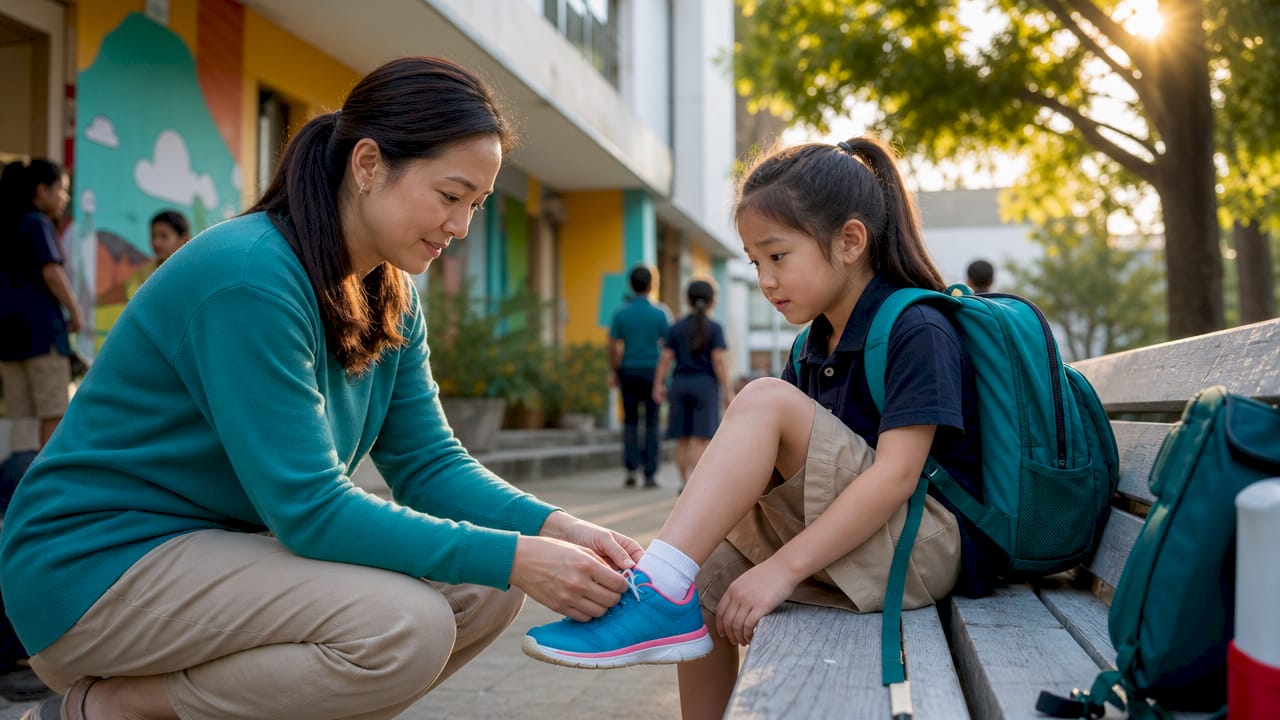
Successful school transition support is defined as the combination of proactive preparation, emotional attunement, and practical skill-building that helps children adjust confidently to a new school environment. For expat families in Singapore, knowing how to help child transition Singapore schools can feel especially complex. You are managing not just a new classroom, but a new culture, a new peer group, and often a new educational system. The good news is that the right strategies, applied at the right time, make a measurable difference. This guide covers every major transition stage, from preschool to secondary school, with research-backed advice tailored for families like yours.
What are the main challenges children face during school transitions in Singapore?
School transitions place real demands on children across emotional, social, and practical dimensions. Understanding these challenges is the first step toward supporting child adjustment in Singapore effectively.
Emotional adjustment is often the most visible challenge. Children may show separation anxiety, mood swings, or reluctance to attend school. These responses are normal, but they signal that a child needs more scaffolding, not less attention.
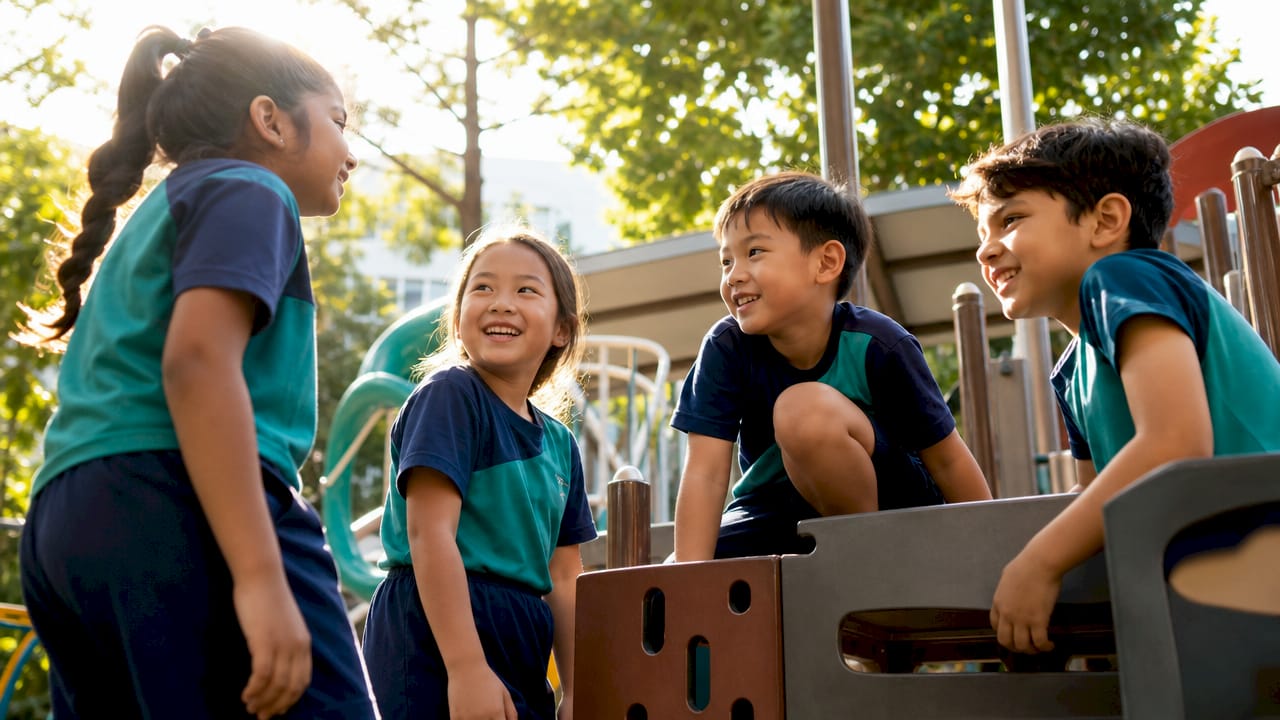
Social dynamics present a separate hurdle. Making new friends in an unfamiliar environment requires confidence and social vocabulary that many children have not yet built. Expat children face an added layer: they may be navigating cultural norms and communication styles that differ from their home country.
Practical independence is a less-discussed but equally real challenge. Self-management tasks like packing school bags, buying food at the canteen, and using restrooms independently are critical for a smoother school transition in Singapore. Children who have not practiced these skills before their first day face unnecessary stress on top of everything else.
Academic expectations also shift significantly between stages. The jump from preschool to Primary 1 involves longer school hours, structured lessons, and a faster pace. The jump from primary to secondary school brings subject-based banding, co-curricular activities (CCAs), and greater personal responsibility. MOE guidance confirms that preparation for Primary 1 should start months before the school year begins, not in the final week.
For expat children specifically, language differences can compound every other challenge. A child who is still building English fluency will find social integration harder, even in an international school setting. Recognizing this early lets you address it directly rather than hoping it resolves on its own.
How can parents prepare their child for a smooth transition from preschool to primary school?
Transitioning from preschool to primary school is one of the biggest leaps a young child makes. The preparation window matters enormously. Here is a step-by-step approach that works.
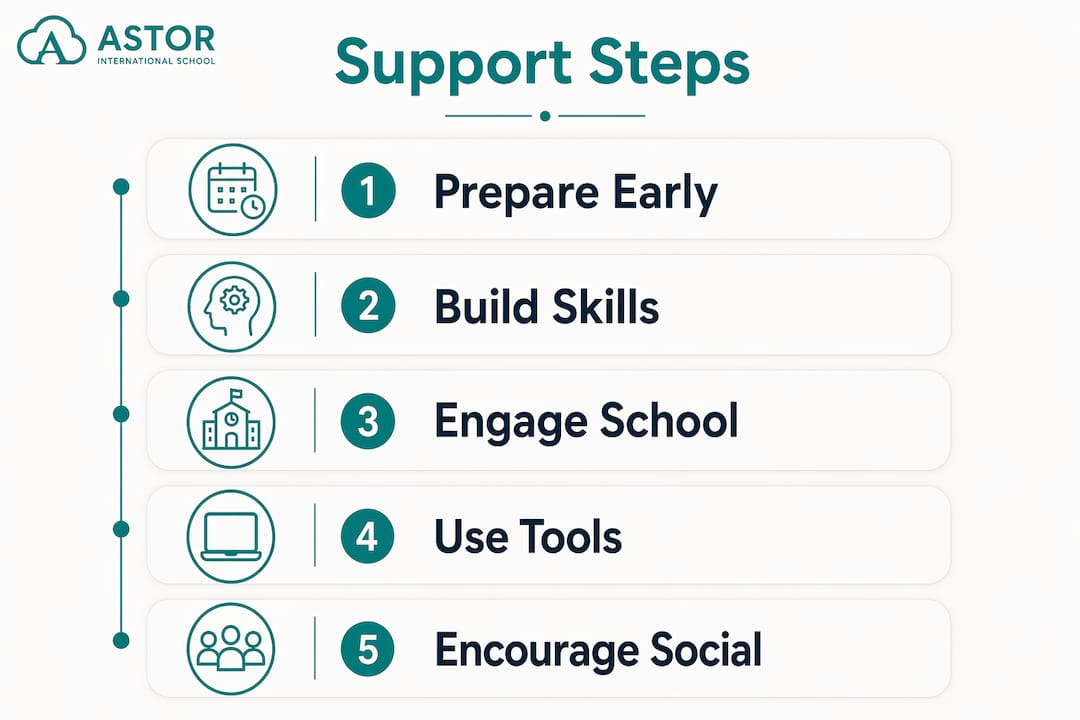
Start routines months ahead. Practice the school morning routine at home well before the first day. Wake up at the same time, pack the school bag together, and put on the uniform. Repetition builds familiarity, and familiarity reduces anxiety.
Build practical independence skills. Independence skills like buying food and using restrooms without help are as important as academic readiness. Practice these at home and during outings so your child arrives at school already capable.
Use role-play to build social confidence. Teaching social skills through role-play scenarios builds children’s confidence to navigate new school social dynamics. Practice introductions, asking to join a game, and handling disagreements calmly.
Visit the school before day one. Attend open houses, orientation sessions, and any parent-teacher meet-and-greet events. Familiarity with the physical space reduces the cognitive load on the first day. If your child can meet their teacher beforehand, even better.
Validate their feelings without amplifying them. Tell your child it is normal to feel nervous. Avoid projecting your own anxiety onto them. Phrases like “You might feel a little nervous at first, and that is completely okay” are more helpful than “Don’t worry, everything will be fine,” which dismisses the feeling entirely.
Connect with ECDA and MOE resources. Singapore’s Early Childhood Development Agency (ECDA) and the Ministry of Education (MOE) both publish guidance for families preparing for Primary 1. These resources cover curriculum expectations, registration timelines, and school readiness checklists. Reviewing them early gives you a clear picture of what your child will face.
Pro Tip: If your child is neurodivergent or has learning needs, share updated psychological or medical reports with the school before term starts. Early sharing of reports significantly reduces anxiety for children with learning or behavioral needs during transitions in Singapore.
Understanding why the transition to primary school matters from an educational perspective can also help you frame the change positively for your child.
What strategies help children transition successfully from primary to secondary school?
The primary-to-secondary transition is more complex than the preschool-to-primary shift. Children are older, more aware of social hierarchies, and facing genuinely higher academic stakes. The strategies that work here are more nuanced.
Prepare for subject-based banding and CCAs. Managing subject-based banding and increased co-curricular activities requires planning. Talk with your child about their interests and help them choose CCAs that genuinely excite them, not just ones that look good on paper.
Establish structured morning routines. Structured morning routines and organized folders reduce transition stress for students moving from primary to secondary school. A predictable start to the day anchors everything else.
Set digital boundaries early. Secondary school brings more screen time, more group chats, and more social media exposure. Agree on boundaries before school starts, not after problems arise.
Communicate with school staff proactively. Strong family-school partnerships are foundational for successful transitions. Contact the Year Head or school counselor before the first week ends. Introduce yourself, share relevant context about your child, and ask how you can stay informed.
Ask low-stakes questions at home. Avoiding repetitive questions about friendships reduces pressure. Instead of “Did you make any friends today?” try “What was the most interesting thing that happened?” This opens conversation without creating performance anxiety.
Pro Tip: Expat parents often underestimate how different secondary school communication norms are in Singapore compared to their home country. Read the school handbook carefully and attend every parent briefing in the first term. The relationships you build with teachers in those early weeks pay dividends all year.
For broader context on supporting your child’s learning through academic changes, the Astor blog covers subject-specific strategies that complement what teachers do in the classroom.
What resources and tools can help parents support school transitions in Singapore?
Parents do not have to figure this out alone. Singapore has a range of resources, from government programs to private support, that make helping kids settle in Singapore much more manageable.
Government and school-based resources are the first place to look. MOE publishes transition guides for both Primary 1 and Secondary 1 on its website. ECDA’s Beanstalk portal offers professional development content that parents can also access for insight into early childhood pedagogy. Schools themselves often have counselors and year-level coordinators who are specifically trained to support new students.
Visual tools and timers are particularly effective for children who struggle with change. Transitioning is a skill taught via priming and visual timers, especially for neurodivergent children. A visual schedule posted on the fridge, showing the morning routine step by step, removes the need for repeated verbal reminders and reduces friction.
Expat parent networks in Singapore are a genuinely useful resource. Groups organized through international schools, community centers, and platforms like InterNations or Facebook expat groups connect parents who have already navigated the same transitions. Their practical, ground-level advice often fills gaps that official resources miss.
Here is a comparison of the main support options available to expat families in Singapore:
Support type | Provider examples | Best for |
Government guidance | MOE, ECDA | Registration, curriculum expectations, school readiness |
School-based support | Year Heads, school counselors | Ongoing adjustment, academic concerns, social issues |
Private professionals | Child psychologists, educational therapists | Learning needs, anxiety, behavioral challenges |
Community networks | Expat parent groups, InterNations | Peer advice, school recommendations, cultural adjustment |
Digital tools | Visual schedule apps, emotion regulation apps | Daily routine support, neurodivergent children |
Pro Tip: If your child has a diagnosis or learning profile, connect with the Dyslexia Association of Singapore (DAS) before school starts. They offer transition support resources and can help you communicate your child’s needs clearly to the school.
Common challenges and how to handle them during school transitions
Even with strong preparation, most children hit at least one rough patch during a school transition. Knowing what to watch for and how to respond makes a real difference.
Signs a child is struggling include changes in sleep patterns, loss of appetite, increased clinginess, reluctance to go to school, and withdrawal from activities they normally enjoy. These signs warrant attention, not dismissal.
Separation anxiety is most common in younger children. Keep goodbyes short and consistent. A long, drawn-out farewell increases anxiety rather than reducing it. A brief, warm goodbye followed by a confident departure signals to your child that you trust the environment.
Social withdrawal often appears in older children who feel out of place. Avoid forcing friendships. Instead, create low-pressure social opportunities outside school, such as a shared activity or hobby class, where your child can connect with peers naturally.
Adjustment delays are normal for the first four to six weeks. If significant distress continues beyond that window, consult the school counselor or a child psychologist. Proactive support and clear communication before and during transitions reduce children’s stress and lead to better adjustment outcomes.
Over-questioning at home is a common parent mistake. Asking “How was school? Did you make friends? Did anyone talk to you?” every single day creates pressure. Use specific, low-stakes prompts instead: “What did you eat for lunch?” or “Did anything funny happen today?”
Pro Tip: The most effective transition support is proactive, not reactive. Reduce cognitive load before the transition happens using visual schedules and consistent scripting. Waiting until your child feels overwhelmed means you are already behind.
Key Takeaways
Helping your child transition smoothly in Singapore requires proactive preparation, practical skill-building, and consistent communication with both your child and their school.
Point | Details |
Start preparation early | Begin practicing routines and independence skills months before the school year starts. |
Build practical independence | Skills like packing bags and buying food matter as much as academic readiness. |
Use visual tools and role-play | Visual schedules and role-play scenarios reduce anxiety and build social confidence. |
Partner with school staff | Contact teachers and counselors early to establish trust and share your child’s needs. |
Watch for warning signs | Persistent distress beyond six weeks warrants professional or school-based support. |
What I have learned from watching expat families navigate Singapore school transitions
After years of observing how expat families move through Singapore’s school system, one pattern stands out clearly. The families whose children settle fastest are not the ones who prepare the most perfectly. They are the ones who stay calm and curious rather than anxious and controlling.
Parents who treat the transition as a problem to be solved often transfer that anxiety directly to their child. The child picks up the signal that school is a place of uncertainty and threat, not growth and possibility. The parents who do best are the ones who frame the transition as an adventure with a learning curve, and who genuinely mean it.
What also strikes me is how often parents underestimate the power of the school relationship. In Singapore’s international school context, teachers are genuinely accessible. A short email introducing your child, sharing a few things they love and a few things they find hard, takes ten minutes and sets a completely different tone for the year. Most teachers respond warmly. That one email can shape how a teacher sees and supports your child for months.
The other thing I would say plainly: give it time. Six weeks feels like forever when your child is unhappy. But most children who receive consistent, calm support at home and proactive engagement at school do find their footing. Patience is not passive. It is one of the most active things you can offer your child during a transition.
— Elena
How Astor International School supports children through transitions
Astor International School, located in the Tanglin area of Singapore, is built around the belief that the best learning happens when every child is truly seen and supported. For expat families navigating school transitions, Astor’s small class sizes and nurturing environment mean your child is never just a face in the crowd. The school’s IPC curriculum is designed to engage children aged 5–12 through meaningful, inquiry-based learning that builds confidence alongside academic skills. Astor has been recognized as both the best small school and the best affordable international school in Singapore. If you are looking for a school where your child’s transition is treated as a priority, explore Astor’s full curriculum to see how it supports children at every stage.
FAQ
How early should I start preparing my child for a school transition in Singapore?
Preparation should start at least two to three months before the school year begins. MOE guidance recommends that families begin building routines and independence skills well ahead of Primary 1.
What are the biggest challenges expat children face when transitioning schools in Singapore?
Expat children typically face cultural adjustment, language differences, and the need to build new friendships quickly, on top of the standard academic and routine changes every child navigates.
How can I tell if my child is struggling with their school transition?
Watch for changes in sleep, appetite, mood, or willingness to attend school. Distress that persists beyond four to six weeks is a signal to seek support from the school counselor or a child psychologist.
Should I contact the school before my child’s first day?
Yes. Family engagement with school staff before school starts is one of the strongest predictors of a smooth transition. A brief introduction email to the class teacher makes a meaningful difference.
Are there specific tools that help neurodivergent children with school transitions in Singapore?
Visual schedules, consistent scripting, and visual timers are the most effective tools for neurodivergent children. Sharing updated reports with the school before term starts also reduces anxiety significantly.
Recommended
Comments