


Inquiry pedagogy: How it empowers your child's learning
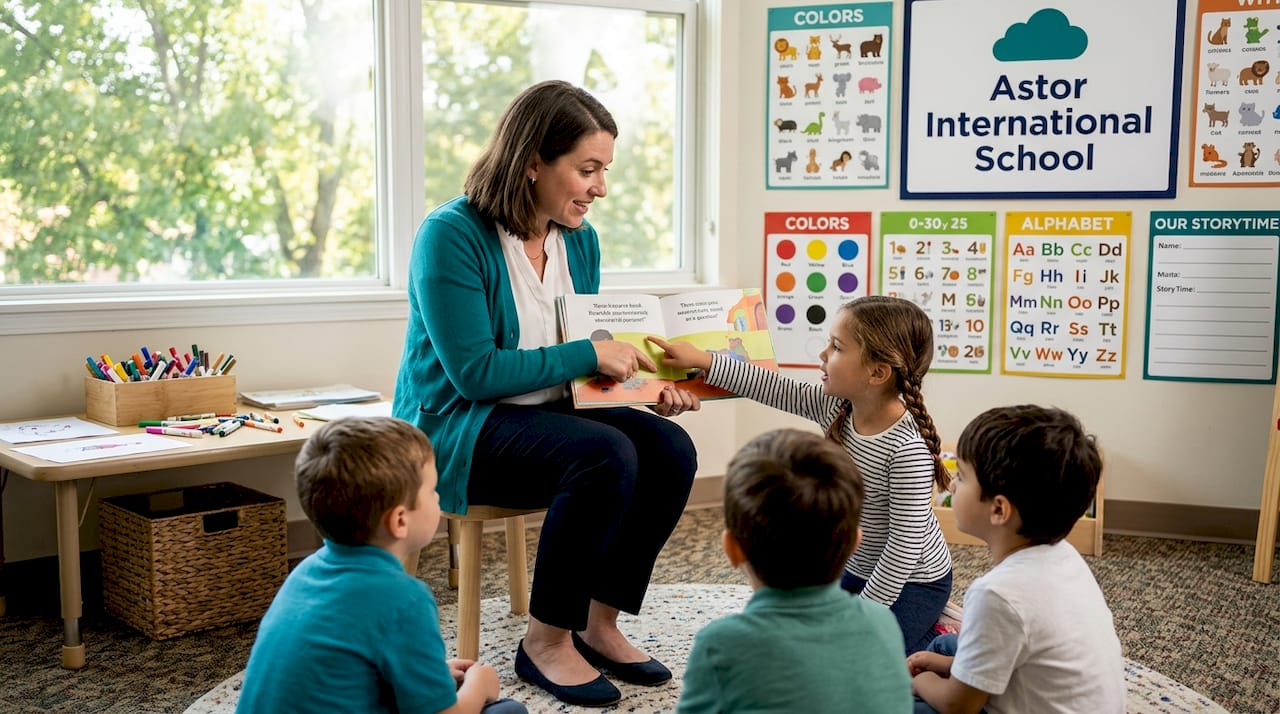
You’ve probably heard terms like “student-centered learning” or “inquiry-based education” tossed around at school open houses or in parent forums. It sounds exciting, but also a little vague. What does it actually mean for your child’s day-to-day experience? Inquiry pedagogy is far more than letting children explore freely or do hands-on projects. As Queen’s University CTL explains, it is a structured, student-centered approach where children learn by generating their own questions, gathering evidence, and progressively taking ownership of their learning. This guide breaks that down into something every parent in Singapore can understand and use.
Table of Contents
Key Takeaways
Point | Details |
Student-driven learning | Inquiry pedagogy empowers children to ask questions and investigate using evidence. |
Structured guidance matters | Teachers provide appropriate support and gradually release responsibility as students gain skills. |
Proven learning benefits | Research links inquiry-based instruction to improved understanding, motivation, and thinking skills. |
Look for real inquiry | Genuine inquiry classrooms focus on student questions and evidence—beyond hands-on projects alone. |
What is inquiry pedagogy?
Let’s start by clearing up the confusion. Many parents assume inquiry-based learning means classrooms with no structure, where children simply do as they please. That’s not quite right. Inquiry pedagogy is a deliberate, carefully designed approach to teaching that places your child’s questions at the heart of learning, rather than a textbook’s agenda.
In a traditional classroom, a teacher explains a concept, students listen, practice it through exercises, and then are tested. In an inquiry-based classroom, the process often works in reverse. A child observes something, becomes curious, asks a question, designs a way to investigate it, collects and analyzes evidence, and then forms a conclusion. The knowledge they build feels real because they discovered it themselves, not because they memorized it for a test.
“Inquiry pedagogy is a student-centered approach where students learn by generating and investigating questions, constructing meaning from evidence, and increasingly directing their own inquiry rather than receiving information directly.”
This kind of learning nurtures curiosity naturally. A child who learns why plants turn toward light through their own investigation remembers that knowledge far longer than one who reads it in a paragraph. And beyond the content itself, they are also building skills like critical thinking, evidence-based reasoning, and intellectual confidence. You can explore a broader overview of enquiry-based teaching to see how these principles connect across different subjects and age groups.
Key principles of inquiry pedagogy include:
Student questioning sits at the center of every learning experience
Evidence gathering replaces passive note-taking as the primary learning mechanism
Reflection and communication help children consolidate and share what they’ve discovered
Active exploration replaces rote memorization as the path to understanding
Types and structure: How inquiry varies across classrooms
Understanding what inquiry pedagogy is, the next step is seeing how it comes to life in different classrooms. Inquiry is not one-size-fits-all. It exists on a spectrum, from highly teacher-directed to fully student-led. Recognizing these variations helps you know what to look for and what questions to ask when you visit a school.
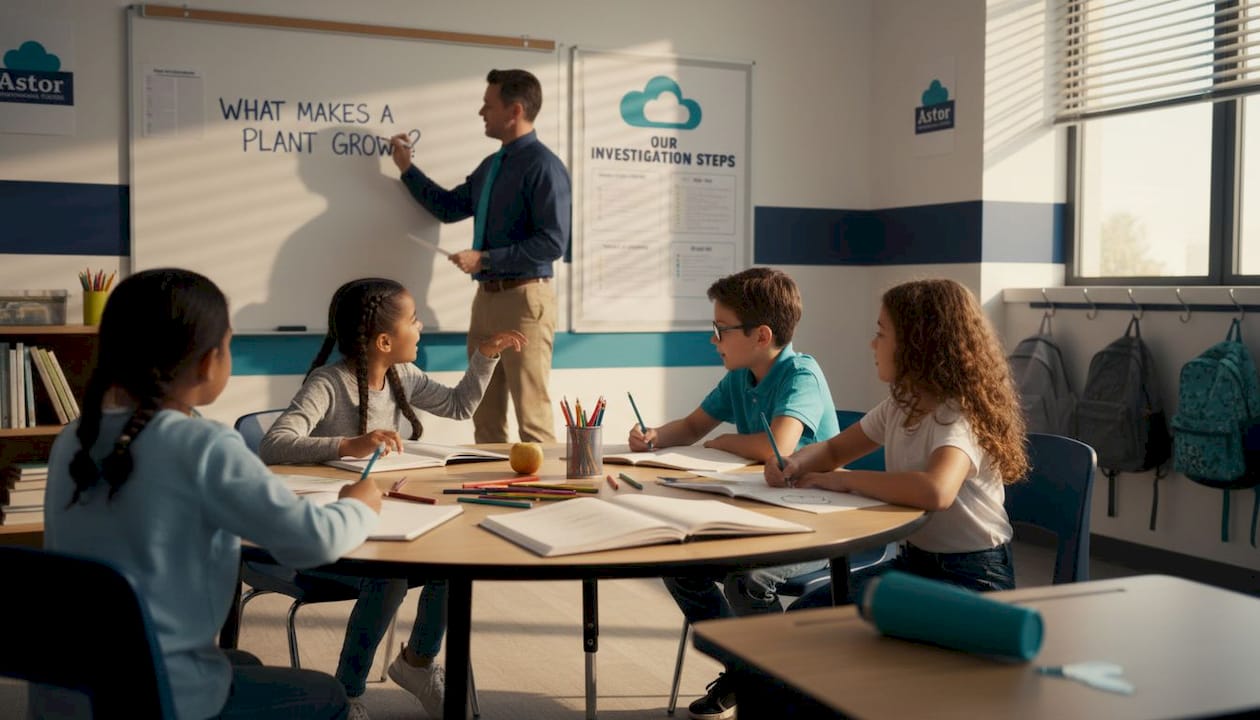
A common framework describes three forms of inquiry: structured, guided, and open inquiry, with each type representing a different balance of teacher and student control.
Type | Who asks the question? | Who designs the investigation? | Best suited for |
Structured inquiry | Teacher | Teacher | Younger or newer learners |
Guided inquiry | Teacher | Student (with support) | Developing learners |
Open inquiry | Student | Student | Confident, experienced learners |
Here is how each type plays out in a real classroom:
Structured inquiry: The teacher poses a question and provides the steps to answer it. Students follow a guided process and discover the answer themselves. For example, a teacher might ask, “What happens to ice when we add salt?” and set up the materials. Children experiment and report findings.
Guided inquiry: The teacher still provides the broad question but allows students to design their own investigation. A child might decide whether to measure the ice’s temperature, observe its surface, or time the melting rate.
Open inquiry: Students identify a question entirely on their own, design their experiment, collect data, and present their findings. This is more common with older, more experienced learners.
You can see real examples of classroom inquiry in action through Astor’s own learning experiences, where children explore color, science, and the world around them through all three types.
Pro Tip: When visiting a school, ask which type of inquiry their students most commonly experience. A healthy inquiry classroom usually moves through all three types across the year, gradually shifting responsibility to students as their skills grow.
The teacher’s role: From delivering content to coaching curiosity
Once you see the range of inquiry types, it’s important to understand the shifting role of teachers in making inquiry pedagogy work. This is one of the most misunderstood aspects of inquiry learning, and it’s worth understanding clearly because it changes everything about how your child experiences school.
In a traditional setting, a teacher is primarily a content deliverer. In inquiry pedagogy, that role transforms significantly. Teachers become designers, coaches, and facilitators. They build learning environments that provoke curiosity. They ask follow-up questions instead of giving answers. They observe closely and offer targeted support at exactly the right moment.
As Queen’s University’s CTL notes, the teacher’s role shifts from delivering content to designing learning conditions, coaching and probing students’ thinking, providing scaffolds, and supporting the development of inquiry skills over time.
“The best learning happens when every child is truly seen and supported, not just taught at.”
What does this look like day to day? A skilled inquiry teacher might:
Pause before answering a student’s question and instead ask, “What do you think? How could you find out?”
Model thinking aloud, saying things like, “I’m noticing something interesting here. Let me think through what this evidence tells us.”
Provide feedback on process, not just outcomes, praising how a child approached a problem rather than just whether they got the right answer
Adjust scaffolding in real time, offering more support to children who are stuck and stepping back for those who are ready to work more independently
This kind of teaching requires a great deal of skill and preparation. It is far more demanding than lecturing, which is why student-centered environments require thoughtful design and genuinely experienced educators. The good news is that when done well, children don’t just learn more. They learn how to learn. Understanding teacher support strategies can help parents recognize what genuine facilitation looks like versus surface-level activity.
Why scaffolding and gradual release matter for your child
With teachers guiding the inquiry process, scaffolding becomes a crucial support system, especially for diverse learners. Scaffolding is the term educators use for temporary support structures that help children accomplish tasks they couldn’t manage alone yet. Think of it like training wheels: present when needed, removed as the child gains confidence and skill.
In inquiry pedagogy, scaffolding gradually fades as students become more competent. This is especially valuable for learners who struggle to form researchable questions, who hold onto misconceptions, or who find complex, open-ended tasks overwhelming.
Here is how scaffolding might appear at different stages:
Learning stage | Scaffolding example | Goal |
Beginning inquiry | Teacher provides question starters and graphic organizers | Build confidence in asking questions |
Developing inquiry | Teacher offers guiding prompts, not answers | Strengthen independent thinking |
Confident inquiry | Peer feedback and self-reflection tools | Deepen metacognitive awareness |
Signs that effective scaffolding is happening in your child’s classroom include:
Teachers break complex investigations into smaller, manageable steps
Children receive sentence frames or question starters when they’re stuck
Students are explicitly taught how to use evidence, not just told to “find evidence”
Support decreases visibly over the course of the school year as children grow more independent
Teachers track individual progress and adjust support accordingly
You can explore specific scaffolding techniques that effective inquiry teachers use to support every learner in the room, regardless of starting point. Scaffolding is the reason inquiry pedagogy works for a wide range of learners, not just children who already thrive in open-ended settings.
Benefits and realities: What the research says about inquiry outcomes
Armed with an understanding of how inquiry pedagogy works, it’s important to look at what studies reveal about its real-world benefits and limitations. The evidence is genuinely encouraging, and it’s worth knowing the full picture.
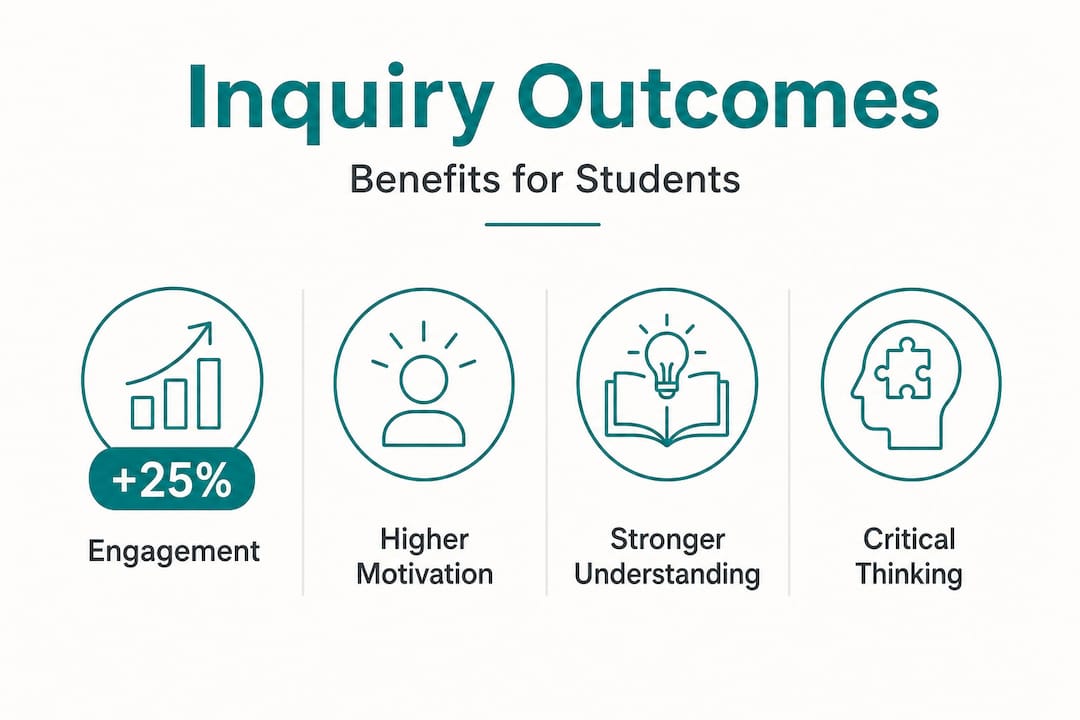
Research consistently finds that inquiry-based approaches lead to improved learning outcomes, though the magnitude varies depending on how well the approach is implemented and how much scaffolding is in place. Children in well-structured inquiry classrooms tend to show stronger motivation, better conceptual understanding, and more developed inquiry skills than peers in traditional settings.
What the research shows:
Children develop deeper understanding of concepts rather than surface-level recall
Motivation and engagement increase significantly when students feel ownership of their learning
Critical thinking and problem-solving skills strengthen over time with sustained inquiry practice
Collaborative communication skills improve as students share and debate their findings
However, it’s important to be realistic. Inquiry pedagogy does come with challenges. Misconceptions can persist if investigations aren’t carefully guided. Children who lack baseline knowledge sometimes struggle to ask productive questions. And outcomes vary when teachers haven’t received strong preparation in facilitation techniques.
Pro Tip: Ask your child’s school how they identify and address misconceptions that arise during inquiry. A strong inquiry program has specific strategies for this, not just a policy of “letting children discover everything.”
For Singapore parents specifically, this inquiry-based learning guide offers a locally relevant lens on how these research findings play out in classrooms here.
What to look for: Recognizing inquiry-based classrooms in Singapore
Lastly, it’s crucial for parents to know how to spot authentic inquiry-based learning in your child’s future classrooms. Not every school that uses the word “inquiry” is implementing it meaningfully. Knowing what to look for puts you in a much stronger position when evaluating options.
As Edutopia points out, parents should look for classrooms that treat children’s questions as central and expect students to use evidence and reflection, not just hands-on activity, to build and communicate their learning. Busy and active does not always mean inquiry-based.
Here are the signs to watch for and questions to ask:
Are students’ questions visible? Look for displayed question walls, inquiry journals, or research boards showing children’s own ideas driving the unit
Do children explain their thinking? Genuine inquiry classrooms regularly ask students to justify their conclusions with evidence, not just report what they did
Is reflection built in? Inquiry learning includes regular moments where children assess their own thinking and revise their understanding
Does the teacher pose questions more than answers? Notice whether educators redirect with curiosity rather than correction
Ask the school directly: “Can you show me how a student’s question has shaped a recent unit of learning?”
You can also look at interactive science activities as one example of how inquiry connects academic content to children’s real lives in meaningful ways.
Our perspective: Why inquiry is more than a teaching trend
Here is something we’ve observed that most articles don’t say plainly: adopting the label of “inquiry pedagogy” without the depth behind it can actually do more harm than good. Children given open-ended tasks without proper scaffolding sometimes feel lost, not empowered. They may develop confidence in the wrong conclusions if misconceptions go unchallenged. True inquiry is as much about the quality of the teacher’s design as it is about the student’s freedom.
At Astor, we’ve seen firsthand that the magic happens in the sustained practice of inquiry, not in a single exciting lesson. It takes time for children to develop the disposition of a genuine inquirer: the patience to sit with uncertainty, the courage to revise a hypothesis, and the skills to communicate findings clearly. This doesn’t happen in a week. It builds across months and years of consistent, thoughtful teaching.
We also believe deeply in the partnership between school and home. When parents understand what inquiry looks like, they can reinforce it in conversations at home. Asking your child “What do you think? How could you find out?” instead of simply giving them an answer is one of the most powerful things a parent can do. To understand more about the underlying concept of teaching and learning that shapes our philosophy, we invite you to explore what drives our educators every day.
The schools that do inquiry best are not the loudest or the trendiest. They are the ones where every child feels genuinely curious, genuinely supported, and genuinely seen.
Explore inquiry-first education at Astor International School
If you’ve been inspired by what genuine inquiry pedagogy can offer, we’d love to show you what it looks like in practice at Astor International School in Singapore’s Tanglin area. As a proud recipient of the best small school and best affordable international school awards, we serve children aged 5 to 12 in small, close-knit classes where every child’s questions truly matter.
Our IPC curriculum is built around inquiry as a core philosophy, not an add-on. From the way our teachers design learning experiences to the way students share their discoveries, inquiry shapes everything we do. Explore our full learning framework and complete curriculum to understand how we put these principles into practice every single day. We’d love to welcome your family into our community.
Frequently asked questions
How is inquiry pedagogy different from traditional teaching?
Inquiry pedagogy centers learning around students’ questions and active problem solving, whereas traditional approaches deliver information directly and expect students to receive and recall it.
Does inquiry-based learning work for young children aged 5-8?
Yes, with age-appropriate scaffolding, inquiry methods work well for young children. Scaffolding gradually fades as children develop competence, making inquiry accessible even for those who need extra support with forming questions or managing complex tasks.
What are the main benefits of inquiry pedagogy?
Studies report improved outcomes including stronger conceptual understanding, higher motivation, and better critical thinking and inquiry skills compared to lecture-based instruction.
What should I ask a school to see if they really use inquiry pedagogy?
Ask how students’ own questions shape lesson design and how children use evidence to explain their learning. Authentic inquiry classrooms go well beyond hands-on activities to include reflection and evidence-based communication.
Recommended
Comments