

S$65.20–S$100.40: Booklist First for Primary 1 Supplies in Singapore
- sasha2644
- 10 hours ago
- 8 min read
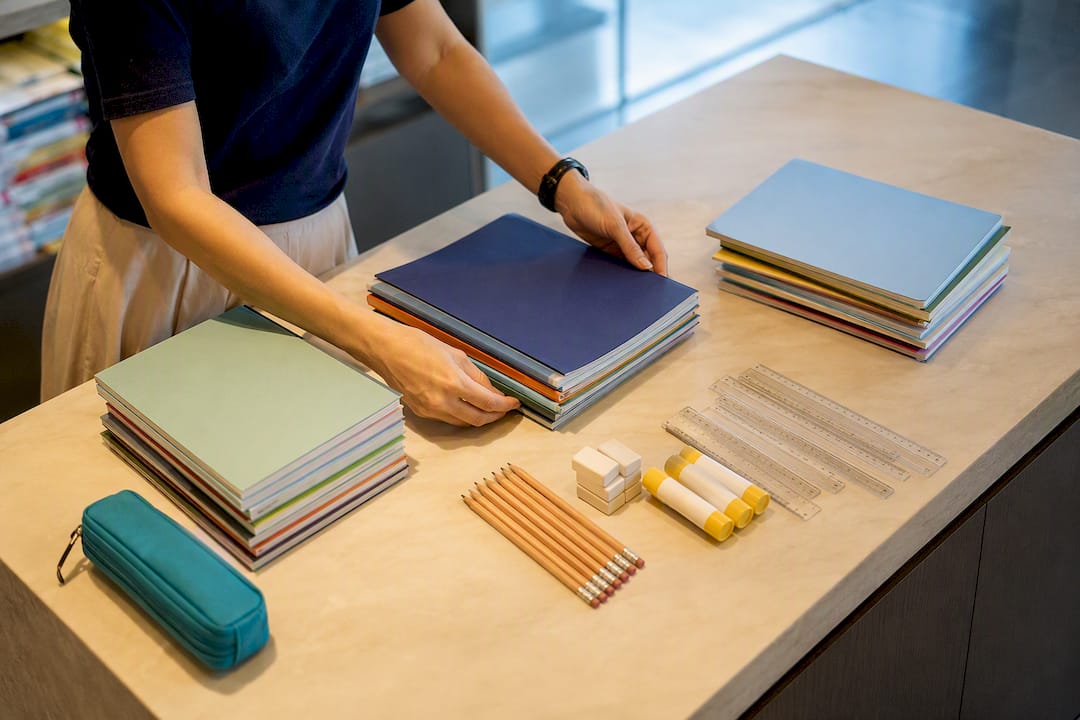
Follow your child’s school booklist first, not a generic checklist. Pre-order textbooks and compulsory stationery through the designated school bookshop or Casco the moment the list is released, then buy an ergonomic school bag, a water bottle, and waterproof name labels now so your child starts Primary 1 ready.
TL;DR:
Purchasing from the official school bookshop or Casco ensures the correct textbook editions and simplifies ordering of required stationery.
School booklists specify exact quantities and color codes for items like exercise books, files, and art supplies, which vary by school and mother tongue stream.
Budgeting for primary one supplies generally ranges from 65 to 100 Singapore dollars, with additional costs for ergonomic bags, water bottles, labels, and optional accessories.
Proper labeling, organized inside the bag, and ergonomic adjustment are crucial for avoiding lost items, reducing strain, and easing daily routines.
Buying essential items early, especially textbooks and stationery, helps avoid last-minute stress and allows time for proper bag fitting and label printing.
Table of Contents
Quick P1 Essentials Checklist: What to Buy Now
Every Primary 1 booklist splits into what schools require and what they simply suggest. Getting that distinction right saves you from overbuying stationery your child will never touch, or worse, showing up on day one without the specific ring binder colour a teacher wanted.
Most schools organize compulsory items around three predictable categories:
Exercise books and workbooks. Quantities and formats (usually 8-line or 12-line ruled books) come straight from the school’s own list, since different schools ask for different page counts.
Subject fastener files in specified colors. Schools frequently color-code files by subject, so a red file for math and a blue one for English is not a style choice, it is a classroom system.
A report book and a mini whiteboard set. These are near-universal Primary 1 requirements across Singapore schools, used for daily communication with parents and for handwriting practice.
Beyond the booklist basics, a handful of personal items round out a child’s first-day kit:
A sturdy pencil case with basic tools (pencils, an eraser, a ruler, a sharpener)
A glue stick and a small pair of blunt-tip scissors
A water bottle, ideally one your child can open independently
A coin pouch or small wallet for canteen money
A lunchbox, if the school does not offer canteen-only meals
Art materials deserve their own mention, since schools tend to specify exact formats. Expect an A4 sketch pad, a set of oil pastels or crayons, and often a second glue stick dedicated to art class. Kong Hwa’s Primary 1 stationery list is a good example of how specific these requirements get, right down to quantities.
A few items sit firmly in the “optional, delay if unsure” pile. PVC book covers and decorative name tags fall here. Some schools bundle covers into their bookshop packages, so buying your own before confirming that can mean paying twice for the same thing.
How School Booklists Work and How to Use Them
School booklists in Singapore are not suggestions, they are the actual purchasing brief. Most follow a familiar structure: Section A lists required textbooks, Section B lists compulsory stationery by subject, and Section C covers optional extras. The Ang Mo Kio Primary School P1 booklist shows this format clearly, with per-item quantities and prices listed against each subject.
Mother tongue selection changes things. A family choosing Malay versus Mandarin versus Tamil will see different textbook line items and different subtotals, so double-check your child’s mother tongue stream before finalizing any order.
Ordering through the official school bookshop carries real advantages over buying loose items elsewhere. Casco Educational Supply’s Access Your School Booklist portal lets parents select their child’s level, school, and mother tongue, then add the correct textbooks and stationery in one pass, choosing delivery or self-collection at checkout. Buying the wrong workbook edition from a random shop is a real risk. Schools often only accept the exact edition the bookshop stocks.
A few logistics worth flagging before you order:
Financial Assistance Scheme (FAS) families may need to collect stationery on-site during a designated window, sometimes with an approval letter in hand.
Keep every receipt. Schools set their own exchange and refund windows, and most will not swap items without proof of purchase.
Confirm collection dates early. Some schools publish specific pickup slots tied to orientation day.
Where to Buy Supplies in Singapore
Once you know what the booklist actually requires, the shopping part gets straightforward. Singapore has a deep bench of stationery retailers, but each tends to specialize.
School bookshops and official vendors remain the safest first stop for textbooks and compulsory stationery bundles. Casco and similar vendors named on your school’s booklist offer pre-order pricing, bundled packaging, and either delivery or self-collection, which matters when you are juggling a dozen individually specified items.
Stationery wholesalers and general retailers cover everything the booklist leaves open-ended. Stationery World, Popular, Evergreen Stationery, Art Friend, and Krafers’ Paradise all stock bulk value packs of exercise books, files, and art supplies, often cheaper per unit than buying single items. Muji, KOKUYO, and Typo carry sturdier pencil cases and organizational tools if you want something that lasts beyond one school year.
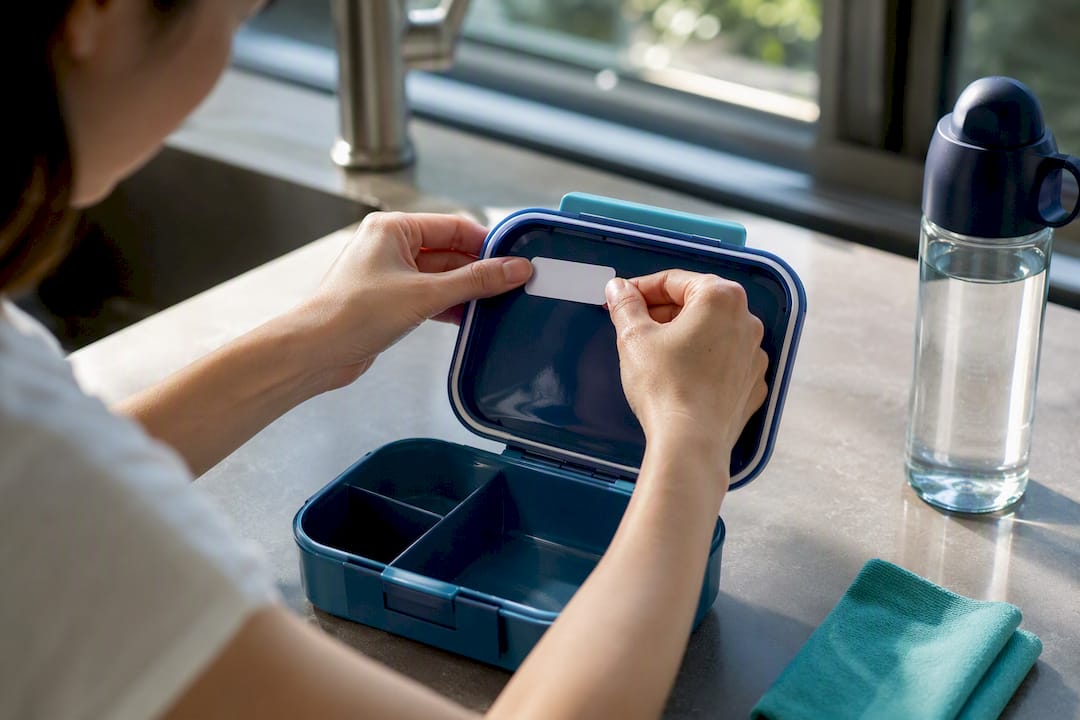
Label and personalization vendors solve a problem every parent eventually hits: lost water bottles and unlabeled lunchboxes. Siang Heng’s name label and sticker printing service produces waterproof labels built for exactly this, with fast local turnaround. StickerKid is another local option worth a look.
Department stores, big-box retailers, and specialty shops handle the secondary purchases, water bottles, lunchboxes, and bag accessories. Tangs Singapore, CityLuxe, Giant, Daiso, Spotlight, HANDS Singapore, and Flying Tiger Copenhagen all carry reasonable ranges, while Smiggle remains a favorite for kid-appealing designs. For insulated lunch gear, S’well, YumBox, and LunchBots are worth comparing on portion sizing and leak resistance.
Bag fitting deserves an in-person visit, not an online guess. Dr. Kong, Ergokid, Ergoworks, and Trio Kids all specialize in ergonomic school bags and let you try them on your child before buying. Decathlon Singapore, Pottery Barn Kids, Skip Hop, Tiger Family, Kid2Youth, and Pupsik Studio also stock lighter backpack options if your child’s supply load is modest. Fit the bag on your child directly. A bag that looks fine on a hanger can sit two inches too low once loaded.
Typical Costs and How to Budget for Primary 1
Budget for textbooks and stationery combined is generally in a mid-range amount for standard Primary 1 lists, based on typical school booklist subtotals. The Riverside Primary School P1 booklist and Ang Mo Kio’s own PDF both show this pattern, with grand totals shifting depending on mother tongue choice, from roughly S$65.20 on the lower end up to S$100.40 for some subject combinations.
That figure covers only the booklist portion. Everything else adds on top:
School bag: low end around S$30 for a basic backpack, mid-range S$60 to S$90 for an ergonomic model, high end S$120+ for premium ergonomic brands
Lunchbox and water bottle combined: S$15 to S$50 depending on insulation and brand
Name labels: typically S$10 to S$25 for a full waterproof set covering bottles, lunchboxes, and clothing
PVC book covers: S$5 to S$15 if bought separately, often cheaper when bundled through the school bookshop
A few savings habits make a real difference. Buying exercise books and files in bulk value packs rather than singly usually costs less per unit. Reusing a sibling’s old pencil case or ruler is fine as long as it still functions. Delaying optional Section C items until you actually see what your child’s classroom needs also prevents wasted purchases.
Families on the Financial Assistance Scheme should check their school’s booklist for FAS-specific collection instructions. Subsidized items are often collected on-site during a set window, which cuts the upfront cash outlay significantly compared to buying everything retail.
Labeling, Organization, and Bag Ergonomics
Small setup choices in the first week save weeks of lost items and sore shoulders later.
Labeling matters more than most parents expect going in. Waterproof name labels from a local printer like Siang Heng hold up through repeated washing, unlike a marker scrawl that fades within a term. Place labels on the inside of lids, the base of water bottles, and the inner tag of bags, spots that survive daily handling better than an exposed surface.
Organization inside the bag matters just as much as what goes in it. Color-coded subject files, matched to whatever system your child’s teacher specifies, cut down on the “wrong book” scramble during lesson transitions. One A4 clear holder dedicated purely to notices and permission slips keeps loose paper from turning into a crumpled mess at the bottom of the bag.
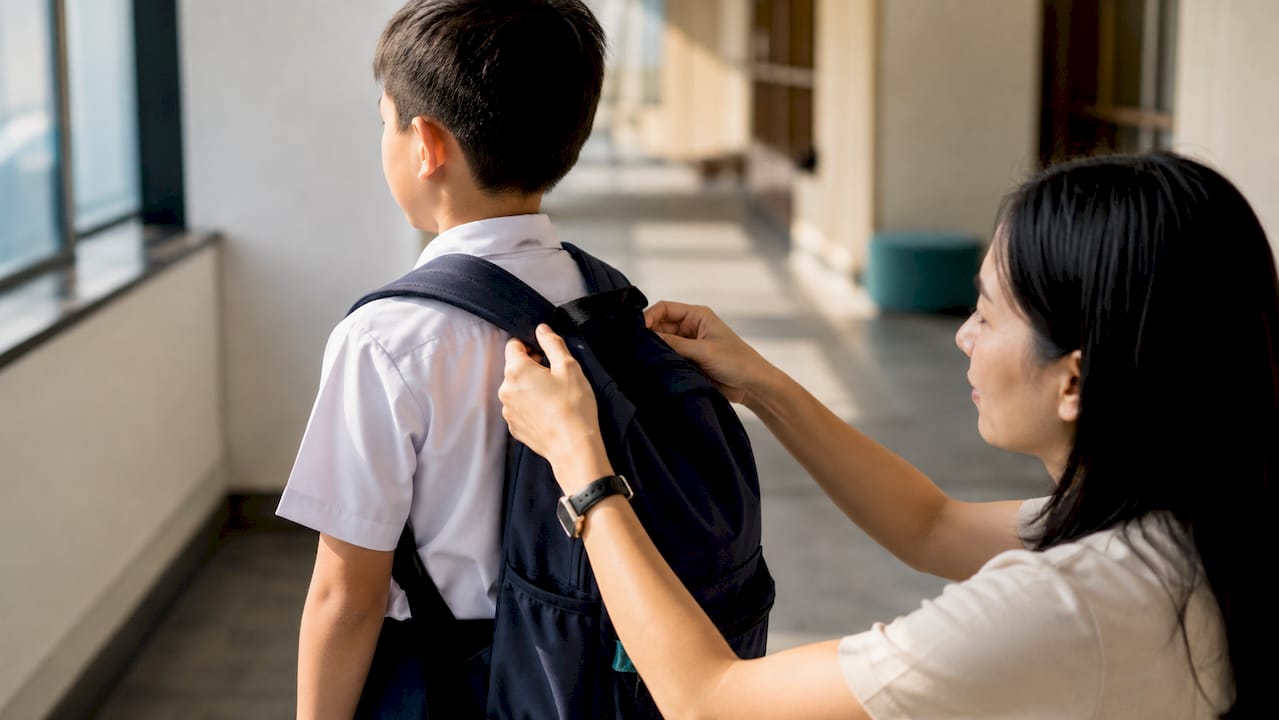
Ergonomics deserves real attention, not an afterthought. Adjust shoulder straps so the bag sits at mid-back, never sagging toward the hips, and check that the loaded bag stays a reasonable fraction of your child’s body weight. Rotating textbooks by day, rather than carrying every subject every day, cuts the load meaningfully.
Pro Tip: Many Primary 1 classrooms keep spare textbooks and workbooks in a classroom shelf or tray, so check with your child’s teacher during orientation whether books can stay in class overnight. If they can, pack only the current day’s subjects and leave the rest behind.
Timing and Logistics: When to Buy and When to Wait
Getting the timing right avoids both the last-minute scramble and wasted early spending.
As soon as the booklist is published, pre-order textbooks and compulsory stationery through the school bookshop or Casco. These windows tend to be tight and self-collection slots fill up fast.
Buy the school bag, water bottle, and name labels early, well before term starts, since fitting a bag properly and waiting for label printing both take a few days.
Hold off on school-specific art brands or classroom-only supplies until orientation day, when teachers often confirm exact requirements that differ slightly from the printed booklist.
Bring your receipt and any FAS approval letter to collection day, since most schools require proof of purchase for exchanges and check FAS documentation on-site.
An Astor Perspective on What Good Preparation Really Means
A well-stocked school bag is not really about the bag. It is about a child walking into Primary 1 feeling ready, not scrambling to find a missing glue stick during art class. At Astor, we have watched this play out enough times in our small classroom settings to know that logistics and emotional readiness are more connected than most checklists suggest.
Astor International School was recognized as a best small school in Singapore precisely because small class sizes let teachers notice the small things, whether that is a child who forgot their name label or one who feels anxious about a new routine. Preparation that covers the practical (the right files, the right bag fit) frees up energy for the part that actually matters: settling in, making friends, and building confidence in a new environment.
If you want the fuller picture beyond stationery, our transition to Primary School checklist walks through the emotional and routine-based side of starting Primary 1, the part no booklist covers.
— Elena
Another Path: Astor’s Support for the Primary 1 Transition
Stocking the right supplies gets your child through the door. What happens once they are inside the classroom is a separate question, and it is one Astor spends most of its energy answering. Astor International School keeps class sizes small enough that teachers notice when a child is struggling with the shift from preschool routines to primary expectations, not just whether their pencil case is full.
Astor is not a stationery supplier, and we will not pretend otherwise. But if you are weighing where your child will actually spend their Primary 1 year, our IPC curriculum gives a clear picture of how inquiry-based learning works in practice, and our curriculum overview covers how small class sizes shape daily learning. If you would like to talk through admissions or see the campus for yourself, get in touch with Astor to arrange a visit.
Sources
Check your own school’s published booklist first. It always overrides any general checklist, including this one.
Recommended
Comments