


10 School Tour Questions Parents Must Ask First (Age Specific)

The tour questions that matter most cover six areas: curriculum and teaching philosophy, staffing and class size, pastoral and SEND support, assessment and reporting, and the full fee picture. Ask each one with your child’s age in mind, since a good question for a five-year-old (nap routines, toileting help) looks nothing like a good question for a ten-year-old (homework load, friendship support). Write every answer down on the spot, using the same format for each school, so you’re comparing facts instead of impressions three visits later.
TL;DR:
Asking for specific staff names, recent student-teacher ratios, and real examples of pastoral concerns ensures you evaluate genuine school practices.
Observing student engagement, classroom displays, and the flow of arrival and dismissal provides more insight than scripted tours or brochure images.
Preparing questions on fees, support services, and daily routines beforehand helps uncover hidden costs and logistical issues parents might overlook.
Focus on how schools handle mid-year transfers, differentiation for different ability levels, and support for non-native speakers to determine suitability.
Visiting with a short list of prioritized questions and watching the school’s natural routines allows for more honest assessments than staged demonstrations.
Table of Contents
What to Research Before Your School Tour Questions
Walking in unprepared means you’ll leave with brochure language instead of real answers. Give yourself about 30 minutes before the visit to read the school’s curriculum page, its published fees, and any accreditation or inspection reports you can find, a habit GreatSchools recommends precisely because it lets you ask sharper, less generic questions on the day.
Before you go, work through this short list:
Decide your child’s non-negotiables. Language support, a SEND diagnosis, commute time, or a specific school-day schedule should shape which questions get top priority.
Write your questions down. A phone note or a printed list keeps you from freezing up mid tour.
Bring a one-page summary of your child. Age, personality, any support needs, and current routines make it easier for staff to give you a specific answer instead of a general one.
Ask to see an ordinary school day. A staged open house tells you less than watching a normal Tuesday morning with children in class.
Age-Specific School Tour Questions by Stage
A toddler’s day and a ten-year-old’s day have almost nothing in common, so your questions shouldn’t either.
For children around 1.5 to 5 years old, ask:
How do you handle toileting, naps, and mealtimes for children who aren’t yet fully independent?
What is your caregiver-to-child ratio in the youngest rooms, and does it change through the day?
How do you support a child who doesn’t yet speak the classroom language?
Can you walk me through how a new child settles in during the first two weeks?
How much of the day happens outdoors, and what safety supervision is in place during play?
For children around 5 to 12 years old, ask:
How do teachers differentiate lessons for a child who is ahead or behind grade level?
What is your homework policy, and how much parent involvement does it expect?
How often do parents receive progress reports, and in what format?
What is your process if a child reports bullying or a friendship problem?
How do you support a child transferring mid-year from a different curriculum?
Push for specifics with follow-ups like “Can you show me a sample timetable?” or “Can you describe a recent example, without names, of how a pastoral concern was resolved?” Vague answers to these follow-ups tell you as much as the answers themselves.
What to Observe During a Normal School Day
Answers are only half the picture. What you see with your own eyes on the observation checklist that guides most school visits often tells you more than anything said in the admissions office.
Watch for these signals as you move through the building:
Are students actually engaged, or watching the clock, during the lesson you observe?
Is student work genuinely displayed on classroom walls, or are the walls suspiciously bare?
How do teachers speak to children in the hallway, not just in the demonstration classroom?
Is the playground supervised at a ratio that feels workable, or does one adult look stretched thin across fifty children?
Are toilets, the library, and shared spaces clean and well stocked, not just the room shown on the tour?
Does the arrival and dismissal flow look calm and organized, or chaotic?
Pro Tip: If you can, arrive 15 minutes before your scheduled tour time and watch the drop-off from the parking area. Drop-off is one routine schools rarely stage for visitors, so it’s often the most honest five minutes of the whole visit.
Mismatches are the real red flag here. A school that talks about “nurturing every child’s curiosity” but shows you a bulletin board with three faded posters from last term is telling you something the brochure won’t.

How to Read the Answers You Get
Some answers sound reassuring and mean almost nothing. Others sound blunt and tell you exactly what you need to know. The difference usually comes down to specificity, a point GlobalSchoolGuide makes well: strong answers include named staff, real numbers, and a concrete recent example, not just a philosophy statement.
Signs you’re getting a substantive answer:
The staff member names a specific person (the SENDCo, the head of pastoral care) rather than saying “the team handles that.”
They can quote a rough figure, such as teacher turnover last year or their student-teacher ratio by class.
They describe a real, recent case, even anonymized, rather than a hypothetical.
Red flags worth taking seriously:
Refusal to share basic numbers like class size or staff turnover.
Every answer redirects back to a slogan instead of a process.
You’re only shown the same one polished classroom, and requests to see anything else get deflected.
What staff tell you contradicts what you just observed in the hallway.
Practical and Fee Questions to Ask on Your Tour
Cost surprises usually come from what wasn’t asked, not what wasn’t disclosed. Request a full, itemized fee schedule and ask directly whether it includes materials, uniforms, field trips, and enrichment, or whether those come as add-ons. Also ask about the history of fee increases over the past few years, whether sibling discounts exist, and what the notice period and refund policy look like if your plans change.
Cover the logistics that affect daily family life just as carefully:
What are the typical bus routes and journey times for your neighborhood?
What are the exact start and end times, and how does the school calendar handle public holidays?
Is wraparound care available before and after school, and what’s the staff-to-child ratio during those hours?
How many families actually use wraparound care, and is space guaranteed or first come, first served?
A Printable Bank of School Tour Questions
Keeping questions organized by category, with the most urgent ones first, makes it far easier to stay on track once you’re actually standing in a hallway with fifteen minutes on the clock. SchoolAtlas recommends exactly this approach: a short priority list for the tour itself, with deeper questions saved for a follow-up conversation with a senior leader.
Ask these ten first, on every tour:
What is your average class size and student-teacher ratio?
What curriculum framework do you follow, and why?
How long has your current teaching staff been with the school, on average?
How and how often do you report on my child’s progress?
What support exists for a child who needs extra help, academically or emotionally?
What language support is available if English (or the language of instruction) isn’t my child’s first language?
What’s included in the published fees, and what costs extra?
What does a typical day look like for a child my child’s age?
How do you handle a child settling in, or a mid-year transfer?
Can I see a classroom in session today, not just the demonstration room?
Save these for a follow-up meeting: questions about school governance and how leadership makes curriculum decisions, specifics on diversity and inclusion policy, how the school engages families in community events, and what percentage of teaching staff hold a formal early-years or primary teaching qualification.
What a Small International School Tour Should Look Like
Astor’s own network offers a useful benchmark. The international school has class sizes capped at 20 and averaging around 15 students. The preschool operates with two playgrounds mixing outdoor and classroom learning for young children.

On a tour like this, ask to see a sample lesson in progress, request the full fee schedule in writing, and ask to sit briefly with whoever coordinates SEND or pastoral support. These publisher-supplied details, including awards and campus features, are listed on Astor’s own site so you can verify them yourself rather than take them on faith.
If You Only Have Five Minutes, Ask These First
Check supervision ratios at pickup or play, get a real classroom snapshot rather than a staged one, and ask one direct question about how SEND or pastoral concerns get handled. If you’re touring with a partner, split up: one watches the classroom, one asks the hard questions. Request a follow-up meeting with a senior leader if five minutes isn’t enough to trust the answer.
— Elena
Book a Tour at Astor and See the Small-Class Difference
Most schools you’ll tour promise personal attention while running moderate to large class sizes. Astor is the alternative built around genuinely small numbers, capping classes at 20 students with an average closer to 15, so the questions above about ratios and engagement have real answers, not marketing lines.
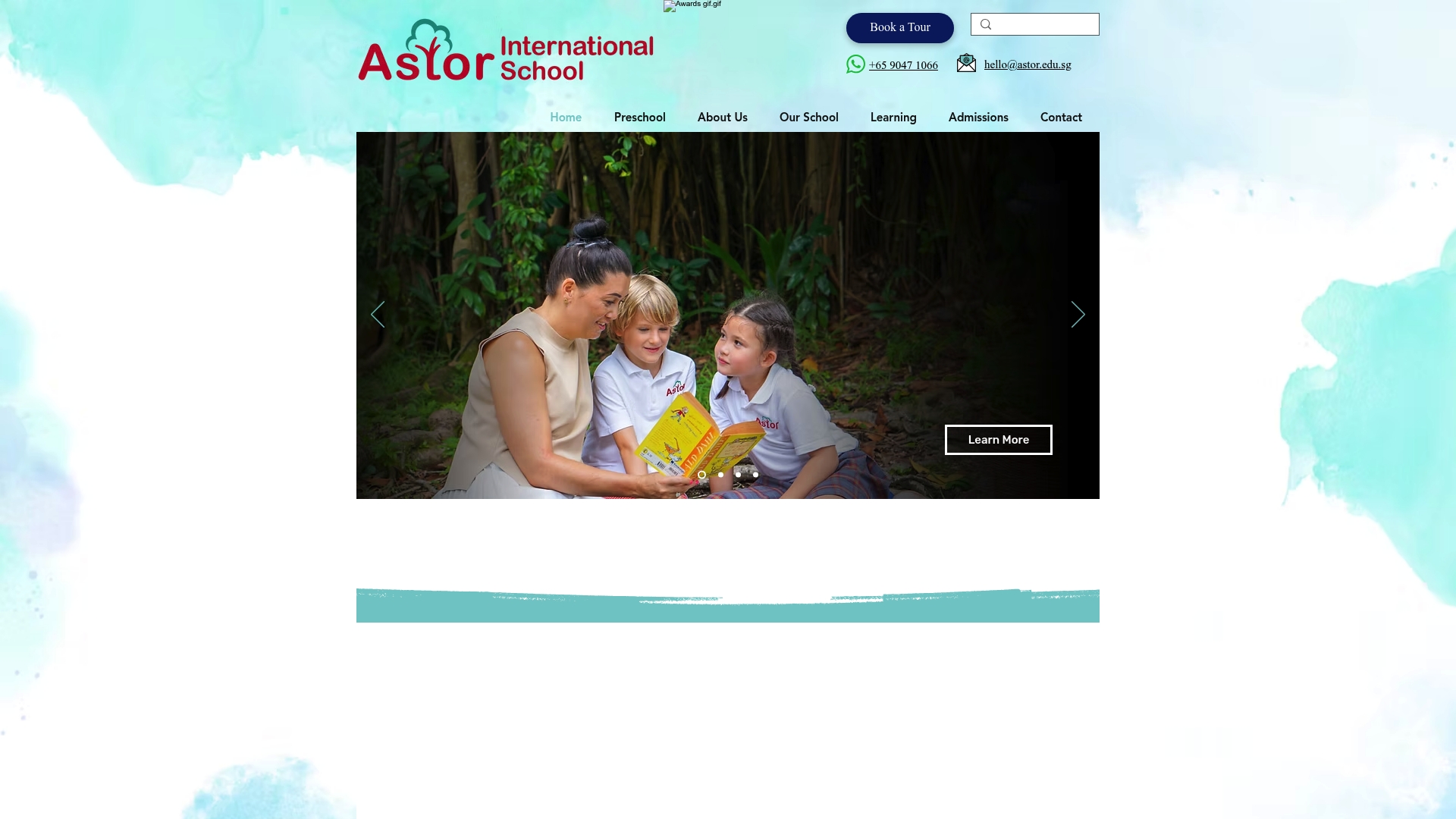
When you book a private school tour, ask to see the IPC curriculum in action, walk the campus outside the scripted stops, and request the full fee schedule, which lists their tuition options and additional courses. Treat Astor as one concrete example to measure other schools against, then schedule your own visit to see how the numbers hold up in person.
A Few More Places to Check Before You Visit
For deeper prep, GreatSchools’ visit guide covers inspection-report research. The observation checklist PDF gives a printable format for tracking what you see. GlobalSchoolGuide focuses specifically on international school vetting. Astor’s own Singapore tour guide covers local logistics and note-taking habits.
Sources
FAQ
What Are Good Questions to Ask During a School Tour?
The strongest questions ask for specifics: class size and ratios, teacher tenure, how progress gets reported, and how pastoral or SEND concerns are actually handled, with a recent example if possible. Generic questions like “Is the school good?” invite generic answers, so aim for ones that force a number or a named process.
What Should I Ask About the School Itself?
Ask about curriculum philosophy, staff qualifications and turnover, and how the school defines and tracks student progress. Also ask what’s included in the published fees versus what costs extra, since this is one of the most common gaps parents discover only after enrolling.
How Do I Prepare for a School Tour?
Spend about 30 minutes beforehand reading the school’s curriculum, fees, and any inspection reports, a step GreatSchools recommends for getting past rehearsed answers. Bring a written question list, a short summary of your child’s needs, and a notepad so you can record answers consistently across every school you visit.
What Questions Should I Ask a 12-Year-Old About a School Tour?
Ask what they noticed about the students they saw, whether the classrooms looked like places they’d want to learn, and whether anyone spoke to them directly during the visit. A twelve-year-old’s honest reaction to the social atmosphere is often more revealing than anything the adults tell you.
Recommended


👍