


The Role of Leadership in Schools: A 2026 Guide
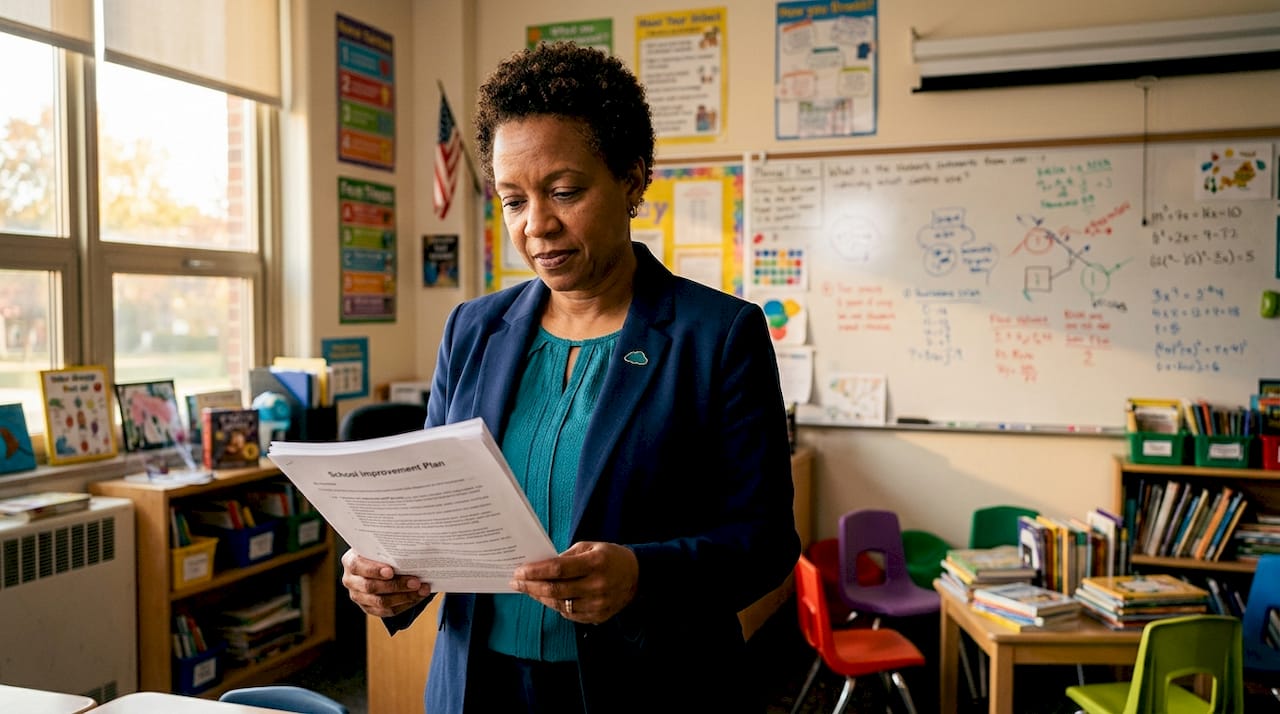
School leadership is the active practice of guiding a school community toward shared goals that improve teaching, learning, and student well-being through vision, management, and collaboration. The role of leadership in schools reaches far beyond administrative duties. It shapes classroom quality, school culture, teacher satisfaction, and ultimately how well every child learns. Recent 2026 research confirms that leadership capabilities directly predict student academic achievement, making the importance of leadership in schools one of the most evidence-backed topics in education today.
How does school leadership influence student achievement?
The impact of school leadership on student outcomes is measurable and significant. A 2026 study found that conceptual leadership capability (strategy and vision) is the strongest predictor of student academic achievement (β=0.348), followed by technical skills (β=0.326) and interpersonal skills (β=0.301). Together, these three dimensions explain nearly half the variance in student outcomes (R²=0.479). That means a school’s academic results are deeply tied to how well its leaders think, manage, and connect with people.
Effective principals improve schools through three primary mechanisms. The Learning Policy Institute identifies principals as the most influential school-based factor for both student learning and teacher retention. This is especially true in underserved communities, where strong principal leadership can directly close equity gaps.
The three core mechanisms are:
Supporting high-quality instruction. Leaders who conduct regular classroom observations and provide meaningful feedback raise teaching quality across the entire school. Teachers improve faster when they receive specific, consistent guidance rather than annual evaluations.
Building a positive school climate. A positive classroom culture built on belonging and psychological safety increases student engagement and reduces behavioral issues. Leaders set the tone for that climate every day.
Retaining talented teachers. Teacher turnover is one of the most disruptive forces in any school. Leaders who invest in staff motivation, recognition, and professional growth keep their best teachers longer.
Pro Tip: Schedule brief, informal classroom visits weekly rather than relying solely on formal observations. Teachers report feeling more supported and less evaluated when leadership presence is consistent and low-stakes.
What leadership styles work best in schools?
Leadership styles in schools fall into three broad categories: transformational, transactional, and laissez-faire. Each produces very different results.

Transformational leadership centers on inspiring teachers and students to exceed expectations. Leaders who use this style build shared vision, encourage creativity, and invest in people’s growth. A 2026 study of secondary schools found that transformational leadership strongly predicts positive teacher performance and student achievement. This style works because it treats motivation as a leadership responsibility, not a personal trait of each teacher.
Transactional leadership focuses on clear expectations, rewards, and consequences. It maintains order and accountability but rarely inspires people to grow beyond their current role. It works well as a baseline but produces limited long-term improvement on its own.
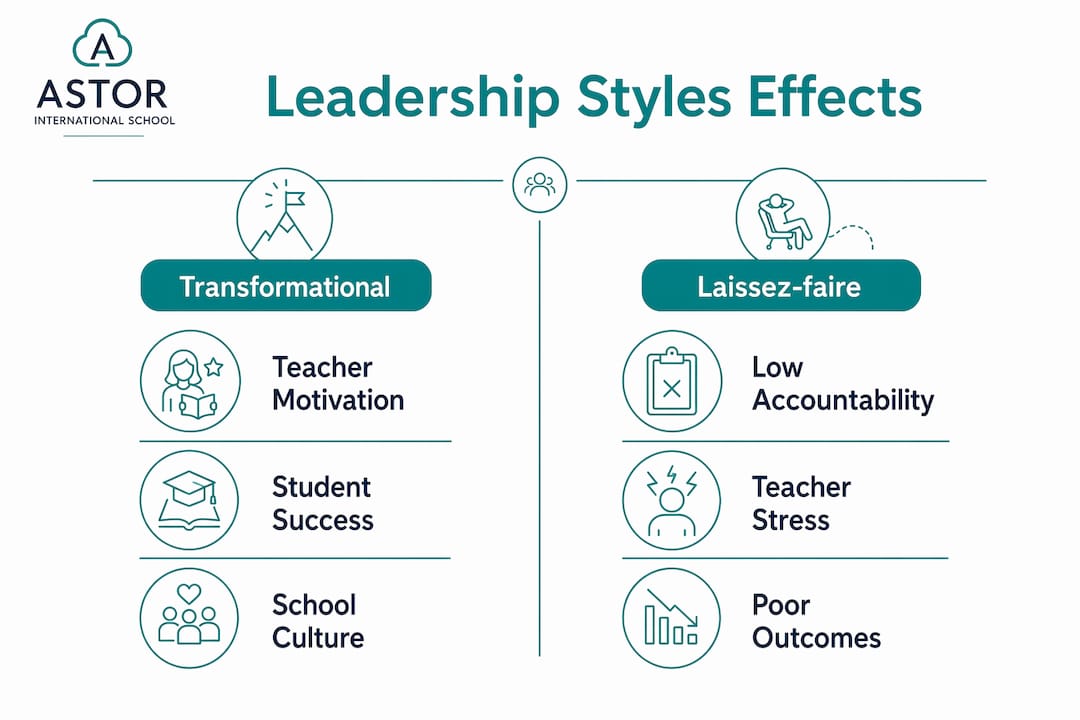
Laissez-faire leadership is the hands-off approach. The same 2026 research confirms it negatively impacts both teacher performance and student achievement. When leaders disengage, teachers feel unsupported and student outcomes decline.
Leadership style | Effect on teachers | Effect on students |
Transformational | Higher motivation and performance | Stronger academic achievement |
Transactional | Consistent compliance | Stable but limited growth |
Laissez-faire | Reduced motivation and support | Declining outcomes |
Effective leadership in education rarely relies on one style alone. Research published in 2026 confirms that leadership and management skills work as complementary competencies. Operational management is as critical as transformational vision. A principal who inspires but cannot manage schedules, budgets, or communication systems will struggle to sustain improvement.
Pro Tip: Assess your default leadership style honestly. If you lean heavily transactional, identify one area each term where you can shift toward coaching and mentoring a teacher rather than evaluating them.
Why does distributed leadership matter for modern schools?
Distributed leadership is the practice of sharing leadership responsibilities across teachers, department heads, and even students rather than concentrating authority in one person. Distributed leadership empowers teachers and students, prevents bottlenecks from solo leadership, and builds stronger school improvement capacity. This is not a soft idea. It is an evidence-backed model that produces measurable gains in school effectiveness.
The case for sharing leadership rests on four practical benefits:
Reduced dependency on one person. When a single leader holds all authority, their departure or absence disrupts the entire school. Distributed leadership builds resilience by developing multiple capable decision-makers.
Faster professional development. Teachers who take on leadership roles grow faster than those who only receive top-down supervision. Collaborative work supports children’s overall development and teacher growth simultaneously.
Higher teacher motivation. Structural equation modeling shows that learning organizations mediate the relationship between instructional leadership and teacher motivation. Embedding professional development in daily routines motivates teachers more than direct supervision alone.
Stronger community connections. The UNESCO GEM Report (2024) notes that 81% of countries require teacher inclusion in school boards and 83% require parent participation. Shared governance is already a global standard.
“Effective leadership is most impactful when it creates a culture of collaboration and continuous shared learning within the school, moving well beyond direct supervision toward building a community of educators who grow together.”
The gap between policy and practice remains wide. Only around 50% of school leadership training programs focus on core dimensions like expectation setting, learning focus, collaboration, and people development. Collaboration is the most underemphasized dimension, covered in only 33% of programs. Schools that invest in leadership development programs for their educators close this gap faster than those that rely on informal experience alone.
How can school leaders build a stronger school culture?
Practical strategies for school leaders combine visibility, communication, and a genuine commitment to both academic and social-emotional learning. The most effective leaders are present, consistent, and clear about what they value.
Prioritize visibility. Walk the school daily. Greet students by name. Sit in on lessons without a clipboard. Presence signals care, and care builds trust across the entire school community.
Set clear expectations and share them widely. Teachers perform better when they understand exactly what good teaching looks like in your school. Document your instructional vision and revisit it regularly with staff.
Develop teacher leaders. Identify teachers who show leadership potential and give them real responsibility. Mentoring programs, curriculum leadership roles, and peer coaching structures all build internal capacity. Student-centered classrooms thrive when teachers feel trusted to lead their own professional growth.
Focus on social-emotional learning alongside academics. Schools that address the whole child see stronger academic results. Leaders who build structures for student well-being, not just test preparation, create environments where curiosity and confidence grow together.
Engage parents as partners. Parents who understand the school’s vision become advocates for it. Regular communication, open-door policies, and family events build the trust that sustains a positive school community.
Pro Tip: Create a simple one-page “leadership vision” document and share it with every new teacher, parent, and student. When everyone knows what you stand for, alignment happens naturally.
Retaining high-quality teachers requires more than salary. Leaders who recognize effort publicly, create time for collaboration, and protect teachers from unnecessary administrative burden keep their best people. Classroom learning strategies improve when teachers feel stable, supported, and valued in their roles.
Key Takeaways
Strong school leadership directly shapes student achievement, teacher retention, and school culture through vision, management, and shared responsibility.
Point | Details |
Leadership predicts outcomes | Conceptual, technical, and interpersonal skills together explain nearly half the variance in student academic results. |
Transformational style leads | Transformational leadership produces stronger teacher performance and student achievement than transactional or laissez-faire approaches. |
Distributed leadership builds resilience | Sharing leadership roles across staff prevents bottlenecks and builds lasting school improvement capacity. |
Collaboration is underserved | Only 33% of leadership training programs cover all four core dimensions, leaving collaboration the most underdeveloped skill. |
Culture drives retention | Leaders who invest in teacher recognition, professional growth, and clear vision retain their best educators longer. |
Leadership as a moral craft, not just a management role
I have spent years reading research on school leadership, and the finding that surprises most administrators is this: leadership is described in the latest literature as a moral craft requiring ethical labor. That framing changes everything.
Most leadership training focuses on systems, data, and instructional frameworks. Those things matter. But the daily reality of leading a school means balancing the needs of a parent who wants more homework with a teacher who is already stretched thin, and a policy mandate that arrives with no additional resources. Every one of those decisions carries a value judgment. The leaders who do this well are not just organized. They are deeply thoughtful about whose interests they are serving and why.
What I find most encouraging in the 2026 research is the evidence that distributed leadership and learning organizations produce better outcomes than heroic individual leadership. The “great principal” model is a myth that burns people out and leaves schools fragile. The schools that sustain improvement over time are the ones where leadership is genuinely shared, where teachers feel ownership over their work, and where professional learning is woven into the daily routine rather than reserved for occasional workshops.
If you are a school administrator reading this, the most powerful thing you can do is identify two or three teachers who are ready to lead and give them real authority. Not just committees. Real decisions. That investment pays back in motivation, retention, and school-wide capacity in ways that no single leader can replicate alone.
— Elena
Astor International School’s approach to leadership and learning
At Edu, the belief that great leadership shapes great learning is built into every aspect of school life. Astor International School in Singapore’s Tanglin area serves students aged 5–12 in small classes where every child is truly seen and supported. Awarded the best small school and best affordable international school in Singapore, Astor combines a nurturing environment with a curriculum designed to develop confident, curious learners.

The school’s International Primary Curriculum places inquiry, collaboration, and personal development at the center of learning. These are not just classroom values. They reflect the same principles that make school leadership effective: shared purpose, continuous growth, and genuine care for every individual. Parents who want to understand how Edu’s curriculum approach supports both academic achievement and well-being are welcome to learn more and connect with the Astor team directly.
FAQ
What is the role of leadership in schools?
School leadership guides a school community toward shared educational goals by combining vision, management, and interpersonal skills. It directly influences teaching quality, student achievement, and school culture.
How does leadership affect student success?
Research shows that conceptual, technical, and interpersonal leadership capabilities together explain nearly half the variance in student academic outcomes. Leaders improve results primarily by supporting instruction, building positive climates, and retaining strong teachers.
What is the most effective leadership style in education?
Transformational leadership produces the strongest outcomes for both teacher performance and student achievement. Laissez-faire leadership consistently produces negative results and should be avoided.
Why is distributed leadership important in schools?
Distributed leadership prevents over-reliance on one person, builds teacher motivation, and strengthens a school’s capacity for continuous improvement. It also aligns with global governance standards that require teacher and parent participation in school decision-making.
How can parents recognize strong school leadership?
Strong school leadership shows up in clear communication, a welcoming school climate, visible and accessible administrators, and teachers who feel motivated and stable in their roles. Parent participation in school governance is a reliable indicator of healthy leadership culture.
Recommended
Comments