


The Role of Teacher Qualifications in Your Child's Education

Teacher qualifications are defined as the credentials, certifications, and specialized training that determine whether an educator can effectively teach specific subjects and grade levels. The role of teacher qualifications in shaping student outcomes is not abstract. UNESCO reports a global deficit of 44 million teachers, many lacking basic qualifications, particularly in underserved regions. That gap has real consequences for children in classrooms everywhere. As a parent, understanding what teacher credentials actually mean, and what they do not guarantee, gives you a sharper lens when evaluating any school for your child.
How do teacher qualifications affect student learning outcomes?
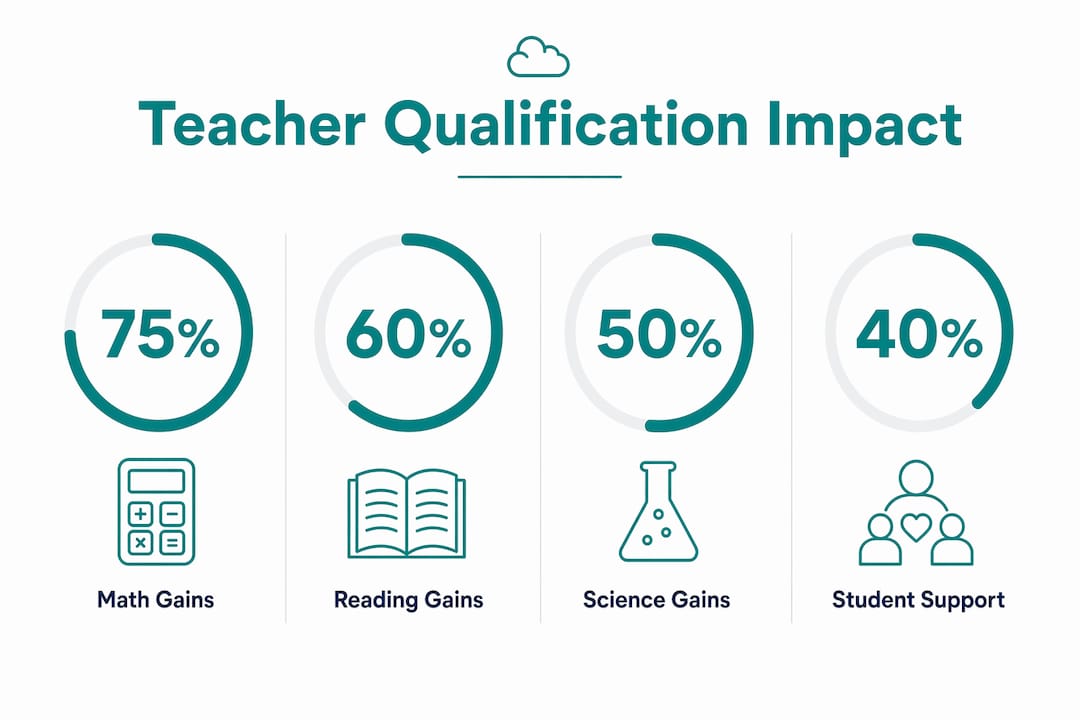
Formal teacher certification produces measurable gains in student performance. A 2026 study published in ScienceDirect confirms that certified teachers improve short- and long-term student results in math, reading, and science. The mechanism matters: certification raises a teacher’s sense of efficacy and encourages pedagogical innovation, which together translate into better classroom practice.
The subject area makes a significant difference. An ERIC report drawing on ten years of North Carolina data found that teacher credentials, including test scores and regular licensure, have a larger effect on math achievement than either class size or socioeconomic status. That finding is worth sitting with. It means that in math especially, who teaches your child matters more than how many children are in the room or what neighborhood the school is in.
Research also shows that the pathway from credential to outcome is not direct. A chain mediation analysis found that teacher efficacy and pedagogical innovation together explain roughly 30 to 40 percent of the total effect that certification has on student achievement. Credentials set the foundation, but what teachers do with that foundation in the classroom determines the result.
Qualification type | Subject area | Effect on student achievement |
Formal certification | Math | Strong positive effect, larger than class size or SES |
Formal certification | Reading and science | Significant positive effect, short and long term |
National board certification | Multiple subjects | Moderate positive effect, especially for experienced teachers |
Teacher test scores (licensure) | Math | Consistent positive correlation with student outcomes |
Pro Tip: When reviewing a school’s teaching staff, look beyond degree titles. Ask specifically whether teachers hold subject-specific certifications and whether they have completed ongoing professional development in the past two years. A master’s degree in education is not the same as a current, subject-aligned credential.
What are the nuances and limitations in teacher qualifications?
Teacher qualifications do not benefit every student equally. A 2026 Frontiers in Education study found that classroom management and teacher-student interaction improve achievement primarily for students with higher prior knowledge. Students who are already behind may not experience the same gains from a highly credentialed teacher without additional, targeted instructional support. That is a finding most school brochures will not mention.
Credentialing policy also carries unintended consequences. A 2026 NBER study found that tougher teacher certification exams impose economic costs and delays on underrepresented minority candidates without producing clear improvements in teaching quality or student achievement. Raising the bar for entry does not automatically raise the quality of instruction. It can, however, shrink the diversity of the teacher workforce. A related study in the Journal of Human Resources found that higher admission standards for teacher training programs reduce new teacher license awards by approximately 9 percent. Fewer qualified teachers in the pipeline affects school staffing and, ultimately, the stability of your child’s learning environment.
Here are the key nuances parents should hold in mind when evaluating schools:
A teacher’s formal credential is a necessary starting point, not a guarantee of excellent instruction.
Lower-achieving students often need differentiated instructional approaches in addition to a qualified teacher.
Certification exam difficulty does not reliably predict classroom effectiveness.
Teacher diversity matters for student belonging and engagement, particularly in international school settings.
Ongoing professional development after initial certification is a stronger predictor of current teaching quality than the credential alone.
Pro Tip: Ask schools directly how they support students who are not yet meeting grade-level benchmarks. The answer will tell you more about teaching quality than a list of staff degrees.
How do teacher qualifications differ across educational levels?
The credential requirements for early childhood educators differ substantially from those for secondary school teachers, and that difference matters for how you evaluate schools at each stage of your child’s development. The Learning Policy Institute notes that early childhood programs often require specialized credentials focused on PreK through 3rd grade, emphasizing developmental alignment rather than subject mastery. A teacher trained for secondary science is not automatically equipped to support a five-year-old’s social and cognitive development.
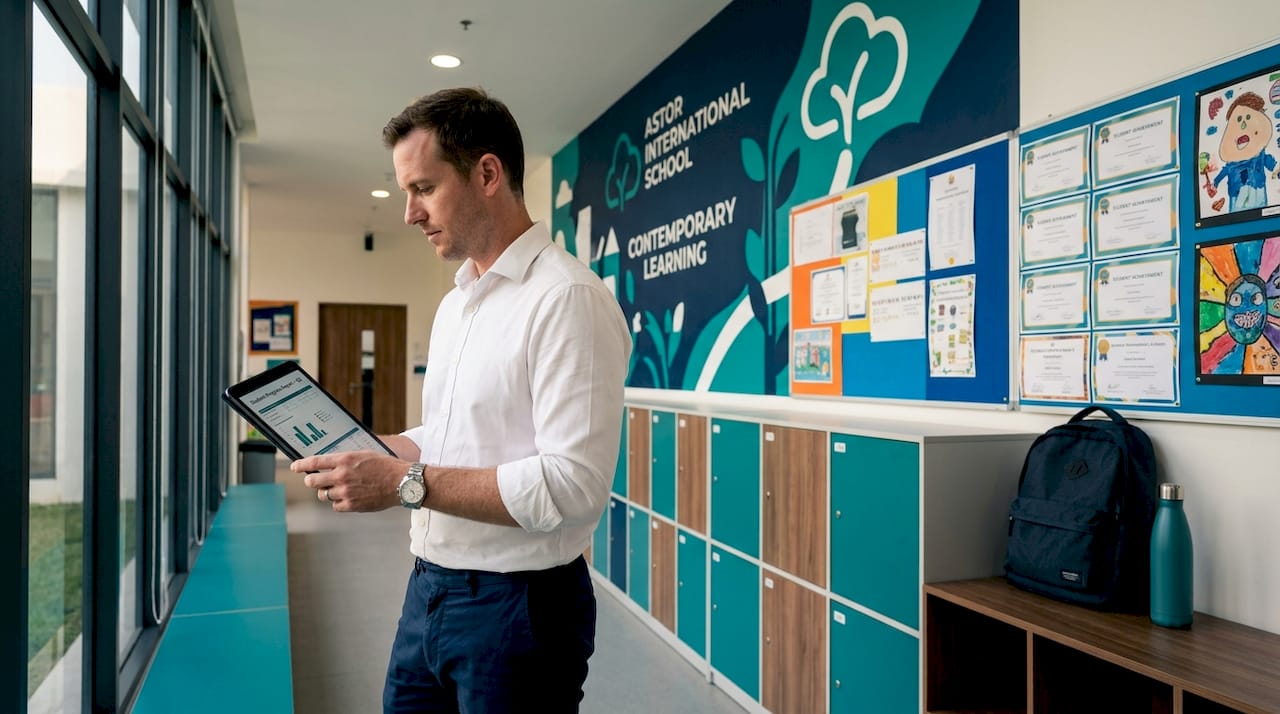
UNESCO’s teacher qualification policies reinforce this point, linking credential alignment to inclusion and digital skills as core competencies for modern educators at every level. The practical implication for parents is that the right credential depends entirely on the age group being taught.
Education stage | Typical credential focus | Key competency areas |
Early childhood (ages 3 to 5) | Specialized PreK or ECE certification | Child development, play-based learning, social-emotional support |
Primary (ages 5 to 12) | Elementary education degree with subject endorsements | Literacy, numeracy, classroom management, differentiated instruction |
Secondary (ages 12 to 18) | Subject-specific degree plus teaching certification | Discipline expertise, critical thinking facilitation, exam preparation |
When you visit a school, ask whether the teachers working with your child’s age group hold credentials specifically designed for that developmental stage. A general teaching degree is a starting point. Developmental specialization is what makes the difference in the early and primary years, which are the most formative for long-term academic confidence.
What practical advice can help parents assess teacher qualifications?
Reading a school’s website for teacher credentials is a reasonable first step, but the labels can be misleading. “Qualified teacher” means different things in different countries and systems. When you are evaluating a school, go beyond the credential title and ask specific questions.
The teacher-student relationship is one of the most reliable indicators of teaching quality that credentials alone cannot capture. Research consistently shows that students learn more from teachers they trust and feel seen by. In small-class environments, that relationship develops more naturally because teachers have the time and attention to know each child individually.
Use this checklist when assessing teacher quality at any school:
Does the school publish its teachers’ subject-specific certifications, not just general degree levels?
How many years of classroom experience do teachers in your child’s year group have?
What professional development has the school provided to its teachers in the past 12 months?
How does the school support teachers in adapting instruction for students at different levels?
What is the teacher-to-student ratio, and how does it affect individual attention?
Does the school have a process for communicating teacher changes to families during the school year?
The answers to these questions reveal far more than a credential list. A school that invests in its teachers’ ongoing growth, maintains small class sizes, and prioritizes the teacher-student relationship is one where qualifications translate into genuine learning gains for your child.
Key takeaways
Teacher qualifications matter most when they are paired with strong teacher efficacy, pedagogical adaptability, and a school environment that supports every learner, not just the highest achievers.
Point | Details |
Credentials improve outcomes | Certified teachers produce measurable gains in math, reading, and science achievement. |
Math shows the strongest effect | Teacher credentials outperform class size and socioeconomic status as predictors of math achievement. |
Not all students benefit equally | Lower-achieving students need targeted support beyond a qualified teacher to close learning gaps. |
Developmental alignment matters | Early childhood and primary credentials should match the specific age group being taught. |
Ask beyond the degree title | Professional development, class size, and teacher-student relationships predict quality as reliably as credentials. |
What I’ve learned about credentials and what they actually signal
By Elena
After spending years reading education research and talking with families navigating school choices, I’ve come to one clear conclusion: a credential is a signal, not a promise. It tells you that a teacher met a defined standard at a specific point in time. It does not tell you whether that teacher walks into the classroom every day with curiosity, patience, and the ability to read a room full of seven-year-olds.
What the research actually shows is that teacher efficacy and innovation are the active ingredients. Certification creates the conditions for those qualities to develop, but it does not install them automatically. I’ve seen parents fixate on whether a school’s teachers hold master’s degrees while overlooking whether those teachers know their students by name, adjust their approach when a child is struggling, or communicate proactively with families.
The finding that teaching quality benefits higher-achieving students more than lower-achieving ones is the detail I wish more parents knew before choosing a school. It means that if your child needs extra support, a credential-heavy teaching staff is not sufficient on its own. You need a school that actively builds student-centered classrooms and differentiates instruction as a matter of practice, not exception.
My honest advice: visit the school, sit in on a class if you can, and watch how teachers respond to the child who is confused. That moment tells you everything a credential cannot.
— Elena
Discover how Astor International School puts qualified teachers to work
At Astor International School in Singapore’s Tanglin area, every teacher brings subject-specific credentials and a genuine commitment to knowing each child as an individual. The school has been recognized as both the best small school and the best affordable international school in Singapore, and that recognition reflects the quality of its teaching staff as much as its curriculum. Astor delivers the International Primary Curriculum, a globally respected framework that aligns directly with the kind of student-centered, inquiry-driven instruction that research links to strong learning outcomes. Small class sizes mean qualified teachers can do what credentials alone cannot: give every child the personal attention that makes learning meaningful. If you are ready to see what that looks like in practice, explore Astor’s full curriculum approach and find out whether it is the right fit for your child.
FAQ
What does “teacher qualified” actually mean?
Teacher qualifications refer to a combination of academic degrees, formal certifications, and specialized training that authorize an educator to teach specific subjects or age groups. The specific requirements vary by country and education system.
Do teacher qualifications directly improve student grades?
Formal certification produces measurable improvements in student achievement in math, reading, and science, but the effect works through teacher efficacy and instructional quality rather than the credential itself.
Are highly qualified teachers equally beneficial for all children?
No. Research shows that teaching quality benefits higher-achieving students more reliably. Students who are behind grade level often need additional, targeted instructional support alongside a qualified teacher.
What should I look for beyond a teacher’s degree?
Ask about subject-specific certifications, years of experience with your child’s age group, recent professional development, and how the school supports teachers in adapting instruction for different learners.
Does a smaller school mean better-qualified teachers?
Not automatically, but small class sizes allow qualified teachers to apply their skills more effectively. When a teacher knows every student individually, credentials translate into personalized, attentive instruction rather than one-size-fits-all delivery.
Recommended
Comments