


What Is Environmental Education for Kids Ages 1.5–12
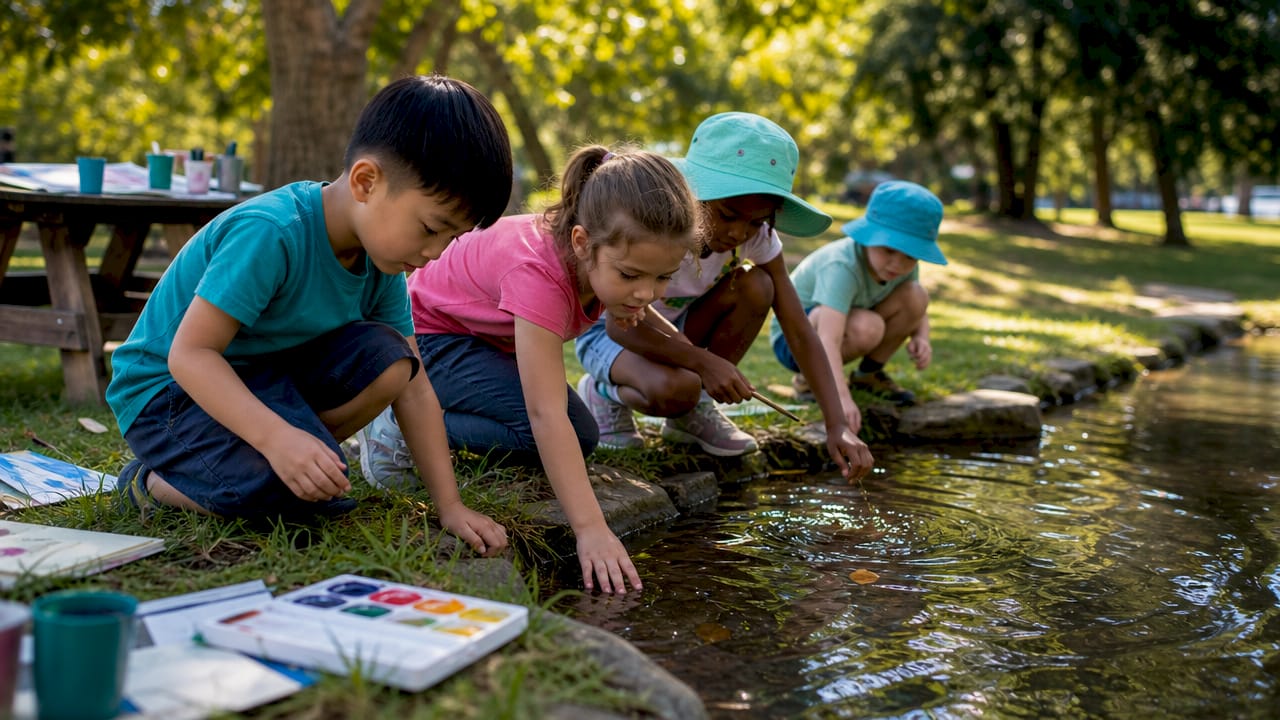
Environmental education is defined as a structured, interdisciplinary process that enables individuals to explore environmental issues, develop critical thinking, and take informed action. For children aged 1.5 to 12, it is far more than a science lesson. It is a framework for building curiosity, responsibility, and a genuine connection to the world around them. The US EPA and UNESCO both recognize environmental education as a lifelong process grounded in five core pillars: awareness, knowledge, attitudes, skills, and participation. Understanding what this means in practice helps parents and educators make deliberate, meaningful choices about how children learn.
What is environmental education and why does it matter?
Environmental education, often referred to as EE, is best understood as education in, about, and for the environment. The “in” means learning directly from nature and outdoor spaces. The “about” means building knowledge of how ecosystems, resources, and human systems connect. The “for” means developing the values and motivation to act responsibly. Together, these three dimensions create a learner who does not just know facts but genuinely cares and knows how to respond.
The US EPA defines EE as a process that does not advocate a particular viewpoint but develops critical thinking and decision-making skills. This distinction matters enormously for parents and educators. Environmental education is not propaganda or activism. It is a structured way of helping children think clearly about complex issues that will shape their entire lives.
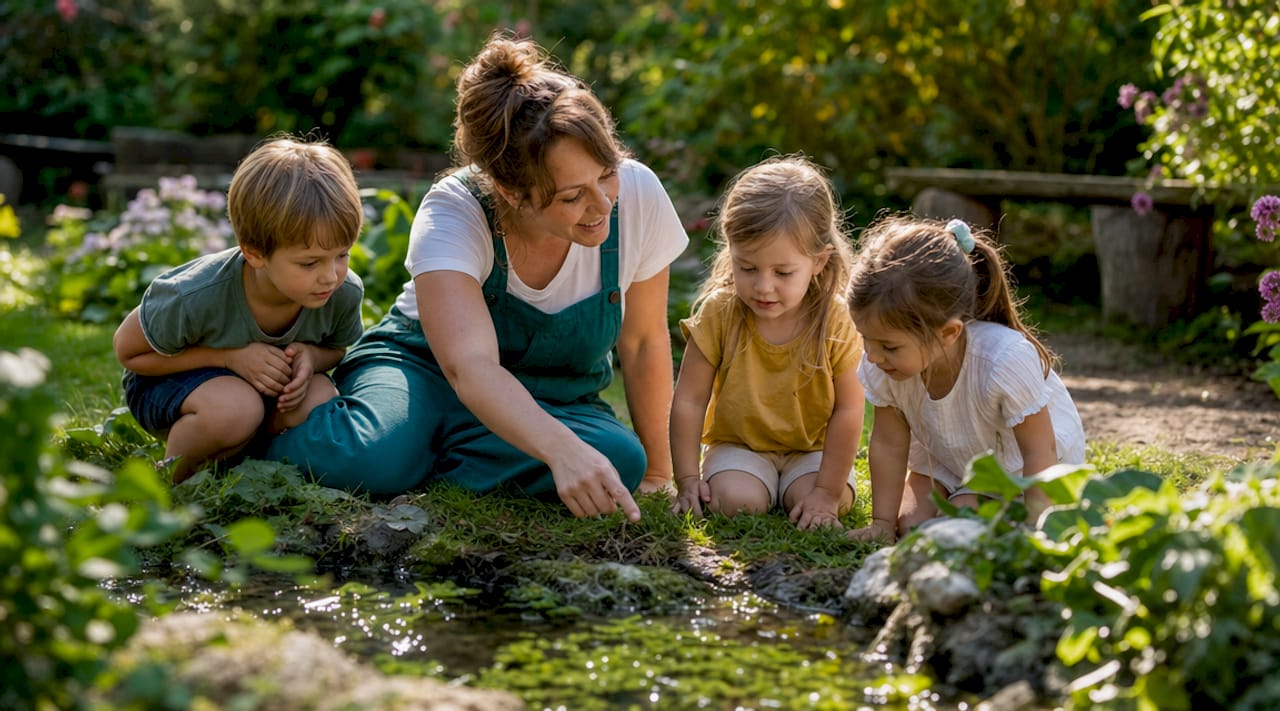
UNESCO frames this even more broadly. Education for Sustainable Development is described as a holistic, lifelong learning process that equips people with skills and values to tackle climate change, biodiversity loss, and sustainability challenges. For a child aged three exploring a garden or a ten-year-old studying water cycles, this process begins with wonder and grows into agency.
What are the key components of environmental education?
Environmental education is built on five pillars, each one building on the last to create a complete learner. Understanding these pillars helps you see why a single nature walk or recycling lesson is not enough on its own.
Awareness: Children develop a basic sensitivity to the environment and its challenges. This is the starting point, often sparked by outdoor play, storytelling, or simply noticing a bird or a puddle.
Knowledge: Learners build an understanding of how natural and human systems work and interact. This includes concepts like ecosystems, food chains, and the impact of human choices.
Attitudes: Children develop values and a sense of concern for the environment. This is where emotional connection forms, and it is deeply influenced by the adults around them.
Skills: Learners acquire practical abilities to identify and address environmental problems. These include observation, research, communication, and collaborative problem-solving.
Participation: Children move from understanding to action, engaging in projects, decisions, and behaviors that reflect their environmental values.
A critical point that many parents and educators miss is the distinction between environmental science and environmental education. Environmental science provides data and causes, while environmental education focuses on decision-making, values, and civic action. Teaching a child why deforestation happens is science. Helping that child decide what they believe and what they can do about it is environmental education.
Pro Tip: Integrate environmental themes across subjects rather than treating EE as a standalone topic. A story about a river in language arts, a measurement activity using leaves in math, and a discussion of community water use in social studies all reinforce environmental literacy without adding extra time to the schedule.
What are the benefits of environmental education for children?
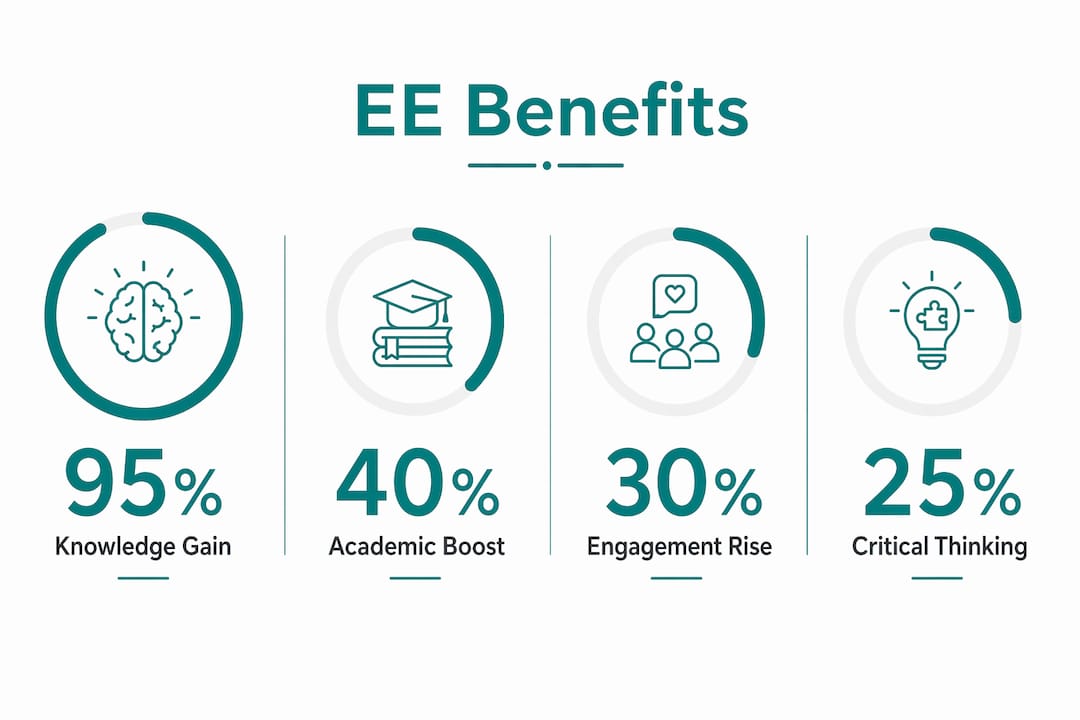
The evidence for the benefits of environmental education is strong and growing. A meta-analysis synthesizing 169 studies with 176,007 participants across six continents and five decades found that EE significantly improves environmental knowledge (effect size g = 0.953), attitudes (g = 0.384), and behavioral intentions (g = 0.256) among children and adolescents. These are not marginal gains. An effect size above 0.8 is considered large in educational research, meaning EE produces some of the most measurable learning outcomes of any subject area.
Beyond environmental outcomes, students engaged in EE show improved academic performance in science, math, reading, and writing. They also develop critical soft skills including collaboration, creativity, and problem-solving. These are precisely the skills that employers and universities identify as most needed in the coming decades.
Outcome area | Measured impact |
Environmental knowledge | Large improvement (effect size g = 0.953) across all age groups |
Environmental attitudes | Moderate improvement (g = 0.384), strongest in younger learners |
Behavioral intentions | Meaningful improvement (g = 0.256), linked to real-world action |
Academic performance | Gains in science, math, reading, and writing alongside EE engagement |
Soft skills | Stronger collaboration, critical thinking, and creative problem-solving |
For children aged 1.5 to 12, these gains are especially significant because the brain is at its most receptive during this window. Positive environmental attitudes formed early tend to persist into adulthood. A child who learns to observe, question, and care about the natural world at age five carries those habits into every classroom and career they encounter later.
You can explore how outdoor learning experiences amplify these benefits further, particularly for younger children who learn most powerfully through direct sensory engagement.
How to teach environmental education to children ages 1.5 to 12
Effective environmental education programs for students rely on one foundational principle: learning must be experiential. Children do not develop environmental literacy by reading worksheets. They develop it by touching soil, observing insects, growing plants, and discussing what they notice with a trusted adult.
Here is a practical sequence for parents and educators looking to implement EE with young learners:
Start with the immediate environment. For toddlers and preschoolers, the backyard, a park, or even a windowsill garden is enough. Observation and naming are the first skills. “What do you see? What does it feel like? What do you hear?”
Build knowledge through questions, not lectures. Ask open-ended questions that invite children to hypothesize. “Why do you think the leaves change color?” builds more lasting knowledge than a direct explanation.
Integrate environmental themes across subjects. Embedding environmental topics into social studies, language arts, and math helps students understand the connections between environmental, social, and economic systems. A story about a drought connects to geography, empathy, and math through water measurement.
Use project-based learning. Give children a real problem to solve, such as reducing waste in the classroom or creating a small garden. Projects develop skills and participation simultaneously.
Invite reflection and discussion. After any environmental activity, create space for children to share what they noticed, felt, and wondered. This builds the attitudes and values pillar of EE.
Connect home and school. Encourage families to continue environmental conversations at home. A child who composts at school and at home develops habits, not just knowledge.
Pro Tip: Avoid treating environmental education as an add-on reserved for Earth Day or science week. The most effective approach embeds EE across learning contexts throughout the year, so children experience it as a natural part of how they think, not a special event.
For age-appropriate activity ideas, classroom activities for kids ages 1.5 to 12 offer a strong starting point for both home and school settings.
What challenges exist in implementing environmental education?
The biggest barrier to effective EE is not a lack of interest. It is a lack of structure. Most schools lack formal environmental education missions, leading to inconsistent implementation and limited behavioral impact. When EE depends on one enthusiastic teacher rather than a school-wide commitment, it disappears when that teacher leaves.
Teacher training is the second major gap. Teachers often lack training in environmental pedagogy, which limits their ability to engage students in critical thinking and multi-dimensional learning. Many educators feel confident teaching environmental facts but uncertain about how to facilitate values-based discussions or guide students toward civic action. This is a solvable problem, but it requires intentional professional development, not just access to resources.
A third common pitfall is teaching EE solely as environmental science. When the focus stays on data, causes, and definitions, the key goals of fostering values, agency, and participatory problem-solving are missed entirely. Children learn what a carbon footprint is but never develop a sense that their choices matter.
The solution is institutional commitment paired with curriculum integration. Schools that embed environmental themes within core subjects, establish a clear environmental mission, and invest in teacher development see the most consistent and lasting impact. For parents, the parallel solution is creating regular environmental experiences at home and asking schools directly how EE is woven into the curriculum, not just offered as an occasional activity.
Learning outside the classroom is one of the most accessible ways to address these gaps, giving children direct environmental experience regardless of what the formal curriculum includes.
Key takeaways
Environmental education is a structured, lifelong process that builds knowledge, attitudes, and skills in children, producing some of the largest measurable learning outcomes in educational research.
Point | Details |
EE is defined by five pillars | Awareness, knowledge, attitudes, skills, and participation work together to build environmental literacy. |
Research confirms large gains | A meta-analysis of 176,007 participants shows EE produces strong improvements in knowledge, attitudes, and behavior. |
Academic benefits are real | Students in EE programs show gains in science, math, reading, and writing alongside environmental outcomes. |
Integration beats isolation | Embedding EE across subjects throughout the year is more effective than treating it as a standalone topic. |
Institutional commitment matters | Schools with a formal environmental mission and trained teachers produce the most consistent, lasting impact. |
Why starting young changes everything
I have spent years watching how children respond to environmental learning, and the pattern is consistent. The children who develop the deepest environmental values are not necessarily the ones who received the most information. They are the ones who were given time, space, and permission to notice the world around them before anyone told them what to think about it.
What concerns me most in current practice is how often environmental education is reduced to a unit, a week, or a single subject. The lifelong, multi-layered framework that moves learners from awareness to active participation cannot be compressed into a term. It requires consistent, repeated exposure across years and contexts. A child who plants seeds at age three, studies water systems at age seven, and leads a school recycling initiative at age eleven has experienced EE as it was designed to work.
Parents often underestimate their own role here. You do not need a science degree to teach environmental education. You need curiosity, consistency, and a willingness to explore alongside your child. The questions you ask on a walk, the habits you model at home, and the conversations you invite at the dinner table are all part of this process. The best learning happens when every child is truly seen and supported, and environmental education gives you a framework for doing exactly that.
— Elena
How Astor supports environmental learning for your child
At Astor International School in Singapore’s Tanglin area, environmental education is woven into the fabric of daily learning rather than treated as a separate subject. The school’s International Primary Curriculum integrates environmental themes across science, social studies, and the arts, giving children aged 5 to 12 the knowledge, skills, and values they need to engage with the world responsibly. With small class sizes and a nurturing environment, every child receives the personal attention that makes this kind of deep, meaningful learning possible. Astor has been recognized as both the best small school and the best affordable international school in Singapore. Explore our curriculum to see how environmental education comes to life for your child.
FAQ
What is the simple definition of environmental education?
Environmental education is a structured process that helps individuals develop the knowledge, attitudes, skills, and motivation to understand and address environmental challenges. The US EPA defines it as an interdisciplinary approach focused on critical thinking and informed action rather than advocacy.
At what age should environmental education begin?
Environmental education can begin as early as 18 months through sensory outdoor play, observation, and nature-based storytelling. The foundational pillar of awareness develops naturally in toddlers when adults create regular opportunities for children to engage with the natural world.
How does environmental education improve academic performance?
Students engaged in environmental education programs show measurable gains in science, math, reading, and writing, alongside stronger collaboration and problem-solving skills. These outcomes are linked to the experiential, inquiry-based methods that effective EE uses across multiple subjects.
What is the difference between environmental science and environmental education?
Environmental science provides data, causes, and explanations of natural systems, while environmental education focuses on values, decision-making, and civic action. Environmental education uses scientific knowledge as a foundation but goes further by developing a child’s sense of agency and responsibility.
How can parents support environmental education at home?
Parents can support EE by creating regular outdoor experiences, asking open-ended questions about nature, modeling environmentally conscious habits, and continuing conversations started at school. Consistency at home reinforces the attitudes and behavioral intentions that formal programs build in the classroom.
Recommended

This is such a helpful breakdown for the early years—my 4-year-old is already asking “why” about everything outdoors, so I’m excited to try these age-specific activities. I’ve been using a simple nature journal template that pairs perfectly with this. https://aiphotoassistant.com
This is such a helpful breakdown for the early years—my 4-year-old is already asking “why” about everything outdoors, so I’m excited to try these age-specific ideas. I’ve been using a simple nature scavenger hunt printable that pairs perfectly with your suggestions. https://3mf-to-stl.org
This is such a helpful breakdown for the preschool years—my 4-year-old is obsessed with bugs right now, so I’m definitely trying the observation journal idea this week. I’ve been using a printable nature scavenger hunt that makes outdoor time way easier. https://ai-picture-generator.net
This is such a helpful breakdown for the early years—my 4-year-old is just starting to ask “why” about nature, and I love the idea of meeting them where they are developmentally. I’ve been using a simple backyard scavenger hunt to build on that curiosity, and it’s amazing how much they absorb. Check out my go-to list of nature-based activities for https://crealitycloud.org
This is such a helpful breakdown for the early years—my 4-year-old is already obsessed with sorting recyclables, and I love how you frame environmental education as hands-on discovery rather than abstract lessons. I’ve been using a similar approach at home, and I’m curious how you adapt it for the older kids in your summer camps. Check out https://faceless-reels.app