


Top benefits of small class sizes for children in Singapore
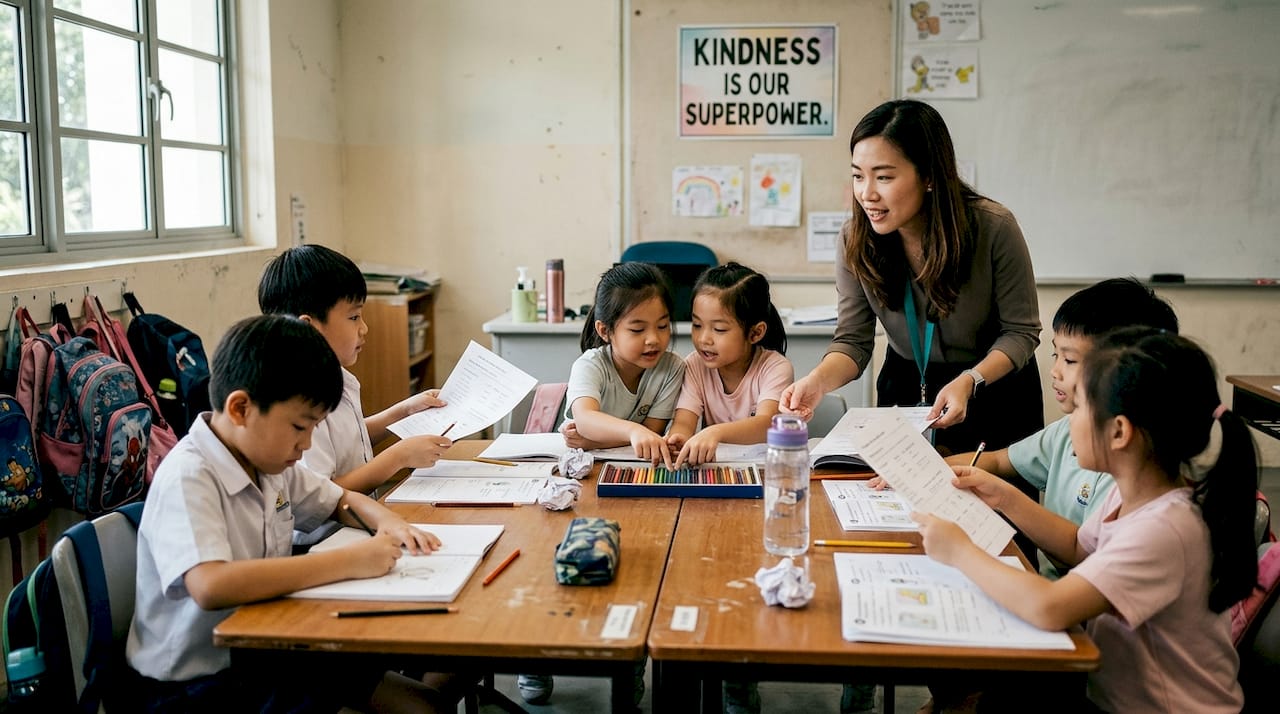
Choosing the right school for your child in Singapore is one of the most meaningful decisions you will make as a parent. Most families want their child to be truly known by their teacher, not just a face in a crowded room. Yet Singapore primary classes average 33 to 34 students, well above international norms. For parents of children aged 1.5 to 12, this gap between what research recommends and what the mainstream system offers is a real concern. Small class sizes are not a luxury preference. They are a proven pathway to deeper learning, stronger relationships, and lasting confidence.
Table of Contents
Key Takeaways
Point | Details |
Early years yield most gains | Small class sizes are most effective for children aged 1.5 to 8 according to global research. |
Personal attention boosts outcomes | Children in small classes receive more individual support, leading to higher academic and social success. |
Singapore’s classes are large | Primary schools in Singapore typically exceed 30 students per class, which is much higher than the global average. |
Quality teaching is key | The impact of small classes depends greatly on skilled teachers and innovative classroom methods. |
Consider practical trade-offs | Parents should weigh class size alongside school resources, costs, and the learning approach when choosing a school. |
Why small class sizes matter for young learners
The evidence supporting small class environments is both clear and compelling. When a teacher has fewer children to care for, every interaction becomes more intentional. Questions get answered more thoroughly. Quiet children get noticed sooner. Struggling learners receive support before small gaps become big ones. This is not wishful thinking. It is what the research consistently shows.
The landmark Project STAR study, conducted across Tennessee schools, found that smaller classes improve graduation rates and produce higher test scores with sustained academic gains that follow children well into adulthood. These are not short-term bumps. Children who spent their early years in small classes were more likely to attend college, earn higher incomes, and demonstrate stronger civic participation. The foundational years, roughly ages 1.5 to 8, are when these effects are most powerful.
What drives these gains? Frequency of teacher-child interaction is a big part of it. In a class of 15 versus a class of 33, a teacher can give meaningful individual attention to each child far more often. Literacy and social skills develop faster when children receive timely feedback and feel genuinely supported.
Here are some of the core reasons small class sizes benefit young learners:
More responsive teaching: Teachers can adjust their approach in real time based on each child’s needs.
Richer classroom conversations: Fewer students means more speaking time per child, building language and communication skills.
Earlier identification of learning needs: Teachers spot challenges sooner and can act before they compound.
Stronger emotional security: Children feel safer asking questions and making mistakes in a smaller, more familiar group.
“The best learning happens when every child is truly seen and supported. Small classes make that possible every single day.”
These benefits connect directly to tailored learning approaches that allow teachers to design lessons around individual curiosity and pace, rather than a one-size-fits-all model.
Pro Tip: When evaluating schools, look for a student-to-teacher ratio of no more than 18 to 1. This is where research suggests the benefits become most consistent and meaningful.
The key academic and social advantages
Understanding the importance of small classes, let us look at the specific advantages your child stands to gain.
Academically, the numbers are encouraging. Small classes boost reading and math scores by roughly 4 percentile points on average, with effects that are strongest for children from disadvantaged backgrounds. That may sound modest, but across a child’s entire school journey, those gains compound significantly. Children in small classes also receive more personalized feedback on their work, which helps them understand not just what they got wrong, but why, and how to improve.
Engagement is another major factor. In a large class, it is easy for a child to drift. In a small class, participation is natural and expected. Children develop the habit of contributing, which builds both academic confidence and communication skills over time.
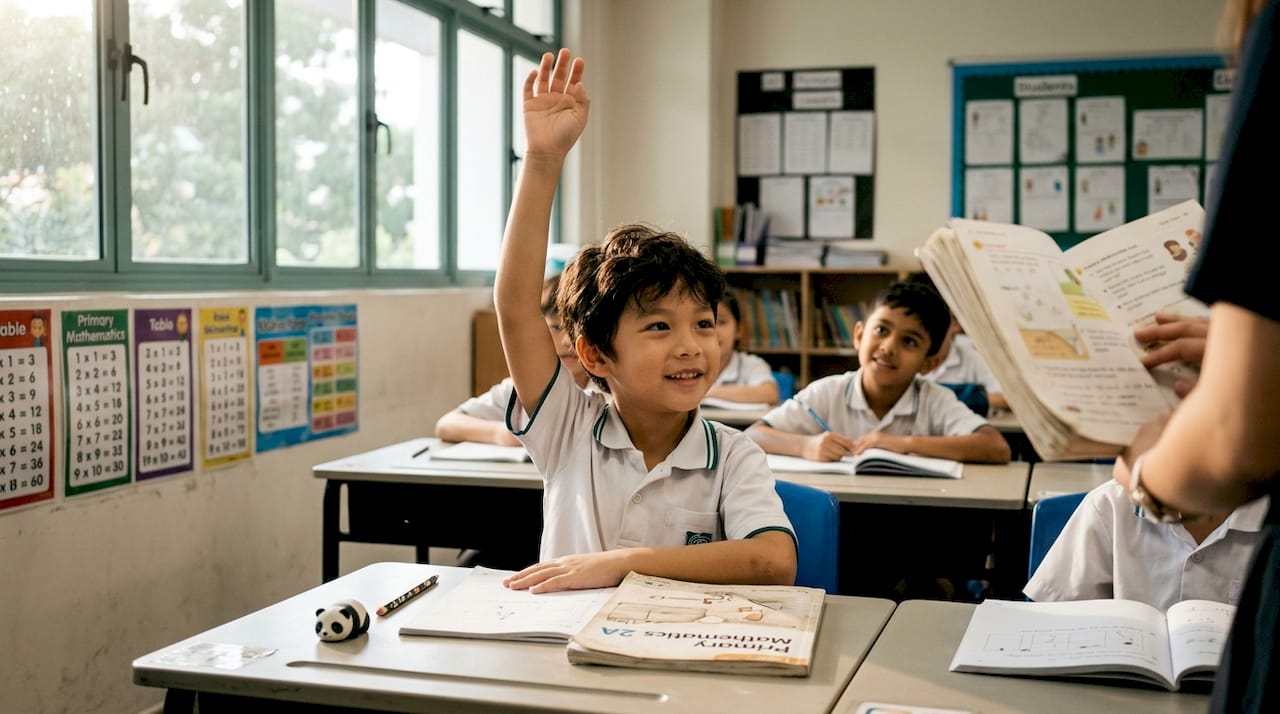
Here is a quick comparison of outcomes across class sizes:
Outcome | Small class (under 20) | Large class (30 or more) |
Personalized feedback | Frequent and specific | Occasional and general |
Student participation | High, regular | Lower, less consistent |
Teacher awareness of needs | Deep and timely | Surface-level, delayed |
Academic progress pace | Individualized | Standardized |
Social-emotional support | Strong and consistent | Limited by time |
A class size and achievement meta-analysis confirms that students in smaller settings benefit from up to 50% more one-on-one interaction time compared to peers in larger classrooms. That additional time is where real learning breakthroughs happen.
Socially, smaller classes are equally powerful. Children build stronger friendships when they interact closely over time with the same group. They develop self-confidence by speaking up more often. They learn to collaborate, negotiate, and empathize in a setting where every voice matters. These social-emotional skills, nurtured early, become the foundation for lifelong success.
All of this aligns with a holistic curriculum framework that treats academic and personal growth as equally important, because they are.
How Singapore’s class sizes compare globally
But how does Singapore measure up compared to other countries? The picture is striking.
Singapore primary schools average 33 to 34 pupils per class, significantly above the OECD average of 20.5. This means the typical Singaporean child shares their teacher with nearly twice as many classmates as children in many other developed nations.
Country or region | Average primary class size |
Singapore | 33 to 34 |
OECD average | 20.5 |
Finland | 19 |
United Kingdom | 27 |
Japan | 27 |
Australia | 23 |
This gap has real consequences for how much individual attention each child receives on a typical school day. Local teachers themselves acknowledge that managing larger classes limits their ability to personalize instruction, even when they are highly skilled and deeply committed educators.
Several factors contribute to Singapore’s larger class sizes:
High population density and demand: Singapore’s education system serves a large number of students within a compact geographic area.
Teacher supply constraints: Training and retaining enough teachers to support smaller classes system-wide is a significant resource challenge.
Policy priorities: The mainstream system has historically prioritized standardized outcomes and efficiency at scale.
Infrastructure limits: Many government school buildings were designed around larger class configurations.
The good news is that private and international schools in Singapore operate outside these constraints. They have the flexibility to keep classes small, which is why families who prioritize personalized attention are increasingly exploring these options. You can find more context and comparisons on the Astor education blog to help guide your research.
Factors to consider and real-world limitations
Even with clear benefits, it is important to understand the real-world context and limitations before making your decision.
Small class size alone is not a magic solution. Research is consistent on this point. The benefits are strongest for younger children and those from disadvantaged backgrounds, but the impact varies depending on several interacting factors. Here is what to weigh carefully:
Age of the child: The younger the child, the more impactful small class environments tend to be. Early childhood and lower primary years are the highest-leverage window.
Teacher quality: A talented, engaged teacher in a small class is far more effective than an uninspired teacher in the same setting. Class size amplifies what the teacher brings.
Curriculum and methods: Innovative, child-centered teaching methods matter enormously. A small class with a rigid, test-focused curriculum may not deliver the full benefits.
Individual student needs: Some children thrive in any environment. Others, particularly those with learning differences or social anxiety, benefit dramatically from smaller, quieter settings.
Cost and accessibility: Smaller classes typically mean higher fees. This is a genuine consideration for many Singapore families and should be factored into your planning.
“Class size is one piece of the puzzle. The teacher’s ability to know each child, adapt, and inspire is what brings the full picture to life.”
Singapore’s policy context around class size shows that reform is complex and slow-moving at the system level. This is precisely why families who want smaller classes today are turning to private and international school options, where these choices are already built into the school’s design.
Pro Tip: When visiting a school, ask not just about class size, but about how teachers differentiate instruction for different learners. The answer will tell you a great deal about the school’s genuine commitment to personalized learning methods.
A fresh perspective: What truly matters in small class education
Stepping back from the numbers and policies, here is an honest look at what makes small class settings work best for families in Singapore.
There is a common misconception that simply enrolling your child in a school with fewer students guarantees better outcomes. It does not. Small class size creates the conditions for great learning. What fills those conditions matters just as much. Skilled teachers who genuinely love working with children, a customized curriculum that sparks curiosity and builds real-world skills, and a school culture that values every child’s unique strengths, these are what turn a small class into a transformative experience.
Singapore teachers themselves note that strong teaching methods and adaptability are as vital as the number of students in the room. We believe the same. For Singapore families, the smartest strategy is to seek schools that combine small class environments with holistic, innovative learning. That combination is rare. But when you find it, the impact on your child is profound and lasting.
Explore small class excellence at Astor International School
Ready to turn these insights into action for your child? At Astor International School in Tanglin, we have built our entire approach around the belief that every child deserves to be truly known, supported, and challenged. Our small class sizes are not just a feature. They are the foundation of everything we do.
Awarded best small school in Singapore and best affordable international school in Singapore, we serve children aged 5 to 12 with a nurturing, internationally minded environment. For younger children aged 1.5 and above, our Astor International Preschool in Holland offers the same warm, small-group philosophy with two playgrounds and a rich mix of outdoor and classroom learning. Explore our curriculum to see how we bring personalized learning to life, or visit Astor International School to book a tour and speak with our educators.
Frequently asked questions
At what age is small class size most beneficial for children?
Small classes have outsized effects in early grades according to Project STAR, making the window from ages 1.5 to 8 the most impactful period for children to benefit from personalized, small-group learning.
Does class size matter more than teacher quality?
Both are important, but a skilled teacher in a small class can maximize learning far more effectively than class size alone. Teacher quality and instructional methods are key determinants alongside class size.
How do Singapore schools compare internationally for class size?
Singapore’s primary schools average about 33 to 34 students per class, well above the OECD average of 20.5, meaning most local children receive significantly less individual attention than peers in many other countries.
Are the benefits of small class sizes supported by research?
Yes. Project STAR found sustained benefits from small classes, including measurable improvements in academics and long-term life outcomes, especially for young and disadvantaged children.
Can small class sizes help with non-academic development?
Absolutely. Small class settings benefit social and emotional skills alongside academics, helping children build confidence, participation habits, and meaningful friendships from an early age.
Recommended

Comments