


Why small schools give children a stronger start
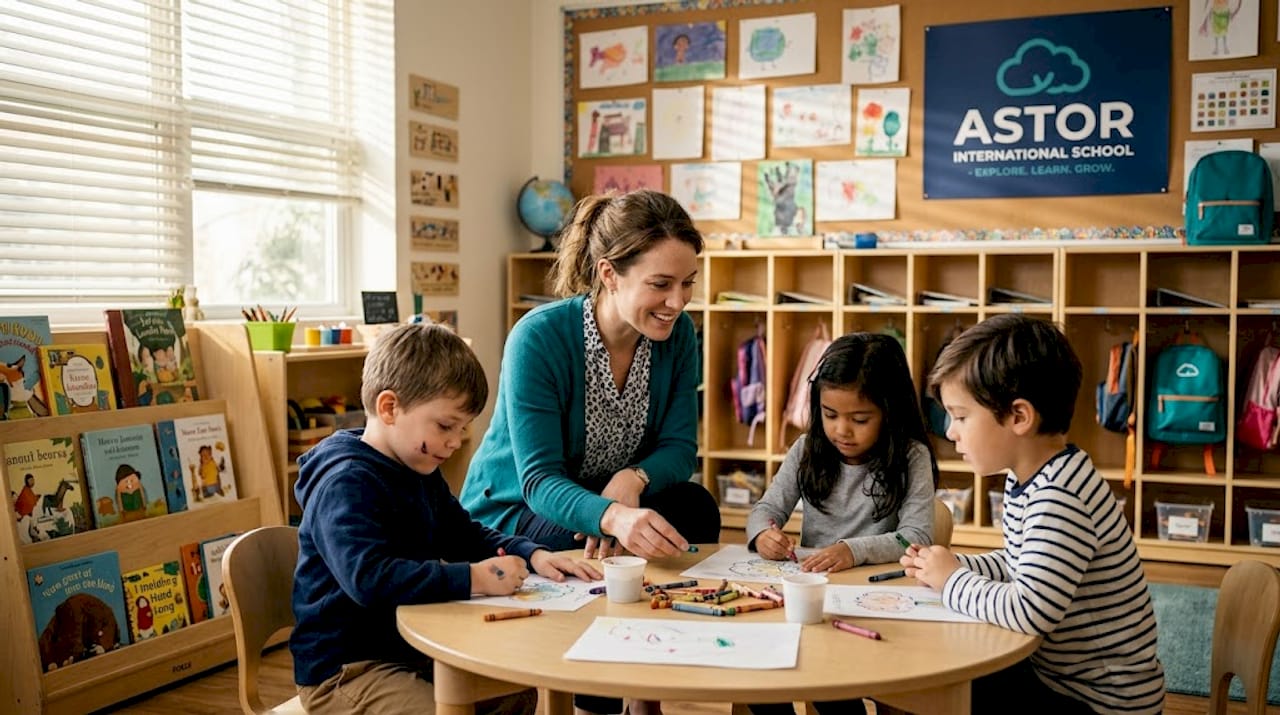
When you move your family to Singapore, choosing the right school feels like one of the most important decisions you will make. Many parents instinctively gravitate toward large, well-known institutions, assuming that more students means more resources, more opportunities, and better outcomes. But that assumption deserves a closer look. A growing body of research, along with the lived experiences of thousands of expat families, points in a different direction. Small schools, often called “boutique international schools,” consistently deliver something that larger institutions struggle to replicate: a truly personalized, nurturing environment where every child is seen, known, and supported.
Table of Contents
Key Takeaways
Point | Details |
Academic gains | Small schools and classes boost student academic performance, especially for young and disadvantaged learners. |
Social-emotional benefits | Personal relationships and supportive communities in small schools strengthen students’ emotional well-being. |
Community integration | Small schools foster close-knit environments that help expat families feel connected and engaged. |
Balanced perspective | Not every student or family will benefit equally; it is important to weigh practical factors and school culture. |
Culture over size | A positive, intentional school culture is more important than size alone when choosing the best fit for your child. |
How small schools enhance academic performance
The idea that bigger schools produce better academic results is one of the most persistent myths in education. The evidence, however, tells a more nuanced and often surprising story. When you look at what actually drives learning in the early years, class size and school size turn out to matter enormously, particularly for children between the ages of five and twelve.
One of the most cited pieces of research on this topic is the Tennessee STAR study, which tracked thousands of students across multiple years. The findings showed that smaller class sizes in early grades lead to improved academic performance, with effects persisting long-term, particularly for disadvantaged students. Children in smaller classes gained the equivalent of several additional months of learning compared to peers in larger settings. Those gains did not disappear when children moved into larger classes later. The early advantage stayed with them.
It is worth noting that not every study agrees. Research from Swiss lower secondary schools found no causal benefit of smaller class sizes on math performance at that level. This tells us something important: the benefits of small schools are most powerful in the early and primary years, which is precisely the age range that matters most for families with children aged five to twelve.
New York City’s small school experiment offers some of the most compelling real-world data. When the city opened dozens of new small high schools in underserved neighborhoods, the results were striking. Students in these schools showed meaningfully higher graduation rates and stronger college enrollment figures compared to students who attended larger, traditional schools in the same communities. This small school impact was especially pronounced for students who had previously been overlooked in larger settings.
Here is a quick comparison of key academic indicators:
Indicator | Small school setting | Large school setting |
Teacher awareness of individual progress | High | Moderate to low |
Frequency of personalized feedback | Weekly or more | Monthly or less |
Student participation in class discussions | High | Lower |
Early identification of learning gaps | Faster | Often delayed |
Parent-teacher communication | Regular and direct | Scheduled and formal |
Pro Tip: When evaluating schools, do not just ask about class size numbers. Ask how teachers track individual progress, what happens when a child falls behind, and how quickly parents are contacted. These questions reveal whether a school truly operates with a small-school mindset or simply has smaller numbers on paper.
The most meaningful academic gains come not just from fewer students in a room, but from what teachers can actually do with that space. In a class of twelve rather than thirty, a teacher can notice when a child is struggling with a concept on Tuesday and adjust the lesson by Wednesday. That kind of responsiveness is what builds genuine academic confidence over time.
Strengthening relationships and social-emotional growth
With academic outcomes covered, it is time to explore something that matters just as deeply, especially for expat children adjusting to a new country: emotional well-being and the quality of relationships at school.
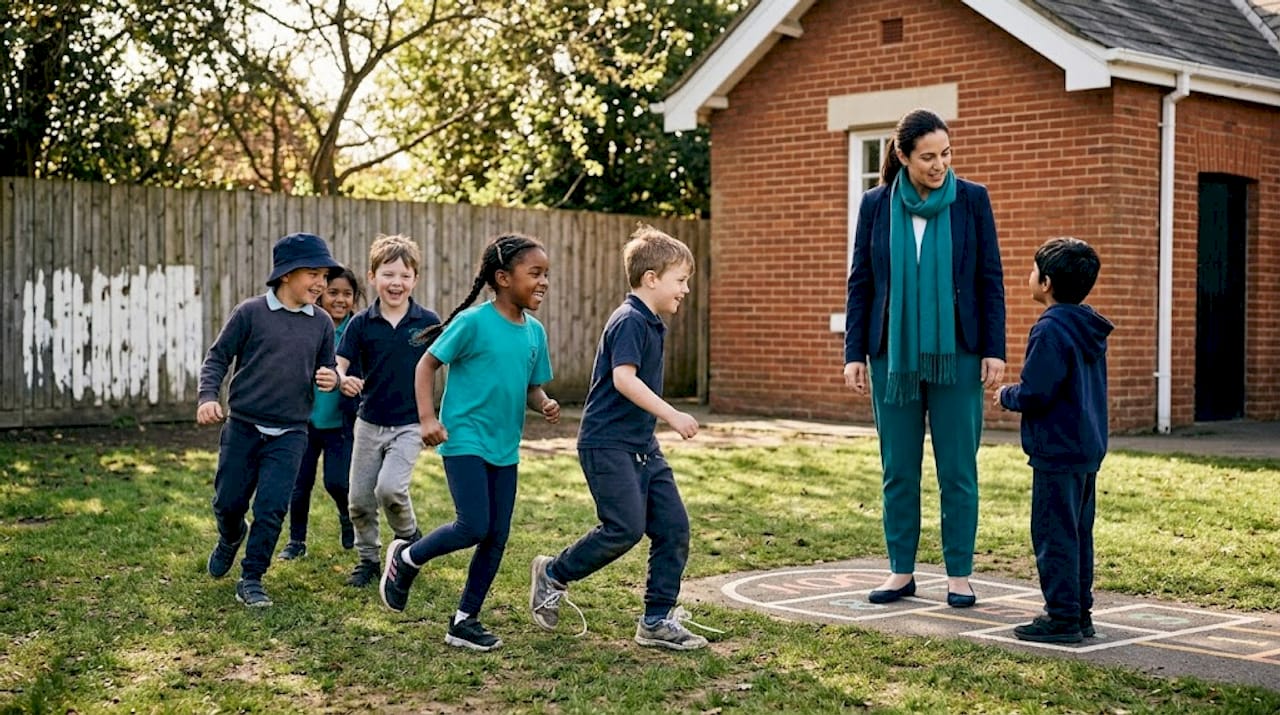
Moving to Singapore is exciting, but it can also feel disorienting for young children. They are navigating a new home, a new culture, and a new classroom all at once. In a large school, it is easy for a child to feel like a face in the crowd. In a small school, that same child is known by name, by personality, and by learning style within the first few weeks.
Research supports this strongly. Experts note that while academic outcomes may vary by context, small schools excel in social-emotional learning, trust-building, and community engagement in ways that larger schools, with all their resources, often cannot match. For expat children who are still finding their footing, this kind of environment is not a luxury. It is a necessity.
Strong teacher-student relationships are at the heart of this advantage. When a teacher works with a smaller group, they can observe not just academic progress but emotional patterns. They notice when a usually cheerful child becomes withdrawn. They recognize when a child needs encouragement versus space. This level of attentiveness shapes how children feel about school and about themselves as learners.
“The best learning happens when every child is truly seen and supported. In a small school, that is not an aspiration. It is a daily reality.”
Effective social-emotional support in small schools tends to show up in very practical ways:
Teachers greet students by name every morning and check in genuinely
Conflicts between students are addressed quickly and with full context
Children feel comfortable asking questions without fear of embarrassment
Parents receive timely, specific updates rather than generic report cards
New students, especially expat children, are integrated with intentional care
Student-centered learning approaches, which place the child’s curiosity and pace at the center of instruction, are far easier to implement in small settings. Teachers can adapt lessons to individual interests, offer differentiated tasks, and follow a child’s lead when genuine curiosity emerges. This flexibility is one of the most powerful tools a school can offer, and it is nearly impossible to achieve consistently in a class of thirty.
Families who have used behavior management strategies at home often find that small schools reinforce those same approaches in the classroom, creating a consistent and calming experience for children. When school and home feel aligned, children settle faster and thrive more fully. For families who want additional support during transitions, children’s therapy resources can also complement what a nurturing school environment provides.
Building a vibrant school community
Beyond classroom relationships, the broader sense of community is a defining advantage of small schools that deserves real attention. For expat families, community is not just a nice bonus. It is often what makes the difference between feeling isolated and feeling genuinely at home.
Small schools foster strong community hubs and achieve outsized academic and social outcomes despite having fewer resources than larger institutions. This is because community is not built through scale. It is built through repeated, meaningful interactions between people who know each other well.
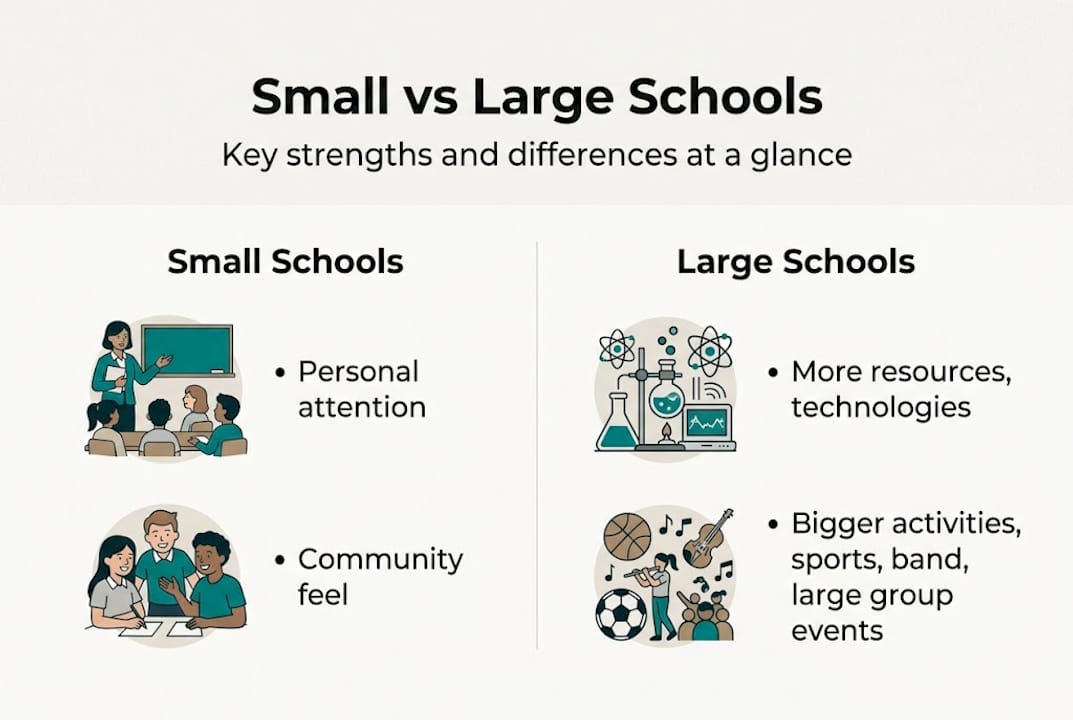
Feature | Small school | Large school |
Parent involvement in school events | High and personal | Often limited or formal |
Sense of belonging for new families | Develops quickly | Can take much longer |
Cultural integration support | Tailored and attentive | General and programmatic |
Opportunities for leadership roles | Accessible to most students | Competitive and limited |
Cross-age friendships and mentoring | Natural and frequent | Rare or structured only |
Mixed-age teaching is one of the most underrated features of small school communities. When older and younger children interact regularly, younger students gain confidence and aspirational role models, while older students develop responsibility and empathy. These are life skills that no textbook can teach directly.
Collaborative learning also flourishes in small communities. When children know each other well, they are more willing to take intellectual risks together, share ideas openly, and support one another through challenges. This kind of trust-based collaboration is a direct product of the tight-knit environment that small schools naturally create.
Story-based learning and other creative approaches are also easier to weave into a small school’s culture, because teachers have the flexibility and the knowledge of their students to tailor these experiences meaningfully.
Pro Tip: A common mistake expat families make when joining a new school community is waiting to be invited in. In small schools, the community is built by everyone. Attend the first parent coffee morning, volunteer for a school event, and introduce yourself to other families early. The connections you make in those first weeks often become your family’s social foundation in Singapore.
Creating a positive learning environment is a shared responsibility between families and schools. When parents are genuinely engaged, children feel that their education matters to the people they love most. Small schools make that engagement accessible and natural rather than formal and occasional.
What parents should know: Nuances and limitations
Now that the core strengths have been detailed, it is important to address the nuances and practical trade-offs honestly. Small schools are not the right fit for every child or every family, and making a well-informed decision means understanding both sides clearly.
The data on small schools is genuinely encouraging but not without complexity. Research on NYC’s small schools showed that students had higher graduation rates (76% versus 68%) and stronger college enrollment figures, but the long-term earnings advantage and college completion rates were not significantly different from those of large school peers. Small schools open doors. What happens beyond those doors still depends on many other factors.
Research also shows that benefits are strongest in new small schools, early grades, and among disadvantaged or minority students. The advantages tend to diminish in older, more established small schools and at secondary level. For families with children in the five to twelve age range, this is actually good news: your children are in exactly the window where small school benefits are most powerful.
Here are the most important questions to ask when you visit a school:
How does the school track and respond to individual learning progress throughout the year?
What extracurricular activities and specialist subjects are available, and how are they staffed?
How does the school support new students, particularly those joining mid-year or from different educational backgrounds?
What is the school’s approach to children who need additional academic or emotional support?
How are parents kept informed and involved in their child’s learning journey?
What is the school’s leadership philosophy, and how does it shape day-to-day culture?
A key statistic worth keeping in mind: Small schools in New York increased graduation rates by 8 percentage points compared to large schools serving similar student populations. That is a meaningful difference in a child’s life trajectory, and it came not from more funding or more facilities, but from a more intentional, connected school environment.
It is also fair to acknowledge that some large schools offer exceptional extracurricular programs, specialist facilities, and a wider range of elective subjects. If your child has a strong passion for a niche sport or a highly specialized academic interest, a larger school may offer more in that specific area. The key is to weigh what your child needs most right now, in these formative years, against what a school of any size can genuinely deliver. Student empowerment activities like debate and project-based challenges can be just as enriching in a small school, and often more accessible because more students get to participate.
The uncomfortable truth about small schools: Why culture matters more than numbers
Here is what most school guides will not tell you: class size is a tool, not a guarantee. We have seen small schools that operate with the same impersonal, one-size-fits-all approach as the largest institutions. And we have seen large schools that do extraordinary work with individual children. The number of students in a room sets the conditions. What determines the outcome is what the school chooses to do with those conditions.
The schools that consistently produce the best results, academically and emotionally, are the ones where leadership is deeply committed to knowing every child, where teachers are supported and stable, and where families are treated as genuine partners rather than passive observers. A positive learning culture does not happen by accident. It is built deliberately, through policies, hiring decisions, daily routines, and the values that a school leadership team models every single day.
When you visit a school, look beyond the class size figures. Ask about staff turnover. Ask how long the principal has been in the role. Ask what the school does when a child is struggling, not just academically, but emotionally. The answers to those questions will tell you far more about what your child’s experience will actually be than any enrollment number will. Small schools have a structural advantage in building this kind of culture. But the culture itself is what you are really choosing.
Explore small school benefits at Astor International School
If everything you have read resonates with what you want for your child, we would love to welcome you to Astor International School in the Tanglin area of Singapore.
Astor has been recognized as the best small school in Singapore and the best affordable international school in Singapore, and we take both of those honors seriously every day. Our small class sizes, IPC curriculum, and deeply committed teaching team create exactly the kind of nurturing, personalized environment this article describes. You can explore our curriculum in detail on our website, or better yet, come and see it in action. We warmly invite you to schedule a personal tour of Astor International School and experience firsthand what it means for your child to be truly seen, known, and supported.
Frequently asked questions
Do small schools in Singapore provide the same academic standards as larger schools?
Yes, many small schools in Singapore offer rigorous academic programs and often achieve comparable or better outcomes. Research confirms that small schools achieve outsized academic and social results despite having fewer resources than larger institutions.
Are there disadvantages to small schools for expat families?
Some small schools may have fewer extracurriculars or specialized resources, so parents should visit and compare options closely. Data shows that while small schools raised graduation rates significantly, not every long-term outcome differs from large school peers.
Is the quality of teachers better in small schools?
Teacher quality varies by school, but smaller settings often foster closer teacher-student relationships which can benefit learning significantly. Experts note that small schools excel in trust-building and social-emotional learning in ways that larger schools often cannot replicate.
Do class size effects last beyond the early years?
Academic benefits from smaller classes are strongest in early grades and may decrease as students progress. Research shows that benefits diminish in older schools and at secondary level, making the primary years the most critical window for small school advantages.
Recommended

Comments