


Smart tips for international school admission in Singapore

Finding the right international school in Singapore is one of the most meaningful decisions you’ll make as an expat parent. The city offers dozens of options, but when your priorities are small class sizes, personalized attention, and fees that don’t require a second mortgage, the search can feel genuinely overwhelming. This guide walks you through a clear, practical process: from setting your criteria and shortlisting schools, to visiting campuses, comparing costs, and submitting a strong application. Follow these steps and you’ll feel confident, not confused, when it’s time to choose.
Table of Contents
Key Takeaways
Point | Details |
Set clear priorities | Focus on class size, affordability, curriculum, and language support when choosing a school. |
Experience each school | Campus visits and open houses are essential for finding the right fit for your child. |
Balance pros and cons | Smaller, affordable schools offer personalized benefits while premium schools charge more for facilities. |
Plan applications early | Start the admission process 6-12 months ahead to access the best school options. |
Set clear criteria before starting your school search
Before you open a single school website, take time to write down exactly what your family needs. This sounds simple, but most parents skip it and end up comparing schools that aren’t even the right fit. Start with the non-negotiables.
Here are the core criteria worth defining early:
Class size: Smaller classes mean more attention for your child. Look for schools with fewer than 20 students per class.
Annual tuition limit: Set a realistic ceiling. Many quality schools in Singapore charge under SGD 25,000 per year.
Curriculum: International Primary Curriculum (IPC), International Baccalaureate (IB), British, or American. Each has a different philosophy.
Location: Proximity to your home or workplace matters more than you think once the school run begins.
EAL support: EAL stands for English as an Additional Language. If your child’s first language isn’t English, this support is not optional. It’s essential.
Understanding trade-offs is important here. Schools that prioritize small classes and affordable fees may have smaller campuses or fewer sports facilities compared to large premium schools. That is not a weakness. For many children, a tighter community and a teacher who knows their name is worth far more than an Olympic-sized swimming pool.
Once you’ve listed your priorities, rank them. Not every school will tick every box. Knowing your top three helps you make faster, clearer decisions. You can find additional school selection guidance to help you think through what matters most for your child’s age and learning style.
The personalized environment benefits of smaller schools are well documented. Children who feel seen and supported tend to build confidence faster and engage more deeply with learning.
Pro Tip: If your child is new to English or joining mid-year, weight EAL support and class size above everything else on your list. These two factors will shape your child’s first year more than any other.
With your aims clear, the next step is to actively evaluate schools.
Research and shortlist affordable, quality international schools
Once you know what you’re looking for, it’s time to gather real information. Reliable sources include official school websites, Singapore expat parent forums like Expat Living and SassyMama, and school open house events. Word of mouth from other expat families is valuable, but always verify claims directly with the school.
Schools that offer small classes under 20 students and fees below SGD 25,000 include options like Astor International School, One World International School (OWIS), and the Holland campus. These are often called boutique international schools, and they punch well above their size when it comes to personalized learning.
Here’s a quick comparison to help you orient your shortlist:
School | Approx. annual fees | Avg. class size | Curriculum |
Astor International School | Under SGD 25,000 | Under 20 | IPC / Holistic |
OWIS | Under SGD 25,000 | Under 25 | IPC / IB |
Holland Campus (Astor Preschool) | Competitive | Small | Play-based |
Tanglin Trust School | SGD 35,000+ | 20-25 | British |
Waiting lists are a real issue. Popular affordable schools fill up quickly, especially at key entry points like Year 1 and Year 3. Check application deadlines as soon as you have your shortlist. Some schools accept rolling applications, while others have fixed intake windows. Visit the school fee comparison page to get up-to-date figures before you plan your budget.
For a broader view of affordable international schools in Singapore, explore options across districts so you’re not limiting yourself by geography alone.
Pro Tip: Attend open houses as early as possible in your search, not just when you’re ready to apply. Schools often remember and favor families who showed genuine interest early.
Once you’ve focused on your family’s needs, it’s time to compare the leading school options in detail.
Visit campuses and open houses to assess fit
No brochure tells the full story. A campus visit gives you something no website can: the feeling of a place. You’ll notice how teachers speak to students in the hallway, how children interact at break time, and whether the environment feels warm or institutional. These details matter enormously.
Here’s how to make the most of your visit:
Observe a real class if possible. Watch how the teacher manages the room. In a small class, you’ll see whether every child is engaged or whether some are drifting.
Ask directly about EAL support. Find out how many EAL sessions per week are offered and whether they’re integrated into class time or separate.
Talk to other parents. Open houses often attract current families. Their candid feedback is more useful than any ranking.
Check the physical environment. Outdoor space, natural light, and classroom layout all influence how children feel about going to school each day.
Ask about class sizes by year group. Some schools have small averages but larger classes at specific year levels.
“The best way to know if a school is right for your child is to visit campuses and attend open houses and pay attention to how the adults in the building treat the children in front of them.”
You can schedule a school tour at Astor International School to see small-class learning in action. If you prefer a group setting first, consider attending an open house where you can meet teachers and ask questions in a relaxed environment.
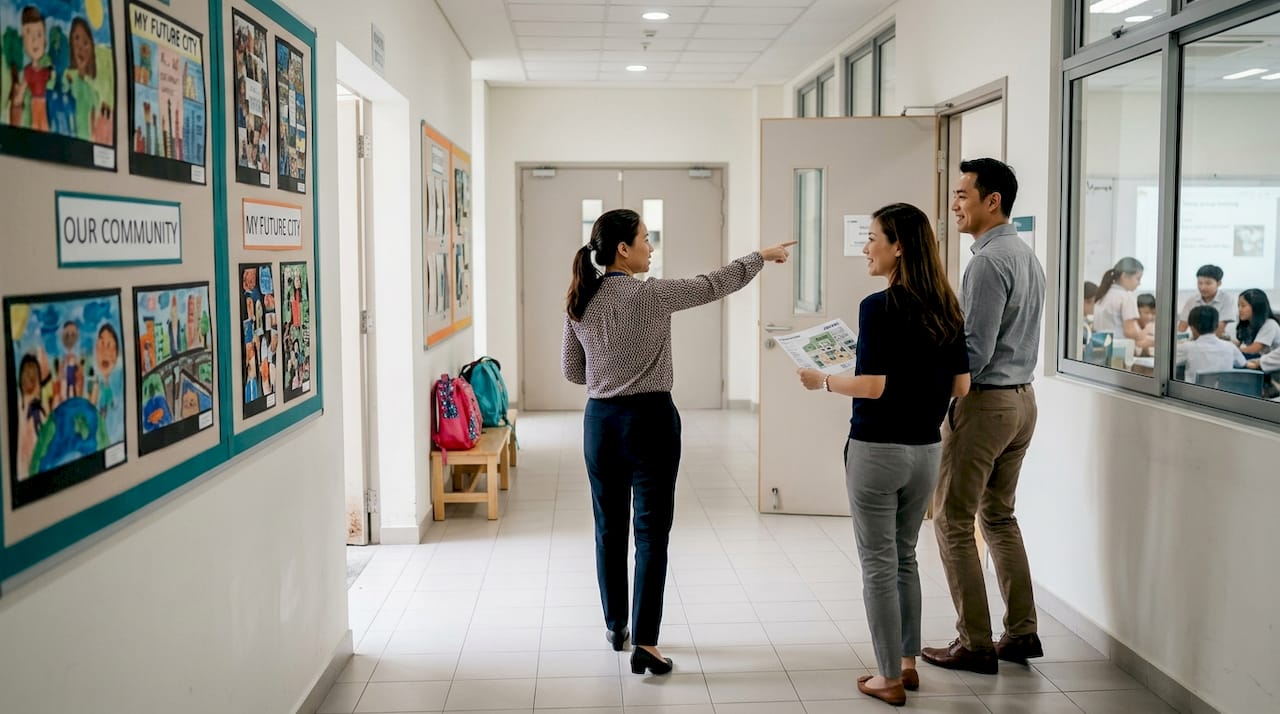
After exploring campuses and experiencing the atmosphere, the next step is to compare what you’ve found to make the right decision.
Compare and decide: Balancing fees, class sizes, and support
Now comes the part where you weigh everything side by side. Most families find this step clarifying rather than stressful, especially once they’ve visited a few schools and have real impressions to work with.
Feature | Premium schools | Affordable schools |
Annual fees | SGD 35,000+ | Under SGD 25,000 |
Class size | 20-28 students | Under 20 students |
Personalization | Moderate | High |
Waitlist length | Often 1-2 years | Shorter or rolling |
University placement | Strong track record | Growing track record |
EAL support | Available | Often a strength |
Premium schools like Tanglin and UWCSEA excel in facilities and university placement but carry fees of SGD 35,000 or more and often have long waiting lists. Affordable schools trade some of those facilities for tighter communities and more individualized attention.
Key questions to ask yourself before making the final call:
Does my child thrive with close teacher relationships or do they do well in larger, more independent settings?
How important are extracurricular options like music, drama, or competitive sports?
Is language transition support a priority right now?
What is the realistic commute, and will it affect my child’s energy levels?
You can review the admission process overview to understand what each school expects from applicants. If language support is a top priority, explore EAL support programs in detail before finalizing your choice.
With your options compared, it’s time for a confident, well-informed decision.
Complete the application: Timing and top tips for success
Once you’ve chosen your preferred schools, move quickly. International school applications in Singapore are competitive, and the best affordable schools fill their places fast.
Follow these steps to submit a strong application:
Gather documents early. Most schools require birth certificates, recent school reports, immunization records, and passport copies. Some ask for a student writing sample or teacher reference.
Apply to two or three schools simultaneously. Don’t wait for one response before applying to the next.
Reference your campus visit. In your application or parent statement, mention your open house attendance or tour. It signals genuine commitment.
Ask about waitlist procedures. If a school is full, ask how the waitlist works and whether there’s anything you can do to stay top of mind.
Follow up politely. A brief, warm email a few weeks after submitting shows continued interest without being pushy.
If your child is a non-native English speaker, EAL support is crucial and should be confirmed before you commit. Ask specifically how the school supports children during the transition period, not just in formal EAL lessons.
Review the step-by-step admissions process to understand exactly what each stage involves. You can also learn about teacher involvement in admissions to see how Astor’s team supports families from the very first inquiry.
Pro Tip: Apply before the end of the calendar year for the following academic year intake. Schools that accept rolling applications still tend to fill their best spots by January or February.
Now that you’re prepared to submit, learn from experiences about what really matters in choosing the right international school.
Our take: Why the best international school for your child may not be the fanciest
We’ve seen many families arrive in Singapore with a list of top-ranked schools and leave those open houses feeling deflated by the fees, the waitlists, or simply the scale of the place. Here’s what we’ve come to believe: the best learning happens when every child is truly seen and supported, and that is far more likely in a small, nurturing school than in a large, prestigious one.
Affordability does not mean compromise. It means choosing a school where your child’s teacher knows not just their name, but their learning style, their worries, and their strengths. That kind of relationship is what builds genuine confidence and curiosity in children aged 5 to 12.
Glossy school rankings rarely capture the day-to-day warmth of a classroom. Watching a teacher kneel down to help a child work through a problem, or seeing students laugh together at break time, tells you more than any league table. Trust your firsthand impressions.
Explore our personalized learning approach to see what that looks like in practice at Astor International School.
Ready to explore the best international school fit?
The most honest insight into any school comes from being there in person. No amount of online research replaces the feeling you get when you walk through the door and see children learning with confidence and joy. At Astor International School in Tanglin, we welcome families to see our small, award-winning school for themselves.
Book a private school tour and experience our small class sizes, warm community, and personalized approach firsthand. You can also learn about the curriculum before your visit so you arrive with the right questions ready. As an affordable international school in Singapore that has been recognized for both quality and value, we’d love to show you what small but mighty really means.
Frequently asked questions
How early should I apply for international schools in Singapore?
Apply at least 6 to 12 months in advance. Premium schools with long waits like Tanglin and UWCSEA can have waitlists stretching one to two years, so starting early protects your options.
Why do small class sizes matter in international schools?
Small class sizes allow teachers to give every child focused, individualized attention. Schools prioritizing classes under 20 students consistently support stronger learning outcomes and greater student confidence.
What is EAL or ESL support and why is it important?
EAL (English as an Additional Language) and ESL (English as a Second Language) programs help non-native English speakers build language skills alongside their regular studies. EAL support is crucial for children transitioning into an English-medium school environment.
What are the pros and cons of affordable vs. premium international schools?
Affordable schools typically offer smaller classes and stronger community bonds at lower fees, while premium schools excel in facilities and university placement at SGD 35,000 or more per year. The right choice depends on your child’s needs, not the school’s reputation.
How can I experience a school’s atmosphere before applying?
Visiting campuses and attending open houses gives you a direct sense of how teachers engage with students and how welcoming the community feels, something no website or brochure can replicate.
Recommended


Comments