


Top 5 Carwale.com Alternatives Providers 2026
- sasha2644
- 4 days ago
- 12 min read

Finding an international school or preschool in Singapore that offers small class sizes, multicultural exposure, and flexible scheduling is harder than it should be. Many schools publish limited fee information and restrict admissions through competitive processes or premium tuition, leaving parents without clarity or accessible choices. This comparison details classroom models, curriculum strengths, and language offerings so parents can confidently select the best school or preschool for their child.
Table of Contents
Astor International School
At a Glance
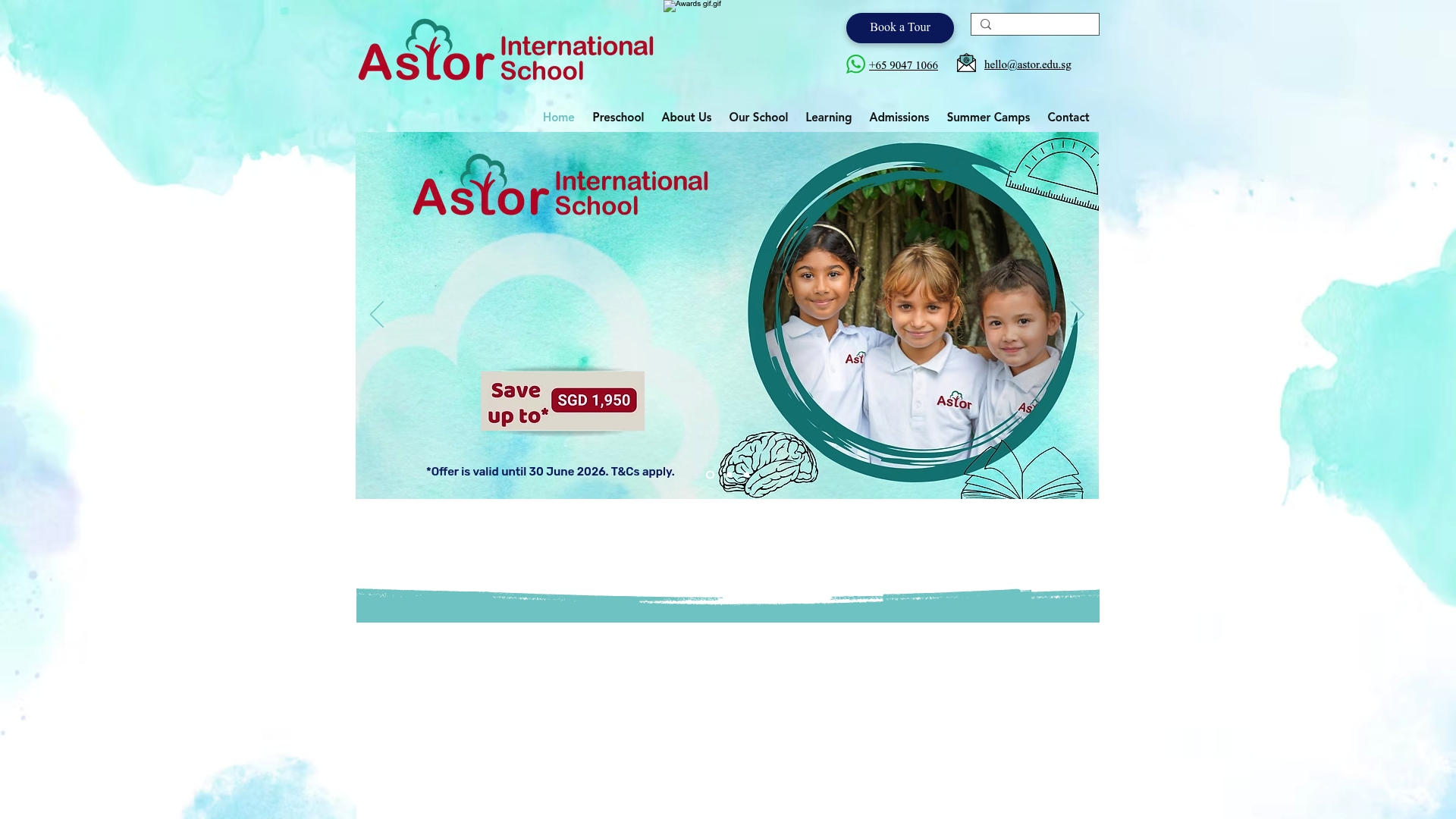
Astor reports a maximum class size of 20 students. That cap keeps classes small and lets teachers give regular one on one feedback. The school serves primary ages five to twelve and sits within the Astor education network alongside a recently acquired preschool in Holland.
Core Features
The curriculum centers on the International Primary Curriculum, British English, and Singapore Math while using enquiry based and experiential learning methods. The school reports a student body from over 30 nationalities, which supports daily multicultural interactions in class. Multiple foreign languages and flexible scheduling with early finishes and enrichment options round out the program.
Key Differentiator
That maximum class size of 20 students gives teachers time to tailor lessons and run hands on inquiry projects with close supervision. Small cohorts allow quicker formative assessment and faster adjustments to individual learning needs. This setup suits families who want focused academic attention without large group instruction.
Pros
The school says it has received awards for being the best small and the best affordable international school in Singapore, which signals recognition within the local sector. Small class sizes and a low student teacher ratio support personalized academic pathways and more direct teacher contact. The network includes Astor International Preschool in Holland, which the school reports was recently acquired and features two playgrounds and a blend of outdoor and classroom learning at holland.astor.edu.sg.
Cons
Limited to children aged 5 to 12, so it does not serve older students.
Who It’s For
You are a parent looking for a small, nurturing international primary school in Singapore for ages five to twelve. Expat families who want a multicultural peer group and parents needing flexible schedules will find the model suitable. Local families seeking affordable, focused primary education also match the profile.
Unique Value Proposition
The school states it is licensed to teach the International Primary Curriculum until 2027. That licensing combined with small classes gives families curricular continuity and predictable assessment frameworks while keeping teacher contact levels high. For parents prioritizing an IPC pathway plus hands on learning, this alignment shortens adjustment times when switching schools.
Real World Use Case
A family relocating to Singapore with a seven year old and a younger sibling can enroll the older child at Astor International School for a focused IPC program. The younger sibling can attend the network preschool at the Holland site until ready for primary. Flexible finish times let working parents stagger pickups without splitting school days.
Pricing
Tuition is not publicly listed on the school summary. Contact the admissions office or use the website for current fees, schedules, and any available financial assistance.
Website: https://astor.edu.sg
ISS International School
At a Glance
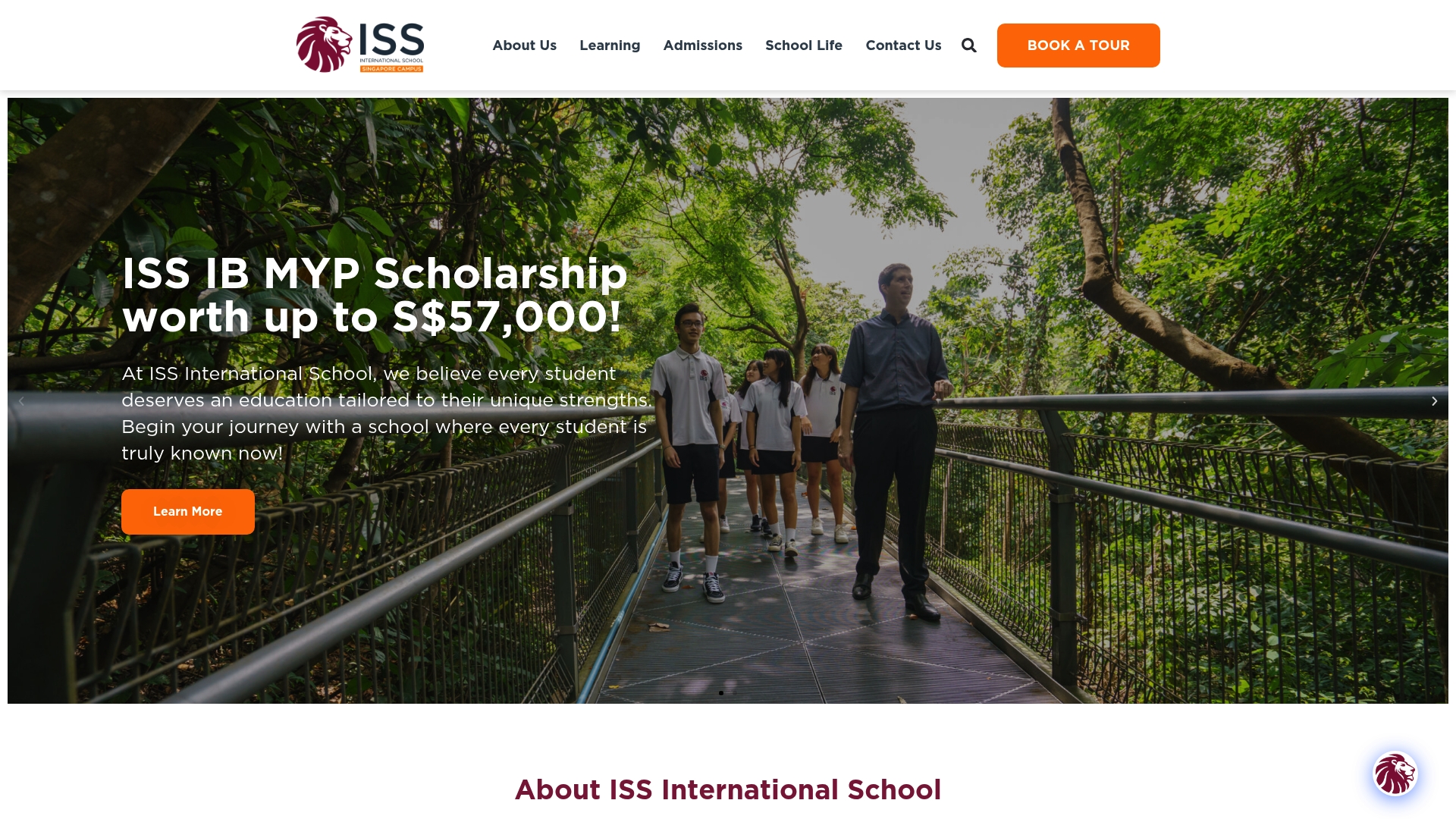
ISS reports a 94% IB diploma pass rate in 2024–2025. The school pairs that IB strength with a US-style High School Diploma to broaden university pathways. Small class sizes on a heritage-rich green hillside shape daily learning and student well-being.
Core Features
ISS runs a K–12 curriculum that includes the IB Primary Years, Middle Years, and Diploma Programmes alongside a High School Diploma. The school emphasizes social-emotional learning, extracurriculars, and targeted English language support for multilingual students. Accreditation from IB, CIS, and WASC underpins academic recognition for international university admissions.
Key Differentiator
The heritage-rich campus and green hillside distinguish ISS from many city international schools. That physical environment supports outdoor learning and projects tied to nature and local history. Small class sizes and an IB focus turn campus assets into daily teaching resources and creative learning opportunities.
Pros
ISS offers a full IB pathway plus a US-style diploma, which gives families multiple university preparation routes. The school favors small classes and a close community, which supports student well-being and personalized guidance. That pass rate above suggests academic strength in the diploma years, while dedicated English language support helps newcomers integrate.
Cons
Premium tuition fees typical of international schools in Singapore make ISS a costly option for budget-conscious families.
The strong emphasis on IB and American curricula may not match families seeking Singapore local curriculum options or PSLE alignment.
Admissions are competitive because reputation and limited class sizes reduce available places.
When It May Not Fit
If your priority is local Singapore certification and exam preparation, this IB and US-diploma focus will not align with that pathway. Families on a strict budget will find tuition levels outside their range. Parents seeking large campuses with dozens of same-age peers may prefer a bigger school.
Who It’s For
Expat families and international residents in Singapore who want a recognized IB pathway and a community-oriented school will find ISS appealing. Parents who value small classes, multicultural peers, and a campus that supports outdoor learning match this profile. The school suits families aiming for broad university options.
Real World Use Case
A multinational family relocating to Singapore chooses ISS to keep their children on the IB track while offering a US-style diploma option. The school’s heritage campus and language support ease social integration for children arriving from different school systems. That mix helps with both academic continuity and settling into Singapore life.
Website: https://iss.edu.sg
House on the Hill Montessori Preschool
At a Glance
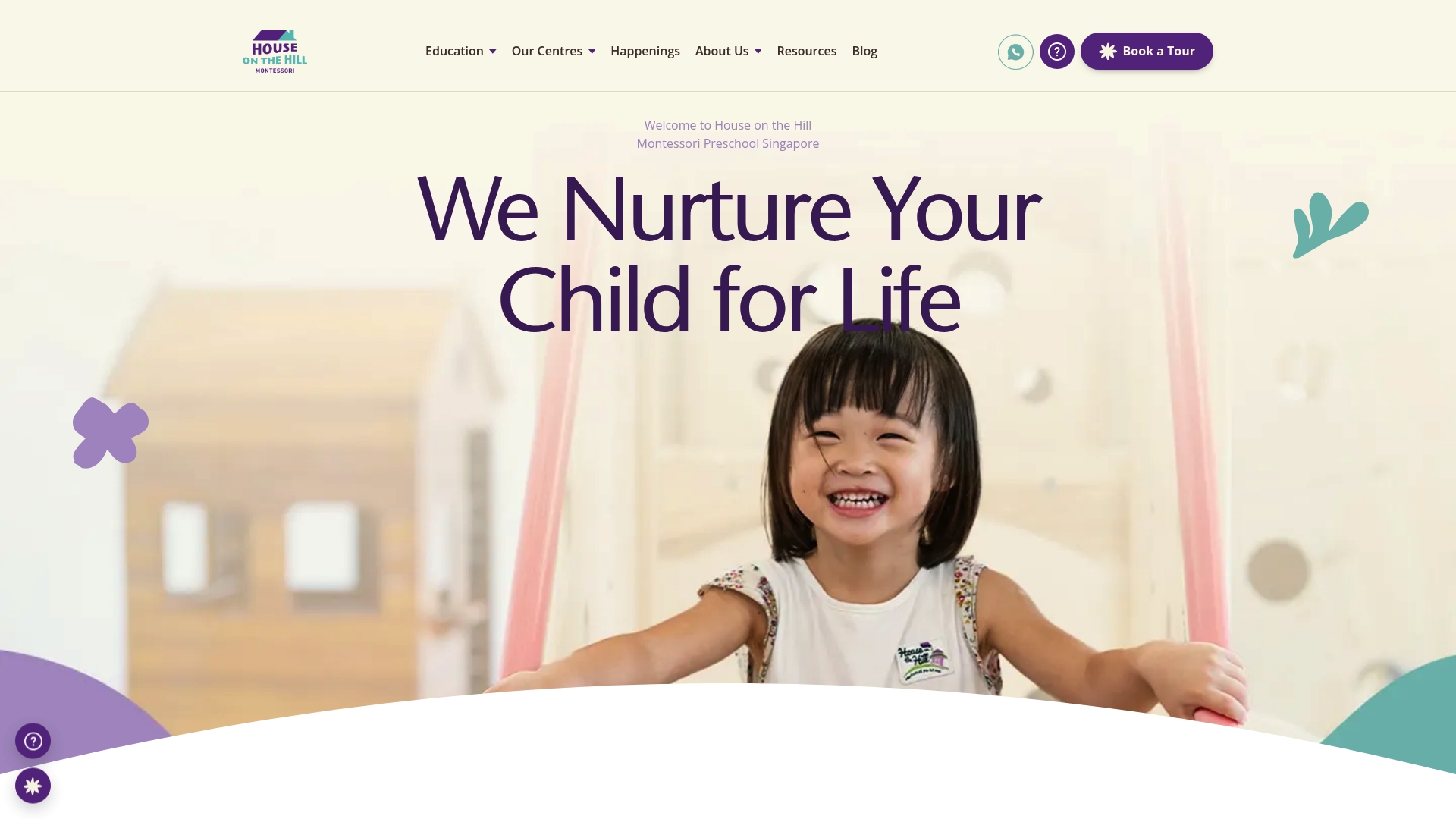
Accepts infants as young as 2 months. House on the Hill runs multiple campuses across Singapore, including Mount Sophia, Balmoral, Pasir Panjang, and Hollandse Club. The school pairs an experiential Montessori program with bilingual Mandarin and optional Japanese offerings. Classrooms and outdoor spaces emphasize practical life, sensorial exploration, and emotional routines alongside nutritious meals.
Core Features
The curriculum centers on authentic Montessori materials and sequences covering practical life, sensorial work, language, mathematics, culture, and social awareness. A bilingual Mandarin strand is led by native speakers, and an optional Japanese program is available. Multiple campuses keep enrollment convenient for families and provide well-equipped indoor and outdoor learning areas focused on independence and play.
Key Differentiator
The combination of Authentic Montessori pedagogy with accessible campus locations sets this preschool apart. Parents who want early Mandarin exposure without leaving a Montessori environment will find that blend uncommon. That mix of fidelity to Montessori practice and language immersion is the product’s defining angle.
Pros
House on the Hill emphasizes a child-centered, experiential day that supports independence and social skills. Low teacher-to-child ratios are reported to allow more personalized attention and guided practice. Multiple campuses make drop-off and family logistics easier, and the curriculum includes arts, outdoor play, and structured emotional-development routines.
Cons
Tuition and fee schedules are not published, so cost clarity requires direct contact.
The provided content does not state exact student-to-teacher ratios or class sizes.
Bilingual programs may present a language adjustment for families not familiar with Mandarin.
When It May Not Fit
Families that need transparent, published tuition before touring will find limited online fee detail. Parents seeking explicitly documented support plans for children with special needs should confirm suitability directly, because program adaptations are not described. Those who prefer an English-only classroom may want to compare other local preschools first.
Who It’s For
This preschool fits Singapore parents seeking a Montessori environment with early language exposure and neighborhood convenience. It suits caregivers who value practical, sensor-based learning and predictable outdoor play each day. It also appeals to families who need infant care options starting in the first months of life.
Real World Use Case
A family enrolls a two-year-old in the Playgroup program and notices the child choosing practical-life tasks independently. Teachers observe and scaffold rather than direct, which strengthens confidence. The family uses a campus near home, cutting commute time and keeping routines stable.
Pricing
Tuition is listed as not specified. Contact the school for a current fee schedule, availability, and any sibling or multi-campus details. Prospective families should request a written fee breakdown and visit to confirm program fit.
Website: https://houseonthehill.com.sg
Adventure Tree Preschool
At a Glance
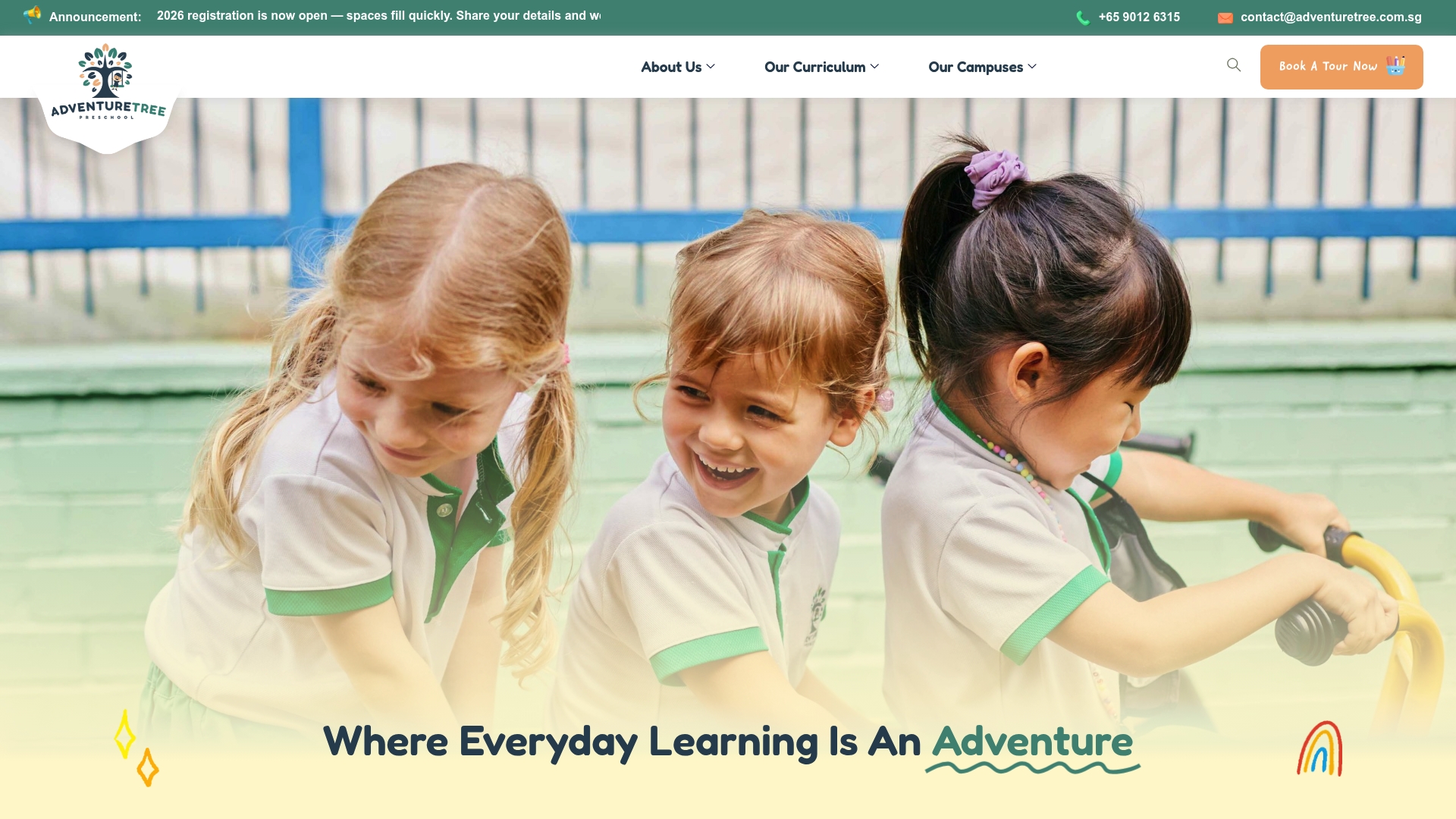
Adventure Tree reports recognition as the Best Play-Based Preschool by Parents’ World 2025. The school serves children aged two months to six years across four campuses in Katong, Bukit Timah, Holland, and Braddell. That mix of small classes and outdoor play defines its hands-on approach to early learning.
Core Features
The program centers on a play-based curriculum that prioritizes outdoor exploration and nature study while aligning with Singapore’s academic framework. Staff provide bilingual instruction in English and Chinese and maintain low teacher to child ratios for focused attention. Parents receive updates and daily notes through the LittleLives app, and the school offers freshly prepared meals with vegetarian options.
Key Differentiator
Adventure Tree pairs a nature-focused program with Western creative learning methods while following local academic expectations. That combination produces frequent outdoor lessons and project work that build curiosity and physical confidence. Multiple campuses give families access across the city without changing the core approach.
Pros
Outdoor learning is a central strength that supports physical development and curiosity through regular nature experiences. Small class sizes let teachers tailor activities and track social and academic progress closely. The bilingual program and reported award recognition add credibility for parents who want both language exposure and a play-first pedagogy.
Cons
Limited detail on educational technology to the parent communication app. Some families seeking tablet or classroom based digital learning may find sparse information.
Pricing details suggest fees are in line with premium preschool offerings, which may not be affordable for all families.
Limited information about specific special education or inclusive programs.
When It May Not Fit
If your family requires documented special needs services or established inclusive education plans, Adventure Tree may lack published detail. Families that need a heavy classroom technology program or regular device based lessons will likely find the offering light on those elements. Budget conscious families should confirm fees and compare alternatives before committing.
Who It’s For
Parents in Singapore who prioritize outdoor, nature based play and want small class sizes for individualized attention will find this school a strong match. The program suits families who want bilingual exposure in English and Chinese and who value accessible campus options across town. It fits parents seeking a play forward path that still prepares children for primary school.
Real World Use Case
A family living near Holland wants a preschool that mixes outdoor play with language development for a three year old. They enroll at the Holland campus to keep morning drop off short and receive daily activity notes via the LittleLives app. Over a term the child gains confidence on outdoor courses and shows steady language progress during small group sessions.
Website: https://adventuretree.com.sg
Holland International School
At a Glance
Holland International School traces over 100 years of Dutch and international education in Singapore. The school teaches children aged 1.5 to 12 and combines both Dutch and English streams. It lists approval from Dutch authorities and CPE registration in Singapore, which supports its recognized status and long local presence.
Core Features
The school runs separate Dutch and English Stream programs built around the International Primary Curriculum (IPC) and a holistic classroom model. Small class sizes allow teachers to focus on ownership, collaboration, and critical thinking during lessons. A broad co curricular roster includes sports, arts, coding, and additional language options, with cultural celebrations tied to IPC units.
Key Differentiator
Holland International School blends a Dutch curriculum tradition with an international primary framework in a deliberately small school setting. That combination suits families who want cultural continuity for Dutch children while keeping an international classroom environment. The emphasis on holistic development and community creates an experience different from larger international schools.
Pros
Small class sizes produce more direct teacher attention and quicker adjustments to individual learning needs. The dual-stream model offers both Dutch language continuity and an international English pathway, useful for families relocating from the Netherlands. Leadership highlights qualified, experienced teachers and formal recognition by Dutch and Singaporean authorities, which supports curriculum credibility and local operating standing.
Cons
Limited publicly available fee and admission details. Prospective families must contact admissions for a full schedule and payment structure.
No clear statement on language proficiency expectations for non Dutch speakers. That gap could complicate placement for children with limited Dutch.
No information published about scholarships or financial aid. Families needing fee support will need to ask the school directly.
When It May Not Fit
If your priority is a large campus with age segmented grade cohorts and many specialized facilities, this small school model may feel constrained. Families who require explicit published fee schedules, formal scholarship programs, or clear non Dutch language entrance criteria will find that information is not publicly listed. Those seeking a predominantly English mainstream international curriculum without Dutch continuity should consider larger international schools instead.
Who It’s For
Parents in Singapore seeking a bilingual Dutch and English primary education will find this school aligned with their goals. It suits families valuing a close community, cultural continuity for Dutch children, and a curriculum that stresses social skills and critical thinking. The school fits those who prefer a small class environment and active co curricular choices.
Real World Use Case
A family relocating from the Netherlands can enroll children and keep Dutch language progression while the children gain international exposure in English. Teachers can tailor lessons faster because class sizes remain small and staff focus on ownership and collaboration. Cultural celebrations tied to IPC units help children retain Dutch traditions while adapting to life in Singapore.
Pricing
Pricing is not publicly listed. The school asks families to contact admissions for the current fee schedule, supplementary costs, and the admissions timeline. Prospective parents should request detailed invoices and payment terms during the enquiry process.
Comparison of alternatives
The listed schools each excel in addressing specific needs families might prioritize in choosing international primary and preschool education options.
Academic and developmental approaches
Astor International School differentiates itself by maintaining a maximum class size of 20 students, which allows their educators to invest significant time in personalized teaching and formative assessments. ISS International School, however, extends its academic pathway with its IB curriculum paired with the US-style High School Diploma, catering to broader preparatory needs for higher education. Meanwhile, House on the Hill Montessori Preschool focuses on early developmental stages, with bilingual Mandarin inclusion integrated into its authentic Montessori framework. Adventure Tree Preschool emphasizes play-based outdoor learning with a bilingual structure, aligning its program with encouraging social and physical development in young learners.
Best fit
Families seeking small class sizes for focused international primary education aligned with the International Primary Curriculum may consider Astor International School.
Parents aiming for an accredited IB program with broader academic pathways might find ISS International School aligns with their aspirations for advanced schooling options.
For early exposure to Mandarin coupled with experiential Montessori pedagogy, House on the Hill Montessori Preschool stands out as a suitable candidate.
Those prioritizing play-based, nature-focused preschool learning with bilingual English and Chinese instruction will find Adventure Tree Preschool meets these goals.
Our pick
Astor International School emerges as an excellent choice for families prioritizing small class sizes to enhance teacher engagement and personalized education within an international curriculum framework. However, families whose children are approaching high school may find ISS International School better aligns with providing advanced pathway options. This choice depends ultimately on balancing immediate educational preferences with long-term developmental goals.
This comparison highlights international education options in Singapore focusing on small class sizes and tailored learning experiences.
School Name | Age Range | Language Streams | Curriculum Focus | Pricing | Notable Limitation |
Astor International School | 5–12 years | English | International Primary Curriculum; Singapore Math | Price not published | Limited to children aged 5 to 12 |
ISS International School | K–12 years | English | Full IB pathway; US-style Diploma | Premium tuition | Premium tuition costs |
House on the Hill Preschool | 2 months–6 years | English and Mandarin | Montessori method; bilingual Mandarin | Price not published | Limited published tuition details |
Adventure Tree Preschool | 2 months–6 years | English and Chinese | Play-based curriculum; nature focus | Premium tuition | Limited details on special education plans |
Holland International School | 1.5–12 years | Dutch and English | International Primary Curriculum; dual streams | Price not published | Limited public fee details |
Finding the Right Educational Fit Amid Challenging Choices
Choosing the perfect school for your child can feel uncertain when options feel excessive and unclear. Families seeking personalised attention, small class sizes, and a nurturing international environment often look for a school that truly understands their child’s needs. Astor International School offers a boutique experience with small classes capped at 20, allowing for focused academic attention within a culturally diverse setting. The recent addition of Astor International Preschool in Holland also supports families with younger children transitioning to primary education.
If you are a parent prioritizing a supportive, affordable international education for children aged 5 to 12 in Singapore, learn more about how the Astor education network can provide that environment. Visit Astor International School to find out how small class sizes and a proven International Primary Curriculum create strong foundations for your child’s development.
FAQ
How does Edu support a personalized learning experience for students?
Edu provides a maximum class size of 20 students, allowing teachers to give regular one-on-one feedback. This structure promotes tailored lessons and hands-on inquiry projects, which are essential for personalized attention. Families seeking focused academic support should consider Edu for its small class sizes.
What is the difference between Astor International School and ISS International School?
ISS International School boasts a 94% IB diploma pass rate in 2024–2025, emphasizing academic strength. In contrast, Edu focuses on the International Primary Curriculum and smaller class sizes to offer more personalized instruction. Choose Edu if you’re looking for a nurturing environment for younger children.
Why is the small class size at Edu considered a key feature?
Small class sizes at Edu facilitate quicker formative assessment and faster adjustments to individual learning needs. This environment allows educators to engage closely with each student, making it ideal for those seeking a focused academic setting. Families prioritizing personalized attention will find this particularly beneficial.
Can I choose Edu if I want a multicultural learning environment?
Edu accommodates a student body from over 30 nationalities, supporting daily multicultural interactions. This diverse setting can enhance the overall educational experience, making it suitable for families looking for a rich, multicultural backdrop for their children’s learning.
What makes Edu’s curriculum different from other international schools?
The curriculum at Edu centers on the International Primary Curriculum, British English, and Singapore Math while utilizing inquiry-based and experiential learning methods. This approach stands out among alternatives, making Edu a great fit for parents seeking a hands-on, immersive learning experience for their children.
Recommended
Comments