


Classroom learning strategies for Singapore parents in 2026
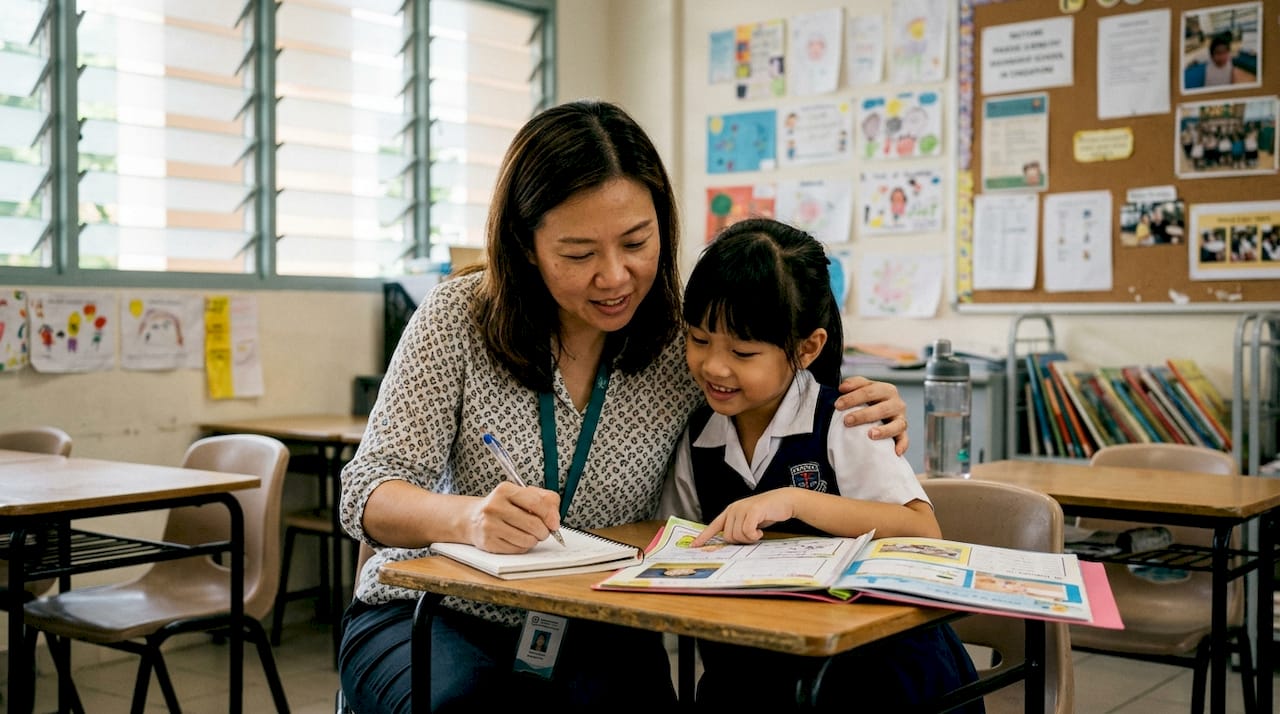
Every parent has felt that quiet worry: your child comes home from school, and something feels a little flat. The enthusiasm you hoped to see just isn’t there. You wonder whether more worksheets would help, or perhaps a tutor, or simply a different approach altogether. The good news is that Singapore’s NEL curriculum details already offers a proven, child-centered foundation for exactly this challenge. This guide walks you through practical strategies rooted in Singapore’s frameworks, covering play-based learning, movement integration, teacher collaboration, and personalized instruction so you can actively support your child’s classroom experience.
Table of Contents
Key Takeaways
Point | Details |
Use play-based learning | Encourage learning through play to boost creativity and executive skills. |
Partner with teachers | Establish clear communication and collaborate with teachers for holistic child development. |
Integrate movement daily | Support physical activities and motor skills for greater engagement and readiness. |
Apply differentiated instruction | Recognize and reinforce each child’s unique strengths and learning preferences. |
Understanding Singapore’s classroom learning frameworks
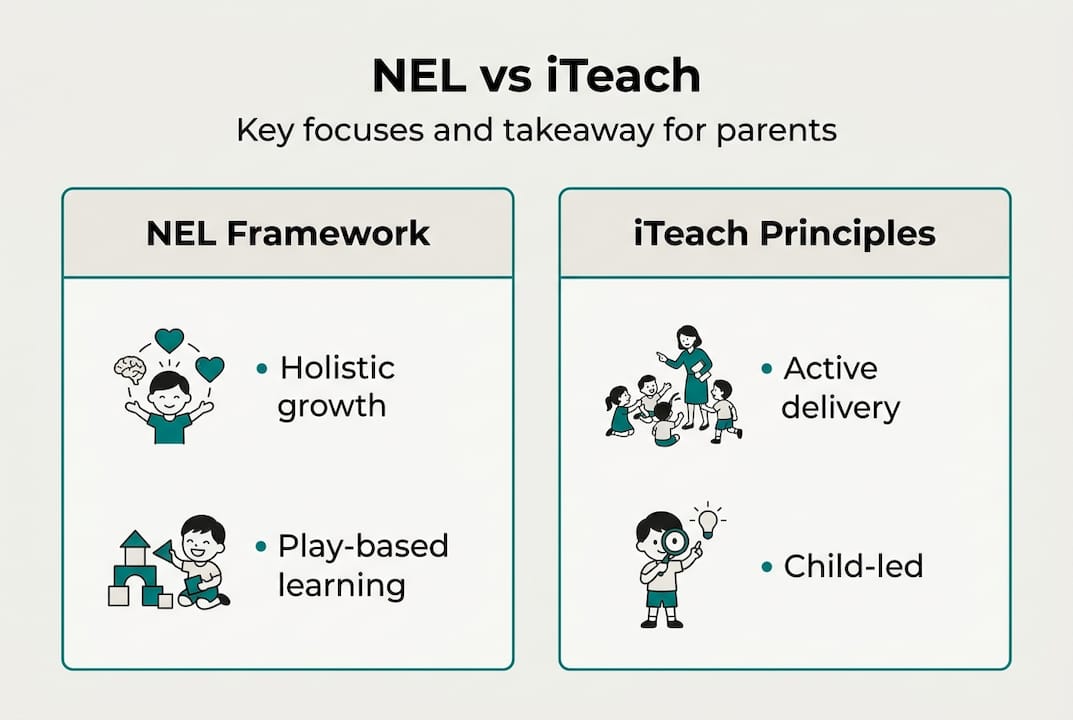
Before jumping into tactics, it helps to understand the thinking behind Singapore’s approach to early education. Two frameworks shape most preschool and early primary classrooms here: the Nurturing Early Learners (NEL) Framework and the iTeach Principles.
The NEL Framework promotes play-based, holistic learning across six key learning areas: aesthetics and creative expression, discovery of the world, language and literacy, motor skills development, numeracy, and social and emotional development. It is not purely academic. Instead, it prioritizes values, curiosity, and the dispositions children need to become lifelong learners.
The iTeach Principles complement the NEL Framework by guiding how teachers deliver learning. These principles emphasize integrated teaching across subjects, purposeful play as a vehicle for knowledge, and quality interactions between teachers and children. Together, they form a coherent philosophy that treats learning as something joyful rather than pressured.
Here is a quick comparison to help you see how these approaches differ:
Framework | Core focus | Teaching style | Parent takeaway |
NEL Framework | Holistic growth and values | Play-based, child-led | Encourage curiosity at home |
iTeach Principles | Integrated, purposeful teaching | Inquiry and interaction | Ask open-ended questions |
Academic-focused | Subject mastery | Direct instruction | Supplement with exploration |
Singapore’s official stance is clear: structured academic drilling at the preschool stage is not the most effective path. Research consistently supports this. Children who experience active learning methods in their early years show stronger motivation, better problem-solving skills, and more positive attitudes toward school as they grow older.
For parents, this means resisting the urge to push flashcards and drills at home. Instead, look for schools and programs that offer an integrated teaching overview where subjects connect naturally and learning feels like discovery. The framework is your ally, not a bureaucratic checkbox.
Play-based and movement-focused strategies for effective learning
With the framework context established, let’s move into actionable strategies, starting with play and movement, which are key pillars in Singapore’s approach.
Play-based learning contributes to executive function and creativity in young children. Executive function includes skills like self-control, working memory, and flexible thinking. These are the mental tools children need to succeed not just in school but in life. Play is not a break from learning. It is the learning.
Movement matters just as much. The movement curriculum developed by ActiveSG outlines Fine and Gross Motor Skills (FSMS) activities specifically designed to improve physical coordination and cognitive engagement in preschoolers. When children move, their brains light up. Simple activities like balancing, throwing, catching, and climbing build the neural pathways that support reading and math later on.
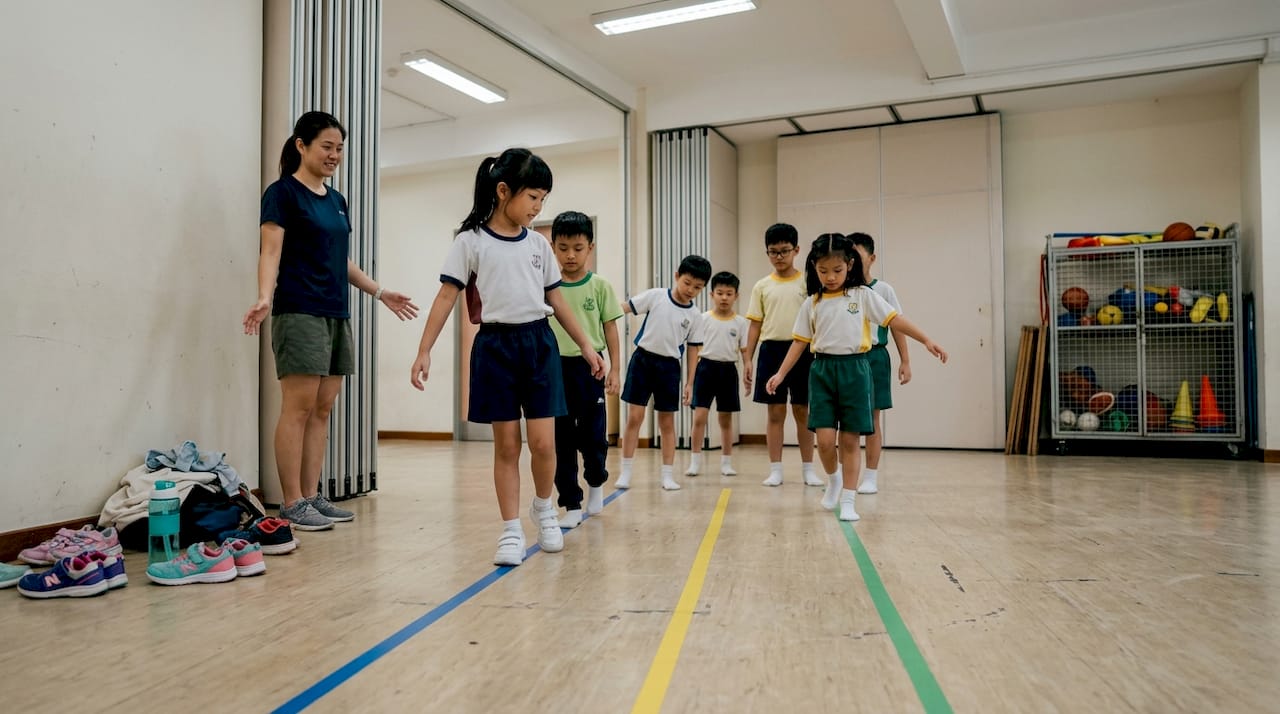
Here are four practical activity types and their developmental benefits:
Activity | Motor skill targeted | Cognitive benefit |
Obstacle courses | Gross motor, balance | Spatial awareness, planning |
Drawing and cutting | Fine motor, hand-eye coordination | Pre-writing skills, focus |
Dramatic play | Social motor skills | Language, empathy, creativity |
Outdoor exploration | Gross motor, sensory | Curiosity, risk assessment |
As a parent, you can reinforce these benefits at home with a few intentional choices:
Set aside unstructured outdoor time every day, even 20 minutes makes a difference.
Offer open-ended materials like blocks, clay, and art supplies rather than screen-based entertainment.
Join your child in imaginative play without directing the outcome.
Visit spaces that encourage movement activities and physical exploration.
Enroll in enrichment programs that balance physical and creative development.
Pro Tip: Resist the temptation to turn play into a lesson. If your child is building a tower and it falls, let them problem-solve independently before stepping in. That moment of frustration followed by resolution is where real learning happens.
“The best learning happens when every child is truly seen and supported, and play is one of the most powerful ways to make that possible.”
Partnering with teachers for holistic development
After equipping your child through play and movement, consider how you can work directly with teachers to amplify results.
Parent-teacher collaboration enhances holistic development and eases the transition to Primary 1. This is especially important in Singapore, where the jump from preschool to primary school can feel significant for both children and families. Teachers see your child in a completely different context than you do. That perspective is valuable.
Effective collaboration does not mean hovering or micromanaging. It means building a genuine, respectful relationship with your child’s teacher so that information flows both ways. Here is what that looks like in practice:
Share relevant context about your child’s interests, fears, and home routines at the start of each term.
Attend parent-teacher meetings with specific observations, not just questions about grades.
Follow up on classroom themes at home so your child sees learning as continuous.
Communicate any significant changes at home (new sibling, moving house) that might affect your child’s behavior in school.
Ask teachers how you can reinforce specific skills during the week.
Schools that prioritize parent-teacher collaboration create structures that make this easier, from regular communication channels to curriculum nights where parents understand what is being taught and why.
Pro Tip: Instead of asking “How is my child doing?” try asking “What is one thing my child is working on that I can support at home this week?” This shifts the conversation from evaluation to partnership and gives you something concrete to act on.
For families navigating the Primary 1 transition, transition support resources can help you prepare your child emotionally and socially, not just academically. Social-emotional readiness matters as much as literacy and numeracy at this stage.
Differentiated instruction: Tailoring approaches for every child
With teacher collaboration established, let’s talk about personalized learning and how parents can support differentiated approaches for optimal classroom outcomes.
Differentiated Instruction (DI) is a teaching approach where educators adjust the content, process, and product of learning based on each child’s readiness, interests, and learning profile. In simple terms, it means not every child in the room is doing the same thing at the same time, because not every child is at the same place.
DI adapts classroom learning to children’s individual needs, but it faces real challenges in Singapore classrooms, including high teacher-to-child ratios and limited professional development time. This is why class size matters so much. In a class of 30, genuine differentiation is difficult. In a smaller class, it becomes genuinely possible.
As a parent, you can reinforce DI at home by:
Observing how your child learns best, whether through visuals, hands-on activity, listening, or reading.
Sharing those observations with teachers so they can adapt their approach.
Offering learning experiences at home that match your child’s current interest, not just their grade level.
Celebrating effort and process rather than correct answers.
Exploring differentiated teaching models when choosing a school.
“When children are given some autonomy over their learning, their engagement and intrinsic motivation increase significantly.”
This is where smaller schools have a genuine advantage. When teacher expertise is paired with small class sizes, teachers can truly know each child and adjust their methods accordingly. That kind of personalized attention is not a luxury. It is what effective learning actually requires.
A key stat worth knowing: Research shows that teacher-to-child ratios directly affect the quality of individualized attention. Smaller ratios consistently correlate with better learning outcomes, stronger relationships, and more confident children.
Expert perspective: What truly drives learning success in Singapore
Here is something that might feel counterintuitive: in a system as achievement-oriented as Singapore’s, the most effective thing you can do for your child’s long-term success is to protect their right to play.
The instinct many parents feel, to add more structure, more practice, more preparation, often works against the very outcomes they want. Play-based endorsed approaches consistently outperform academic drilling for long-term growth in creativity, resilience, and self-regulation. These are the skills that matter most in a rapidly changing world.
What we have seen in Singapore classrooms is that children who are given autonomy, who are allowed to make choices, take risks, and even fail in safe environments, develop a relationship with learning that sustains them far beyond primary school. The children who struggle most are often those who have been over-coached and under-trusted.
For families who want to go deeper on this, our learning success insights explore these themes regularly. And Singapore’s own family support initiatives increasingly recognize that healthy habits, including play, rest, and emotional wellbeing, are foundational to academic success. Trust the framework. Trust your child. And trust that nurturing curiosity today creates capable, confident learners tomorrow.
Astor International School: Next steps for parents
If these strategies resonate with you, Astor International School in Singapore’s Tanglin area puts them into practice every single day. As an award-winning small school for children aged 5 to 12, we keep class sizes intentionally small so that every child receives the personalized attention they deserve.
Our explore our curriculum page shows how we integrate active, holistic learning across all year groups. Our IPC methodology connects learning to real-world themes and encourages genuine curiosity. And our enrichment classes give children the space to explore movement, creativity, and collaboration beyond the core curriculum. We would love to show you what meaningful, joyful learning looks like for your child.
Frequently asked questions
What is the NEL Framework and how does it impact classroom learning?
The NEL Framework promotes joyful, active learning across six developmental areas, shaping how Singapore preschools approach teaching through play, values, and holistic growth rather than purely academic instruction.
How can parents reinforce classroom learning at home?
Parents support learning most effectively by fostering curiosity, encouraging open-ended play, maintaining consistent communication with teachers, and building social-emotional skills alongside academic ones.
What are the main benefits of play-based learning?
Play fosters long-term outcomes in executive function and creativity, giving children stronger self-regulation, problem-solving ability, and motivation that supports them well into their school years.
How can parents support differentiated instruction in Singapore classrooms?
DI in Singapore preschools works best when parents share their child’s learning preferences and interests with teachers, and reinforce flexible, responsive learning approaches at home to complement what happens in the classroom.
Recommended

This guide to Singapore's NEL framework and iTeach principles is such a practical help — I love how it shows that play-based learning and teacher collaboration matter more than piling on worksheets. I've already started using the movement-integration tips at home, and my child's enthusiasm is picking up. Thanks for the clear takeaways; I'll be sharing this with other parents, and I've bookmarked https://casinimigliori.com as a useful companion.