


Enrichment Activities for Kids: Ages 1.5 to 12
Choosing enrichment activities feels simple until you’re actually standing in front of an overwhelming list of options, unsure what will genuinely benefit your child versus what just sounds good on paper. This curated list of enrichment activities for kids is built to cut through that noise. Whether your child is a curious toddler just discovering the world or a preteen ready for deeper challenges, the right activity at the right time can build confidence, spark curiosity, and lay a foundation that formal schooling alone simply cannot provide.
Table of Contents
Key takeaways
Point | Details |
Age matters in selection | Match activities to your child’s developmental stage to maximize engagement and skill growth. |
Variety sustains interest | A balanced mix of screen-based, screen-free, high-energy, and creative activities keeps children motivated. |
Low cost can mean high impact | Many of the most effective enrichment activities require minimal materials and under five minutes of setup. |
Preparation reduces friction | Keeping a stocked activity bin at home encourages spontaneous, consistent participation. |
Enrichment benefits all children | Not just advanced learners. Children prone to boredom or disruptive behavior gain the most from structured enrichment. |
How to choose from the list of enrichment activities for kids
Before picking anything specific, it helps to step back and think about what your child actually needs right now. Not what looks impressive. Not what their classmates are doing. What they genuinely need.
Age and developmental stage are your starting points. A 2-year-old thrives on sensory play and simple real-world tasks. A 10-year-old needs cognitive challenge and social engagement. Mismatching activity to stage is the fastest way to turn curiosity into frustration.
Think about these factors when evaluating any activity:
Time commitment. Some programs ask for daily practice; others are purely drop-in. Be honest about what your family schedule can realistically sustain.
Cost. Activities range from completely free to several hundred dollars per month. Budget matters, but expensive does not always mean better.
Screen vs. screen-free balance. Screen time can be constructive when balanced thoughtfully within a child’s broader activity mix. Aim for variety rather than strict restriction.
Energy level. High-energy physical play and quiet focused crafts both serve important developmental purposes. Rotate between them.
Child motivation. An activity a child resists is rarely worth forcing. Sustained engagement comes from genuine interest, not parental enthusiasm.
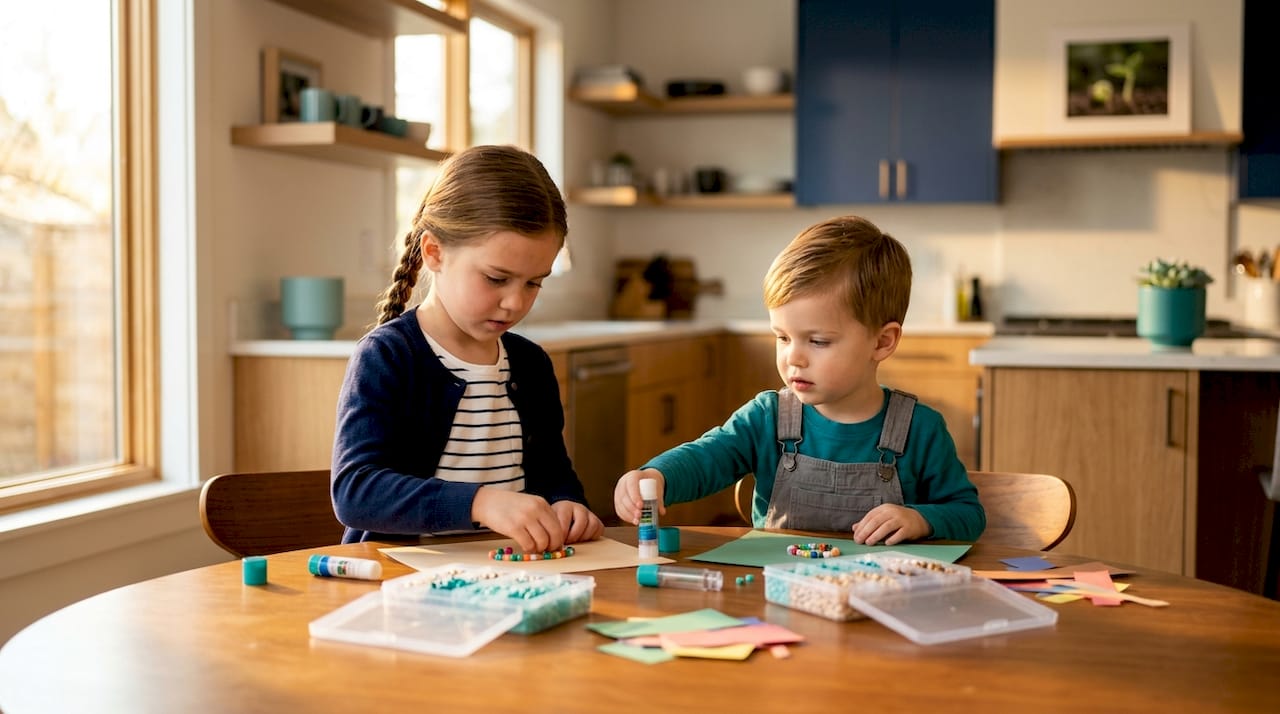
Pro Tip: A prepared activity bin stocked with basics like colored paper, glue sticks, scissors, and small containers dramatically reduces the friction that prevents spontaneous enrichment moments at home.
One more thing worth saying clearly: enrichment supports all children, not just academically advanced ones. Kids who get bored easily, act out in class, or struggle socially often respond remarkably well to structured enrichment outside school. It gives them a place to shine on their own terms.
Enrichment ideas for toddlers and preschoolers (ages 1.5 to 4)
This age group is not too young for real enrichment. The key is meeting them where they are: hands-on, sensory-rich, and focused on the world immediately around them.
Montessori-aligned toddler activities typically require less than five minutes of setup and focus on practical life tasks that build genuine independence. These are not just busy work. They are the building blocks of concentration and self-regulation.
Great starting points include:
Practical life tasks. Pouring water between cups, sweeping with a child-sized broom, folding washcloths, or sorting objects by color all build coordination and focus.
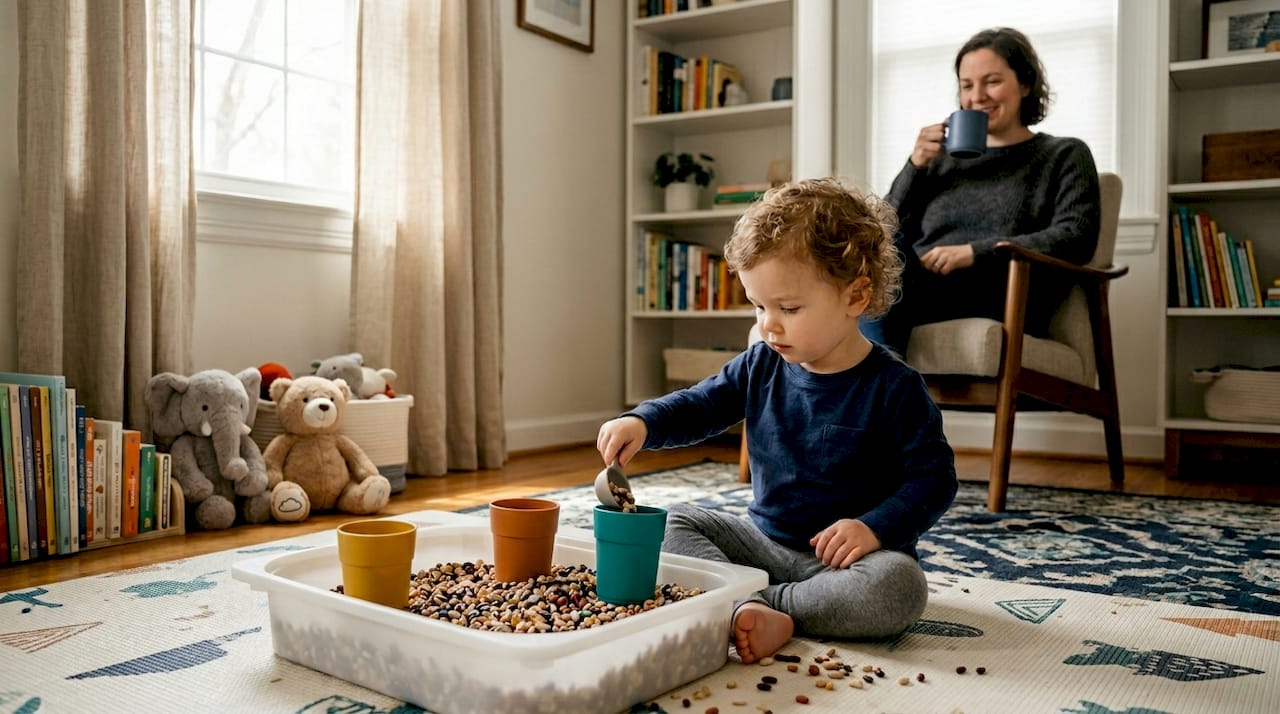
Sensory bins. Fill a shallow container with rice, dried beans, sand, or water with small scoops and cups. Let exploration happen without a set goal.
Simple crafts. Fingerpainting, stamp art, and tearing paper to create collages are all age-appropriate creative activities for children this young.
Nature-based play. Collecting leaves, examining pebbles, or doing rain painting teaches process observation over perfect results. Focus on what your child notices, not what they produce.
Marble painting. For messier projects like this one, adapting the environment by placing paper inside a box lid lets toddlers participate independently with less cleanup stress for you.
Pro Tip: Toddlers learn best through repetition. If your child wants to do the same pouring activity twelve days in a row, that is not a sign of boredom. It is how mastery actually forms.
The goal at this stage is not academic outcomes. It is giving your child rich, safe experiences that make the world feel curious and manageable.
Enrichment activities for early elementary kids (ages 5 to 8)
Children at this stage are ready for activities with more structure, social interaction, and a sense of accomplishment. Here are activities that develop creativity, cognition, and physical confidence simultaneously.
Cooking simple recipes. Children who help with food preparation are more likely to try new foods and develop positive eating habits alongside real math and science understanding. Start with no-bake recipes and progress to simple stovetop cooking with supervision. You can read more about what kids learn from cooking to see just how many skills develop in the kitchen.
Gardening. Even a single pot on a balcony teaches patience, responsibility, and basic biology in a way no worksheet can replicate. Let your child choose what to grow.
Arts and crafts projects. Move beyond coloring pages into paper sculpting, weaving, or basic printmaking. These engaging crafts for kids develop fine motor skills while building creative confidence.
Board games and card games. Strategic games like Uno, Blokus, or Guess Who build turn-taking, pattern recognition, and graceful losing. All genuinely useful life skills.
Introductory coding. Platforms like Scratch Jr. introduce computational thinking through drag-and-drop storytelling. It is play that happens to be programming.
Storytelling and puppetry. Have your child create characters, give them voices, and perform a short show. Stories teach deeper than direct instruction, and this age group takes to it naturally.
Dance and movement classes. Physical enrichment at this age builds spatial awareness, coordination, and social confidence in equal measure.
Advanced enrichment ideas for tweens (ages 9 to 12)
Older children have real interests and real opinions. Enrichment activities that feel too childish get dismissed quickly. These options respect their growing capability while still providing genuine developmental challenge.
Coding and design challenges. Coding projects generally cost between $0 and $200 with a two-to-four-hour weekly commitment. Platforms like Scratch, Python basics, or even game design tools like GDevelop give older kids a tangible creative product at the end.
Music participation. Learning an instrument develops discipline, memory, and emotional expression in ways that transfer directly to academic performance. You can explore the full case for musical enrichment and development to share with your child before committing.
Photography and filmmaking. Give a child a phone camera and a simple project brief and watch their observational skills sharpen. Movie-making teaches editing, narrative structure, and constructive self-criticism.
Science projects and nature journaling. Tracking local birds, testing household chemistry, or building simple circuits all connect to real-world science in a way that feels personal and motivated rather than assigned.
Podcast creation. Choosing a topic, researching it, writing a script, and recording an episode develops literacy, critical thinking, and public speaking in one activity.
Community involvement. Volunteering, participating in neighborhood clean-ups, or joining environmental stewardship projects builds civic identity. Immersive games combining storytelling with environmental themes have also been shown to improve mood, resilience, and pro-environmental behavior in youth, making screen-based options genuinely valuable at this stage.
Theater and drama. School productions or community theater build memory, empathy, and stage presence. Children who are shy in the classroom often discover a different version of themselves on stage.
Comparing enrichment activities by cost, time, and development focus
Not all activities are created equal in terms of what they demand from your family. This table gives you a clear side-by-side view to help you decide what fits.
Activity | Typical cost | Weekly time | Core skills developed |
Practical life tasks (Montessori) | Free | 30 min | Independence, fine motor, focus |
Cooking and baking | $0 to $20/month | 1 to 2 hours | Math, science, nutrition literacy |
Arts and crafts | $10 to $30/month | 1 to 3 hours | Creativity, motor skills, expression |
Board games | $15 to $50 one-time | 1 to 2 hours | Logic, social skills, patience |
Coding | $0 to $200/month | 2 to 4 hours | Problem-solving, creativity, tech literacy |
Music lessons | $50 to $500/month | 2 to 5 hours | Discipline, memory, emotional intelligence |
Sports and dance | $30 to $150/month | 2 to 4 hours | Physical fitness, coordination, teamwork |
Gardening | $5 to $20 one-time | 1 to 2 hours | Patience, biology, responsibility |
The most effective approach is not picking one category and going deep. It is mixing a low-cost, low-commitment screen-free option with one higher-investment structured class, then filling the gaps with spontaneous, unstructured play. That combination covers cognitive, physical, social, and creative development without burning anyone out.
Pro Tip: Parents frequently underestimate how much preparation they actually need to keep screen-free enrichment activities accessible. Set up your activity bin once, restock it monthly, and the friction essentially disappears.
When motivation drops, rotate rather than push harder. Children often return to an activity with fresh enthusiasm after a few weeks away from it.
My perspective on building a real enrichment menu
In my experience working alongside educators and parents of young children, the biggest mistake I see is treating enrichment like a performance rather than a process. Parents sign kids up for five structured classes because it looks like they are doing everything right. Then the child burns out by week six, and everyone wonders what went wrong.
What I have learned is that the best enrichment menus are balanced. High energy and calm. Screen-based and hands-on. Structured and completely open-ended. When a child has that variety across their week, they do not just avoid boredom. They develop resilience and genuine self-direction.
I also think we undervalue unstructured creative time. The child who spends forty minutes building something odd out of cardboard boxes is doing enrichment. It just does not come with a certificate. Some of the most meaningful creativity happens when children are given materials and then left alone to figure out what to do with them.
My honest take: start with one structured activity your child genuinely asked for, add one practical skill-building activity at home, and leave real space for unscheduled time. That formula works across ages. It is not flashy, but it protects both your child’s curiosity and your family’s sanity.
— Elena
Discover enrichment programs that grow with your child
If you are looking to complement home activities with structured, nurturing programs, Astor International School offers enrichment classes designed for children across multiple age groups. With small class sizes and a deeply personalized learning environment, every child receives the attention they need to genuinely thrive.
Astor’s programs are built around the International Primary Curriculum, a holistic approach that connects learning to real-world themes. That means enrichment is not an add-on. It is woven into how children learn every single day. Whether your child is just starting preschool or approaching the end of primary school, Astor’s warm and structured environment offers a meaningful next step beyond what happens at home.
FAQ
What are good enrichment activities for toddlers?
Practical life tasks like pouring, sorting, and sweeping are ideal for toddlers aged 1.5 to 3. Montessori-aligned activities at this stage require minimal setup and build independence, fine motor skills, and concentration.
How many enrichment activities should a child do per week?
One structured class combined with two or three informal home activities is a healthy starting point. Balanced activity menus that mix energy levels and formats sustain engagement better than packing a schedule full of structured commitments.
Are educational games a legitimate form of enrichment?
Yes. Well-designed educational games for kids build problem-solving, narrative thinking, and even emotional resilience. Games that combine storytelling with real-world themes have measurable positive effects on mood and well-being in children.
What after school enrichment ideas work for reluctant learners?
Activities with a clear creative product, like cooking a real recipe or building something with physical materials, tend to work well for children who resist traditional learning formats. Enrichment builds social confidence and engagement even in children who struggle in conventional classroom settings.
How do I keep enrichment activities affordable?
Start with free or low-cost options like gardening, crafting, and cooking before investing in structured classes. Many of the most developmentally rich fun learning activities for kids require nothing more than basic household supplies and your consistent presence.
Recommended
Comments