


How to assess class size benefits: A Singapore parent's guide

You want the best possible environment for your child to learn and grow, and class size feels like one of the clearest signals of quality. Yet the more you research, the more confusing the picture becomes. How do you assess class size benefits when some schools advertise 15 students per class while others with 28 students consistently outperform them? Understanding how to assess class size benefits means looking past the marketing numbers and asking sharper questions about what actually shapes learning.
Table of Contents
Understanding the role of class size in Singapore’s education system
How to quantitatively interpret class size benefits and limits
Weighing cost trade-offs before prioritizing class size reductions
Steps parents can take to assess class size benefits for their child
Why focusing solely on class size can mislead parents seeking the best for their children
How Astor International School supports your child’s learning in balanced class environments
Understanding the role of class size in Singapore’s education system
To effectively assess benefits, you first need to understand Singapore’s unique approach to class size. It may surprise you to learn that there is no single fixed class size applied universally across all schools here. Instead, MOE allocates teaching resources based on student needs rather than fixed numbers. This is a meaningfully different philosophy from simply capping every class at 20 students.
What does this look like in practice? Students with higher learning needs receive smaller teaching class sizes and more targeted instructional support. Most form classes are assigned two form teachers, which means your child benefits from two adults focused on their social and emotional development, not just academic progress. Technology plays a deliberate role too, allowing teachers to manage larger groups effectively without sacrificing personalization.
This also means there are real trade-offs in the system worth understanding:
Smaller classes require more teachers, which affects teacher recruitment and quality
Technology supplements instruction in larger settings, often successfully
Social-emotional guidance is structured through form teacher pairs, not purely through class size
Classroom learning strategies matter as much as the physical number of students in a room
Resource allocation decisions vary by school type, funding model, and student population
Knowing this framework helps you ask better questions when visiting schools.
Key factors to consider when evaluating class size benefits
Understanding the system helps, but you also need practical factors to guide your thinking when you are sitting across from an admissions director. Evaluating class size impact requires you to match what you learn against your specific child’s needs.
Here is a practical order of priority:
Identify your child’s learning profile first. A highly independent learner who thrives on self-directed work will benefit differently from a smaller class than a child who needs frequent one-on-one reassurance and feedback.
Ask schools about support mechanisms beyond class size numbers. Good schools don’t just reduce headcounts; they add small-group tutoring, targeted learning support, and structured social-emotional check-ins.
Probe teaching quality directly. Ask about teacher qualifications, professional development programs, and how long the average teacher has been at the school. Research consistently shows that effective teaching practices paired with smaller classes yield better outcomes than reducing seats alone.
Ask about technology integration. How does the school use digital tools to extend what a single teacher can offer? A well-used platform can make a class of 22 feel more personalized than an underprepared class of 14.
Understand what “support” actually means. Ask whether support is reactive (waiting for a child to fall behind) or proactive (built into the weekly schedule for every student).
Parents are sometimes advised to look beyond numeric class size and dig into the actual support mechanisms tailored to their child. This framing is worth keeping front of mind on every school tour.
The teacher’s role in a small class is just as important as the number on the brochure. A gifted teacher in a class of 24 will do more for your child than an underprepared teacher in a class of 12.
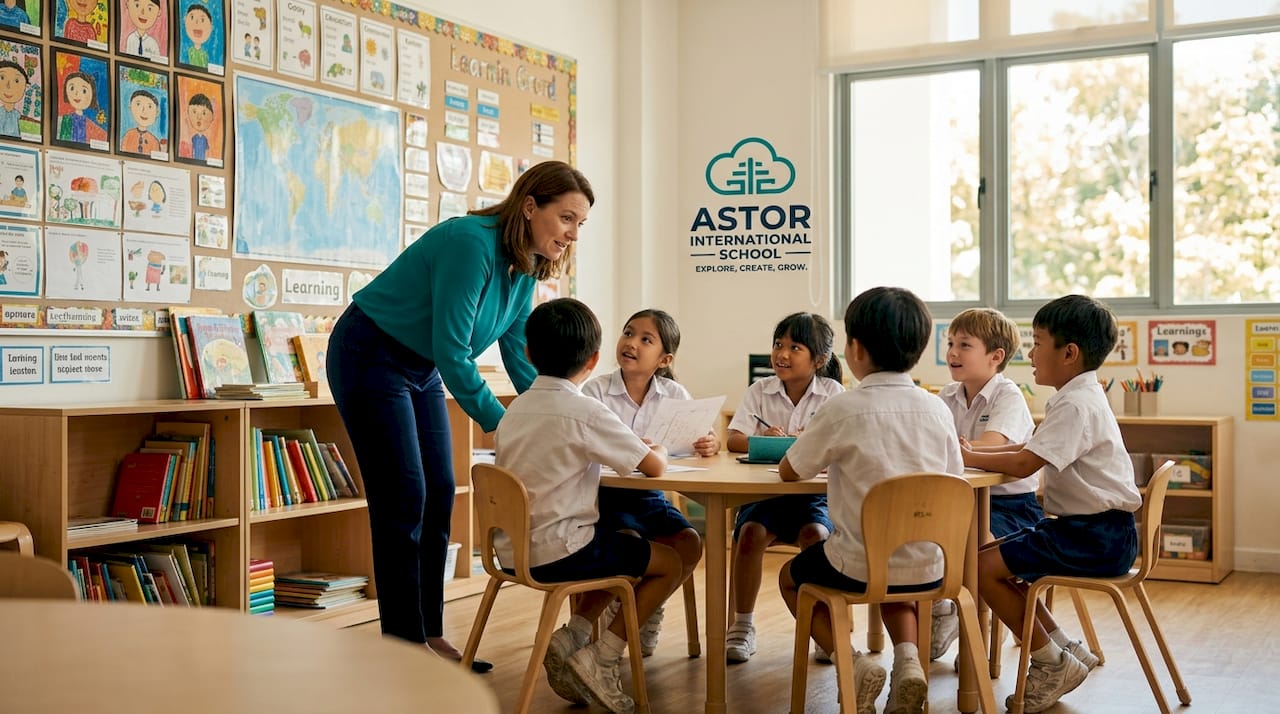
Pro Tip: During school visits, ask to speak with a teacher directly, not just the admissions team. Ask: “How do you differentiate instruction for students at different ability levels?” Their answer will tell you more about learning quality than any class size figure.
How to quantitatively interpret class size benefits and limits
With this quantitative understanding, you can better judge what benefits to expect and what questions to ask schools.
The most cited research on class size benefits is Tennessee’s Project STAR. It showed real gains in early grades when classes ran 13 to 17 students versus 22 to 26. But here’s what often gets left out of that conversation: those gains were most significant for children in kindergarten through Grade 3, and they were most pronounced for students from disadvantaged backgrounds.
Outside Project STAR, the picture becomes much more uncertain. Many studies find negligible or very small effects from class size reductions when controlling for other variables. Effect sizes in large-scale European studies are often so modest that they would be statistically meaningless in any individual school comparison.
Grade level | Evidence strength | Notes |
Early childhood (ages 1.5 to 6) | Strong | Smaller groups improve language, attention, and social development |
Elementary (ages 6 to 10) | Moderate | Benefits clearest in literacy and numeracy for at-risk learners |
Upper primary (ages 10 to 12) | Weak to mixed | Limited evidence for strong effects at this level |
This table matters because parents in Singapore often assume that smaller always equals better across every age group. The research simply does not support that view uniformly.
Pro Tip: If a school advertises a class size of 15 versus a comparable school at 22, ask what the research says about your child’s age group before treating that difference as decisive. For a 10-year-old, a difference of 7 students may matter far less than the quality of the teaching team.
Weighing cost trade-offs before prioritizing class size reductions
Knowing the cost-benefit balance helps you prepare better evaluation questions to assess real value.
Reducing class sizes is expensive. A school that cuts average class size from 24 to 16 effectively needs to increase its teaching force by roughly 50 percent. That cost gets passed somewhere, usually to parents through higher fees, or to the school through accepting trade-offs in teacher compensation and curriculum investment. Research confirms that class size reductions improve learning but carry significant budgetary costs that can affect overall school quality.
Singapore’s education ministry has been transparent about this. The trade-off between smaller classes and teacher quality is real, and doubling the teaching force to reduce class sizes could dilute the talent pool.
Approach | Cost level | Evidence of benefit |
Across-the-board class size reduction | High | Moderate, mainly early years |
Early-years small group focus only | Moderate | Strong for ages 3 to 7 |
Small-group tutoring within normal classes | Lower | Strong, especially for struggling learners |
Technology-enhanced differentiation | Variable | Promising when implemented well |
As a parent, your smartest questions when assessing schools are:
Does the school pair smaller classes with genuinely strong teachers, or does it use small class size as the only selling point?
Is the fee premium justified by measurable learning support, or just by a lower headcount?
How does the school use resources to support students who need more, not just reduce numbers across the board?
What does the school’s approach to international school selection actually prioritize when budgeting for quality?
Steps parents can take to assess class size benefits for their child
With these practical steps, you can assess class size benefits tailored to your child’s growth with real confidence.
Step 1: Define your child’s learning needs clearly before any school visit. Is your child at an early developmental stage needing high interaction? Does your child need more emotional reassurance or more independent challenge? Your answer shapes every question you ask.
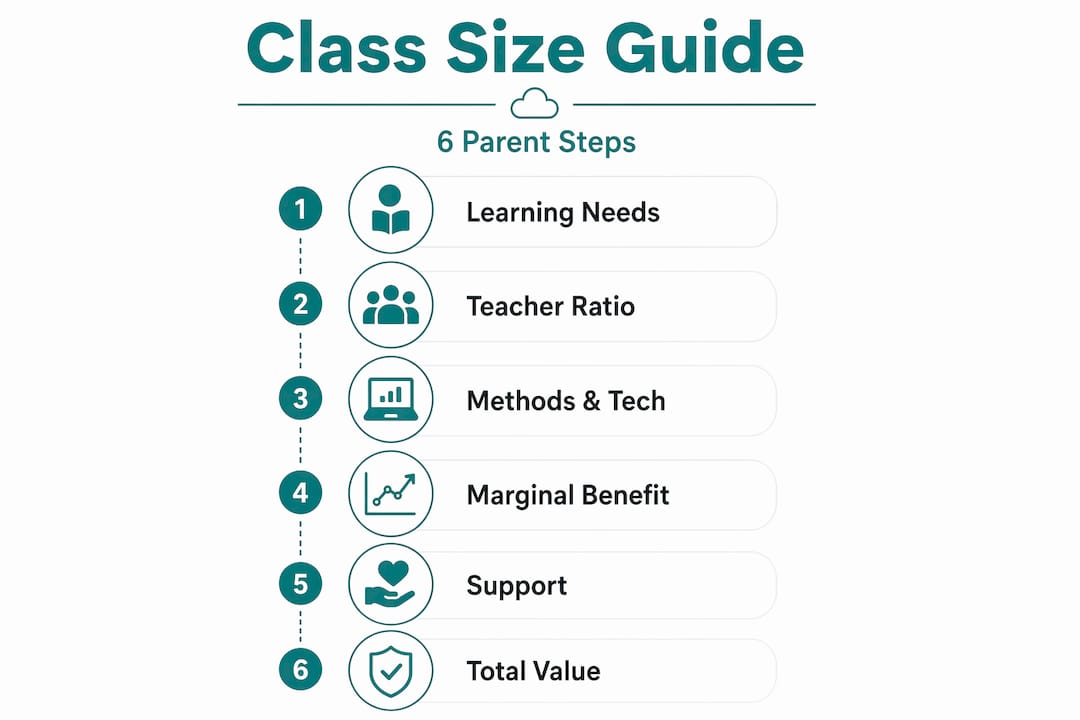
Step 2: Ask about the teacher-to-student ratio, not just class size. A class of 20 with one teacher is very different from a class of 20 with a lead teacher and a dedicated learning support aide.
Step 3: Request details on teaching methods and technology use. A school using personalized learning platforms can genuinely differentiate instruction even in a larger group, while a school without clear pedagogy will underdeliver even with 12 students.
Step 4: Apply a marginal benefit mindset. Focus on meaningful differences relevant to your child’s stage. The gap between 25 and 33 students may be significant at age 4. At age 11, it may matter far less than teacher experience or curriculum depth.
Step 5: Ask about social-emotional support structures. Does the school assign form teachers? Are counselors available? Is small-group pastoral time built into the weekly schedule? These supports often deliver more developmental benefit than raw class size.
Step 6: Evaluate total educational value, not just the number on a brochure. Use these school visits as your opportunity to navigate school choices with clear criteria and also to support your child’s learning journey at home.
Pro Tip: Bring a short list of five written questions to every school tour. Schools that welcome detailed questions and answer them with specifics are showing you something important about their culture of transparency.
Why focusing solely on class size can mislead parents seeking the best for their children
Here is the uncomfortable truth many school marketing materials will never tell you: a smaller class size is a condition, not a guarantee. It creates opportunity. Whether that opportunity is used well depends almost entirely on what happens inside the room.
We see this play out consistently. Schools that invest in smaller classes but neglect teacher development, curriculum quality, and student wellbeing programs often produce results no better than well-resourced schools with larger groups. Meanwhile, schools that pair reduced class sizes with experienced, caring teachers and structured social-emotional support frequently produce remarkable outcomes. MOE’s own approach confirms that effective education depends on tailored resource allocation, not just smaller class sizes.
There is also a real risk that chasing small numbers leads parents away from schools with better overall support systems. A school with 18 students per class but a high teacher turnover rate, inconsistent curriculum delivery, and minimal pastoral support will underperform a school with 24 students per class where teachers know every child by name, follow a strong framework, and check in on wellbeing proactively.
The best learning truly does happen when every child is seen and supported. That visibility comes from a culture of care, not from a marketing number. Parents who understand the real benefits of small class sizes in context are the ones who make the most confident, informed choices for their children.
How Astor International School supports your child’s learning in balanced class environments
After understanding how to assess class size benefits, here is how Astor International School puts these principles into practice in a way that genuinely serves children.
Astor International School in the Tanglin area of Singapore has been recognized as both the best small school and the best affordable international school in Singapore. These awards reflect something real: a deliberate commitment to keeping classes small, teaching quality high, and every child personally known to their teachers. The school’s well-designed curriculum pairs structured academic progression with the internationally respected IPC framework, building curious, confident learners. Every element of the school’s campus is designed to foster connection, creativity, and genuine learning. Small but mighty, Astor offers the kind of nurturing environment where class size and teaching quality work together, exactly as the research recommends.
Frequently asked questions
Does a smaller class size always mean better academic results for my child?
Not necessarily. Benefits at elementary level are clearest for younger children, but outcomes at every stage depend heavily on teaching quality and the support structures built around your child.
How does Singapore’s MOE handle class sizes differently from fixed-size approaches?
Singapore’s MOE allocates resources by student needs rather than applying one fixed class size, meaning students who need more support receive smaller teaching groups, while technology helps manage larger settings effectively.
What alternative approaches might be better than just reducing class sizes?
Targeted early-years small classes and small-group tutoring typically deliver better cost-benefit outcomes compared with blanket class size reductions across all year groups.
What should parents ask schools to understand the real class size benefits for their child?
Ask how the school uses its teaching resources to support children with different needs, including questions about additional supports beyond headcounts such as learning aides, social-emotional programs, and differentiated instruction methods.
Recommended


Comments