


Examples of Hands-On Learning for Educators and Parents
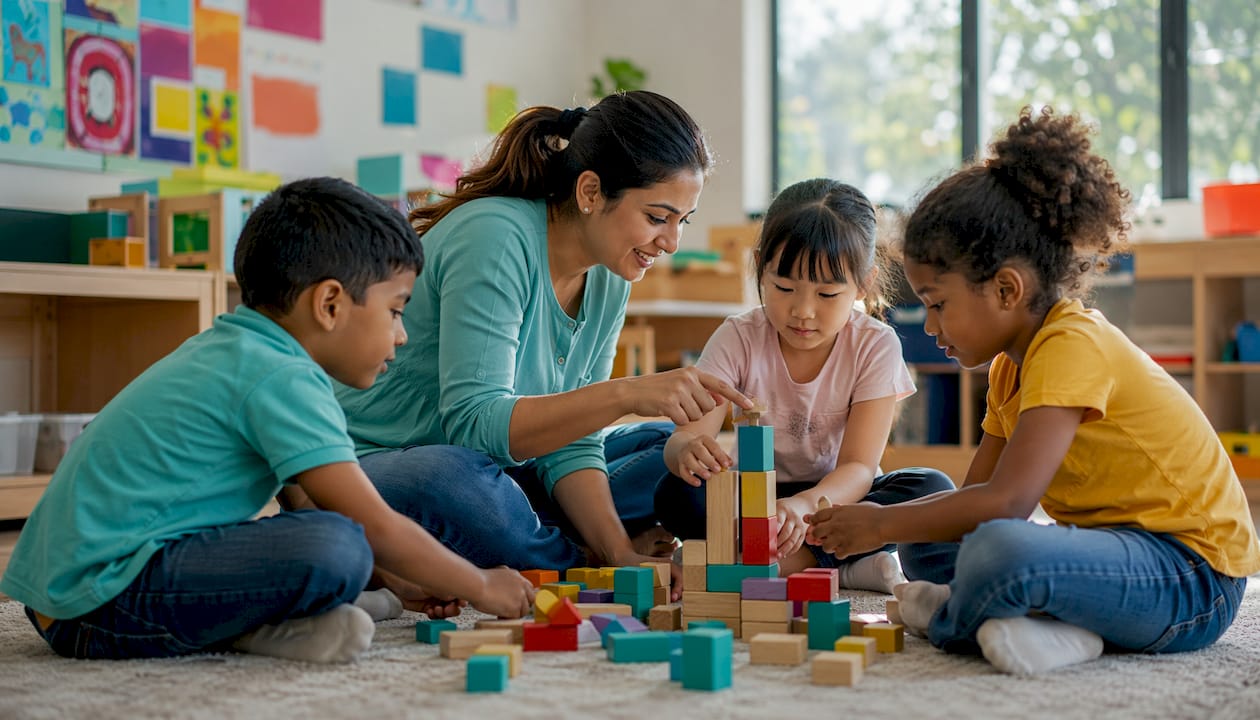
Hands-on learning puts children in direct contact with materials, problems, and real experiences so they build understanding by doing, not just listening. The most effective examples of hands-on learning span every subject and age group: letter-sound scavenger hunts for early readers, building physical models of plants or machines for science, outdoor measurement games for math, and collaborative community projects for social studies. What unites all of them is that children use their hands, their senses, and their thinking together, which is precisely why retention rates for active learning far outpace those of passive lecture formats.
This article gives you a practical, research-backed collection of activities you can use or adapt right away, along with the implementation strategies and educational theory that explain why they work so well.
Table of Contents
What does hands-on learning actually look like in practice?
The clearest way to understand active, experiential education is to see it in action across different subjects and age levels. The examples below cover early childhood through middle school and draw on tactile, visual, and movement-based modalities.
Literacy and language arts
Letter-sound scavenger hunts: children search the classroom or yard for objects that begin with a target sound, connecting phonics to physical discovery.
Story stones: painted rocks depicting characters, settings, and objects that children arrange and rearrange to build and retell narratives.
Word-building with magnetic letters or clay: forming words by hand reinforces spelling patterns more durably than copying from a board.
Readers’ theater: assigning roles and performing a short script builds fluency, comprehension, and audience awareness simultaneously.
Mathematics
Outdoor measurement walks: students use rulers, measuring tapes, or non-standard units like footsteps to measure playground features, trees, or shadows.
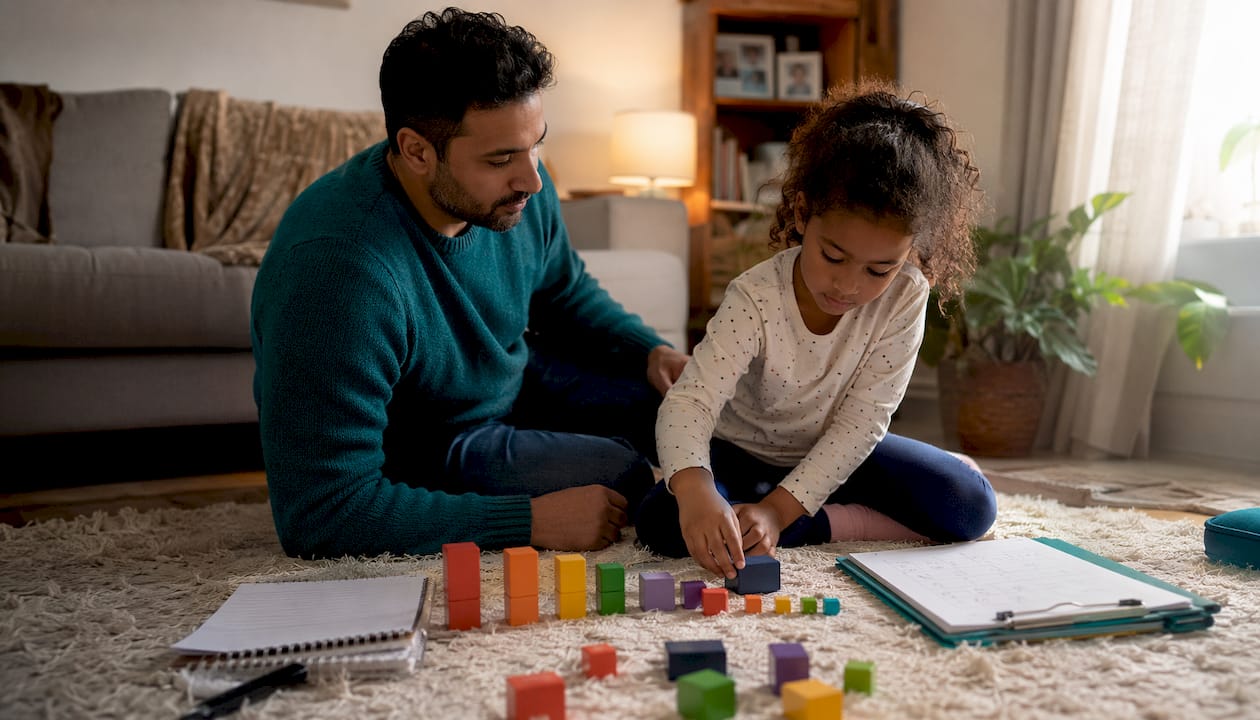
Sorting and patterning with manipulatives: counters, blocks, and colored tiles let young children explore number relationships concretely before moving to written equations.
Fraction cooking: halving or doubling a simple recipe connects fractions to a real context children care about.
Geometry with geoboards: stretching rubber bands across pegs to form shapes gives abstract polygon properties a physical form.
Science
Building physical models: constructing a model plant cell from craft materials, or assembling a simple machine from household objects, makes structure and function tangible. Hands-on science activities like these consistently deepen student curiosity and conceptual understanding.
Seed germination journals: planting seeds and recording growth over weeks teaches observation, data collection, and patience.
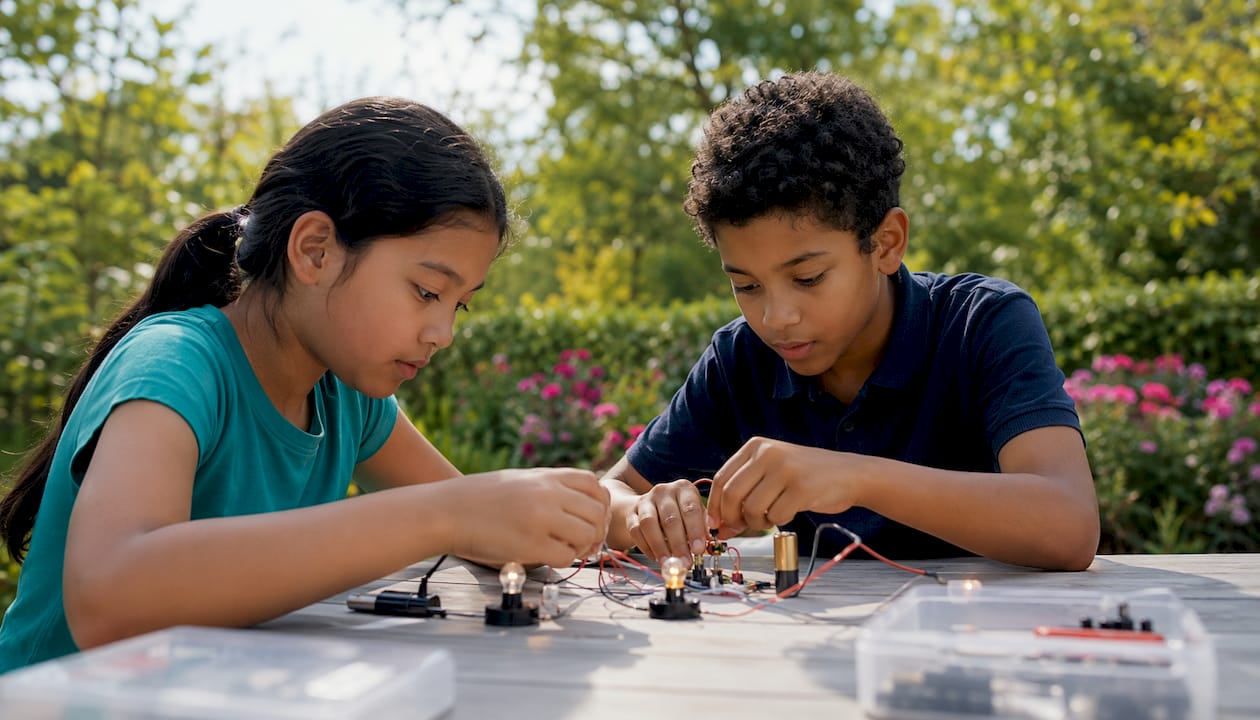
Simple circuit building: connecting batteries, wires, and bulbs to light up a circuit gives electricity concepts an immediate, satisfying result.
Aquatic or outdoor ecology studies: observing living systems in real environments produces richer understanding than textbook descriptions alone.
Social studies and humanities
Community mapping: children draw or build maps of their neighborhood, identifying landmarks, services, and routes.
Historical artifact analysis: handling replica artifacts or primary source photographs prompts questions that a textbook summary rarely does.
Collaborative mural or timeline projects: groups research a period or culture and contribute panels to a shared visual display, building both content knowledge and teamwork.
Pro Tip: For home learners, math activities at home do not require special equipment. A kitchen, a garden, or a walk around the block can supply the raw material for measurement, estimation, and data collection.
Why hands-on activities produce stronger learning outcomes
The case for active, experiential education is not just intuitive. Research consistently shows that students who engage physically with content retain and apply it more effectively than those who receive the same content passively.
Retention. Students retain about 75% of what they learn through direct practice, compared to roughly 5% from a traditional lecture. That gap is large enough to reshape how you plan a lesson.
Engagement and motivation. College students in one study rated hands-on laboratory stations as more challenging, novel, and attention-grabbing than either case studies or video lectures, with the highest levels of intrinsic motivation and behavioral engagement.
Critical thinking and problem-solving. When children build, test, and adjust, they are analyzing situations and testing hypotheses, not just absorbing facts. Those are the same cognitive moves that transfer to new problems.
Deeper conceptual understanding. Research shows that grounding education in tangible experiences creates more permanent understanding than abstract instruction alone.
Social and communication skills. Collaborative hands-on tasks require children to negotiate, explain their thinking, and listen to peers, building communication skills that no worksheet can replicate.
Sustained interest across age groups. Hands-on learning remains motivating well beyond early childhood, sustaining student engagement through secondary school and introductory college-level STEM courses.
The physical act of creating something tangible, whether a model, a map, or a working circuit, gives children a sense of ownership over their learning. That ownership is one of the strongest predictors of long-term curiosity.
How to implement hands-on learning effectively
Designing a hands-on activity is straightforward. Designing one that actually teaches the intended concept takes a little more thought. These practical steps will help you get it right.
Start with a clear learning objective. Every activity should connect to a specific skill or concept. Ask yourself: what will the child understand or be able to do after this that they could not before?
Scaffold from concrete to abstract. Begin with physical materials, move to visual representations, and then introduce symbolic or written forms. This progression, sometimes called the concrete-pictorial-abstract sequence, prevents children from memorizing procedures without understanding them.
Build in guided reflection. Reflection after hands-on activities is what converts physical experience into conceptual understanding. Without it, an activity can become busy work. Ask children to explain what they noticed, what surprised them, and what they would change.
Differentiate for diverse learners. Offer materials in different sizes, textures, or complexity levels. Pair verbal instructions with visual cues. Tactile learning is particularly supportive for children with speech, behavioral, or linguistic challenges because it provides a physical anchor for abstract ideas.
Keep groups small. Smaller groups mean every child handles the materials and contributes to the discussion, rather than watching one confident peer do all the work.
Connect to real contexts. Activities feel meaningful when children can see why they matter. Measuring ingredients for a recipe, building a shelter for a toy animal, or writing a review of a book they want others to read all tie skills to purposes children recognize.
Pro Tip: After any hands-on activity, try three reflective questions: “What did you do?”, “What did you notice?”, and “What does that tell you?” These three prompts move children from recalling actions to constructing meaning, which is where the real learning happens.
The educational theories that explain why this approach works
The value of learning by doing has deep roots in educational research. Three theorists in particular shaped how we understand why physical engagement supports cognitive development.
John Dewey argued in the early twentieth century that genuine education arises from experience, not transmission. For Dewey, a child who plants a seed and observes its growth learns biology more authentically than one who reads a description of germination.
Jean Piaget showed that children construct knowledge through interaction with their environment. His stages of cognitive development place concrete operational thinking, the ability to reason about physical objects, before abstract reasoning. Hands-on activities meet children where they are developmentally.
Lev Vygotsky added the social dimension. Learning happens most effectively within a child’s zone of proximal development, the space between what they can do alone and what they can do with support. Collaborative hands-on tasks, guided by a teacher or a more capable peer, sit precisely in that zone.
Beyond these three, Maria Montessori’s method offers a practical illustration of the same principles. Montessori materials isolate single variables using physical objects designed for self-correction, so children discover errors through the material itself rather than through adult correction. That self-directed discovery builds both competence and confidence.
What separates hands-on learning from passive or visual-only instruction is the learner’s agency. Watching a demonstration activates recognition. Doing the task yourself activates construction. The bridge between concrete manipulation and abstract reasoning is what hands-on teaching methods are specifically designed to cross.
What the research says about hands-on learning across learner types
The evidence base for experiential education has grown considerably, and it reveals some nuances worth understanding before you design your next activity.
This finding from self-directed activity research points to something educators often discover on their own: a child who follows a rigid step-by-step protocol learns less than one who has genuine decisions to make during the activity.
Guided versus unguided learning
Completely unguided discovery can leave children without the conceptual framework to make sense of what they experienced. Structured guidance and explicit instruction sometimes produce better outcomes by directing attention to the most important evidence. The most effective approach combines open-ended exploration with well-timed teacher questions that focus children’s attention without removing their agency.
Diverse learners
Children learning English as a second language, or those with learning differences, benefit especially from tactile and physical tasks. When language is a barrier, a physical model or a hands-on experiment gives the concept a form that words alone cannot. Hands-on learning supports ESL students and those with behavioral or learning challenges by providing tangible anchors that reduce the cognitive load of abstract instruction.
Real-environment learning
Children who study aquatic ecology in an actual outdoor environment outperform peers taught the same content in a traditional classroom. The real environment adds sensory richness, unpredictability, and authentic purpose that no simulation fully replicates.
Learning context | Key benefit | Best suited for |
Physical model building | Connects structure to function | Science, engineering concepts |
Outdoor real-environment study | Adds sensory richness and authentic purpose | Ecology, geography, math measurement |
Collaborative project work | Builds communication and critical thinking | Social studies, literacy, STEM |
Manipulative-based math | Grounds abstract operations in concrete form | Early numeracy, fractions, geometry |
Reflective hands-on tasks | Converts experience into conceptual understanding | All subjects, all ages |
Minds-on matters as much as hands-on. Research from EDC makes the point clearly: students need metacognitive tasks alongside physical ones. Asking children to predict outcomes before an activity and explain their reasoning afterward is what turns a lively lesson into lasting understanding. The hands engage the body; the reflection engages the mind.
For project-based learning specifically, this combination of doing and reflecting is what distinguishes a meaningful project from a craft activity. When children investigate a real question, make decisions, and present their findings to an audience, every part of the process builds both knowledge and confidence.
Hands-on learning at Astor International School
At Astor International School in Singapore, hands-on and experiential learning are woven into the curriculum by design, not as occasional extras. Astor’s International Primary Curriculum is built around thematic, inquiry-led units that give children ages 5–12 the chance to investigate, build, experiment, and reflect across subjects. Small class sizes mean every child gets their hands on the materials, every voice gets heard during reflection, and every teacher can respond to what individual children need in the moment.
Astor has been recognized as both the best small school and the best affordable international school in Singapore, and that recognition reflects something real: a learning environment where curiosity is taken seriously and children are genuinely seen. The preschool at Holland Village adds outdoor playgrounds and a mix of classroom and open-air learning for the youngest learners, giving even the smallest children the physical, sensory experiences that research consistently links to stronger development.
If you are looking for a school where your child will spend their days doing, making, and discovering rather than sitting and listening, explore Astor’s curriculum to see how experiential learning shapes every year of their education.
Key Takeaways
Hands-on learning produces deeper understanding and stronger retention than passive instruction because it combines physical engagement, guided reflection, and learner agency across every subject and age group.
Point | Details |
Retention advantage | Research shows students retain about 75% of what they learn through direct practice, versus roughly 5% from passive lecture. |
Reflection is non-negotiable | Guided reflection after every activity converts physical experience into lasting conceptual understanding. |
Works for diverse learners | Tactile and physical tasks support ESL students and children with learning differences by anchoring abstract ideas. |
Theory backs practice | Dewey, Piaget, and Vygotsky each showed that children construct knowledge through active, social engagement with their environment. |
Astor’s approach | Astor International School embeds hands-on, inquiry-led learning into its IPC curriculum for children ages 5–12 in small, nurturing classes. |
Recommended
Comments