

Global Citizenship Education: A Guide for Parents
Global citizenship education (GCED) is defined by UNESCO as a transformative pedagogical approach that equips learners with the knowledge, skills, values, and attitudes needed for democratic participation, global cooperation, and sustainable development. GCED sits at the heart of SDG target 4.7, which calls on all nations to promote peaceful, inclusive, and sustainable societies through education. For parents and educators in Singapore and beyond, understanding what global citizenship education means is the first step toward raising children who are confident, empathetic, and ready for an interconnected world. This guide explains the core pillars, real benefits, and practical ways to bring GCED to life at home and in school.
What is global citizenship education, and why does it matter?
Global citizenship education is not a single subject on a timetable. It is a cross-curricular framework woven across disciplines to build critical thinking, cultural awareness, and social responsibility in learners of all ages. That distinction matters. A child does not become a global citizen by studying one unit on climate change. The mindset grows through consistent, connected learning experiences across geography, literature, history, science, and the arts.
UNESCO formally linked GCED to the Sustainable Development Goals in 2015, making it a global education priority. That alignment signals to parents and educators that this is not a passing trend. It is a recognized framework backed by international consensus on what children need to thrive in the 21st century.
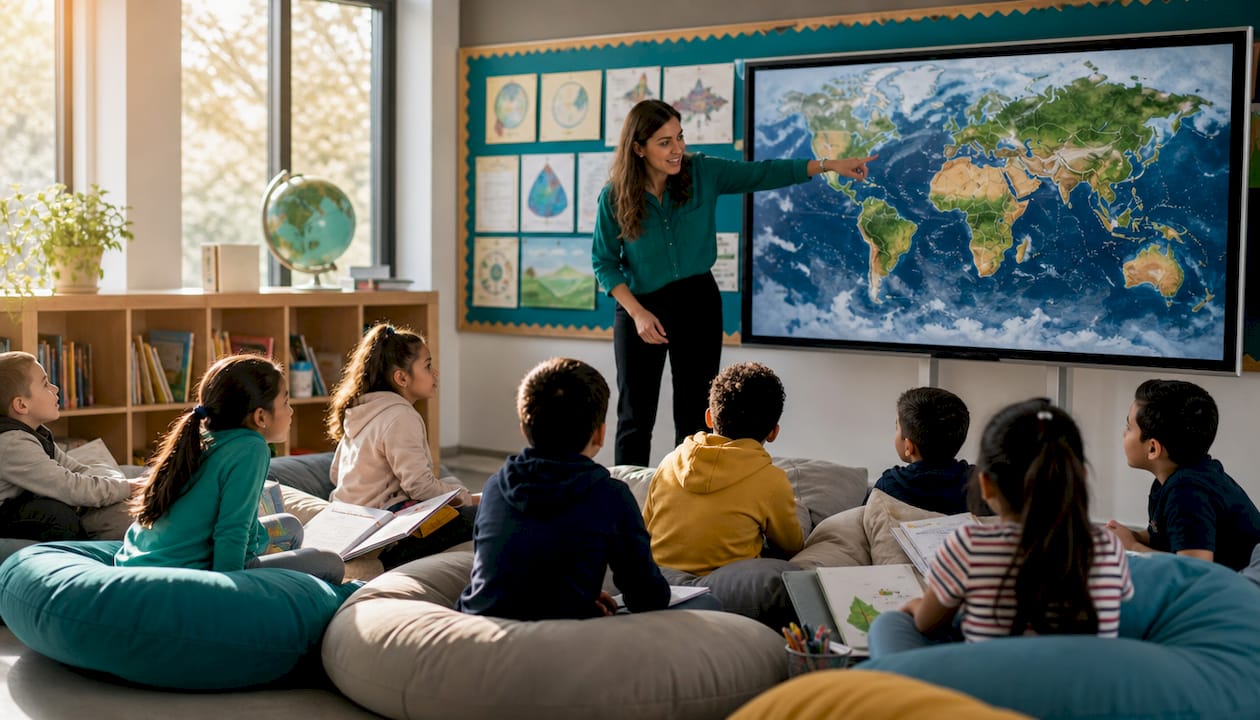
The goals of global citizenship education center on three broad outcomes: cognitive (understanding global issues), socio-emotional (developing empathy and respect), and behavioral (taking responsible action). Children who develop all three dimensions are better prepared to collaborate across cultures, resolve conflicts peacefully, and contribute meaningfully to their communities.
What are the key pillars of global citizenship education?
GCED rests on four interconnected pillars that together shape a well-rounded global citizen.
Critical thinking. Children learn to question assumptions, evaluate evidence, and form reasoned opinions about complex issues like inequality, climate change, and human rights.
Cultural awareness. Learners develop respect for different traditions, languages, and perspectives, recognizing that diversity is a strength rather than a barrier.
Empathy. Students practice perspective-taking, understanding how others experience the world and why that understanding matters for cooperation.
Social responsibility. Children move from awareness to action, engaging in community projects, ethical decision-making, and behaviors that reflect care for others.
These pillars are not taught in isolation. They are embedded across subjects. A history lesson on colonialism builds critical thinking and empathy simultaneously. A science project on water scarcity connects local action to global interdependence. Transformative education places learners as active protagonists rather than passive recipients of information. That shift in role is what makes GCED genuinely different from traditional civic education.
Pro Tip: Ask your child’s teacher how global themes connect across subjects this term. A simple conversation can reveal whether GCED is being integrated meaningfully or treated as a one-off lesson.
What are the benefits of global citizenship education for children?
GCED improves learner engagement, motivation, and the development of soft skills such as empathy, critical thinking, and conflict resolution. Those skills are not just good for character. They are increasingly recognized as career-critical in diverse global workplaces.
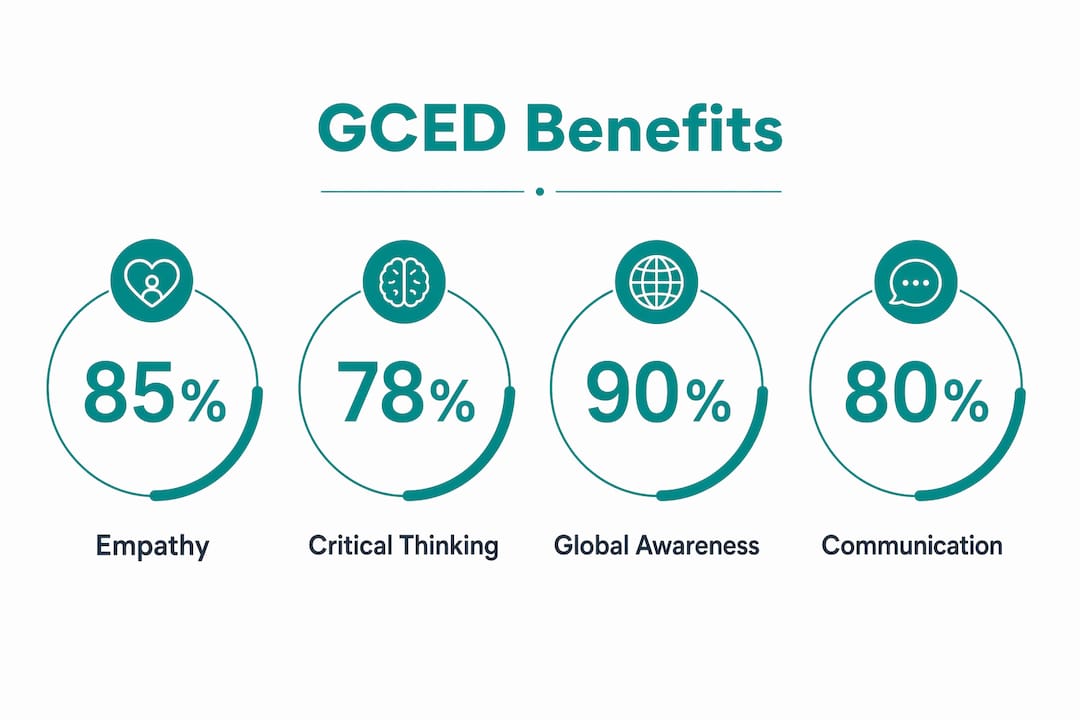
Children who receive consistent GCED develop stronger social-emotional competencies. They learn to listen before reacting, to seek common ground in disagreements, and to consider how their choices affect people they may never meet. These habits form early and stay for life.
The benefits of global citizenship extend beyond the classroom in measurable ways:
Higher motivation. When learning connects to real-world issues children care about, engagement rises naturally.
Better conflict resolution. Students who practice structured dialogue and perspective-taking handle peer disagreements more constructively.
Stronger teamwork. Collaborative projects that mirror real global challenges build cooperation skills that employers and universities value.
Active community involvement. Children who understand global interdependence are more likely to volunteer, advocate, and participate in civic life as they grow older.
A child who graduates with these competencies is not just academically prepared. They are socially and ethically ready for a world that demands both.
How is global citizenship education implemented in schools?
Effective implementation treats GCED as a flexible framework rather than a fixed syllabus. Schools that do this well integrate global themes into existing subjects rather than creating a separate “global citizenship” class that competes for timetable space.
Here is how thoughtful schools approach it:
Map global themes across subjects. Teachers identify natural entry points in geography, literature, science, and the arts where global issues connect to existing content.
Shift to student-centered pedagogy. Co-creating knowledge with students, rather than delivering it to them, builds the agency that GCED requires.
Use structured practice spaces. The most effective GCED programs give students structured opportunities to practice conflict resolution, teamwork, and ethical reasoning locally before applying those skills to global contexts.
Invest in teacher development. Professional learning communities, coaching, and access to frameworks like the Global Citizenship Circle help teachers move from theory to practice with confidence.
Celebrate international days and diverse voices. Events like UNESCO’s International Day of Peace or World Environment Day give students concrete moments to connect learning to action.
The International Primary Curriculum (IPC) is one example of a structured program that builds international mindedness across subjects for primary-aged learners. It gives teachers a clear framework while preserving the flexibility to connect global themes to local contexts.
Pro Tip: If you are an educator, start small. Choose one unit per term and ask: “Where can students practice a global citizenship skill here?” Small, consistent integration beats a single annual project every time.
What challenges and misconceptions do parents and educators face?
The most common misconception about global citizenship is that it requires travel, a foreign passport, or special privilege. Global citizenship is a mindset and a set of daily actions, not a status tied to geography or wealth. A child in Singapore can be a deeply engaged global citizen without ever leaving the country.
Parents and educators also face these practical challenges:
Teacher readiness gaps. 1 in 4 teachers globally feel unprepared to teach sustainable development and global citizenship themes. That gap is not a personal failing. It reflects a system-level need for better professional development and clearer frameworks.
The awareness-only trap. Many schools deliver information about global issues without building the skills to respond to them. Curricula must move beyond awareness to include agency-building activities like civic participation and team problem-solving.
Balancing local and global. Children need to see how global values connect to their own neighborhoods and daily lives. Abstract global concepts without local anchors rarely stick.
Resistance to change. Some educators and parents worry that GCED introduces political content or undermines local cultural values. In practice, well-designed GCED programs strengthen cultural identity while building respect for others.
Addressing these challenges starts with honest conversations between parents, teachers, and school leaders about what GCED looks like in practice, not just in policy.
How can parents and educators support children in becoming global citizens?
Supporting global citizenship does not require a curriculum overhaul. Small, consistent actions at home and in school build the competencies that matter most.
Talk about global issues at the dinner table. Discuss news stories, ask your child what they think, and model respectful disagreement. Critical thinking grows through conversation.
Expose children to diverse stories and perspectives. Books, films, and art from different cultures build cultural awareness naturally. International mindedness through art is one way schools make this tangible for young learners.
Connect community service to global themes. A food drive is not just local generosity. It connects to global food security. Naming that connection helps children see themselves as part of something larger.
Encourage debate and structured dialogue. Skills like argumentation and active listening are central to global citizenship. Debate programs in primary schools build exactly these competencies in age-appropriate ways.
Model inclusive behavior. Children learn from watching adults. When you treat people from different backgrounds with genuine curiosity and respect, you teach global values more powerfully than any lesson plan.
At home | At school |
Discuss global news together | Integrate global themes across subjects |
Read books from diverse cultures | Use structured dialogue and debate |
Connect service projects to global issues | Celebrate international awareness days |
Model respectful disagreement | Invest in teacher professional development |
The most effective approach combines home and school reinforcement. When children hear consistent messages about empathy, responsibility, and respect in both environments, those values take root.
Key Takeaways
Global citizenship education is a cross-curricular framework that builds the knowledge, skills, values, and behaviors children need to participate responsibly in an interconnected world.
Point | Details |
GCED is a UNESCO-endorsed framework | It supports SDG target 4.7 and focuses on knowledge, skills, values, and active participation. |
Four core pillars drive GCED | Critical thinking, cultural awareness, empathy, and social responsibility work together across subjects. |
Benefits go beyond academics | GCED builds soft skills like conflict resolution and teamwork that prepare children for global workplaces. |
Implementation requires a mindset shift | Schools must move from awareness-only delivery to student-centered, agency-building learning experiences. |
Parents play a critical role | Consistent reinforcement at home through conversation, diverse stories, and modeled behavior deepens GCED outcomes. |
Why I believe GCED is the most undervalued part of a child’s education
Most education conversations focus on literacy, numeracy, and exam results. Those things matter. But the children I have seen thrive in diverse, complex environments are the ones who learned early how to listen, adapt, and act with integrity. That is what global citizenship education actually produces.
What strikes me most is how often GCED is treated as an add-on rather than a foundation. Schools that embed it deeply, where it shows up in science class and in how conflicts are handled on the playground, produce students who are genuinely different. They are more curious, more resilient, and more willing to take responsibility for outcomes beyond themselves.
The teacher readiness gap is real, and it deserves more attention than it gets. Asking educators to teach global citizenship without proper training and frameworks is like asking someone to coach a sport they have never played. The solution is not to lower expectations. It is to invest in the professional development that makes confident, effective GCED teaching possible.
My strongest advice for parents: do not wait for the school to lead. Ask questions, start conversations at home, and look for schools that treat international mindedness as a daily practice, not an annual event.
— Elena
Global citizenship education at Astor International School
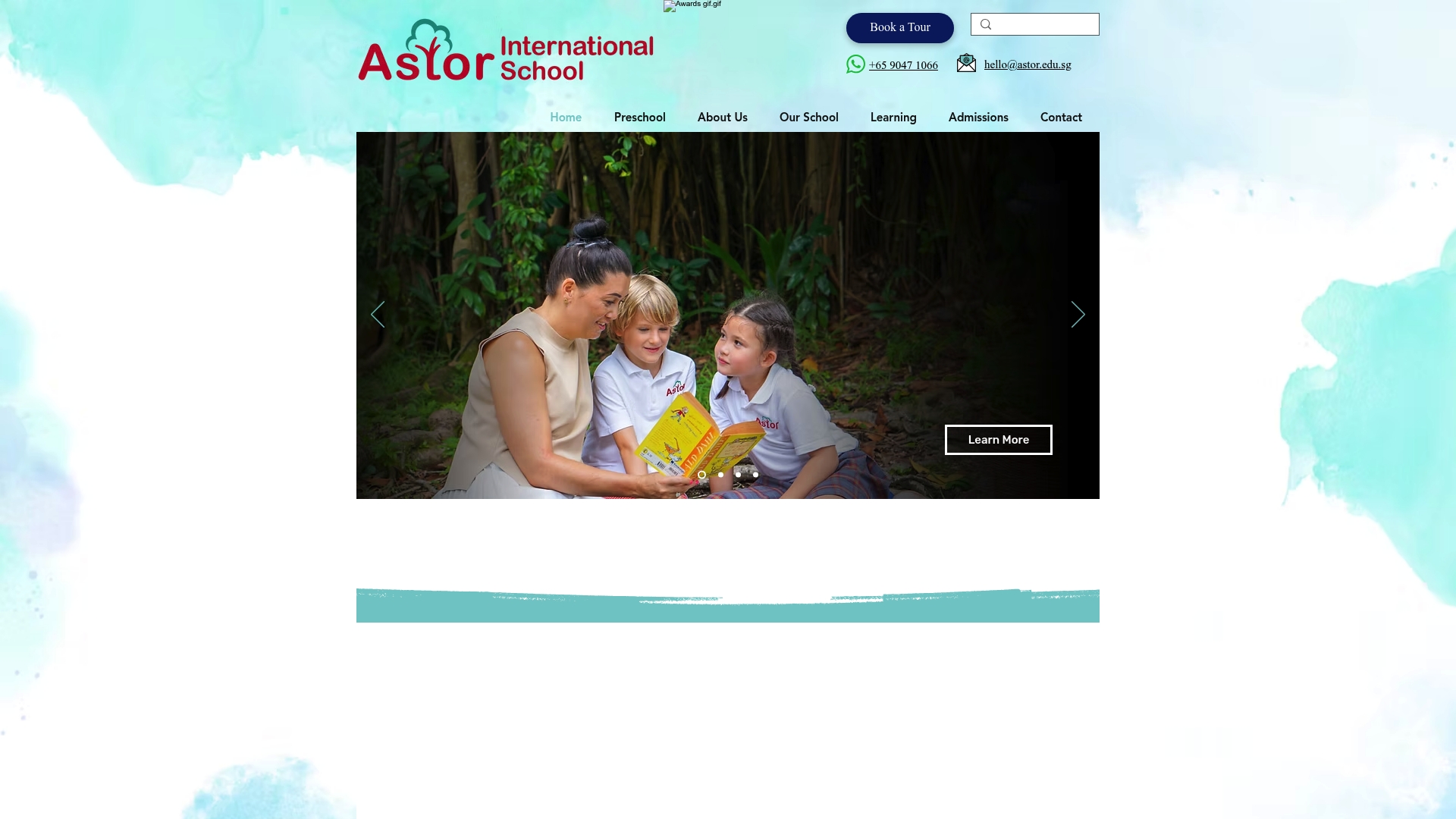
Edu, through Astor International School in Singapore’s Tanglin area, brings global citizenship education to life through the International Primary Curriculum. The IPC is a structured, internationally recognized program that weaves global themes, cultural awareness, and critical thinking across every subject for children aged 5–12. Small class sizes mean every child is genuinely seen and supported, and teachers have the space to build the kind of meaningful, student-centered learning that GCED requires. Astor International School has been recognized as both the best small school and the best affordable international school in Singapore. If you are looking for a school where global citizenship is a daily practice, not a policy statement, explore what Astor offers at astor.edu.sg.
FAQ
What is global citizenship education in simple terms?
Global citizenship education is a teaching approach that helps children understand global issues, develop empathy and critical thinking, and take responsible action in their communities. UNESCO defines it as a framework for building knowledge, skills, values, and attitudes for peaceful and sustainable societies.
Does global citizenship education require travel or living abroad?
No. Global citizenship is a mindset and a set of daily behaviors, not a status tied to travel or nationality. Children can develop strong global citizenship competencies entirely within their local school and community.
What age should global citizenship education start?
GCED can begin in early childhood and is most effective when introduced consistently from preschool through primary school. Early exposure to empathy, cultural awareness, and social responsibility builds habits that strengthen over time.
How do schools integrate global citizenship into the curriculum?
Schools integrate GCED by connecting global themes to existing subjects like geography, history, literature, and science rather than teaching it as a standalone class. Student-centered projects, structured dialogue, and community service activities are common methods.
What is the biggest barrier to global citizenship education in schools?
Teacher readiness is the most significant barrier. 1 in 4 teachers globally report feeling unprepared to teach global citizenship and sustainable development themes, which points to a clear need for better professional development and practical frameworks.
Recommended

Comments