

Holistic education guide for expat parents in Singapore
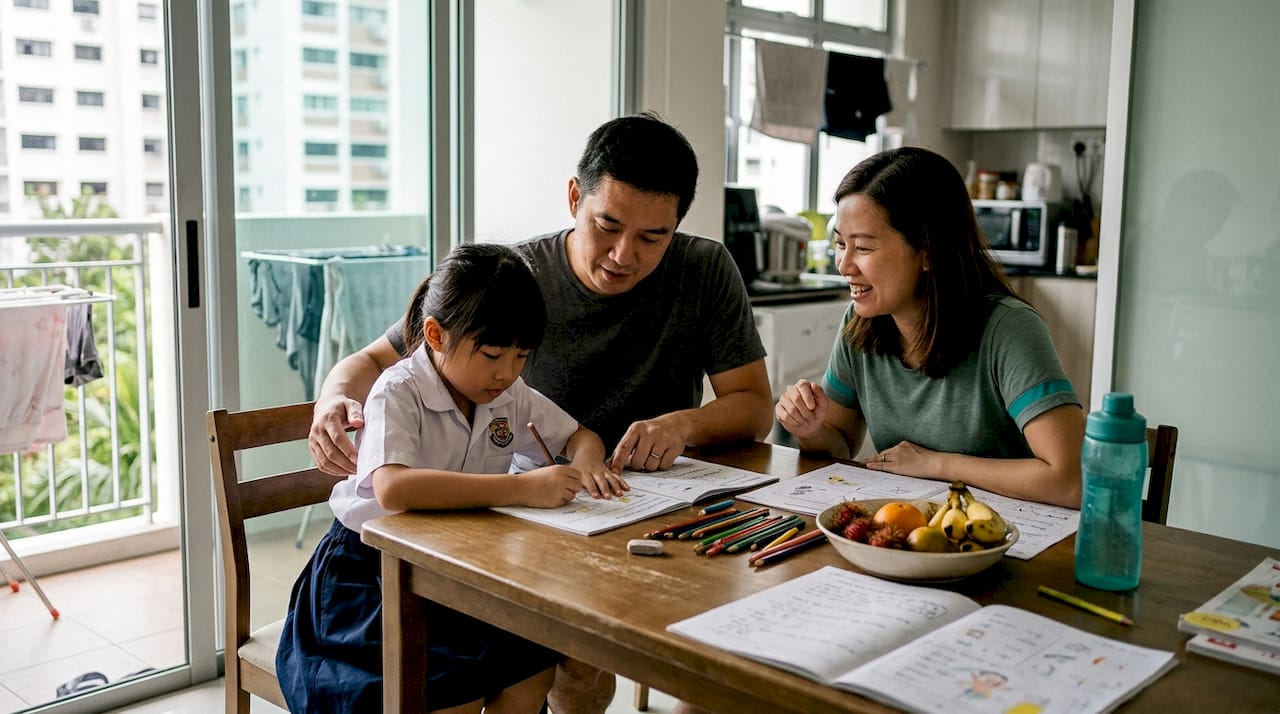
Raising children abroad comes with a unique kind of pressure. In Singapore, where academic results are celebrated and competitive entry into top schools is the norm, many expat parents find themselves wondering whether chasing grades is really enough. The good news is that a growing number of international schools are offering something more meaningful. Holistic education develops the whole person, nurturing intellectual, emotional, social, physical, creative, and spiritual growth alongside academic skills. This guide walks you through what holistic education actually means, which methodologies matter most, and how to make a confident, informed choice for your child in Singapore.
Table of Contents
Key Takeaways
Point | Details |
Whole-child development | Holistic education nurtures academic, emotional, social, and creative growth for expat children. |
Evidence-backed methods | Research supports Montessori, Waldorf, and IB as effective holistic approaches. |
Clear benefits in Singapore | Holistic schooling can boost math, resilience, and engagement alongside traditional academics. |
Comparison reveals trade-offs | Holistic and traditional methods each offer unique strengths and challenges in Singapore’s environment. |
Make informed choices | Parents should prioritize recognized programs and understand both short-term and long-term impacts. |
What is holistic education?
Holistic education is not a single teaching method. It is a philosophy. At its core, it believes that children learn best when they feel connected, valued, and genuinely engaged, not just when they are tested and ranked. Rather than focusing exclusively on academic output, holistic education treats each child as a whole person with emotional needs, creative instincts, and social bonds that matter just as much as reading scores.
Holistic education aims to develop the whole person, connecting learning to community, nature, and values. That means a child is not simply taught math and language. They are also guided to understand their emotions, collaborate with peers, appreciate nature, and develop a sense of purpose. For expat families moving between countries and cultures, this kind of grounding can be especially powerful.
The six core dimensions holistic education addresses are:
Intellectual growth: Critical thinking, curiosity, and a love of learning
Emotional development: Self-awareness, empathy, and managing feelings
Social skills: Communication, teamwork, and respect for others
Physical well-being: Movement, health, and body awareness
Creative expression: Art, music, storytelling, and imaginative play
Spiritual awareness: A sense of meaning, values, and connection to something larger
For expat children especially, the emotional and social dimensions can make a real difference. Moving to a new country, making new friends, and adapting to a different culture is a lot for a young child to process. Schools that prioritize emotional intelligence alongside academics give these children a stronger foundation.
“The best learning happens when every child is truly seen and supported, not just academically, but as a whole human being.”
At Astor, our mission and values are built around exactly this belief. We also share regular insights on nurturing children in international settings through our school blog, which many expat parents find helpful when navigating education choices in Singapore.
Major holistic education methodologies
Once you understand the philosophy behind holistic education, the next step is knowing which teaching approaches bring it to life. There are four major methodologies that expat parents in Singapore are likely to encounter.
Core holistic methodologies include experiential, self-guided, and interdisciplinary learning, with practical roots in Montessori, Waldorf, Reggio Emilia, and IB frameworks. Each has a distinct personality, and the right fit depends on your child’s age, temperament, and your family’s values.
Methodology | Key features | Best for |
Montessori | Mixed-age groups, self-directed, hands-on materials | Independent, curious learners aged 2 to 12 |
Waldorf | Nature, imagination, delayed formal academics | Creative children, early childhood focus |
Reggio Emilia | Projects, environment as teacher, collaboration | Preschool and early primary years |
IB/IPC | Inquiry-based, globally minded, structured | Primary and secondary international students |
Montessori classrooms are calm, purposeful spaces where children choose their own activities from a carefully prepared set of materials. Mixed-age groupings encourage mentorship and cooperation. Children move at their own pace, which suits expat kids who may be ahead in some areas and still catching up in others after relocating.
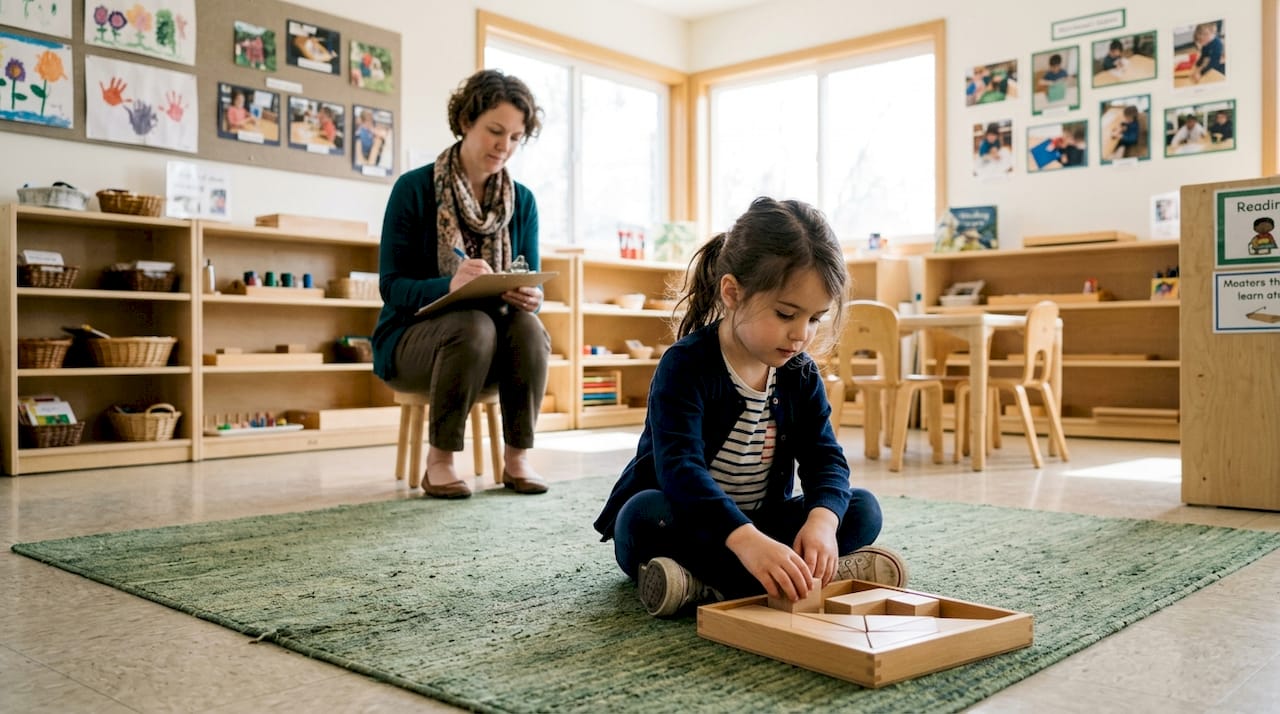
Waldorf education delays formal reading and writing until around age seven, prioritizing imaginative play, storytelling, and nature. This approach builds creativity and emotional depth, though it can feel at odds with Singapore’s academically driven culture.
Reggio Emilia treats the classroom environment itself as a third teacher. Children work on long-term projects inspired by their own questions and interests. It is collaborative, visual, and deeply child-centered, making it especially effective in preschool settings.
IB and IPC frameworks offer structured inquiry-based learning that is globally recognized. The International Primary Curriculum, or IPC, is particularly well-suited to expat children because it is designed for internationally mobile families and emphasizes both academic rigor and personal development. You can explore our IPC curriculum overview to see how this works in practice, alongside our full curriculum details.
Pro Tip: If your child has moved schools more than once, look for a methodology with a clear structure like IPC or IB. Consistency matters more than novelty when children are still building their sense of belonging.
Evidence-backed benefits of holistic education
Parents naturally want to know: does holistic education actually work? The short answer is yes, and the evidence is encouraging.
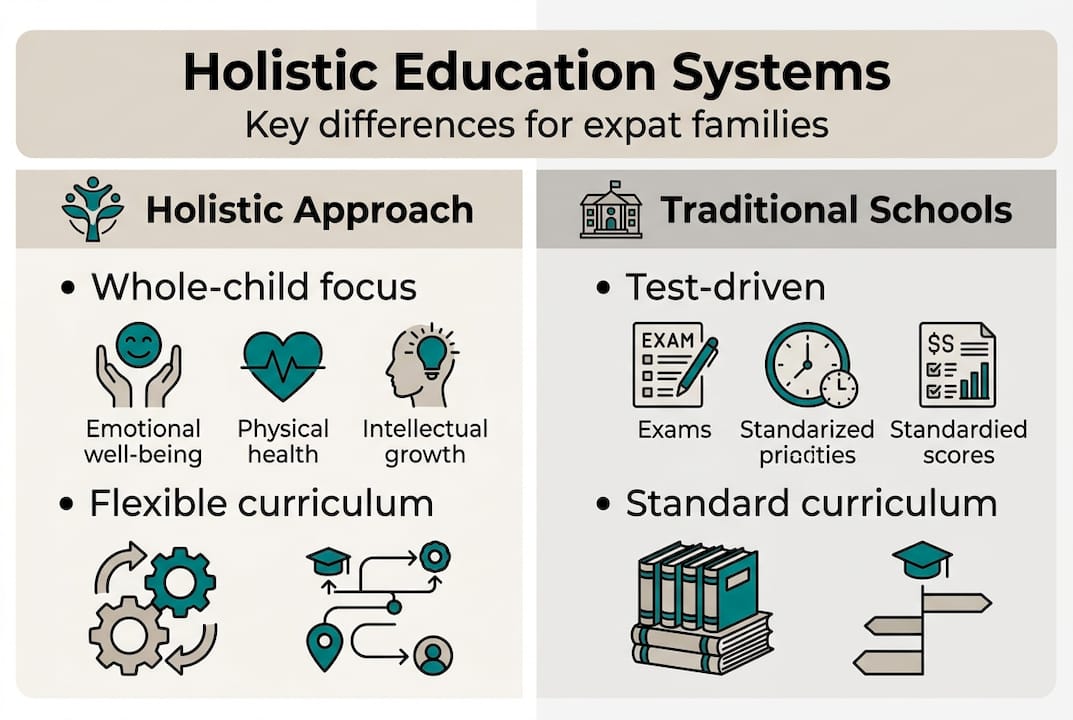
SEL integration improves well-being, engagement, and resilience; Montessori shows medium-large gains in math problem-solving; active learning boosts test scores. These are not small findings. They represent meaningful improvements in how children feel about school and how they perform in it.
Here is a summary of what the research shows:
Social-emotional learning (SEL): Children in SEL-integrated programs show stronger emotional regulation, better peer relationships, and higher engagement in class
Math skills: Montessori students demonstrated medium to large gains in math problem-solving compared to peers in traditional settings
Resilience and motivation: Holistic approaches build intrinsic motivation, meaning children want to learn rather than simply performing for grades
Reading: Gains in reading were observed but tended to fade over time, suggesting holistic schools may need to supplement literacy instruction more deliberately
For families at the Astor International School, these findings align with what we see in our own classrooms. Small class sizes mean teachers can apply active, inquiry-based strategies consistently, which research links directly to stronger academic outcomes.
It is also worth noting what holistic education does for children emotionally. Expat children often carry the invisible weight of transition, missing old friends, adjusting to new routines, and sometimes learning in a second or third language. Schools that build emotional resilience into everyday learning help these children thrive rather than just cope.
Comparing holistic and traditional education systems in Singapore
Singapore has one of the most respected education systems in the world. Its traditional schools are disciplined, structured, and academically rigorous. For many local families, this system delivers exactly what they want. But for expat families, particularly those who have experienced different schooling cultures, the contrast can feel sharp.
Personalized, experiential, and collaborative methods in holistic education contrast with standardized, teacher-led traditional approaches. Waldorf’s delayed academics, for example, can challenge children re-entering Singapore’s competitive norms if they transition back to a traditional school later.
Here is how the two approaches compare across key areas:
Learning style: Holistic education is child-centered and inquiry-driven; traditional schooling is teacher-led and curriculum-driven
Assessment: Holistic schools often use portfolios, observation, and projects; traditional schools rely heavily on standardized tests
Social development: Holistic programs build collaboration and emotional skills as part of daily learning; traditional schools tend to treat these as secondary to academics
Pace: Holistic education allows children to progress at their own speed; traditional systems move the whole class together
“Choosing a school is not just about academics. It is about finding an environment where your child feels safe enough to take risks and curious enough to keep asking questions.”
For expat parents, the key question is not which system is better in theory. It is which environment will help your specific child feel confident, engaged, and ready to grow. Reviewing a school’s learning approach before enrolling gives you a clearer picture of how philosophy translates into daily classroom life. You can also browse holistic preschool options in Singapore to compare what is available across the island.
One criticism of holistic education worth acknowledging is that not all programs are equally rigorous. Some schools use the language of holistic education without the substance. This is why choosing an established school with a clear, documented curriculum matters so much.
A realistic perspective: What expat families need to know
Here is something that does not get said often enough: holistic education is not a magic solution, and not every school that calls itself holistic actually delivers on that promise. We have seen programs that use beautiful language about child-centered learning while still running fairly traditional classrooms underneath. The label matters less than the practice.
For expat families in Singapore, the real challenge is finding a school that balances genuine holistic values with enough academic structure to keep your child’s options open. A child who spends their early years in a purely play-based environment may struggle if they later need to transition into a more traditional secondary school.
The most effective holistic schools are the ones that integrate emotional and creative development into a clear academic framework, not instead of one. Look at real curriculum examples before you decide. Ask schools how they track progress, how they support children who are struggling, and how their graduates perform when they move on. Those answers will tell you far more than any philosophy statement.
Small schools with small class sizes tend to deliver holistic principles more authentically. When a teacher knows every child by name and by nature, personalized learning stops being a buzzword and becomes a daily reality.
Explore holistic education options with Astor International School
If you are looking for a school in Singapore that genuinely lives its holistic values, Astor International School in Tanglin is worth exploring. Awarded best small school and best affordable international school in Singapore, we offer a nurturing environment for children aged 5 to 12 with small class sizes and an IPC-based curriculum designed for internationally mobile families.
Our IPC program weaves inquiry, creativity, and emotional development into every subject. You can explore our full curriculum online or join us at an open house to see our classrooms and meet our teachers in person. We would love to show you what meaningful, personalized learning looks like for your child.
Frequently asked questions
Is holistic education available for preschool and primary levels in Singapore?
Yes, several international schools offer holistic approaches, including Montessori, Waldorf, Reggio Emilia, and IPC and IB frameworks for both preschool and primary levels.
Does holistic education support academic achievement as well as emotional health?
Empirical studies show holistic education boosts math and well-being meaningfully, though reading gains may require additional support over time.
How does holistic education differ from traditional schooling?
Holistic education is child-centered, experiential, and collaborative, while traditional schooling emphasizes standardized, teacher-led academic delivery with uniform pacing.
Are holistic approaches recognized by mainstream Singapore schools?
Some international schools integrate holistic principles fully, but mainstream local schools remain largely traditional. Families can explore international preschool options across Singapore to find programs that align with holistic values.
Recommended
Comments