


Top 3 International Schools Database.com Alternatives 2026
- sasha2644
- Jun 13
- 10 min read
Finding an international preschool or primary school that provides personal attention and flexible learning options can be time-consuming for families relocating to Singapore. Many directories and listing platforms give little detail on actual classroom size, language support, and curriculum structure, making it difficult to compare meaningful differences. This comparison reviews three alternatives to International Schools Database.com so you can decide which school offers the best teaching style, curriculum, and support for your child’s needs.
Table of contents
Astor international school
At a glance
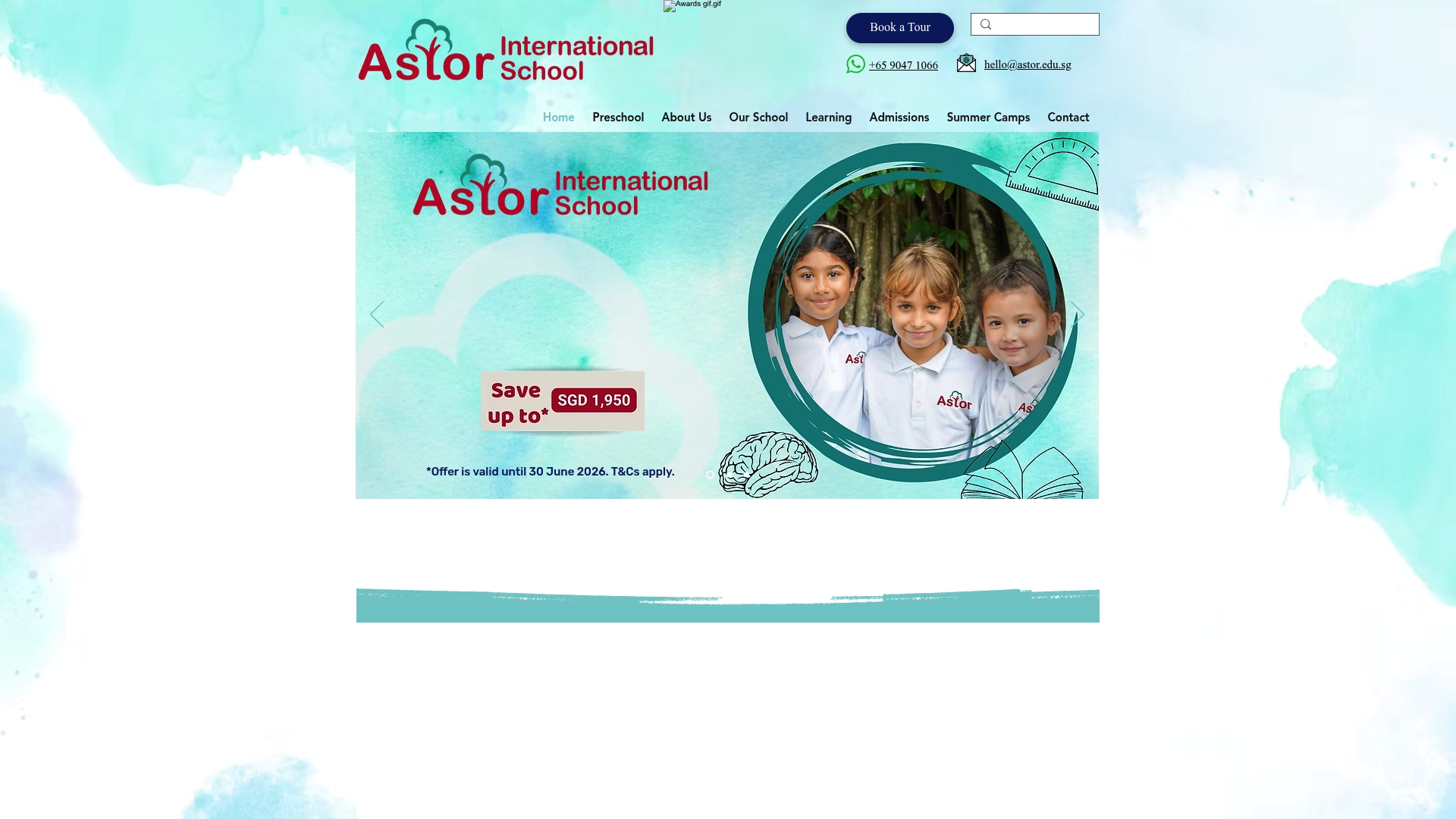
Astor reports small class sizes with a maximum of 20 students per class and an emphasis on inquiry based, child centered learning for ages 5 to 12. The school advertises awards for being a top small and affordable international school. Established in 2019, Astor positions itself as a practical primary option for expatriate families in Singapore.
Core features
Astor’s main offerings are clear and focused:
Max 20 students per class which supports personalized attention and close teacher relationships.
Inquiry based, child centered pedagogy that emphasizes curiosity and meaningful projects.
A diverse student body with over 30 nationalities represented in classrooms.
Curricula that include IPC, British English, and Singapore Math to align with international progression.
Regular lessons in multiple mother tongue languages to support multilingual development.
Key differentiator
The school pairs genuinely small class sizes with internationally recognized primary curricula and a clear focus on individualized inquiry based teaching. That mix shapes daily practice. Teachers can tailor pacing and assessment to each child while keeping learning grounded in IPC and Singapore Math.
Pros
Personalized attention helps shy or late arriving children settle faster. Small classes make it easier for teachers to notice and respond to gaps in learning.
A focused curriculum mix gives academic continuity. British English, IPC, and Singapore Math prepare children for transfer into many secondary systems.
Multilingual lessons support home languages. Offering multiple mother tongue languages during lessons aids language continuity for expatriate families.
Flexible scheduling and enrichment options let families balance work and after school activities. The school advertises affordable tuition while keeping options for extra programs.
A diverse community exposes children to many cultures. Classrooms with 30 plus nationalities create daily opportunities for social learning.
Cons
Small school size may limit program variety and certain facility options compared with larger international schools.
Who it’s for
Astor fits expatriate families seeking a small, caring primary setting with international curricula and affordable fees. Parents who value frequent teacher contact and multilingual support will find the model practical. The school is not suited to families looking for full secondary pathways.
Unique value proposition
A concrete advantage is the classroom cap of 20 students combined with IPC and Singapore Math. That configuration reduces class management overhead and lets teachers allocate time for one on one work. For many parents this means clearer progress reports and more visible day to day improvement without high fees.
Real world use case
A family moving to Singapore with a seven year old needs a smooth school transition and language support. Astor can place the child in a small class, continue instruction in a home language, and use inquiry projects to integrate the child socially. The child receives targeted academic attention while parents keep a manageable tuition cost.
Pricing
Tuition is not listed on the site and is likely available on inquiry. Parents should request a fee schedule and ask about enrichment program costs and flexible scheduling fees during the admissions call.
Website: https://astor.edu.sg
Holland international school
At a glance
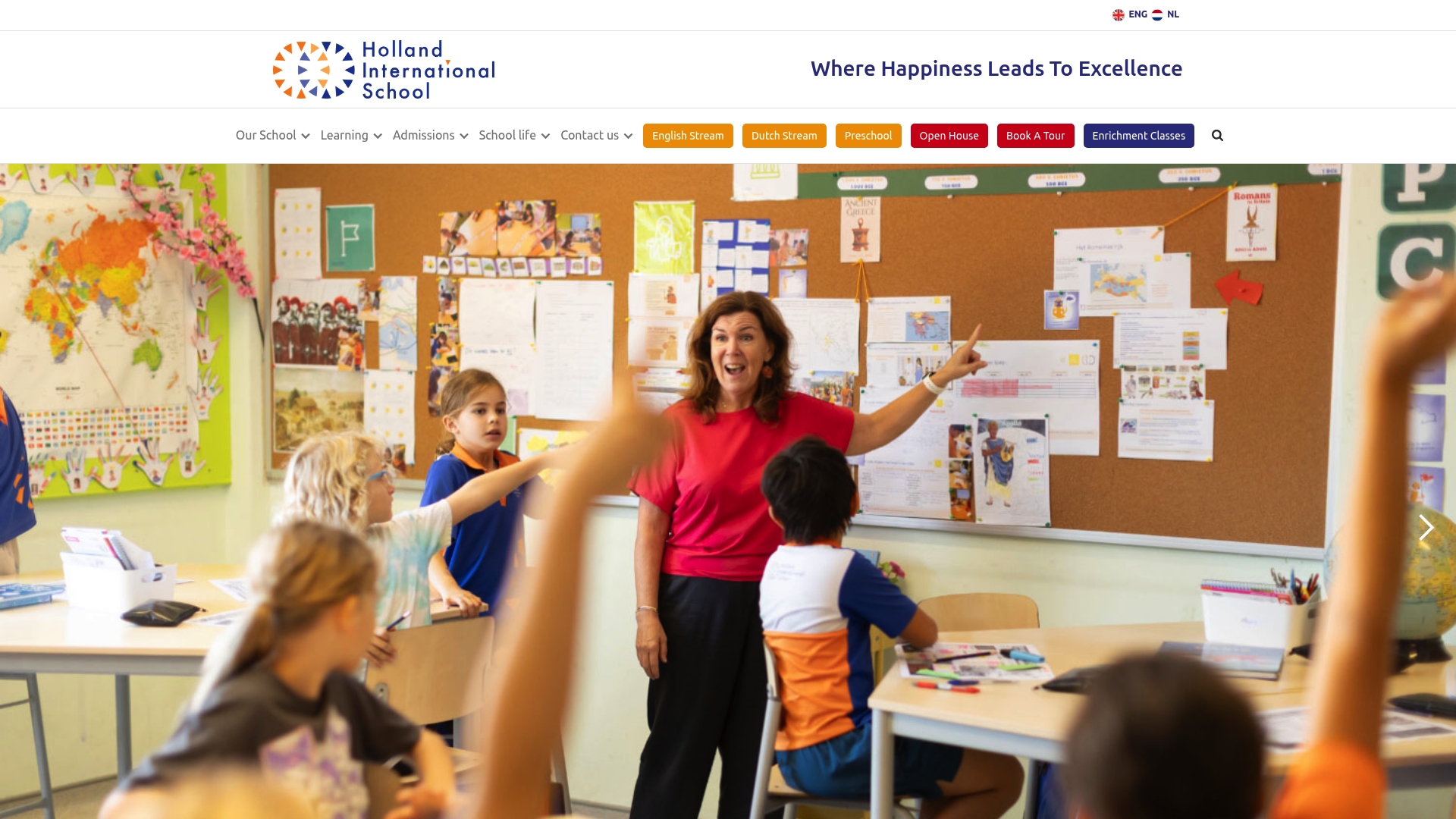
Dutch and English Streams serve children aged 1.5 to 12 on a scenic, green campus in Singapore. The school reports recognition from the IPC and IEYC. Small class sizes and a family like community aim to balance academics with social and creative growth.
Core features
Dutch and English Streams based on international curricula. Both streams follow age appropriate, inquiry led learning tied to the International Primary Curriculum.
Holistic education that emphasizes ownership, critical thinking, and collaboration. Teachers plan projects that connect academic skills to social development.
Small class sizes with personalized support. That structure makes regular one on one attention and tailored feedback practical.
Rich extracurricular program including sports, arts, coding, and languages. Activities extend the school day and support varied interests.
Modern facilities and digital learning tools such as Google Classroom and library digital resources. Outdoor space and two playgrounds give room for play and exploration.
Key differentiator
The school blends Dutch language tradition with international primary practice in a green campus setting. That mix creates a bilingual option without sacrificing an international outlook. The emphasis on personal development makes social and creative skills as visible as academic progress.
Pros
Warm, welcoming community environment that helps new families settle quickly. Parents often mention approachable staff and regular community events.
Small class sizes with individual attention allow teachers to follow each child closely. That helps when students need subtle curriculum adjustments or extra language support.
Accessible to families who do not speak Dutch, with comprehensive language support in the English stream. Non Dutch families can still access bilingual exposure through targeted programs.
Holistic curriculum balancing academics, creativity, and social skills encourages confident, curious learners. Project work and extracurriculars support multiple learning styles.
Scenic, spacious campus in Singapore provides room for outdoor play and nature based learning. The environment supports physical activity and quiet reading time alike.
Cons
Limited third party feedback is publicly available, which makes independent comparison harder. Prospective parents may need to visit and speak with current families to assess fit.
When it may not fit
Families seeking a large mainstream school experience may find the environment too small. The school focuses on Dutch and IPC oriented curricula, so parents wanting a national curriculum such as local Ministry of Education streams will not find that here. Those seeking detailed public reviews or extensive published performance data may need to rely on direct visits and meetings instead.
Who it’s for
Parents in Singapore who want a small, bilingual primary option for children aged 1.5 to 12 will find this attractive. It suits families who value a close community, regular individual attention, and a curriculum that values creativity alongside academics. Non Dutch families who want cultural diversity with strong English support will also fit well.
Real world use case
A family relocating from Europe looks for a school that preserves Dutch language links while offering an international curriculum. They choose Holland International School for mixed language exposure, small class sizes, and after school arts and sports. The parents meet teachers, tour the green campus, and confirm the school can support their child through dual language transition.
Pricing
Tuition details are not specified on the summary page. For current fees and the full charge schedule, consult the school fee structure on the official site or contact admissions directly.
Wise oaks international school
At a glance
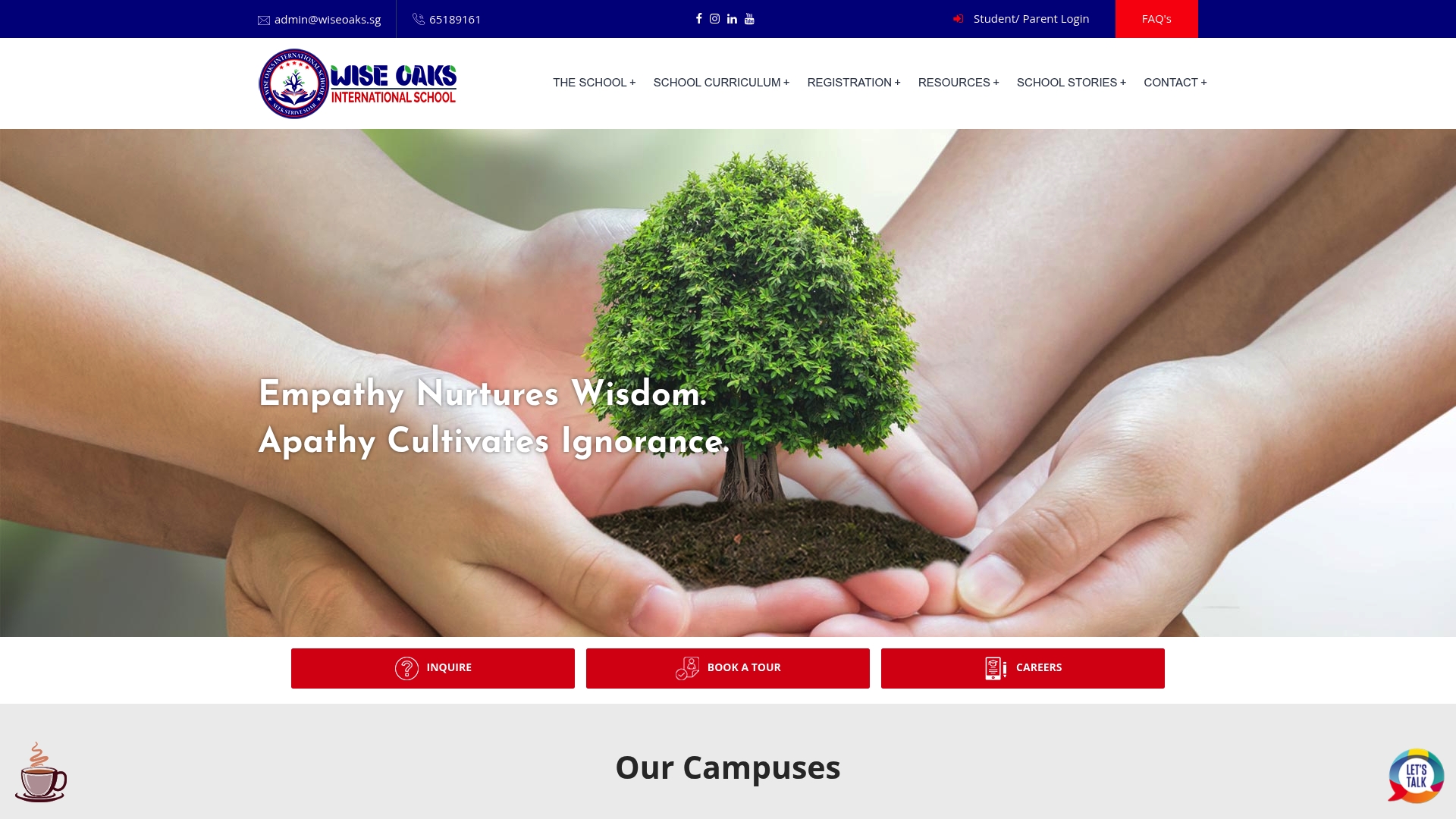
The school runs a proprietary Reception Year Program that concentrates on foundational English and math within a Cambridge based curriculum. It serves children in grades 1 to 8 across multiple campuses in Singapore including East Coast, Bukit Timah, and Upper Serangoon Road. Governance comes from an Academic and Examination Board and staff with international teaching experience guide the school community.
Core features
Cambridge based curriculum for grades 1 to 8 with structured assessment and benchmarking through standardized tests and internal assessments.
Reception Year Program that focuses on early English and math skills and prepares younger children for primary level work.
Multiple campuses across Singapore with dedicated facilities to improve access for families and create localized school communities.
Holistic education covering moral, aesthetic, physical, intellectual, emotional, and social development delivered alongside language enrichment and co curricular activities.
Key differentiator
The proprietary Reception Year Program gives Wise Oaks a clear early years angle within a Cambridge program. That program targets core literacy and numeracy so children start primary years with shared foundations. For parents seeking a structured early class that leads into Cambridge learning, this program is the school community feature that stands out.
Pros
Strong academic foundation. The school combines Cambridge curricula with Singapore Mathematics to give members a recognizable international framework.
Experienced teaching team. Faculty hold a minimum of three years teaching in international or local schools which supports classroom consistency.
Inclusive community. The school promotes diversity and community engagement through values such as integrity, compassion, and responsibility.
Accessibility across neighborhoods. Multiple campuses make the school convenient for families living in different parts of Singapore.
Broad program mix. Language enrichment and co curricular activities sit alongside core academics for balanced development.
Cons
Limited fee transparency. Public information does not include specific tuition figures or cost structures which makes early budgeting difficult.
Sparse extracurricular detail. The site provides few specifics about activity options and any associated fees for those programs.
Admission constraints. A rolling admissions policy may create competition and reduce the chance of immediate entry for some families.
Few details on digital learning. The school shares little information about technology integration or classroom digital tools.
When it may not fit
Families seeking full fee schedules and explicit information about scholarships or financial aid will find the public materials thin. Households that need guaranteed immediate placement may struggle under rolling admissions. Parents prioritizing strong technology use or a school with detailed digital learning plans will find less to evaluate here.
Who it’s for
Parents in Singapore looking for a values based international option for children in early or middle primary grades will find this school relevant. It fits families who favor a Cambridge aligned syllabus with structured early years preparation and local campus options. It appeals to parents who value character education alongside academics.
Real world use case
A family relocating to Singapore wants a school that builds character and gives language support while preparing children for international assessments. They visit the nearest campus, meet teaching members, and enroll a child in the Reception Year Program to strengthen English and math before entering grade 1. The multiple campus network keeps the child connected to the same school community if the family moves neighborhoods.
Website: https://wiseoaks.sg
Comparison of alternatives
Selecting an international school often involves evaluating diverse aspects to align to individual family priorities and values. By comparing notable institutions like Astor International School, Holland International School, and Wise Oaks International School, parents can better determine which options suit their children’s development and overall needs.
Extracurricular and cultural exposure
Holland International School distinguishes itself in terms of offering a bilingual curriculum and a vibrant, engaging extracurricular program. Features such as arts, sports, and coding activities extend learning beyond academics and integrate creative and social skill-building into the educational environment. Meanwhile, Astor International School focuses heavily on personalized learning within a curated curriculum, emphasizing core academics and inquiry-based learning methodologies.
Accessibility and campus distribution
Wise Oaks International School excels with its multiple campuses across Singapore, which facilitates accessibility for families residing in varied neighborhoods. Parents benefiting from this structure can ensure minimum disruption when relocating locally. Astor International School focuses primarily on its single campus environment to optimize faculty and resources toward fostering excellent academic and interpersonal outcomes.
Best fit
Parents prioritizing small class sizes complemented by an inquiry-based learning approach will find Astor International School appealing.
Families seeking bilingual education within a nurturing community would benefit from Holland International School.
Those valuing accessibility and convenience through strategically located campuses should consider Wise Oaks International School.
Our pick
Astor International School offers an emphasis on small class sizes, individual teacher-student engagement, and a carefully balanced curriculum incorporating IPC and Singapore Math principles. While other schools may cater to diverse extracurricular interests or multiple locations, Astor stands out by providing a learning experience best tailored for expatriate families seeking targeted academic and language support for their children’s primary education.
Choosing the right international school involves evaluating unique features and how they align with your priorities. Below is a comparison of alternatives to “international-schools-database.com” focusing on schools’ primary features.
School | Features | Unique Strength | Best Suited For | Limitations |
Astor International School | Max 20 students per class, IPC curriculum | Personalized attention with a child-centered approach | Expat families prioritizing inquiry-based, small class sizes | Limited program variety due to smaller school size |
Holland International School | Dutch-English bilingual streams, green campus | Combines bilingual exposure with international pedagogy | Families desiring a bilingual approach in a nurturing environment | Limited third-party feedback for performance evaluation |
Wise Oaks International School | Reception Year program, Cambridge curriculum | Early structured foundation in literacy and numeracy | Families preferring a values-oriented program with Cambridge alignment | Limited transparency on fee and activity details |
Experience the benefits of a boutique international school
Finding the right international school can feel overwhelming when faced with broad options like international-schools-database.com alternatives. Families often seek more personalized attention, smaller class sizes, and trusted curricula that truly support each child’s individual growth. Astor International School offers exactly that blend of care and academic focus with its maximum 20 students per class and inquiry-based approach that nurtures curiosity and confidence in every child.
Discover how a smaller, nurturing environment with recognized programs like IPC and Singapore Math makes a meaningful difference for expatriate families in Singapore. Learn more about our small but mighty school community at Astor International School and see why parents trust us for both affordable tuition and quality education. Start with a visit or request information today to explore personalised learning designed just for your family.
Learn more about Astor
FAQ
How does Edu support personalized learning in international primary education?
Edu offers small class sizes with a maximum of 20 students per class, enabling personalized attention and a nurturing educational environment. This feature allows teachers to tailor their pacing and assessments to each child’s needs, fostering a more engaging learning experience. Consider enrolling your child at Edu to benefit from this individualized approach.
What is the difference between Edu and holland international school regarding language support?
Holland International School offers a strong bilingual education with Dutch and English streams, focusing on inquiry-led learning. While this structure is beneficial for families wanting a Dutch-language foundation, Edu’s emphasis on inquiry-based, child-centered learning makes it a better fit for parents prioritizing international curricula without a specific language focus. You can evaluate how each option aligns with your family’s educational goals.
Can i expect a strong community experience at Edu similar to that of holland international school?
Edu provides a welcoming, close-knit community environment with a diverse student body representing over 30 nationalities. This aspect fosters social learning and cultural exchange, similar to what parents appreciate at Holland International School. Engaging with the community at Edu can enhance your child’s educational experience by exposing them to various cultures.
What can families expect in terms of extracurricular activities at Edu compared to wise oaks international school?
Edu offers flexibility in scheduling and enrichment options, catering to after-school activities, whereas Wise Oaks International School has a broader extracurricular program including sports, arts, and coding. Families should consider how much importance they place on these additional activities when making their choice. Edu can still provide a balanced experience with its supportive learning environment.
How does edu’s pricing structure compare to the others?
Pricing details for Edu are not explicitly listed, similar to Wise Oaks International School, which doesn’t share detailed tuition figures publicly. Families interested in understanding enrollment costs should reach out directly to inquire about fee schedules, making it a manageable step towards securing a valuable educational experience.
Recommended
Comments