


5 Key Advantages of Affordable International Schools in Singapore
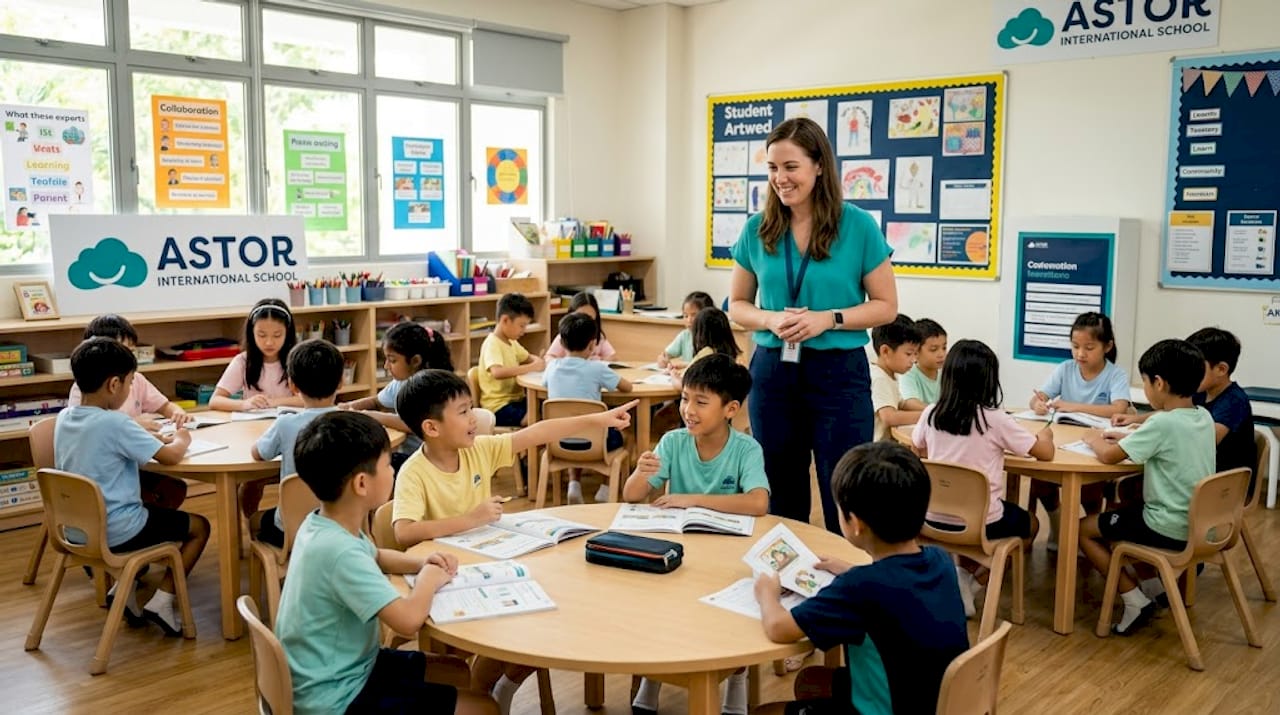
Choosing the right school for your child in Singapore can feel overwhelming. With dozens of options ranging from local government schools to high-end international campuses charging upwards of $4,000 per month, many expat and local parents wonder if quality education is only available at a premium price. The good news is that affordable international schools like Astor International School offer small class sizes averaging 15 students, delivering the personalized attention and individualized learning that so many children genuinely need to thrive.
Table of Contents
Key Takeaways
Point | Details |
Smaller class sizes | International schools typically have 15-22 students per class, allowing more individualized attention. |
Tailored learning | Affordable schools use low staff-to-student ratios and custom plans for diverse learning needs. |
Multicultural community | Students gain global perspectives and strong friendships in diverse, close-knit environments. |
English immersion | Schools offer full English curricula helping both local and expat children thrive academically and socially. |
Competitive value | Affordable international schools provide high-quality education at a fraction of premium school fees. |
How small class sizes benefit primary learners
Understanding the importance of affordability starts with how class size shapes daily learning. For children aged 5 to 12, the size of their classroom community has a direct, measurable impact on how they learn, how confident they feel, and how quickly they receive support when they struggle.
The difference between local and international school settings is significant. According to the Ministry of Education Singapore, local primary schools have average class sizes of 34 students, with a pupil-to-teacher ratio of 15:1. In contrast, international schools typically average 15 to 22 students per class. The OECD primary school average sits at 21 students. That gap matters enormously in practice.
School type | Average class size | Pupil-to-teacher ratio |
Singapore local primary | 34 students | 15:1 |
OECD average (primary) | 21 students | varies |
Affordable international | 15 to 22 students | as low as 8:1 |
When a teacher works with 15 children instead of 34, the daily experience for each child shifts completely. Teachers can check in with every student during a lesson. They notice when a child is confused, disengaged, or quietly struggling. They have the time to offer gentle redirection, a different explanation, or a word of encouragement. These small moments add up over weeks and months, building stronger learning outcomes and genuine confidence.
Smaller classes also improve how children relate to one another. Young learners aged 5 to 12 are still developing their social skills, and tightly-knit classroom communities give them the space to practice collaboration, communication, and empathy. Group discussions feel safer. Friendships form more naturally.
“The best learning happens when every child is truly seen and supported — and that starts with giving teachers the space to actually know their students.”
Pro Tip: Before enrolling your child anywhere, ask the school directly: what is your maximum class size policy, and how do you handle it when a class grows? The answer tells you a lot about the school’s real priorities.
Personalized learning and diverse support
Once you see the value of small class sizes, it’s easier to appreciate how schools leverage them for personalized education. A small classroom is only as powerful as what a teacher does within it. The best affordable international schools use that space to build genuinely individualized learning programs.
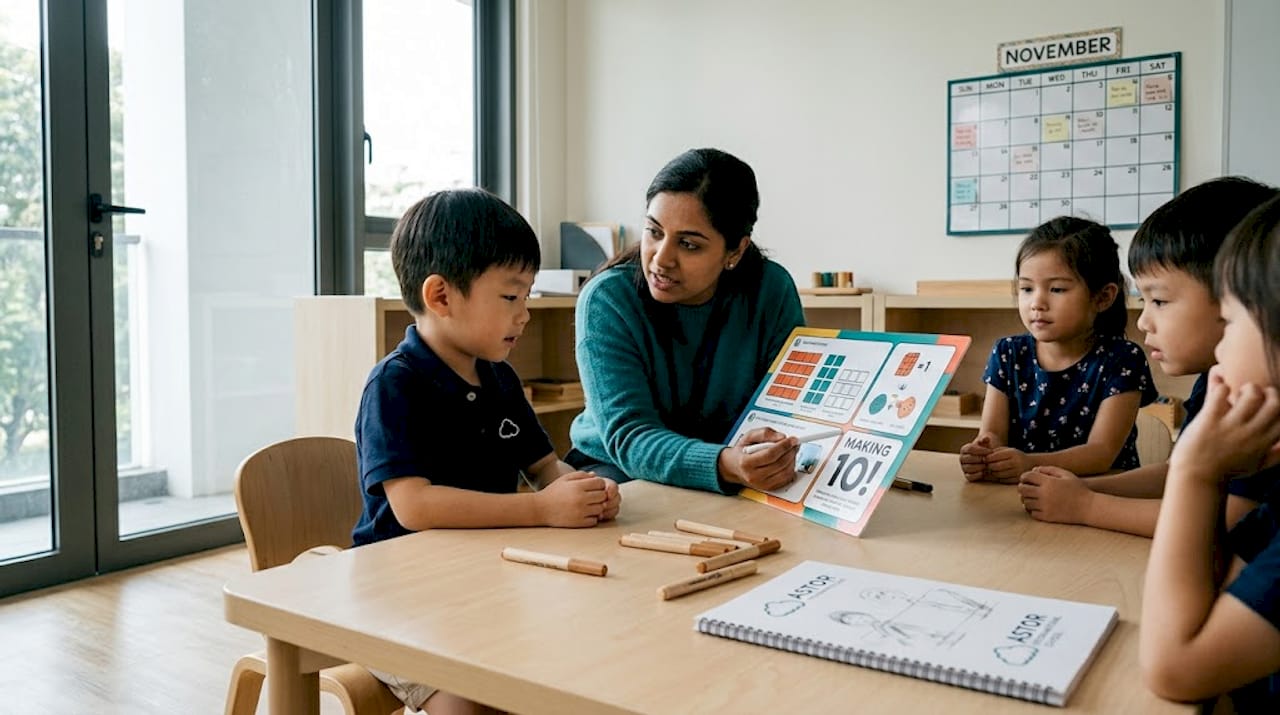
This is especially meaningful for children between 5 and 12 years old, when learning differences are often first identified. Dyslexia, ADHD, sensory processing challenges, and other needs are more visible in a small-group setting, and support can begin sooner. Some schools go further by designing specific programs around each child’s profile from day one.
A staff-to-student ratio of 1:8 allows teachers to conduct individualized assessments and tailor their approach to each learner, supporting active engagement rather than passive listening. Other institutions, like Dynamics International School, specialize in individualized education plans for children aged 5 to 12 with learning differences, offering this level of personalized support at around $13,000 per year.
Feature | Large class schools | Small class affordable schools |
Individual assessment | Infrequent | Regular and ongoing |
Learning differences support | Limited | Specialized plans available |
Teacher time per student | Minimal | Substantial |
Curriculum flexibility | Fixed | Adaptive |
What does this look like in practice? A child who processes information more slowly gets more wait time and alternative explanations. A child who is advanced in reading gets extension activities rather than waiting for the group to catch up. A child who is anxious in loud environments has a teacher who notices and adjusts accordingly.
This is the kind of inquiry-based learning that draws on each child’s natural curiosity and meets them where they are. Rather than teaching to a test, educators in small schools can design meaningful learning experiences that connect to what each child already knows and wonders about. How inquiry-based learning works in practice involves student-led questions, hands-on exploration, and responsive teaching — all of which are far easier to implement when class sizes are small.
Pro Tip: When visiting a school, ask whether teachers conduct individual assessments at the start of each year, and whether there is a structured process for identifying and supporting children with learning differences. A confident, detailed answer is a very good sign.
Community feel and multicultural exposure
Personalized support isn’t the only reason parents favor these schools. Community and cultural aspects are just as important, particularly for families who have recently relocated to Singapore and are navigating a new environment alongside their children.
Small schools create something that is hard to replicate in a large institution: a genuine sense of belonging. When a school has 150 students rather than 1,500, your child knows most of their peers by name. Teachers know families, not just students. Events feel warm and personal rather than anonymous and managed. This close-knit quality is one of the most consistent things parents mention when they talk about why they love smaller schools.
For expat families especially, this sense of community can make a significant difference in how quickly children settle in and feel comfortable. Moving to a new country is already a big adjustment. Finding a school where your child feels genuinely welcomed and known can ease that transition considerably.
At the same time, small international schools in Singapore bring together children from many different nationalities and cultural backgrounds. This multicultural mix is one of the most valuable things an international school experience can offer. Children who grow up learning alongside peers from different countries develop natural comfort with diversity, curiosity about different perspectives, and the social flexibility that serves them well throughout life.
“Smaller schools like Astor, with around 150 students, foster close-knit communities and personalized guidance, ideal for expats and locals seeking alternatives to premium schools costing $4,000 or more per month.”
Research into bilingual and multicultural learning environments also shows that children who engage with diverse peers and language settings from an early age tend to develop stronger cognitive flexibility and communication skills. In Singapore, with its remarkable cultural mix, an international school campus becomes a genuine microcosm of the world.
Curriculum continuity and English immersion
Alongside community, continuity of learning and language support help families settle into Singapore’s educational environment. For globally mobile families, one of the biggest academic challenges is the disruption caused by moving between countries mid-school year or between year groups.
When your child has been following one curriculum in the UK, Australia, Canada, or elsewhere, arriving in Singapore and suddenly switching to the local national system can create significant gaps. Concepts may have been taught in a different order, terminology may differ, and the style of instruction can feel foreign. These transitions are stressful for children and parents alike.
Affordable international schools address this by maintaining consistent, internationally recognized curricula that translate smoothly across countries. Whether your family has been in Singapore for two months or two years, your child’s learning journey continues without major disruption. This is one of the most practical and underappreciated advantages that these schools offer.
Full English immersion is another powerful component. For children whose first language is English, it provides familiar comfort in a new setting. For children who are still developing their English skills, full-immersion instruction accelerates language acquisition far more effectively than bilingual or translated alternatives.
Key advantages of curriculum continuity for expat families:
Children avoid repeating concepts or skipping over key content they missed
Assessment frameworks remain consistent across different school postings
University and secondary school transitions are smoother when a recognized curriculum has been followed
English fluency develops steadily through consistent, immersive instruction
Families looking to navigate school choices in Singapore will find that international schools offering under $30,000 per year can deliver curriculum continuity and English immersion alongside small classes of 15 students or fewer, outperforming local schools in terms of individualized attention.
Understanding international school admission early in your planning process also helps you secure a place that genuinely fits your child’s needs before the best spots fill up.
Value for money: How affordable schools compare
Now that you know the academic and community upsides, let’s clarify the real cost and compare what you get for your investment. Many parents assume that lower fees mean lower quality. In the world of boutique international schools, that assumption often proves wrong.
School type | Annual fees (approx.) | Average class size | Personalized plans | Multicultural environment |
Local government school | $400 to $5,000 | 34 students | Limited | Moderate |
Affordable international | $10,000 to $30,000 | 15 to 20 students | Yes | High |
Premium international | $30,000 to $55,000+ | 15 to 25 students | Yes | High |
Schools like Astor International School offer class sizes averaging 15 students, a genuinely personalized experience, and a nurturing community at a fraction of what premium campuses charge. Meanwhile, schools with around 150 students deliver the close community feel and tailored guidance that simply isn’t possible in larger, more expensive institutions.
When evaluating whether a school truly offers value, consider these steps:
Visit the school in person and pay attention to how teachers interact with students during a regular class period, not just during a tour.
Ask about the staff turnover rate. Schools where teachers stay long-term invest more deeply in their students’ growth.
Request to see an example of how student progress is tracked across a full academic year.
Talk directly with current parents rather than relying solely on school-produced marketing materials.
Compare what is included in the fee, such as learning materials, activities, and support services, rather than just the headline annual number.
The path to success at an affordable international school isn’t about paying less for less. It’s about finding a school where every dollar contributes directly to your child’s learning experience, not to maintaining a prestige brand or a sprawling campus.
A realistic view: What parents should really consider
Data comparisons are helpful, but here’s what long-term parents and educators say truly makes the difference. Having worked closely with families across Singapore, we know that the school decision process often gets skewed by things that feel important but aren’t necessarily what shapes a child’s day-to-day experience.
Rankings matter less than fit. A school that tops a national table is not automatically the right place for your child. What matters more is whether the teaching style matches how your child learns, whether the teachers genuinely notice and respond to each student, and whether your child looks forward to going to school each morning. These things don’t show up in league tables.
The rigor of local Singapore schools can come as a real cultural shock for expat families, particularly those arriving from more progressive educational systems. Large class sizes and a strong exam-oriented culture are effective for many students, but they can be genuinely distressing for children who need more support, more time, or a different style of instruction. This is where schools that use individualized plans and small group settings shine, particularly for children with learning differences who might otherwise fall behind in a larger system.
We also believe, based on everything we see in our own school community and from parent feedback, that engagement matters more than test scores at the primary level. A child who loves learning at age 8 will develop the resilience and curiosity to handle academic challenges at 14 and 18. A child who dreads school at age 8 may perform on tests but carry that anxiety forward.
The benefits of small class sizes are well documented, but parents who have chosen smaller schools consistently emphasize something beyond the data: their children feel known. That emotional safety is the foundation on which genuine academic growth is built.
Pro Tip: Ask schools for a visit day where your child attends an actual class rather than a guided tour. Watch how the teacher responds to individual students. That observation will tell you more than any brochure. You can also read parent feedback on affordable schools to understand what families genuinely experience over time.
Explore affordable international learning opportunities
Ready to see these advantages in action? Astor International School, located in the Tanglin area of Singapore, has been recognized as both the best small school and the best affordable international school in Singapore. With class sizes built intentionally around personalized learning and a warm, multicultural community of around 150 students, it represents exactly the kind of education this article has described.
You can explore Astor’s IPC curriculum to understand how the International Primary Curriculum supports children aged 5 to 12 with engaging, theme-based learning that connects knowledge across subjects. For a broader overview, the learning programs at Astor International School cover everything from classroom structure to extracurricular opportunities. When you’re ready to take the next step, the Astor International School website makes it easy to arrange a school tour or speak with our admissions team directly. Your child deserves to feel truly seen and supported every single day.
Frequently asked questions
How much do affordable international schools in Singapore cost annually?
Most affordable international schools charge between $10,000 and $30,000 per year, with some options like Dynamics International School available at around $13,000 annually, significantly less than premium options while still delivering quality international education.
Are class sizes in international schools smaller than local schools?
Yes. Singapore local primary schools average 34 students per class, while international schools typically range from 15 to 22 students, giving teachers significantly more time and attention for each child.
What makes affordable international schools a good choice for expat families?
Affordable international schools offer curriculum continuity, multicultural exposure, small class sizes, and full English immersion, all of which help expat children transition smoothly and thrive academically in a new country.
Do affordable international schools support children with learning differences?
Yes. Several schools offer individualized education plans specifically designed for children with learning differences, with small class settings and dedicated staff support making early identification and intervention far more effective.
Recommended
Comments