


Understanding international curriculum in Singapore schools
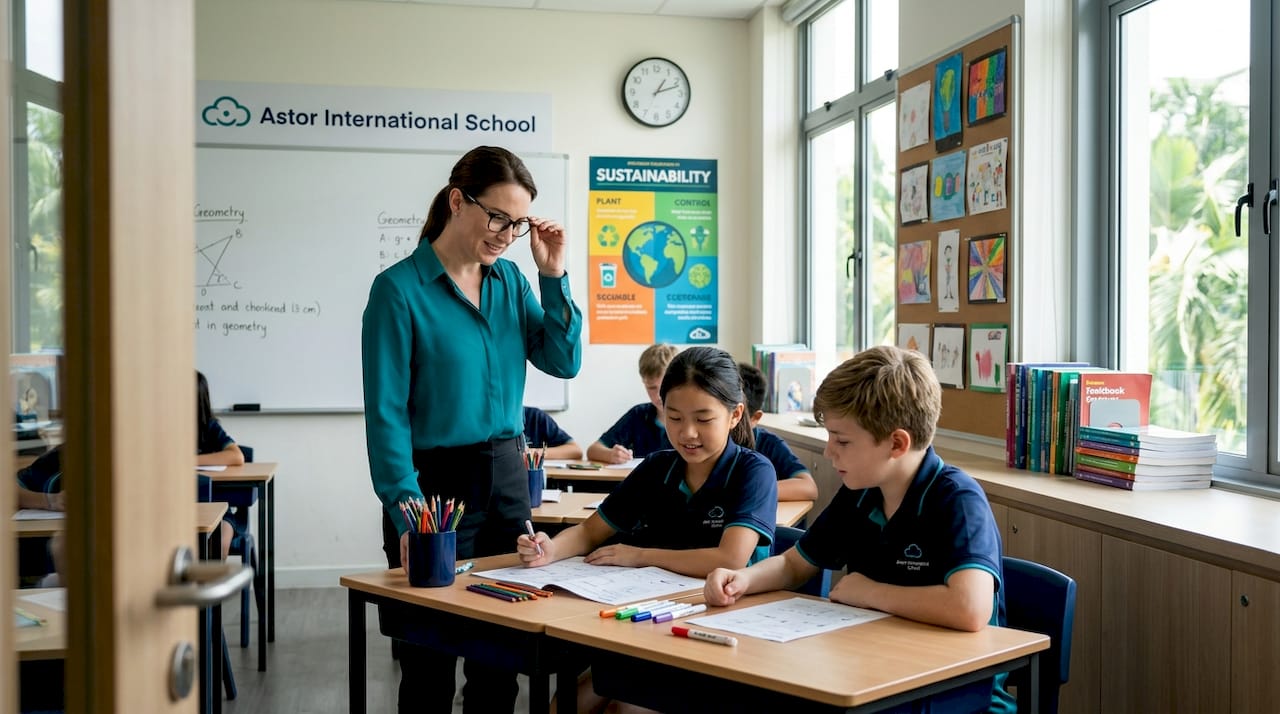
Choosing a school in Singapore can feel overwhelming, especially when you’re balancing a family relocation, a child’s emotional adjustment, and a completely unfamiliar education landscape. Many parents assume that picking an “international school” is straightforward, but the real question goes much deeper: what does an international curriculum actually do for your child? It’s not just a list of subjects taught in English. It’s a carefully designed system of pedagogy, assessment, and values that shapes how your child thinks, learns, and transitions between schools across the world. This guide breaks it all down so you can make a confident, informed choice.
Table of Contents
Why families choose international curriculum: Continuity and mobility
Inside the international curriculum: Pedagogy and assessment architecture
Comparing international and local curriculum: Stress, flexibility, and hidden demands
A fresh perspective: What parents often miss when evaluating international curriculum
Explore international curriculum options at Astor International School
Key Takeaways
Point | Details |
Educational continuity | International curriculum helps students transition smoothly between schools, avoiding gaps. |
Inquiry-led pedagogy | Frameworks like IB PYP focus on curiosity, collaboration, and integrative learning. |
Assessment architecture | International schools may rely on continuous assessment, demanding learner independence. |
Nuanced demands | Reduced early exam stress can hide higher expectations for organization and analytical skills. |
Personal fit matters | Parents should match their child’s learning style to the assessment and teaching approach. |
Why families choose international curriculum: Continuity and mobility
School choice is one of the most emotionally charged decisions a relocating family faces. You’re not just picking a building. You’re choosing a learning culture, an assessment model, and a community that your child will spend years inside. For expat families especially, the stakes feel even higher because the school you choose today may not be the last school your child attends.
This is where international curricula show their greatest strength. Curriculum frameworks and assessment approaches are designed to travel with the child, particularly in IB schools, offering structural continuity for cross-border moves. When your child learns within the IB framework in Singapore and then transitions to an IB school in London or Tokyo, the foundational learning approach, assessment language, and student expectations remain consistent. That continuity matters enormously for a child’s confidence and academic progress.
Navigating school choices for expat kids involves weighing many factors, but curriculum portability is often the most practical one. A predictable framework gives both children and parents a reliable anchor during transitions that can otherwise feel destabilizing.
Here is a simple side-by-side look at how local and international curricula differ across some key dimensions:
Feature | Local curriculum (MOE) | International curriculum (e.g., IB) |
Mobility and portability | Designed for Singapore context | Globally recognized and transferable |
Assessment model | High-stakes national exams | Ongoing, portfolio-based, varied |
Curriculum continuity across borders | Limited | Strong and structured |
Language of instruction | English and mother tongue | Primarily English, multilingual options |
Teaching philosophy | Content-driven, structured | Inquiry-led, student-centered |
Recognition overseas | Strong in Asia | Recognized globally |
Families who move frequently benefit from the predictable structure of recognized international frameworks. Rather than starting from scratch at every new school, children build on a foundation that travels with them. The enrichment programs available for expat kids in Singapore often complement this international framework beautifully, reinforcing the same inquiry-driven values outside the classroom.
Key advantages of curriculum continuity for mobile families include:
Reduced academic disruption during relocation
Consistent assessment language that teachers across countries understand
Familiar classroom expectations that help children settle faster
A shared learner profile that travels with the child’s record
Reduced stress for parents managing mid-year transitions
You can find a broader overview of expat resources for families settling into Singapore, including school guidance, community networks, and practical tips. For families weighing whether a smaller school setting might offer extra support during transitions, the benefits of small international schools are also worth exploring carefully.
Inside the international curriculum: Pedagogy and assessment architecture
Beyond continuity, understanding the actual classroom experience is key. International curricula, particularly the IB Primary Years Programme (PYP), are not just a different sequence of topics. They represent a fundamentally different philosophy about how children learn and how teachers facilitate that learning.
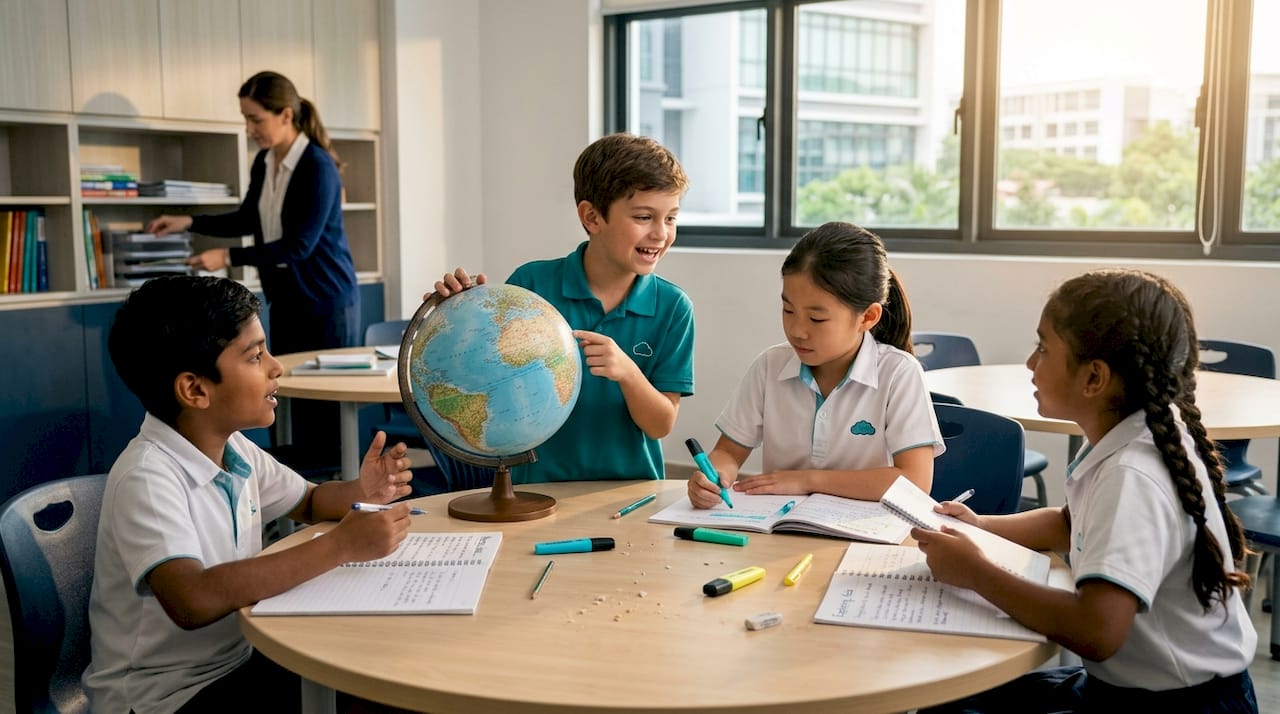
The IB PYP works as a transdisciplinary, inquiry-based framework organized by a school-developed programme of inquiry across age groups, themed around inquiry and the learner profile. “Transdisciplinary” is a word worth pausing on. It means that learning does not happen inside neat subject boxes. Instead, themes like “How the world works” or “Who we are” weave together science, language, social studies, and the arts into connected investigations. Children are not memorizing isolated facts. They are building understanding across multiple dimensions simultaneously.
The PYP curriculum framework supports conceptual inquiry-based learning between, across, and beyond subject boundaries, informed by constructivist and social-constructivist learning theories that emphasize collaboration and integrative thinking. In practical terms, this means children are expected to ask questions, investigate problems, collaborate with peers, and reflect on what they have discovered.
“The role of international curriculum is not simply to deliver academic content. It includes the design of how assessment works, how student voice is honored, and how learning builds across years into a coherent developmental arc.”
Here is a quick overview of the core features of the IB PYP:
PYP feature | Description |
Transdisciplinary themes | Six global themes that organize units of inquiry |
Learner profile | Ten attributes (e.g., curious, caring, open-minded) |
Programme of inquiry | School-developed units that structure learning |
Assessment approach | Ongoing, reflective, and portfolio-based |
Student agency | Children are active co-constructors of their learning |
Exhibition | A culminating, student-led inquiry project |
In a typical PYP classroom, learning unfolds something like this:
A central idea or question is introduced, connected to a transdisciplinary theme
Students explore the concept through provocation activities that spark curiosity
Research and investigation take place individually and in groups
Students reflect on what they have learned and how their thinking has changed
Learning is documented and assessed through observation, reflection, and portfolio work
This is a very different rhythm from a traditional lesson where the teacher delivers content and students reproduce it on a test. Parents who understand this distinction arrive at school meetings with much better questions and a much clearer sense of whether this model resonates with their child’s natural way of engaging with the world. Reading our inquiry-based learning guide for parents is a great starting point, and understanding how inquiry-based learning works in practice can help you picture what your child’s school day actually looks like.
Inquiry-based learning: How it shapes student outcomes
Now that you know the pedagogical structure, let’s focus on its effect on student learning and skills. The shift from content delivery to inquiry-driven exploration has real, measurable implications for the kind of learner your child becomes over time.
IB research from 2022 examined meanings and practices of inquiry-based teaching and learning across Primary Years, Middle Years, and Diploma programmes, confirming that inquiry-based teaching is an explicit design goal embedded across all IB levels. This is not an add-on feature or a marketing phrase. It is built into the curriculum’s DNA from the earliest years.
When children learn through inquiry from a young age, they develop habits that carry them far beyond any single school. They learn to sit with open questions rather than rushing to a “correct” answer. They build resilience when an investigation does not go as expected. They practice articulating their reasoning, not just their conclusions.
Core competencies that inquiry-based international curricula actively develop include:
Critical thinking: Children learn to evaluate sources, question assumptions, and reason through complexity
Collaboration: Group investigations require negotiation, listening, and shared responsibility
Self-direction: Students initiate research and manage their own learning pace within structured frameworks
Communication: Presenting findings, writing reflections, and discussing ideas builds confident expression
Adaptability: Shifting between topics and perspectives prepares children for environments that value flexibility
Global awareness: Transdisciplinary themes naturally connect local experience to broader world contexts
Our primary school curriculum guide provides a helpful comparison of how these skills are cultivated differently across various frameworks available in Singapore.
Pro Tip: Before enrolling your child, spend time observing a classroom in action if the school allows it. Ask teachers how they assess learning throughout the year and what a “typical week” looks like. The gap between how a curriculum is described in a brochure and how it lives in a real classroom can be significant, and the best schools will welcome your questions openly.
Comparing international and local curriculum: Stress, flexibility, and hidden demands
Let’s address the common misconception that international curricula are “easier” or inherently less demanding. This assumption leads many families into a school that surprises them, not because it is worse, but because the type of demand is different from what they expected.
The “international” label can hide different learning styles and assessment pressures; some families perceive international schools as less exam-heavy early on, but international curricula can demand self-direction and analytical thinking to succeed. A child who thrives under clear instructions and defined study goals may find the open-ended nature of inquiry units more stressful, not less.
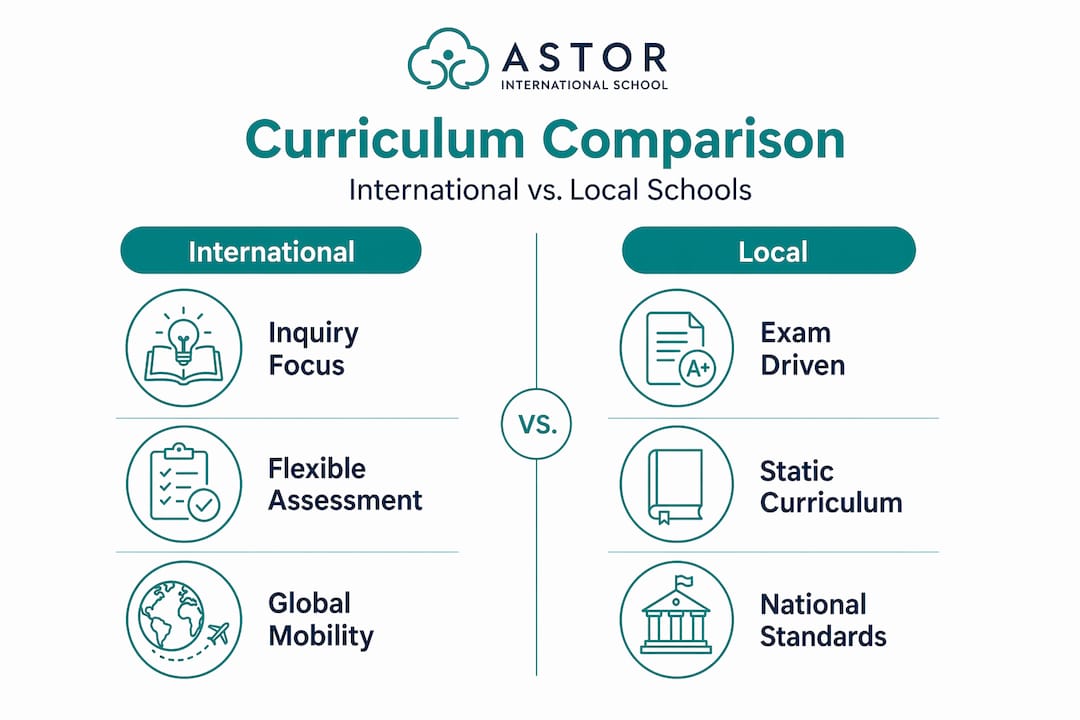
Inquiry-based or continuous-assessment models can be a better fit for some children than others; parents are advised to consider whether their child handles ongoing coursework and deadlines well rather than relying on one final exam. This is honest and important advice. Neither model is universally superior. They suit different learners in different ways.
Dimension | Local curriculum pressure | International curriculum pressure |
Primary exam focus | High (PSLE at grade 6) | Low to moderate in early years |
Ongoing assessment load | Moderate | High and continuous |
Self-direction required | Moderate | High |
Parental involvement in learning | Moderate | Often more intensive |
Analytical writing demands | Strong | Strong, from early on |
Organization and deadline management | Exam-period intensive | Year-round |
Questions families should honestly ask themselves before choosing an international school:
Does my child manage open-ended tasks without becoming anxious or disengaged?
Can my child organize ongoing projects and meet rolling deadlines?
Is my family in a position to support a learning model that may require more active involvement at home?
How does my child respond to feedback that is qualitative rather than score-based?
If we relocate again, will the school’s framework ease that transition?
The holistic education guide for expat parents offers more perspective on evaluating fit beyond academics. For a detailed side-by-side curriculum analysis, the primary school curriculum guide is worth reading before your school visits.
Pro Tip: Ask the admissions team at any school you are considering to walk you through a sample assessment portfolio from a child at your child’s year level. This gives you a concrete feel for what “continuous assessment” actually means in daily practice, and it removes a lot of the anxiety that comes from abstract descriptions.
A fresh perspective: What parents often miss when evaluating international curriculum
After working with hundreds of families navigating Singapore’s school landscape, one pattern stands out clearly. Most parents research what is taught. Very few dig into how learning is assessed and how teachers are expected to respond when a child is struggling.
This is the gap that leads to surprises. A family chooses an international school expecting relaxed learning, and then discovers their child is expected to manage five ongoing projects simultaneously. Or a family avoids international schools assuming their academically strong child will be unchallenged, and misses out on an environment that would have developed their child’s creative thinking and collaborative skills profoundly.
Our experience at Astor tells us that the best-fit families are the ones who look closely at assessment architecture before they look at rankings or fees. Assessment design reveals a curriculum’s real values. When teachers are assessing through observation, conversation, and portfolios, they are looking for depth of understanding, not just correct answers. That signals something meaningful about how children are seen in that school.
The IPC curriculum framework offers another angle on international education that many families overlook entirely. IPC organizes learning through engaging thematic units and explicitly separates personal, social, and academic goals, giving teachers and parents a richer picture of the whole child.
Small schools, by nature, give parents more access to teachers and more visibility into their child’s daily experience. That close relationship makes it far easier to catch mismatches early and adjust. The best learning really does happen when every child is truly seen and supported, and that only works when teachers know each student well enough to notice when something is not quite right.
Explore international curriculum options at Astor International School
If this article has helped you think more clearly about what international curriculum really means, the natural next step is exploring what that looks like in practice.
At Astor International School, we offer the IPC curriculum and other international frameworks for children aged 5 to 12 in a small, nurturing environment that has been recognized as both the best small school and the best affordable international school in Singapore. Our small class sizes mean your child is known, not just enrolled. Explore our full curriculum details and connect with our admissions team to talk through how our approach fits your child’s learning style and your family’s plans.
Frequently asked questions
Is IB or IPC more suitable for primary-aged children in Singapore?
Both are recognized international frameworks, but IB PYP is a transdisciplinary, inquiry-based framework organized around a learner profile, while IPC organizes thematic units with explicit personal and social goals. Suitability depends on your child’s learning style and how your family engages with each model.
Do international schools have less exam stress for young children?
International curricula can demand self-direction and analytical thinking even when formal exams are reduced, so the experience is different rather than simply easier. Continuous assessment places ongoing demands on organization and engagement throughout the school year.
How does the international curriculum support transitions for expat children?
Curriculum frameworks and assessment approaches travel with the child in internationally recognized programs like IB, which significantly reduces learning gaps and adjustment time when families relocate across borders.
What should parents consider before choosing an international school?
Parents should review whether their child handles ongoing coursework and deadlines well rather than depending on a single final exam, since continuous assessment is a defining feature of most international curricula and suits some learners much better than others.
Recommended
Comments