


Why Creativity Matters So Much in the Early Years
- sasha2644
- 4 days ago
- 15 min read
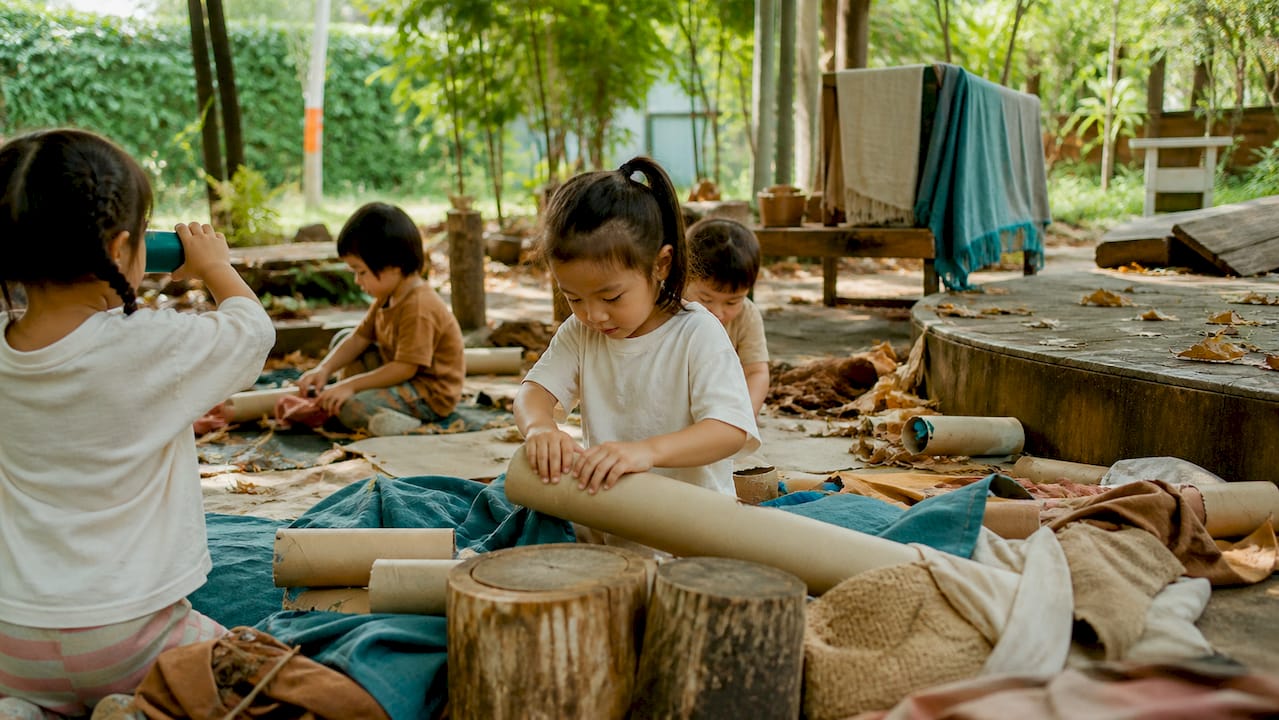
Creativity is a core developmental engine in early education. It builds language, problem-solving, self-regulation, and social understanding, all while shaping habits of mind that carry into later schooling. A 2026 scoping review found that arts-rich early childhood settings are consistently linked to stronger self-regulation, empathy, and perspective-taking in young children, though researchers are careful to frame this as an association tied to the right conditions rather than a simple cause and effect.
The practical takeaway for this week is small but real: give children one uninterrupted block of open-ended play time, with no worksheet at the end of it, and watch what they build with it.
That single shift, backed by guidance from the UK Department for Education and NAEYC, does more for a child’s thinking than most structured activities we tend to reach for first.
Creativity in early childhood isn’t one skill. It spans imaginative play, artistic expression, problem-solving, and movement.
Research ties these forms to language growth, social competence, and executive function.
The biggest lever educators and parents control isn’t materials. It’s how much unhurried time and how little correction children get.
Key Takeaways
Creativity in early education works because it combines unhurried time, open-ended materials, and responsive adults into the same conditions that build language, self-regulation, and problem-solving.
Point | Details |
Creativity has four forms | Imaginative play, artistic expression, problem-solving, and movement each build distinct skills. |
Time matters more than materials | Protect 30 to 45 uninterrupted minutes for creative play rather than adding more toys. |
Adults should ask, not direct | Open questions like “What would happen if?” extend thinking; corrections shut it down. |
Assess process, not product | Track choices, persistence, and revisions instead of grading finished work. |
Astor builds this into daily routines | Small classes, outdoor play, and arts enrichment support process-focused creative learning across ages 1.5 to 12. |
Table of Contents
What Does Research Say About the Benefits of Creativity in Early Childhood?
What Do the Key Studies on Early Childhood Creativity Actually Show?
What Are Some Creativity Activities for Toddlers and Preschoolers?
How Do You Observe and Assess Creativity Without Killing It?
What Gets in the Way of Fostering Creativity, and How Do You Fix It?
How Astor Supports Creative Development From Preschool Through Primary
What Is the Role of Creativity in Early Education?
Creativity in early childhood is best understood as a process, not a product. It’s how a toddler figures out that a cardboard tube can be a telescope, a drainpipe, or a trumpet depending on the day, and how a five-year-old negotiates the plot of a pretend rescue mission with three other kids who all want to be the captain. The Ministry of Education’s early learning framework categorizes it into four connected forms, and that taxonomy is worth learning because it changes what you notice in a classroom.
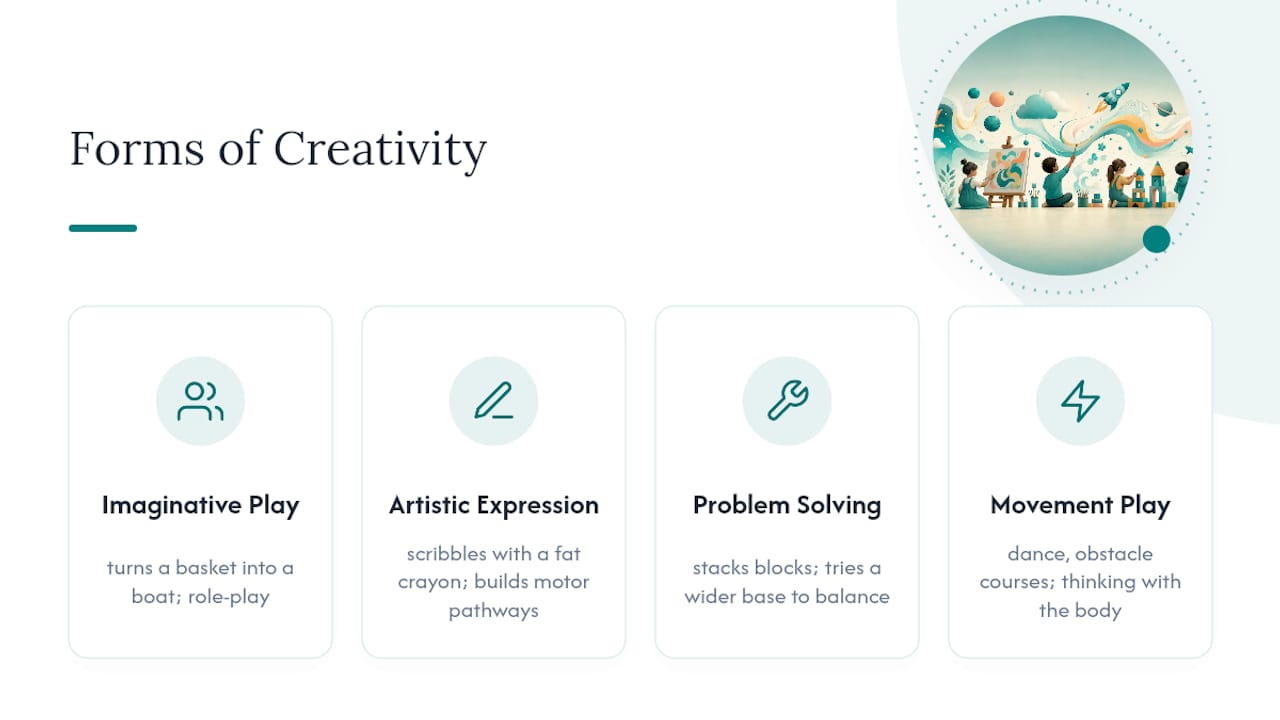
Imaginative or pretend play is the most recognizable form. A child turning a laundry basket into a boat, assigning roles to stuffed animals, or narrating a tea party is rehearsing social scripts, testing cause and effect, and practicing language in a low-stakes setting.
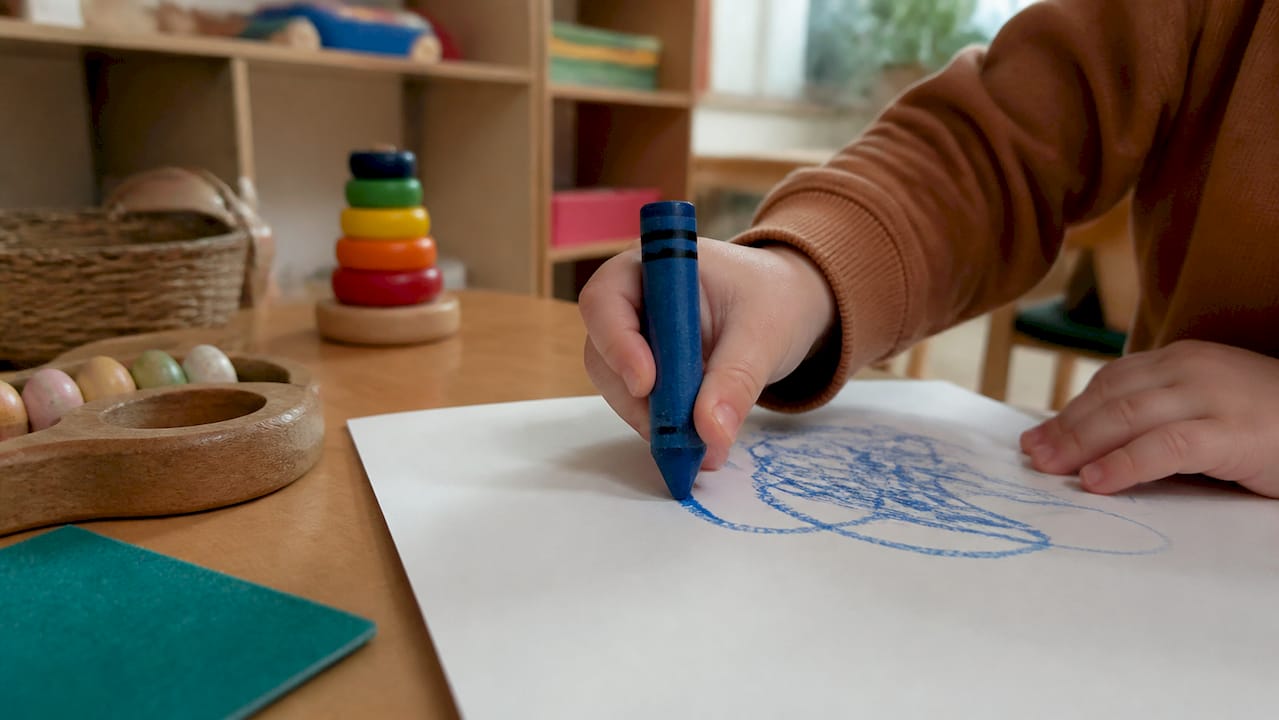
Artistic expression covers drawing, painting, music, and early storytelling. A toddler scribbling with a fat crayon is building the same motor pathways a preschooler uses later to draw a recognizable house.
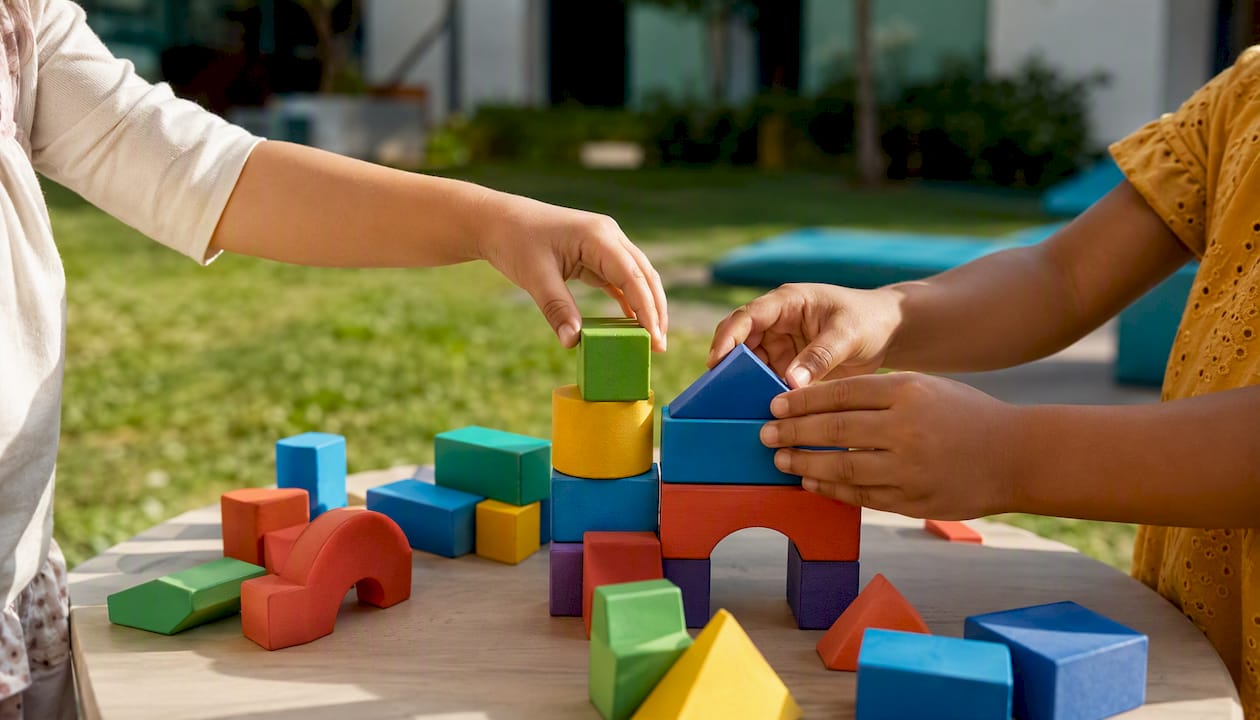
Problem-solving creativity shows up when a child stacks blocks that keep toppling and tries a wider base instead of giving up, or when a group figures out how to share one tricycle between four kids without an adult stepping in.
Movement and embodied creativity includes dance, obstacle courses, and construction play, where children think with their bodies as much as their hands.
How this looks at different ages
Age Range | What Creativity Looks Like | Example |
Infant | Sensory exploration, cause-and-effect testing | Banging a spoon on different surfaces to hear different sounds |
Toddler | Early symbolic play, scribbling | Pretending a block is a phone; making marks with paint |
Preschool (3-5 years) | Sustained pretend narratives, representational art | Building a “restaurant” with a menu, taking orders from friends |
Early primary (5 years) | Collaborative storytelling, purposeful building | Designing and testing a paper bridge with a partner |
The same underlying skill often surfaces across different media. A four-year-old who invents an elaborate backstory for her drawing of a dragon is doing the same imaginative work as a six-year-old who negotiates rules for an invented playground game. Both are generating original ideas and testing them against reality, one with a crayon, the other with a rulebook only the players understand.
Imaginative play strengthens narrative language and theory of mind.
Artistic expression develops fine motor control and symbolic thinking.
Problem-solving creativity builds persistence and flexible reasoning.
Movement-based creativity supports spatial awareness and body confidence.
What Does Research Say About the Benefits of Creativity in Early Childhood?
The evidence on creativity’s developmental payoff is more specific than most people assume. The Early Childhood Education Journal’s scoping review covering studies from 2018 to 2024 reports consistent associations between arts participation and gains in planning, working memory, and cognitive flexibility, the mental skills children draw on for everything from following multi-step instructions to switching between tasks without melting down.
A 2026 scoping review found that arts education functions as a set of pedagogical conditions, materials, time, and relationships, associated with creativity, self-regulation, empathy, and perspective-taking, while cautioning against simple causal claims.
That framing matters. The research doesn’t say art classes make kids smarter in some generic sense. It says that when children get real time, varied materials, and responsive adults around them, several things tend to improve together: their capacity to plan ahead, their ability to negotiate socially, and their tolerance for frustration when a plan doesn’t work the first time.
Language and communication benefit directly from creative play. PBS’s overview of play-based development notes that dramatic play and process art give children low-pressure opportunities to practice vocabulary, sequence events into a story, and negotiate meaning with peers, all skills that transfer straight into early literacy.
Social-emotional growth shows up in how children handle shared materials, whose idea “wins” in a pretend game, and how they recover from a tower collapsing. Process art, music, and movement in particular let children express feelings before they have the vocabulary to name them, which is why art therapy models emphasize creative expression as a channel for emotional regulation even outside clinical settings.
Self-regulation and executive function develop through the sustained attention that open-ended creative tasks demand. A child absorbed in building a block city for twenty minutes is practicing the same attention control she’ll need for a math worksheet later, just in a form that doesn’t feel like work.
Cultural and physical access matter too. The California Department of Education points out that visual and performing arts give children of varying abilities and cultural backgrounds multiple entry points into expression, which is one reason creative activities tend to be more inclusive than activities built around a single “right answer.”
None of this means more art time automatically produces better outcomes. The scoping review is explicit that study designs vary widely, sample sizes are often modest, and dosage (how much creative time, how often, over how long) is rarely standardized across studies. What the research supports is a coherent but bounded claim: the conditions that creativity requires, unhurried time, varied materials, and responsive adults, are the same conditions that support broader cognitive and social development. Treat that as a strong signal to build a routine around, not a guarantee tied to any specific activity.
What Do the Key Studies on Early Childhood Creativity Actually Show?
Reading the research directly, rather than secondhand summaries, changes how you apply it. Here’s what several representative studies and reviews actually measured, and where their conclusions stop.
The 2026 scoping review (Early Childhood Education Journal) synthesized studies from 2018 to 2024 across preschool and early primary ages, measuring outcomes like working memory, planning, and social-emotional ratings. It found consistent positive associations but flagged inconsistent outcome measures across studies, meaning the “how much” question remains unsettled.
NAEYC’s practitioner guidance draws on classroom observation and pedagogy research rather than a single controlled trial. It measures teacher and child behavior around provocations and open-ended materials, concluding that over-direction from adults measurably narrows the range of ideas children generate.
UK Department for Education guidance synthesizes early-years practice standards, focusing on environmental design (space, materials, time) rather than isolated activities. It concludes that imagination develops when adults notice and respond to child-led exploration, not when adults schedule “creativity time” as a discrete subject.
PBS’s Whole Child framework draws on developmental psychology research into play, measuring cognitive, social, and emotional indicators tied to dramatic and constructive play. It supports play as a vehicle for problem-solving and language practice, though it doesn’t isolate creativity from play more broadly.
The practical implication across all four: none of this research proves that a specific art kit or curriculum brand produces creativity. What it supports is a pattern of conditions, time, materials, and adult stance, that shows up again and again regardless of setting. The common gap across studies is dosage. Nobody has pinned down exactly how many minutes of open-ended play a week move the needle, so the safest classroom guidance is to protect more unstructured time than feels comfortable, rather than chase a specific number.
How Can Teachers Foster Creativity in the Classroom?
Evidence translates into a short list of durable principles, and most of them cost nothing.
Lead with provocations, not instructions. NAEYC’s guidance on nurturing creativity is blunt about this: an open invitation tied to a child’s interest beats a scripted lesson almost every time. Instead of “today we’re making paper plate suns,” try setting out yellow paint, string, and paper plates with no instructions at all and see what emerges.
Protect process over product. A finished drawing that looks messy to an adult might represent forty minutes of genuine problem-solving for the child who made it. Praising the process (“You tried three different ways to get the wheels to stay on”) teaches persistence in a way that praising the result never does.
Give real time and real space. The UK’s early years guidance is specific that imagination develops when children get well-planned, richly resourced environments and enough uninterrupted time to actually explore them. Fifteen minutes between transitions doesn’t count. Aim for at least 30 to 45 uninterrupted minutes for sustained pretend play or building projects.
Choose open-ended materials over single-purpose toys. Blocks, fabric scraps, cardboard tubes, and natural materials like pinecones or shells can become almost anything. A toy fire truck can only be a fire truck.
Position yourself as a facilitator, not a director. This is the principle adults find hardest, mostly because silence feels unproductive. Sit near the play, watch closely, and step in only with a question, not a correction.
Document and reflect regularly. A quick photo with a one-line note (“Mia rebuilt her tower four times, adjusting the base each time”) turns fleeting creative moments into evidence you can share with families and use to plan next steps. Astor’s own guidance on stimulating classroom creativity leans on exactly this kind of light-touch documentation.
Effective prompts sound less like instructions and more like curiosity out loud:
“What would happen if you tried it a different way?”
“Tell me about your plan before you start.”
“What part are you most proud of so far?”
“What could you add to make it even better?”
“Who else’s idea could fit into yours?”
These questions do real work. They hand the thinking back to the child instead of supplying the answer, and they give you a window into a child’s reasoning that a finished product never reveals on its own.
Pro Tip: The single most common way adults shut down creativity is correcting a child’s creative choice in real time, “that’s not how the sky looks,” “trees aren’t purple.” Bite your tongue for five seconds before responding to anything that looks “wrong.” Nine times out of ten, the child has a reason, and asking about it teaches more than fixing it.
Family and community context shape what children bring into this process, too. Children from different cultural and linguistic backgrounds draw on different stories, songs, and materials in their play, and the UK early years framework notes that varied community experiences genuinely broaden the material children use in imaginative play. A teacher who notices and welcomes that variety, rather than steering every child toward one “standard” version of pretend play, gets richer creative output from the whole group.
What Are Some Creativity Activities for Toddlers and Preschoolers?
Ready-to-use activities work best when they specify materials, timing, and the underlying learning goal, not just the fun part.
Loose parts sculpture (ages 1.5 to 3). Materials: fabric scraps, wooden spoons, plastic cups, a basket of natural items like pinecones. Set the basket down, sit nearby, and let toddlers combine items freely for 15 to 20 minutes. Goal: cause-and-effect exploration and early symbolic substitution.
Color mixing tray (ages 2 to 4). Materials: three primary paint colors, a tray, paintbrushes, paper. Offer only the three colors and let children discover new ones by mixing. Goal: sensory exploration and early scientific reasoning.
Story stones (ages 3 to 5). Materials: smooth stones with simple images glued on (a house, a cat, a cloud). Children pick three stones and invent a story connecting them, alone or with a partner. Goal: narrative language and imaginative sequencing.
Box city construction (ages 3 to 6). Materials: cardboard boxes of varying sizes, tape, markers. Offer 30 to 45 uninterrupted minutes for children to build and negotiate a shared “town.” Goal: collaborative problem-solving and spatial reasoning.
Music and movement interpretation (ages 2 to 6). Materials: instruments or household objects that make sound, open floor space. Play different tempos and ask children to move “like the music feels.” Goal: embodied creativity and emotional expression.
Simple STEAM provocation, “will it float?” (ages 4 to 7). Materials: a water tub, assorted small objects, paper for predictions. Children test, revise predictions, and explain their reasoning. Goal: scientific thinking paired with open-ended exploration.
For mixed-ability groups, the easiest adjustment is time, not task. A younger or less confident child might need the same activity broken into two shorter sessions rather than a simplified version of it. The pretend play research on toddler development backs this up: repetition across shorter sessions builds the same imaginative capacity as one long session, just at a pace that matches a shorter attention span.
How Should You Set Up a Space That Invites Creativity?
Physical space either invites sustained creative work or quietly discourages it. A room where every material has one correct use and one correct storage bin trains children to ask permission before they experiment.
Keep at least one open floor area clear of furniture for block building, dramatic play, or movement.
Store loose parts (fabric, containers, natural materials) in low, open bins children can access without asking.
Rotate about a third of available materials every two to three weeks to renew interest without overwhelming choice.
Build a 30 to 45 minute uninterrupted block into the daily schedule, ideally not right before a transition like lunch or pickup.
Take creative materials outdoors whenever weather allows. Mud, sticks, and water offer sensory and problem-solving opportunities that indoor materials can’t replicate. Astor’s own guidance on the role of playgrounds in early learning covers how outdoor risk-managed play supports this directly.
Set simple, consistent safety boundaries (how many children per building zone, where scissors live) so freedom doesn’t tip into chaos.
Outdoor creative play deserves special attention because it’s the setting adults most often rush. A puddle isn’t a mess to clean up quickly. It’s a material a four-year-old can spend twenty minutes investigating, dropping objects in, watching ripples, testing what floats. The management tip that works best here is proximity without hovering: stay close enough to intervene for safety, far enough that children make their own discoveries.
How Do You Observe and Assess Creativity Without Killing It?
Assessing creativity is tricky because the instinct to grade it, “this drawing is good,” “that story doesn’t make sense”, tends to shut down the exact behavior you’re trying to encourage. The fix is to observe process, not output.
A simple observation template focuses on four things: what choices did the child make, how did they respond when something didn’t work, did they use symbols or pretend elements, and how did they negotiate with peers. Jotting a quick note against each of these, even a single sentence, builds a far richer picture over a term than a folder of finished drawings ever could.
What to Observe | Sample Note |
Choices made | Picked blue for the “ocean” without being asked |
Persistence/revision | Rebuilt the tower three times after it fell |
Symbolic use | Used a stick as a “magic wand” in pretend play |
Social negotiation | Offered to swap roles when a friend wanted to be captain |
Process-focused rubrics work the same way. Instead of scoring “artistic quality,” score planning (“did the child describe an intention before starting”), revision (“did the child adjust their approach after a setback”), and collaboration (“did the child incorporate a peer’s idea”). None of these require any artistic judgment from the teacher at all.
For conversations with children and families, a small bank of open questions goes further than a checklist: “What was the trickiest part?” “What would you try differently next time?” “Who helped you with this idea?” Save the notes. They become the backbone of a portfolio that shows growth over a year, not just a folder of pretty pictures.
Focus notes on process indicators, not finished quality.
Ask, don’t rate. Questions reveal reasoning; scores just reveal an adult’s opinion.
Share process notes with families regularly so creativity is visible beyond the classroom.
What Gets in the Way of Fostering Creativity, and How Do You Fix It?
Time pressure, testing culture, and tight budgets are the three barriers educators name most often, and each has a workaround that doesn’t require new funding.
Barrier: no time in a packed schedule. Fix: fold creative time into transitions instead of treating it as an add-on. A 10-minute open-materials table while waiting for lunch counts.
Barrier: assessment pressure pushes toward worksheets. Fix: use process observation notes (see above) as your documented evidence. They satisfy reporting needs without shrinking creative time.
Barrier: limited materials budget. Fix: loose parts cost almost nothing. Cardboard, fabric scraps, and natural materials outperform expensive kits for open-ended play.
Barrier: cultural or language mismatch in materials. Fix: ask families what stories, songs, or objects matter at home, and bring those into the provocation table.
Pro Tip: For multilingual children, offer story stones or pretend-play props tied to family traditions rather than defaulting to generic classroom sets. It costs nothing and instantly widens whose imagination the room reflects.
When resources are genuinely scarce, family and community involvement fill the gap better than any purchased kit. A single donated box of fabric scraps from a parent, or a neighborhood nature walk to collect pinecones, does the same developmental work as a store-bought sensory bin.
How Does Creativity Fit Into the Rest of the Curriculum?
Creativity works best woven through subjects, not scheduled as a separate period wedged between math and snack time.
One project blueprint that does this well: a two-week “bridge builders” unit combining math and art. Children measure and compare block lengths (math), design and decorate a bridge for a toy vehicle (art), then test and revise it (problem-solving). Assessment focuses on the revision process, not whether the bridge looks tidy.
Open with an inquiry question that has no single right answer, such as “How could we get this toy across the water without getting wet?”
Let children sketch or describe a plan before building, preserving choice over the final design.
Build in at least one planned “failure” moment, a bridge that collapses, to observe revision and persistence.
Close with a reflection conversation, not a written test, using questions like “What surprised you?”
For reporting against early learning frameworks, document the inquiry questions asked and the revisions children made rather than a finished product photo. That evidence maps cleanly onto most curriculum standards without shrinking the open-endedness that makes the project work. Astor’s approach to experiential preschool learning follows this same inquiry-first structure across subjects.
Anchor each unit in an open inquiry question, not a fixed outcome.
Let math, science, and art overlap naturally inside one project rather than teaching them in isolation.
Reserve final reflection time for conversation, not grading.
How Does Astor Put Creative Learning Into Practice?
At Astor’s Holland preschool, small class sizes and two playgrounds mean creative play isn’t squeezed into leftover minutes. Children move between outdoor exploration and classroom provocations across the day, and teachers document choices and revisions the way this guide describes, not just finished artwork.
That same process-first thinking runs through the primary curriculum, where arts, inquiry, and cross-curricular projects sit alongside core academics rather than after them.
A simple template families can borrow for their own conversations at pickup: “What did you build or make today? What part took the most tries?” Two questions, asked consistently, do more to surface a child’s creative thinking than “did you have a good day?” ever will.
Small class sizes free teachers to observe process, not just manage behavior.
Two playgrounds allow daily rotation between structured and loose-parts outdoor play.
Documentation focuses on choices and revisions, shared with families regularly.
Pro Tip: Ask your child’s teacher what provocation the class explored that week, not just what worksheet came home. The answer tells you far more about what your child actually practiced.
A Teacher’s Honest Take on Fostering Creativity
The evidence keeps pointing back to the same uncomfortable truth for adults who love to help: our best intentions often get in the way. Every time I’ve watched a well-meaning teacher jump in to fix a wobbly block tower or “correct” a purple sky, the child’s engagement visibly drops. Creativity doesn’t need more adult input. It needs more adult patience.
If you take one thing from this guide, make it the smallest possible change: this week, pick one 30-minute block, set out open-ended materials, and say nothing for the first ten minutes. Watch what happens when nobody rescues the plan.
How Astor Supports Creative Development From Preschool Through Primary
Small classes make the difference here, because a teacher watching six children build with blocks can actually notice which child revised their plan twice, something that gets lost in a class of thirty. Astor’s preschool and primary programs are built around exactly the conditions this guide describes: real time, varied materials, and teachers positioned to observe rather than direct.
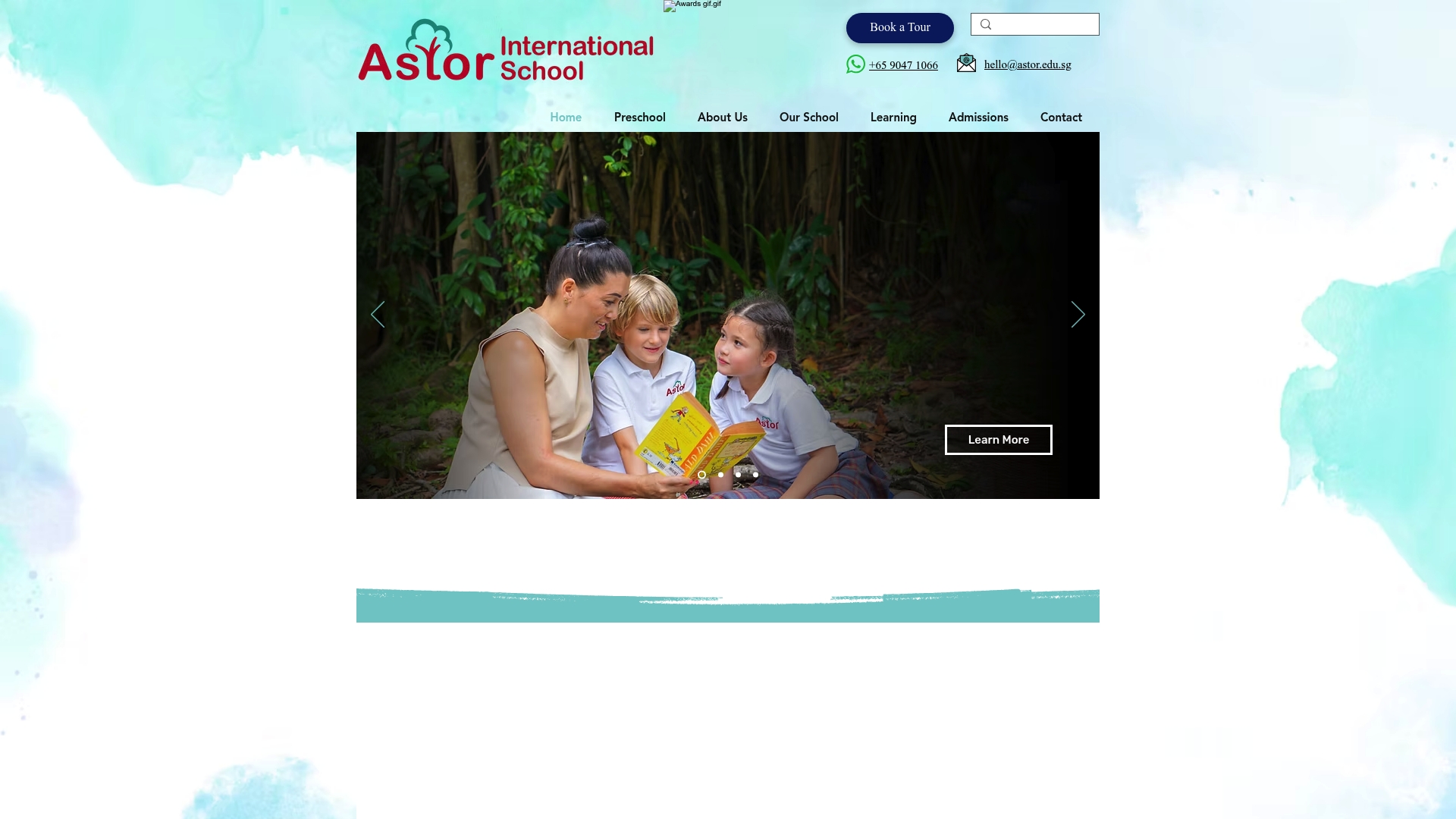
Astor’s outdoor spaces, arts enrichment, and inquiry-based IPC curriculum give children daily access to the kind of open-ended, process-focused learning research links to stronger self-regulation and problem-solving. Enrichment in arts, movement, and languages runs alongside core academics rather than competing with it for time. If you’re weighing schools for a child between 1.5 and 12 years old, the most useful next step is a visit. Book a tour, ask to see a class during unstructured play, and see how teachers respond when a plan doesn’t go as expected. That single observation tells you more than any brochure.
Sources
Excerpt from Nurturing Creativity: An Essential Mindset for Young Children’s Learning — NAEYC
Help for early years providers: Imagination and creativity (UK Department for Education guidance)
Visual and Performing Arts resources — California Department of Education
Aesthetics and creative expression overview — NEL (Ministry of Education)
Recommended
I love how you highlight that creative play isn't just about art projects — it's how kids make sense of the world around them. We've seen such a difference at home since we started prioritizing open-ended play. I've been using https://hunyuan3d.dev
The way you connect creativity to problem-solving in the early years really stuck with me. I've been trying more open-ended activities at home, and I've been using https://grabcad.site