


Step-by-step classroom learning: a parent's guide
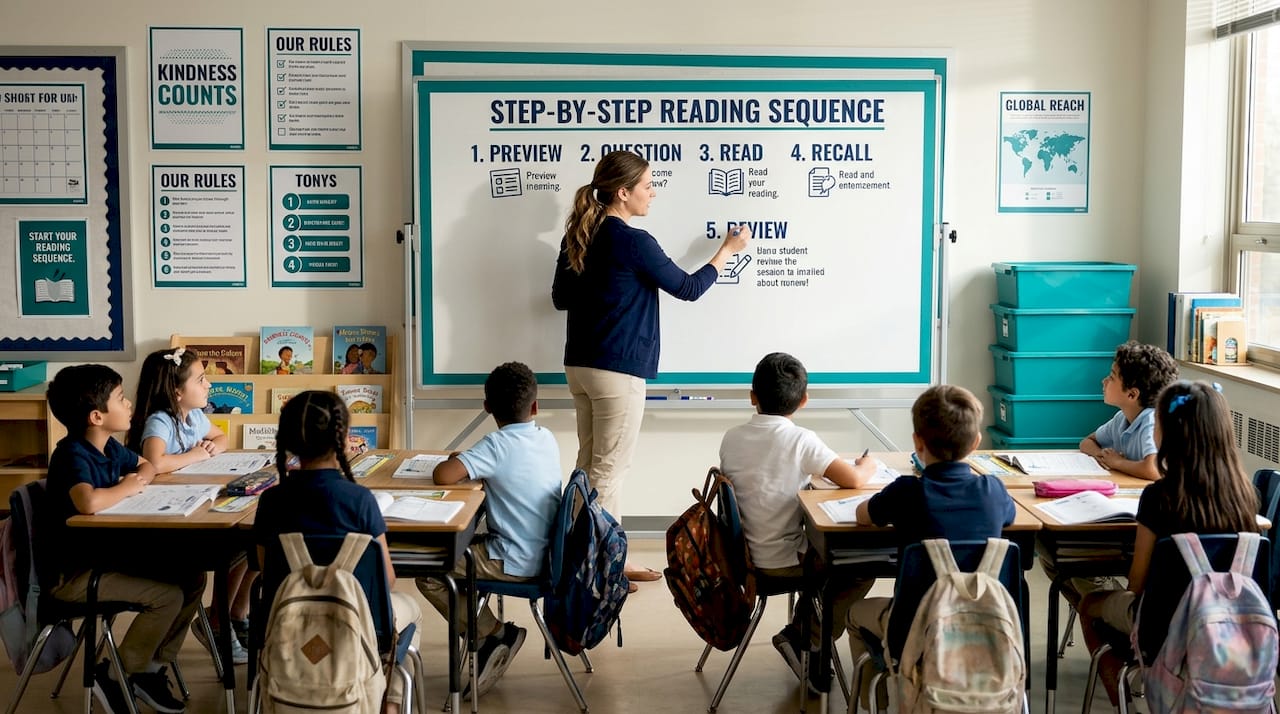
Finding the right classroom learning approach for your child can feel overwhelming, especially when you’re settling into a new country, navigating an unfamiliar education system, and trying to decode what actually works. Many parents in Singapore, particularly expat families, notice that their children either thrive or struggle depending on how consistently the school delivers structured, sequential instruction. The good news is that once you understand what effective step-by-step classroom learning looks like, you can recognize it, support it at home, and advocate for it confidently. This guide walks you through everything you need to know.
Table of Contents
Key Takeaways
Point | Details |
Research-based foundations | Successful classroom learning relies on age-appropriate and evidence-informed structures. |
Consistent routines | Step-by-step classroom methods help children adapt, especially in new environments. |
Phonics and literacy balance | Early reading improves most with explicit phonics plus rich language experiences. |
Home-school partnership | Communication with teachers ensures continuity and adapts learning to each child. |
Adaptability matters | Blending proven strategies with cultural flexibility creates lasting results for families. |
What makes step-by-step classroom learning effective?
Step-by-step classroom learning, for children aged 1.5 to 12, means teaching new skills in a carefully ordered sequence. Each small step builds on what came before, so children gain confidence and competence as they progress. It sounds straightforward, yet many classroom environments still jump between methods without a clear roadmap, leaving some children behind.
Research consistently supports a combination of three core pillars. First, choosing age-appropriate foundations through developmentally appropriate practice, which means individualized, responsive care tailored to a child’s age, cultural background, and personality. Second, teaching key subskills explicitly and in sequence where evidence supports it, particularly in literacy and numeracy. The Education Endowment Foundation’s phonics research confirms that a defensible framework combines choosing age-appropriate foundations, teaching subskills explicitly, and maintaining a rich motivating language environment rather than relying on a single method. Third, keeping the environment language-rich and motivating so that structured learning remains engaging and meaningful rather than mechanical.
Core elements by age segment
Age group | Key foundations | Core skills focus | Ideal environment |
1.5 to 3 years | Sensory play, language modeling | Vocabulary, object recognition | Warm, predictable, play-based |
3 to 5 years | Structured play, early phonics | Pre-reading, counting, motor skills | Language-rich with guided exploration |
5 to 8 years | Explicit instruction, reading routines | Decoding, writing, numeracy | Structured with creative space |
8 to 12 years | Project-based and collaborative | Critical thinking, research, expression | Flexible, discussion-driven |
For expat families, this framework offers particular clarity. When children move between countries and school systems, the consistency of a well-sequenced learning structure acts like a familiar anchor. Children adapt faster when the how of learning remains recognizable, even when the content or language shifts.
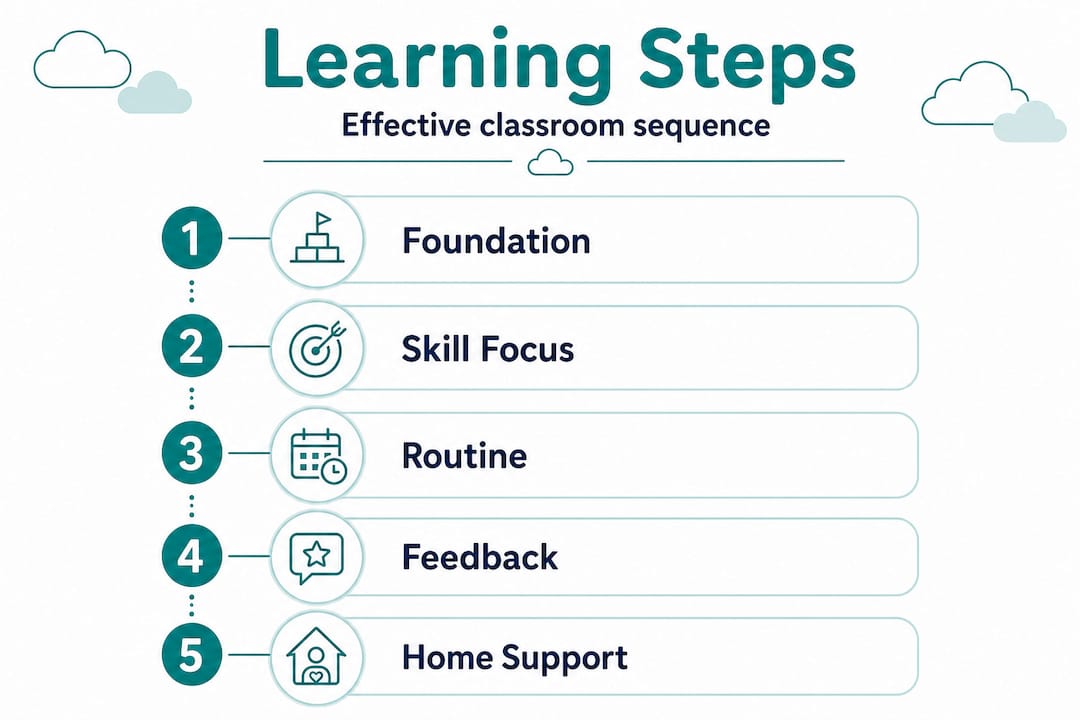
Benefits for expat families specifically include greater adaptability between curricula, clearer communication with teachers about where a child currently stands, and consistent reinforcement between school and home routines. You can explore more step-by-step learning strategies that connect school and home practice, and find additional ways to support your child’s learning in a Singapore context.
Pro Tip: Ask your child’s teacher to share a brief overview of the skill sequence they follow for literacy and numeracy. Even a one-page outline helps you reinforce the same steps at home, which significantly accelerates your child’s confidence.
Step-by-step process for effective classroom learning
Knowing why a structured approach works is valuable. Knowing how to implement or recognize it in practice is even more useful. A proactive classroom management approach emphasizes prevention, preparation, persistence, and keeping follow-up lessons genuinely engaging rather than reacting to problems after they arise.
Here is a practical process that both teachers and parents can use to evaluate or support classroom learning:
Set clear expectations before the lesson begins. Children perform better when they know what is coming. A brief preview of the session, naming what skill will be practiced and why it matters, reduces anxiety and primes attention.
Establish the learning environment. Organize materials, minimize distractions, and ensure the physical space signals that learning is about to happen. This is especially important for younger children who are highly sensitive to environmental cues.
Introduce the new skill explicitly. Model the skill clearly, thinking aloud so children can follow the reasoning. Do not assume prior knowledge. Start from what the child already knows and build forward.
Practice with guidance. Let children attempt the skill with teacher or parent support close by. Errors at this stage are expected and should be treated as information, not failure.
Provide independent practice with immediate feedback. Once children show basic competency, give them space to try independently. Feedback should be specific and timely, not just “good job.”
Close with positive reinforcement and preview. End each session by celebrating what was learned and briefly signaling what comes next. This creates anticipation and a sense of forward momentum.
For younger children, age-appropriate pedagogies guidance emphasizes balancing structured instruction with child-directed activity, ensuring children are active agents in their learning rather than passive recipients.
Preventive vs. reactive approaches
Approach | What it looks like | Outcome for children |
Preventive | Clear routines, prepared transitions, proactive skill-building | Fewer disruptions, higher engagement, stronger retention |
Reactive | Addressing problems as they occur, inconsistent follow-through | Increased anxiety, gaps in learning, behavioral escalation |
It is worth noting that expat children transitioning into new schools benefit enormously from preventive approaches. When classroom routines are predictable, the cognitive load of adapting to a new cultural and social environment is reduced. You can also review class schedule management tips for practical ideas on structuring the day effectively.
Pro Tip: When your child starts at a new school, ask teachers to share the daily schedule in advance. Walking your child through the routine at home the night before significantly reduces first-day anxiety and helps them enter the classroom ready to learn.
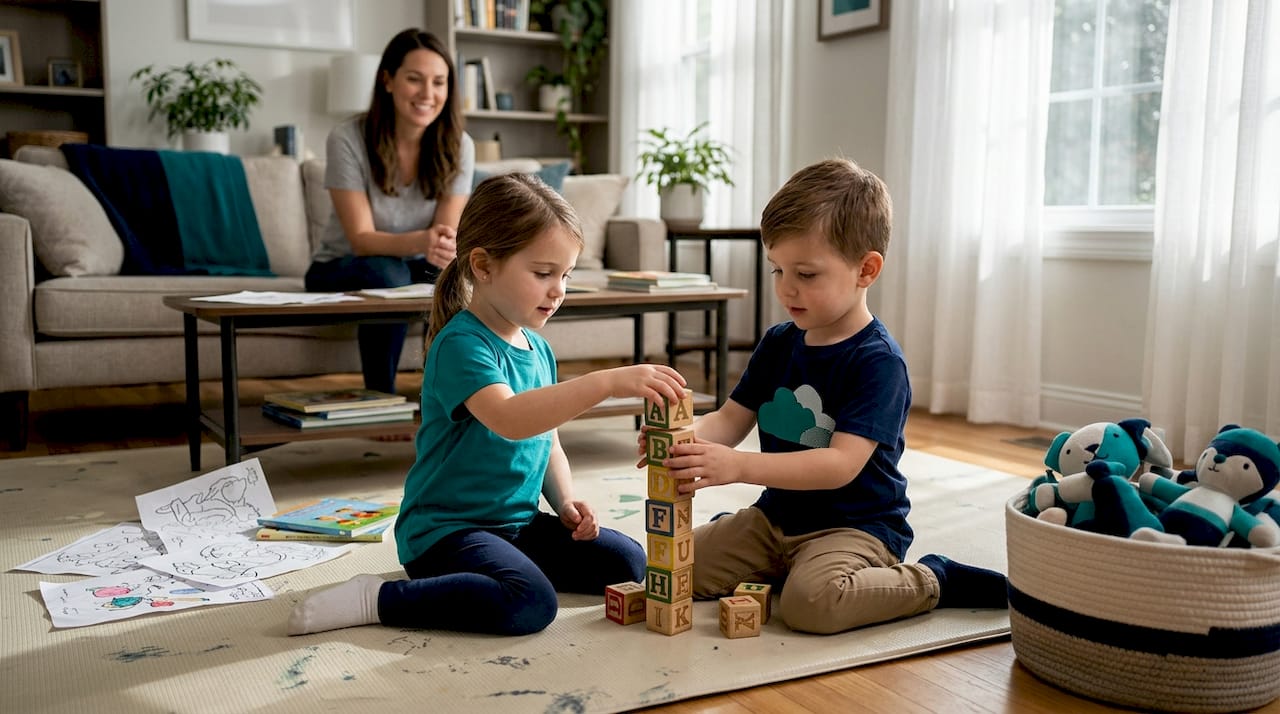
Supporting these steps at home is just as important. There are concrete ways to support classroom steps at home that align with what teachers do in school, and connecting this with holistic learning approaches ensures your child’s social and emotional growth happens alongside academic development.
Laying literacy foundations: Phonics and rich language experiences
Reading is one of the most researched areas in early education, and the findings are remarkably consistent. Phonics instruction averages +5 months of additional reading progress compared to approaches that do not use it systematically. That is not a small difference, especially in the critical window between ages 4 and 7 when reading foundations are being built.
Research also confirms that structured phonics outperforms whole-language approaches for decoding, particularly for children who do not pick up reading intuitively. This does not mean phonics is the only tool. The most effective classrooms combine explicit phonics instruction with a language-rich environment that fills children with vocabulary, story, and a love of reading.
Here is what to look for in a strong early literacy classroom:
Explicit phonics features: Letter-sound relationships taught in a clear sequence, regular blending practice, decodable books that match current phonics knowledge, and prompt error correction.
Language-rich environment features: Classroom libraries with diverse books, daily read-aloud sessions, opportunities for children to talk about what they read, and vocabulary instruction embedded across subjects.
Balance: Neither approach alone is sufficient. Phonics without rich context produces children who can decode but do not enjoy reading. Rich language exposure without phonics leaves some children guessing at words rather than reading them.
“Waiting for children to pick up reading naturally is a risk many families cannot afford to take. Structured, proactive literacy support, starting earlier than you might expect, is one of the highest-value investments in your child’s long-term confidence and achievement.”
For expat families, literacy foundations can be particularly complex. Children may be learning to read in their second or even third language. In these cases, explicit phonics instruction is especially valuable because it gives children a reliable decoding system rather than asking them to memorize whole words in a language they are still acquiring.
Knowing early literacy tips that you can apply at home, alongside understanding the importance of phonics in early reading development, puts you in a strong position to ask the right questions and spot strong classroom practice.
Partnering with teachers: Maintaining learning continuity at home
The most effective classroom strategies gain their real power when they are reinforced consistently at home. Research confirms that parent-teacher communication that is specific, actionable, and focused on the child’s strengths and needs drives meaningful learning continuity.
Here is a practical process for building and maintaining that partnership:
Introduce yourself early. Connect with the teacher in the first two weeks of school, not just at the first formal parent meeting. A brief email sharing your child’s strengths, interests, and any known challenges sets a collaborative tone immediately.
Ask about the learning sequence. Request a clear overview of the skills the class will be working on over the term. This helps you reinforce at home rather than accidentally working ahead or in a conflicting direction.
Share what you observe at home. Teachers see your child for a few hours a day. You see them in the morning, after school, during homework, and on weekends. Specific observations, such as “she gets frustrated when decoding longer words” or “he loves anything related to animals,” are genuinely useful.
Focus on strengths as well as challenges. Communication that starts from what a child does well tends to produce more productive conversations and more creative solutions.
Follow up after implementing suggestions. If a teacher recommends a specific strategy, try it for two weeks and then report back. This kind of loop builds trust and signals that you are a genuine partner in your child’s education.
When communicating with teachers, there are some clear do’s and don’ts:
Do: Be specific, listen actively, approach teachers as experts in their field, and ask open-ended questions about your child’s progress.
Do: Share your cultural context if it is relevant, especially as an expat family where different school systems may have shaped your child’s expectations.
Don’t: Compare your child to classmates or pressure teachers to accelerate beyond the class pace unnecessarily.
Don’t: Wait until a problem becomes serious before reaching out. Early, casual communication prevents bigger concerns.
For families who are new to Singapore, there are helpful expat family resources that provide broader context, and a practical guide on school choices for expat kids in Singapore can help you make the most informed decision from the start.
Our perspective: What families miss about step-by-step classroom success
We have seen families arrive in Singapore with thorough notes on evidence-based methods, detailed questions for teachers, and a clear commitment to structured learning. And yet their children still struggle in the early months. The reason is almost always the same: they followed the steps correctly but overlooked the relationships.
Step-by-step methods work best when they are adapted to the specific child, the specific classroom culture, and the specific relationship between teacher and family. Copying a framework from a different country without adjusting for cultural context, classroom dynamics, or the personality of the teacher often backfires. One family we know transferred their son from a high-structure academic school in Europe into a more inquiry-based Singapore classroom. They pushed hard for the familiar step-by-step routine their son was used to. His teacher felt undermined. The relationship became strained. And ironically, his learning stalled precisely because the partnership broke down.
What worked in the end was a shift in approach. The parents started listening more and advocating less. They asked the teacher how she built structure into the day, shared what routines helped their son settle, and found the common ground between the two approaches. Within a term, their son was thriving.
The real lesson is this: adaptability, open communication, and genuine curiosity about how a specific classroom works will always outperform a rigid checklist. Evidence-based methods are your starting point, not your script. This is one of the most meaningful benefits of small schools, where teachers know families well enough to adapt and respond in real time, rather than applying one-size-fits-all solutions.
Pro Tip: Before focusing on which method is “best,” ask yourself whether your child feels safe, seen, and encouraged in their classroom. When those three things are true, almost any evidence-based method works better.
How Astor International School supports step-by-step learning success
At Astor International School, we have built our entire approach around the principles described in this guide: structured, sequential learning delivered by teachers who genuinely know every child in their class. As Singapore’s award-winning small international school, with class sizes that allow for real individual attention, we make it possible for teachers to adapt the pace and depth of each learning step to each specific child.
Our IPC curriculum combines academic rigor with child-centered learning, and our learning approach is designed to feel consistent, nurturing, and meaningful at every stage. For families with children between 5 and 12, we offer a structured yet flexible environment where the partnership between home and school is genuinely valued. Explore our curriculum to see exactly how we sequence learning across year groups, and reach out to us if you would like to discuss how our approach fits your child’s needs.
Frequently asked questions
How do I know if my child’s classroom uses a step-by-step approach?
Look for clearly defined routines, explicit skills instruction, and regular teacher feedback on your child’s progress. A proactive classroom approach prioritizes preparation and consistency, which you can observe in how lessons begin and end.
What should I do if my child isn’t making reading progress?
Ask the teacher specifically about phonics instruction and request examples of step-sequenced reading practice. Phonics instruction averages +5 months of additional reading progress, so if it is missing or inconsistent, that is worth addressing promptly.
How can parents support step-by-step classroom learning at home?
Communicate regularly with your child’s teacher, reinforce school routines at home, and share specific observations about what helps your child. Parent-teacher communication that is concrete and actionable is one of the strongest predictors of sustained learning progress.
Is a structured classroom approach good for very young children?
Yes, when it matches the child’s age and developmental needs. Structure should always be developmentally appropriate, balanced with child-driven play and exploration, rather than imposed rigidly from above.
Recommended
Comments