


What Is Comprehensive Education? A Guide for Parents
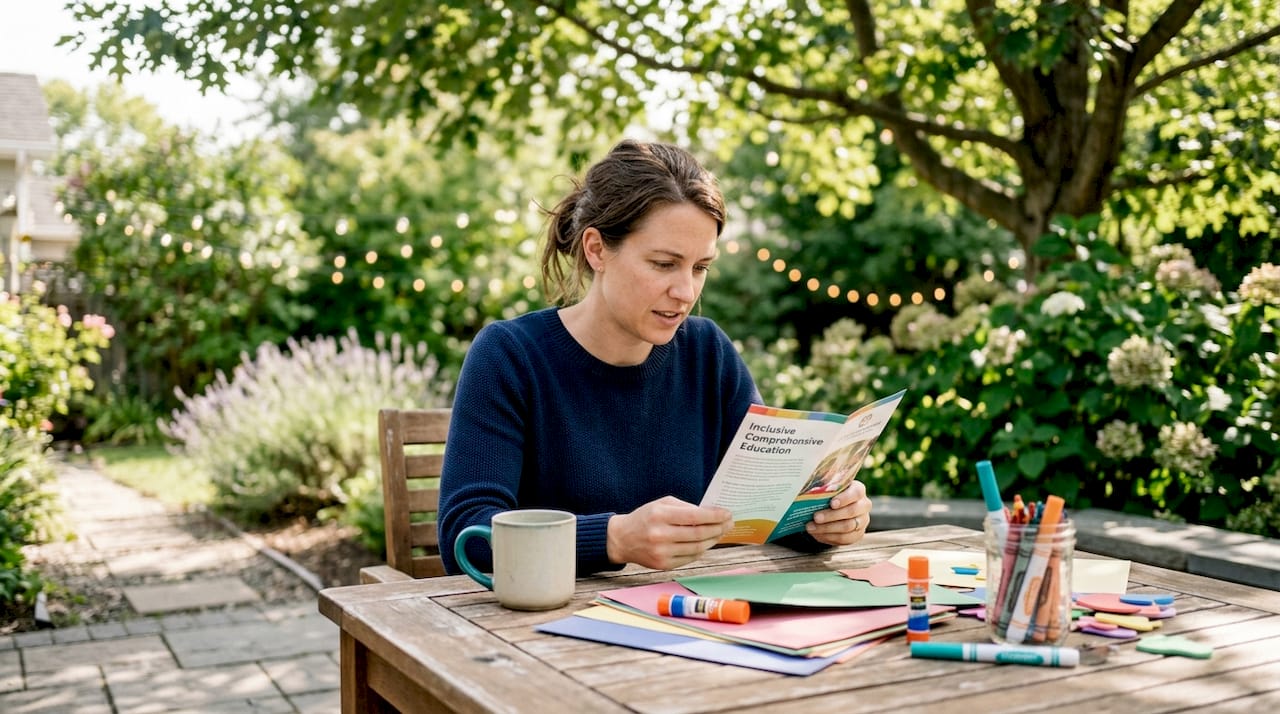
Comprehensive education is defined as an inclusive system that enrolls all children regardless of academic ability, providing every student with an equally broad and meaningful curriculum. Unlike selective schooling, it does not sort children by test scores or perceived potential. The Finnish Ministry of Education’s 2045 vision frames comprehensive schools as vital institutions preparing children to participate democratically in an uncertain future. For parents and educators of children aged 1.5 to 12, understanding the comprehensive education meaning is the first step toward choosing a learning environment where every child genuinely thrives.
What is comprehensive education and why does it matter?
Comprehensive education is a broad, student-centered model that integrates academic learning with social, emotional, and physical development. The goal is not simply to teach reading and math. It is to raise capable, curious, and confident people who can navigate real life. This is what separates a truly holistic education approach from a narrowly academic one.
The definition of comprehensive education rests on three pillars: equal access, broad curriculum, and competency-based growth. Every child, regardless of background or learning style, receives the same entitlement to a full range of subjects and experiences. Competency-based learning confirmed in March 2026 research boosts student engagement and builds resilience. That means children who learn this way are better prepared for challenges they cannot yet anticipate.
The importance of comprehensive education shows up clearly in long-term outcomes. Broad academic exposure links directly to improved lifetime earnings and life satisfaction. Children who experience a wide curriculum early develop stronger problem-solving skills than those in narrowly focused programs. For parents choosing a school for a child aged 1.5 to 12, this evidence matters.
What does a comprehensive curriculum include?
A comprehensive curriculum covers academic subjects alongside creativity, critical thinking, physical education, and social-emotional learning. No single area is treated as more important than another. The curriculum is designed so that each domain reinforces the others.
Core components typically include:
Literacy and numeracy as foundational academic skills
Science and inquiry to build curiosity and logical thinking
Arts, music, and movement to develop creativity and expression
Social studies and ethics to build empathy and civic awareness
Physical education to support health and body confidence
Social-emotional learning to develop self-regulation and collaboration
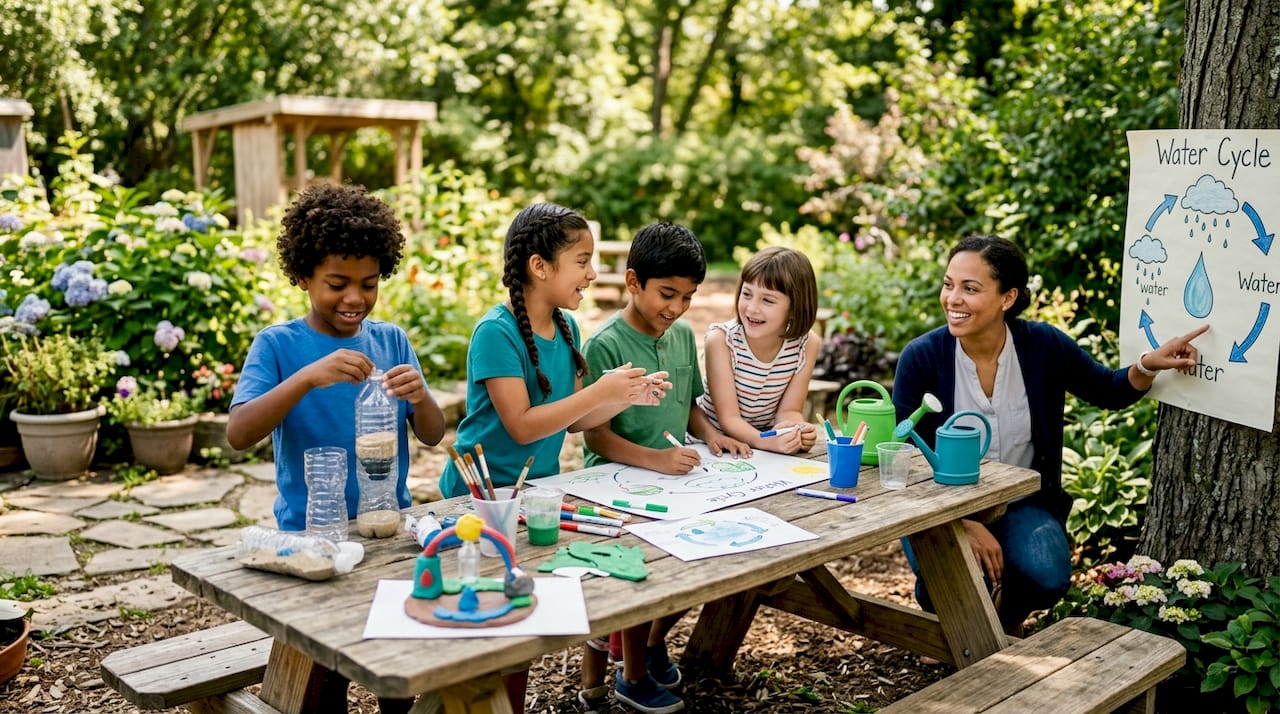
Each of these areas connects to the others in practice. A lesson on water conservation, for example, might combine science, math, and storytelling in a single session. Integrated teaching like this is a hallmark of comprehensive curricula because it shows children how knowledge applies in the real world.
Pro Tip: When reviewing a school’s curriculum, ask whether subjects are taught in isolation or connected across disciplines. Integrated lessons are a strong sign of a genuinely comprehensive program.
The social-emotional component deserves special attention for young children. Children aged 1.5 to 12 are forming their identities, learning to manage feelings, and building their first friendships. A curriculum that treats these skills as equally important as reading gives children a foundation that supports everything else they learn.
How does comprehensive education differ from traditional models?
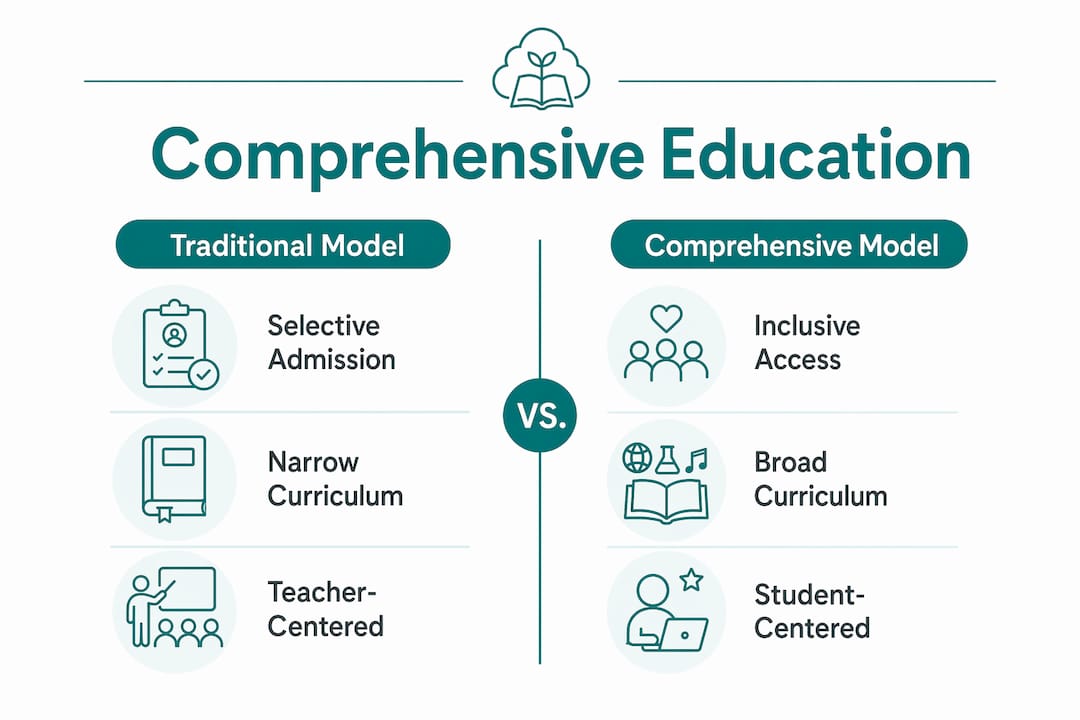
Traditional education models often sort children by academic performance, stream them into ability groups, and focus heavily on standardized testing. Comprehensive education rejects this approach. Every child enters the same school, joins the same classes, and receives the same curriculum entitlement.
The table below shows the key differences between the two models.
Feature | Traditional model | Comprehensive model |
Admission | Often selective by ability or test | Open to all children |
Curriculum | Narrow academic focus | Broad, integrated subjects |
Assessment | Primarily standardized tests | Formative, ongoing assessment |
Pedagogy | Teacher-centered instruction | Student-centered learning |
Goal | Academic performance | Lifelong skills and wellbeing |
The shift from teacher-centered to student-centered learning is one of the most significant changes in comprehensive models. Teachers become facilitators rather than lecturers. Children take an active role in their own learning, which builds confidence and ownership. Formative assessments replace one-size-fits-all tests, allowing educators to tailor support in real time.
Comprehensive schools also include vocational and practical subjects that selective schools often omit. This breadth gives children exposure to a wider range of skills and interests before they are old enough to specialize. The result is a more equitable system where a child’s future is not determined by a single test at age seven or ten.
How can parents and educators support children in comprehensive settings?
Parents play a bigger role in comprehensive education than many realize. The model depends on children developing autonomy, and that process starts at home. Supporting your child’s learning at home does not mean drilling worksheets. It means asking open questions, encouraging curiosity, and letting children work through problems independently.
Here are four practical ways to support a child in a comprehensive education setting:
Ask open-ended questions after school. Instead of “What did you learn today?” try “What surprised you today?” This builds reflective thinking and shows children that curiosity is valued.
Connect learning to everyday life. Point out math in cooking, science in the garden, and storytelling in family conversations. Children who see learning everywhere engage more deeply at school.
Support collaboration, not just individual achievement. Comprehensive education values teamwork. Encourage your child to work on group projects and talk through disagreements respectfully. Collaborative work builds skills that no test can measure.
Communicate regularly with teachers. Comprehensive models rely on parental involvement in learning as a genuine partnership. Ask about your child’s progress in social-emotional areas, not just academics.
Pro Tip: If your child’s school uses inquiry-based learning, ask the teacher to share the current unit theme. Then find one related book, video, or outing that connects to it. This small step deepens learning far more than extra homework.
Educators in comprehensive settings face their own challenges. Shifting from direct instruction to facilitation takes time and practice. Teachers who succeed in this model build classroom environments where children feel safe to ask questions, make mistakes, and try again.
What do curriculum examples and success indicators look like?
Concrete examples make the benefits of comprehensive education visible. A class of seven-year-olds studying ancient civilizations might write a story from a historical character’s perspective, build a model city using measurement and geometry, and perform a short drama piece. Three subjects. One meaningful experience. This is integrated learning in practice.
For children aged 1.5 to 5 in a preschool setting, the curriculum looks different but follows the same principles. Outdoor play, sensory exploration, and storytelling are not extras. They are the curriculum. A child who spends time at a water table is learning physics, measurement, and cause-and-effect reasoning without a textbook in sight.
Success in comprehensive education does not always look like a test score. Watch for these signs that the approach is working:
Your child asks questions you cannot answer, which shows genuine curiosity
Your child talks about school friends and group projects with enthusiasm
Your child tries new things without fear of being wrong
Your child connects classroom topics to things they see at home or outside
Your child shows persistence when a task is difficult rather than giving up
Mastery-oriented goals replace the pressure of ranking and grading. Children focus on understanding rather than performance. Research confirms that students in these models perform academically equal to or better than peers in traditional programs, and they develop stronger real-world problem-solving skills alongside that academic foundation.
Key takeaways
Comprehensive education gives every child equal access to a broad curriculum that builds academic skills, social confidence, and real-world capability from the earliest years through primary school.
Point | Details |
Inclusive by design | Comprehensive education enrolls all children without academic selection or ability streaming. |
Broad curriculum scope | It covers academics, arts, physical education, and social-emotional learning as equally important areas. |
Integrated teaching | Subjects are connected across disciplines to show real-world relevance and deepen understanding. |
Formative assessment | Ongoing feedback replaces standardized tests, allowing teachers to tailor support in real time. |
Parent partnership | Active parental involvement in fostering curiosity and autonomy strengthens outcomes at every age. |
Why I think parents underestimate breadth in early education
The most common concern I hear from parents is this: “Won’t a broad curriculum mean my child doesn’t go deep enough in anything?” It sounds reasonable. It is also, in my experience, the wrong question.
General education over narrow focus is a stronger predictor of life satisfaction and financial success than early specialization. Children who are pushed into a narrow academic lane at age six or eight often arrive at adolescence without the social skills, creative confidence, or emotional vocabulary to handle real challenges. The child who spent years drilling test prep may outscore peers at ten. By twenty, the child who learned to collaborate, question, and adapt often leads.
The schools I respect most are the ones that resist the pressure to specialize too early. They trust that a curious, confident eight-year-old who loves science and drama and building things is not unfocused. That child is developing the breadth that makes depth possible later. Small schools with small class sizes are often better at this than large institutions because every teacher actually knows every child.
The logistical challenges are real. Delivering a truly broad curriculum requires thoughtful staffing and scheduling, especially in smaller settings. But the schools that solve this problem well produce graduates who are genuinely ready for the world, not just the next exam.
— Elena
Astor International School’s approach to whole-child learning
Edu brings the principles of comprehensive education to life for children aged 1.5 to 12 in Singapore. Astor International School in the Tanglin area has been recognized as the best small school and best affordable international school in Singapore. Its small class sizes mean every child is truly seen and supported, not just taught.
At the heart of Astor’s program is the IPC curriculum, an internationally recognized framework that integrates academic subjects with personal and international learning goals. Children learn through themed units that connect literacy, science, social studies, and the arts into one meaningful experience. Astor International Preschool in Holland also brings this same spirit to the youngest learners, with two playgrounds and a mix of outdoor and classroom learning that makes every day an opportunity to grow. Learn more about Astor’s full curriculum and find the right fit for your child.
FAQ
What is the definition of comprehensive education?
Comprehensive education is an inclusive system that enrolls all children without academic selection and provides a broad curriculum covering academic, social, emotional, and physical development equally.
How does comprehensive education work in practice?
Teachers use integrated lessons, formative assessments, and student-centered methods to connect subjects and tailor learning to each child’s needs rather than relying on standardized tests.
What are the main benefits of comprehensive education?
Children in comprehensive programs develop stronger real-world problem-solving skills, greater social confidence, and academic results equal to or better than those in traditional selective models.
Is comprehensive education suitable for children under five?
Yes. For children aged 1.5 to 5, comprehensive education takes the form of play-based, sensory, and inquiry-driven learning that builds the same foundational skills in an age-appropriate way.
How can I tell if a school truly offers comprehensive education?
Look for integrated curriculum units, formative rather than purely test-based assessment, small class sizes that allow personalized attention, and a clear focus on social-emotional development alongside academics.
Recommended

Your blog provided us with valuable information to work with. Each & every tips of your post are awesome. Thanks a lot for sharing. Keep blogging, Enphase thuisbatterij
I have bookmarked your website because this site contains valuable information in it. I am really happy with articles quality and presentation. Thanks a lot for keeping great stuff. I am very much thankful for this site. Sunpower zonnepanelen
Thumbs up guys your doing a really good job. SolarEdge batterij
I have recently started a blog, the info you provide on this site has helped me greatly. Thanks for all of your time & work REC solar zonnepanelen
Thank you for your post, I look for such article along time, today i find it finally. this post give me lots of advise it is very useful for me. Sma batterij