


Why the Transition to Primary School Matters
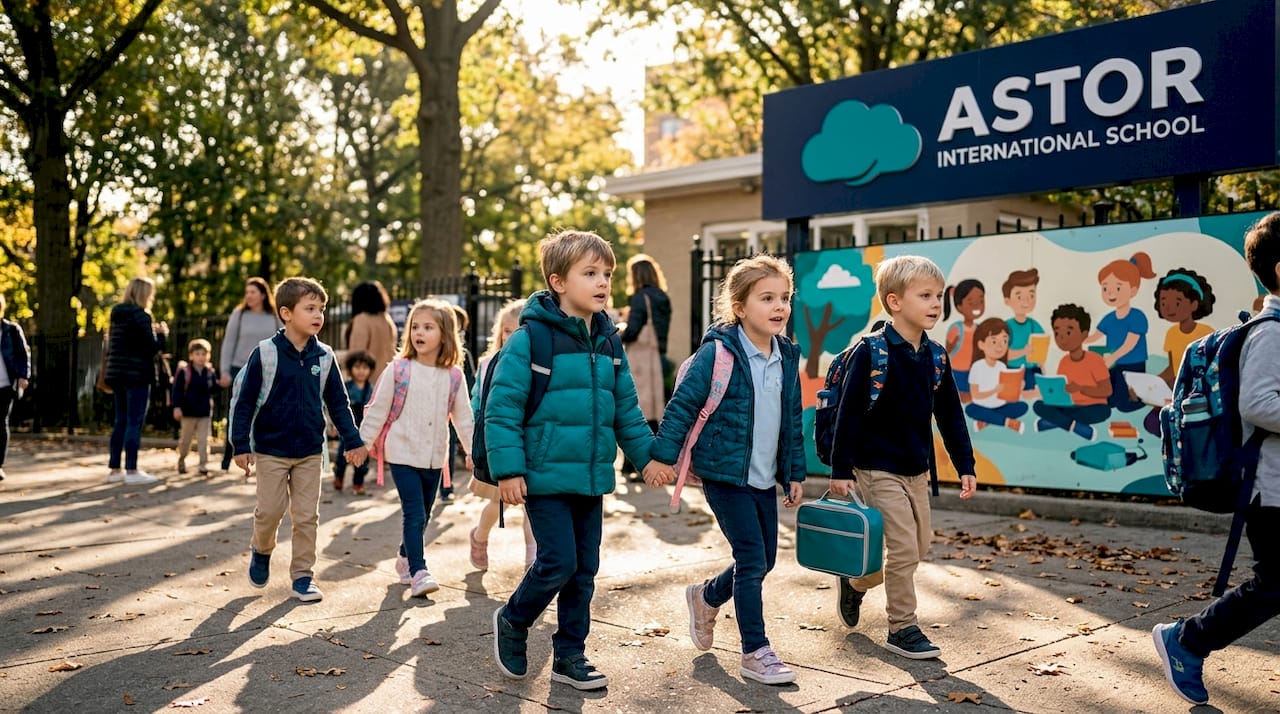
The transition to primary school is the single most consequential developmental shift a young child makes, shaping academic habits, social confidence, and emotional regulation in ways that echo through every school year that follows. Research confirms that readiness factors like executive function and socio-emotional regulation predict long-term school success more reliably than early literacy or numeracy scores alone. For Singapore parents navigating Primary 1 registration, MOE orientation events, and the emotional weight of watching your child walk into a new world, understanding why this transition matters is the first step toward making it a genuinely positive experience.
Why transition to primary school matters more than most parents realize
The formal term for what your child is experiencing is the “preschool-to-primary transition,” and it is far more complex than simply changing buildings. Children move from play-based, flexible preschool environments into structured classrooms with longer hours, subject-specific learning, and new social hierarchies. That shift demands a set of skills most parents do not think to practice at home.
A 2025 systematic review found that executive function and socio-emotional regulation carry effect sizes of d = 0.38 to 0.82 in predicting school readiness. That range is significant. It means a child who can manage attention, regulate frustration, and follow multi-step instructions has a measurably stronger foundation than a child who can recite the alphabet but melts down when a routine changes. The same review identified parental involvement and teacher collaboration as critical ecological predictors, meaning the adults around a child matter as much as the child’s own skills.
Many parents focus almost entirely on academic preparation, drilling phonics and numbers in the months before Primary 1. This is understandable, but it misses the point. Training self-management skills yields higher returns for transition success than academic content alone. The child who knows how to ask for help, sit with discomfort, and recover from a mistake will outperform the child who can read but cannot self-regulate, especially by the time Term 2 arrives and novelty wears off.
What key skills and readiness factors matter most
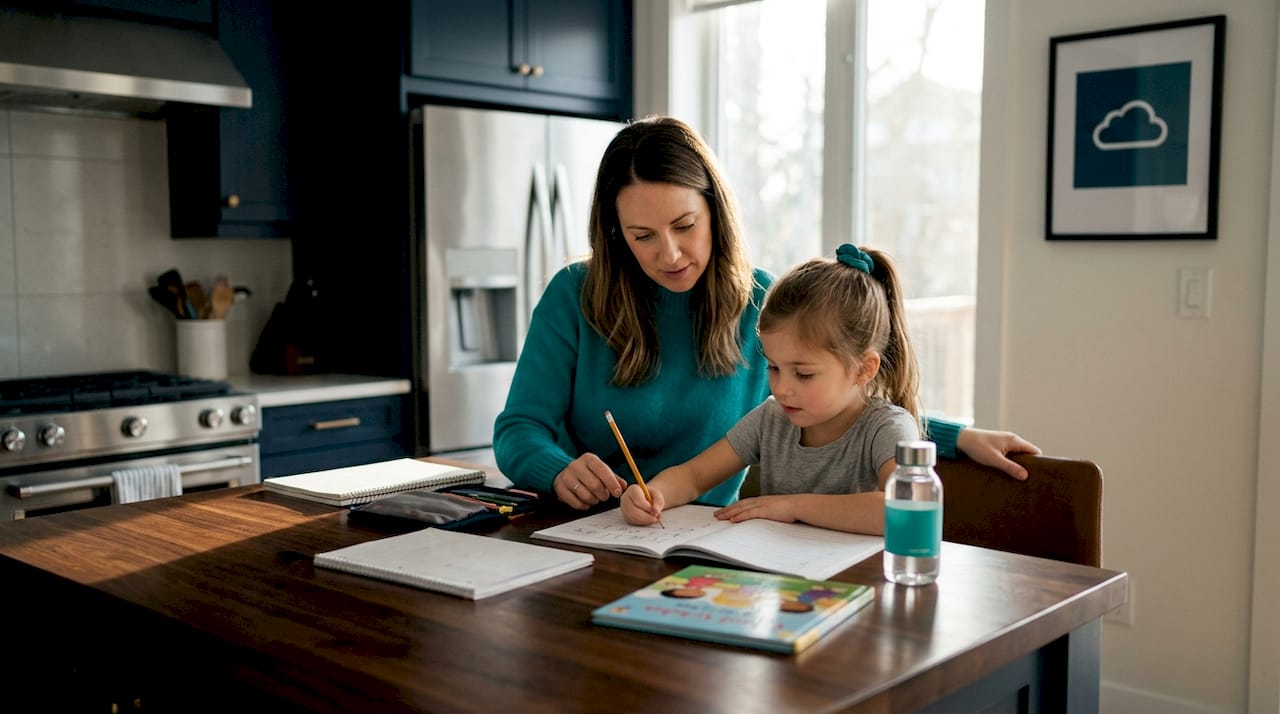
Understanding the specific skills that predict a smooth transition gives you something concrete to work toward. These are not abstract qualities. They are observable, practicable behaviors you can nurture at home and in preschool.
The most predictive readiness factors, drawn from the 2025 preschool-to-primary review, include:
Attention regulation: The ability to stay focused on a task for 10 to 15 minutes without redirection, which mirrors the demands of a Primary 1 lesson.
Emotional self-regulation: Recognizing and managing feelings like frustration, disappointment, and anxiety without adult intervention every time.
Social competence: Initiating peer interactions, taking turns, and resolving minor conflicts independently.
Independence in routines: Packing a bag, managing a water bottle, and navigating a toilet break without prompting.
Parental involvement: Active engagement from caregivers in school communication, homework support, and emotional check-ins.
The last point deserves emphasis. Parental involvement is not just helpful. It is a measurable predictor of how well children adjust. Schools that build strong parent-teacher communication channels from day one see better behavioral and academic outcomes across the board.
Pro Tip: Start a simple “school readiness” practice at home three months before Primary 1 begins. Set a 15-minute quiet activity time each day where your child works independently on a puzzle, drawing, or simple task without your help. This builds the attention stamina that structured lessons demand.
You can find more practical strategies in this guide on supporting your child’s learning in Singapore, which covers parental involvement approaches that align with what primary schools actually expect.
How does Singapore’s MOE Kindergarten programme support a smooth transition?
Singapore’s Ministry of Education does not leave the transition to chance. MOE Kindergarten at Jing Shan runs a five-week experiential program that exposes children to primary school routines, environments, and social interactions before their first official day. The program is one of the most thoughtfully designed transition supports in the region.
Activities in the program include:
Guided school tours to reduce the physical unfamiliarity of a larger campus
Library visits that introduce children to independent reading spaces
Trial lessons with actual Primary 1 teachers, building familiarity with instructional style
A buddy system pairing preschoolers with older students for peer-led orientation
Canteen visits to practice ordering food and managing a short break independently
The underlying principle is what educators call “situated familiarity.” Repeated exposure to the P1 environment reduces cognitive load on the first day, freeing up mental energy for learning rather than survival. A child who has already walked those corridors, sat in that canteen, and spoken to that teacher arrives with confidence rather than overwhelm. This directly supports executive functioning and engagement from week one.
“Reducing uncertainty through practical, repeated exposure to the new school builds confidence better than abstract reassurance.” — Straits Times report on MOE Kindergarten transition practices
Beyond MOE Kindergarten, Singapore’s broader P1 registration process reflects the same philosophy. P1 registration runs from June to October 2026, with the Parents Gateway app delivering orientation updates, supply lists, and transition tips directly to families. This structured, multi-touchpoint approach gives parents a clear timeline and reduces the anxiety that comes from not knowing what to expect.
Why do home routines and parenting style influence transition outcomes?
The school does its part, but the home environment is equally powerful. Penn State research found that daily family routines are directly associated with fewer behavior problems and ADHD symptoms after the school transition begins. Consistent routines give children a sense of predictability that carries over into how they handle the unpredictability of a new school day.
Here is what the research recommends for building a transition-supportive home environment:
Establish a consistent morning routine at least six weeks before school starts. Wake time, breakfast, dressing, and bag-packing should follow the same sequence every day so the routine becomes automatic.
Create a wind-down routine in the evenings that includes a fixed bedtime. Sleep deprivation is one of the most underestimated factors in early school adjustment, affecting attention and emotional regulation directly.
Practice the school commute two or three times before the first day, whether by bus, MRT, or car. Familiarity with the journey removes one more source of morning anxiety.
Build in a daily debrief after school. A simple “What was one good thing today?” question opens communication and helps children process new experiences rather than bottle them up.
The critical caveat from Penn State is this: harsh parenting negates the protective benefits of even the most consistent routines. A child living in a structured but emotionally harsh home does not gain the behavioral benefits that routines otherwise provide. Managing your own stress during this period is not a luxury. It is a direct input into your child’s adjustment.
Pro Tip: If you find yourself snapping at your child during the transition period, pause and name it. “I’m feeling stressed about your new school too” is more powerful than you think. It models emotional regulation, which is exactly the skill your child needs to develop.
What challenges do children face during the transition and how can they be mitigated?
The transition period is a sensitive window for wellbeing. Without adequate support, children at risk can experience drops in motivation and academic engagement that are difficult to reverse once patterns are set. Knowing the common challenges in advance lets you prepare rather than react.
The Dyslexia Association of Singapore notes that P1 transition is demanding due to longer school hours, higher behavioral expectations, and larger class sizes. For children with learning differences or heightened sensitivity, these demands can feel overwhelming. Emotional regulation strategies like deep breathing, a comfort object in the bag, or a pre-agreed signal with the teacher can make a real difference.
Common challenges and practical mitigations include:
Longer school days: Gradually extend your child’s active focus time at home in the weeks before school starts. Move from 20-minute activities to 45-minute sessions to build stamina.
Structured lessons replacing free play: Introduce short, structured activities at home that require listening and following instructions, such as simple cooking tasks or craft projects with steps.
Larger class sizes: Arrange playdates with two or three children at once rather than one-on-one, so your child practices navigating group dynamics before school begins.
Separation anxiety: Practice short separations in familiar settings. Drop your child at a neighbor’s or relative’s home for an hour and return as promised, building trust that you always come back.
Early and ongoing communication with the class teacher is the most underused tool available to parents. Teachers notice behavioral shifts before parents do. A brief message at the start of term introducing your child’s personality, strengths, and any concerns sets a collaborative tone that benefits your child throughout the year. For children with identified learning needs, connect with the school’s Student Support Team before the first day, not after a problem emerges.
Key takeaways
The transition to primary school succeeds when children develop self-regulation and executive function skills, supported by consistent home routines, emotionally warm parenting, and proactive school collaboration.
Point | Details |
Self-regulation over academics | Executive function and emotional regulation predict school success more reliably than early literacy or numeracy skills. |
MOE’s situated familiarity approach | Repeated exposure to the P1 environment through tours, trial lessons, and buddy systems reduces first-day cognitive load. |
Routines with emotional warmth | Consistent home routines improve behavioral outcomes, but only when paired with supportive, non-harsh parenting. |
Proactive parent-school communication | Introducing your child’s needs to the teacher before problems arise is the most effective transition strategy available to parents. |
Transition as a sensitive window | Lack of support during this period can reduce motivation and engagement in ways that are difficult to reverse later. |
What I’ve learned about transition that most advice gets wrong
By Elena
After years of working with families navigating the preschool-to-primary shift, the pattern I see most often is this: parents prepare their children for the content of school and forget to prepare them for the experience of school. They practice letter sounds but not sitting still. They buy the right stationery but never practice eating lunch independently in a noisy setting.
The research backs this up completely. Academic readiness alone is insufficient. Emotional regulation and independence are what carry children through the first term. I have seen children who could read fluently at five fall apart by Week 3 because they had never learned to manage frustration without an adult immediately stepping in.
What I advocate for is what I call “process preparation” over “content preparation.” Teach your child how to ask for help. Teach them how to recover from getting something wrong. Teach them that feeling nervous is normal and that it passes. These are not soft skills. They are the skills that determine whether a child thrives or struggles in a structured environment.
Singapore’s MOE transition programs are genuinely good, and I encourage every parent to engage with them fully rather than treating orientation as a box to check. The situated familiarity approach used in MOE Kindergarten is grounded in real developmental science. Use it. And if your child’s preschool offers any form of primary school visit or trial session, prioritize it over almost anything else on your calendar that week.
Finally, be honest with yourself about your own anxiety. Children are extraordinarily good at reading parental emotion. If you are dreading the transition, your child will sense it. Your calm confidence is not just reassuring. It is one of the most concrete things you can give your child before that first day.
— Elena
How Astor International School supports your child’s transition
At Astor International School in Singapore’s Tanglin area, the move from preschool to primary education is treated as a milestone worth preparing for with care and intention. Astor’s IPC curriculum is built around holistic development, giving children the social, emotional, and academic foundations that research identifies as the true predictors of school success. Small class sizes mean every child is genuinely seen and supported, not lost in a crowd. Astor has been recognized as both the best small school and the best affordable international school in Singapore, and that recognition reflects a real commitment to personalized learning. If you are exploring primary school options that align with everything this article covers, the Astor curriculum is a strong place to start.
FAQ
What does “school readiness” actually mean for Primary 1?
School readiness refers to a child’s capacity to manage attention, regulate emotions, follow routines, and engage socially, not just academic knowledge. A 2025 systematic review found executive function and socio-emotional regulation are stronger predictors of P1 success than early literacy or numeracy skills.
How early should parents start preparing for the P1 transition?
Start at least three to six months before Primary 1 begins. Building consistent routines, practicing independence, and visiting the school environment well in advance reduces anxiety and cognitive load on the first day.
What if my child has learning differences or special needs?
The Dyslexia Association of Singapore recommends emotional adjustment strategies like deep breathing and reassurance, combined with early contact with the school’s Student Support Team before the first day rather than waiting for difficulties to surface.
Does Singapore’s MOE provide transition support for families?
Yes. MOE runs structured orientation programs and uses the Parents Gateway app to deliver transition tips, supply lists, and orientation schedules directly to families throughout the P1 registration period.
Can home routines really affect how well a child adjusts to school?
Penn State research confirms that consistent daily routines are linked to fewer behavior problems after the school transition, though these benefits are reduced when parenting is emotionally harsh or inconsistent.
Recommended
Comments